
Fact-checked and edited in collaboration with avian field experts, this report examines the geographic distribution, evolutionary mechanics, and ecological significance of North America’s rare pink-plumed bird species.
Executive Overview
True pink birds are a biological anomaly in North America. While tropical ecosystems are replete with brightly pigmented avians, the avifauna of the United States and Canada boasts fewer than a dozen species that exhibit notable pink or magenta plumage. Far from being a mere aesthetic curiosity, the presence of these pink and rose-tinted species offers a fascinating lens into evolutionary biology, dietary ecology, microscopic feather physics, and shifting environmental ranges driven by climate change and habitat alteration.
From the iconic American Flamingo—long considered a vagrant tourist in Florida, now showing signs of potential permanent residency—to the high-altitude, elusive Rosy-Finches of the American West, North America’s pink birds captivate both casual backyard birders and dedicated ornithologists. These species derive their coloration through three distinct biological pathways: dietary carotenoid accumulation (as seen in flamingos and spoonbills), microscopic feather structures that refract light into iridescent pinks (demonstrated by western hummingbirds), and complex genomic mechanisms governing melanin and carotenoid expression (evident in finches).
This report provides an authoritative breakdown of North America’s pink-plumed avians, detailing their identification, geographic strongholds, ecological requirements, and the best practices for observing them in the wild or attracting them to managed landscapes.
Detailed Chronology and Range Dynamics: The Expanding Horizons of Pink Avians
The historical presence—and absence—of certain pink birds across North America is shifting rapidly. Decades of observational data compiled by conservation groups and field ornithologists reveal dynamic changes in where these birds can be found.
The Flamingo’s Return to the Sunshine State
Historically, ornithologists debated whether the American Flamingo (Phoenicopterus ruber) ever maintained a stable, native breeding population in Florida prior to European settlement, as historical records from the 18th and 19th centuries were often confounded by heavy hunting and trade. For generations, the flamingos seen in Florida were largely considered escapees from captivity or vagrants blown off course by Caribbean hurricanes.
However, recent chronological data paints a new picture. Following major tropical weather events—most notably Hurricane Idalia—flocks of wild flamingos were blown deep into the Florida Peninsula and the panhandle. Unlike historical vagrants that quickly vanished, many of these recent arrivals have taken up year-round residency in ecosystems like the Everglades, Biscayne Bay, and the Florida Keys. Conservation scientists are monitoring these populations closely to determine if Florida is witnessing the historic re-establishment of a self-sustaining American Flamingo breeding colony.
The Northward Migration of the Roseate Spoonbill
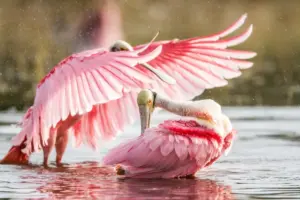
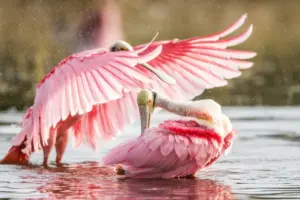
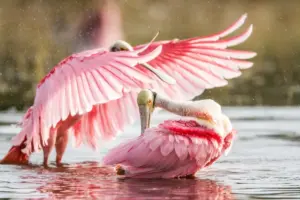
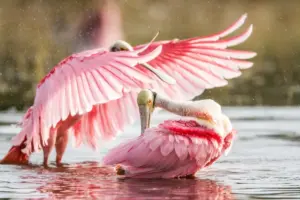
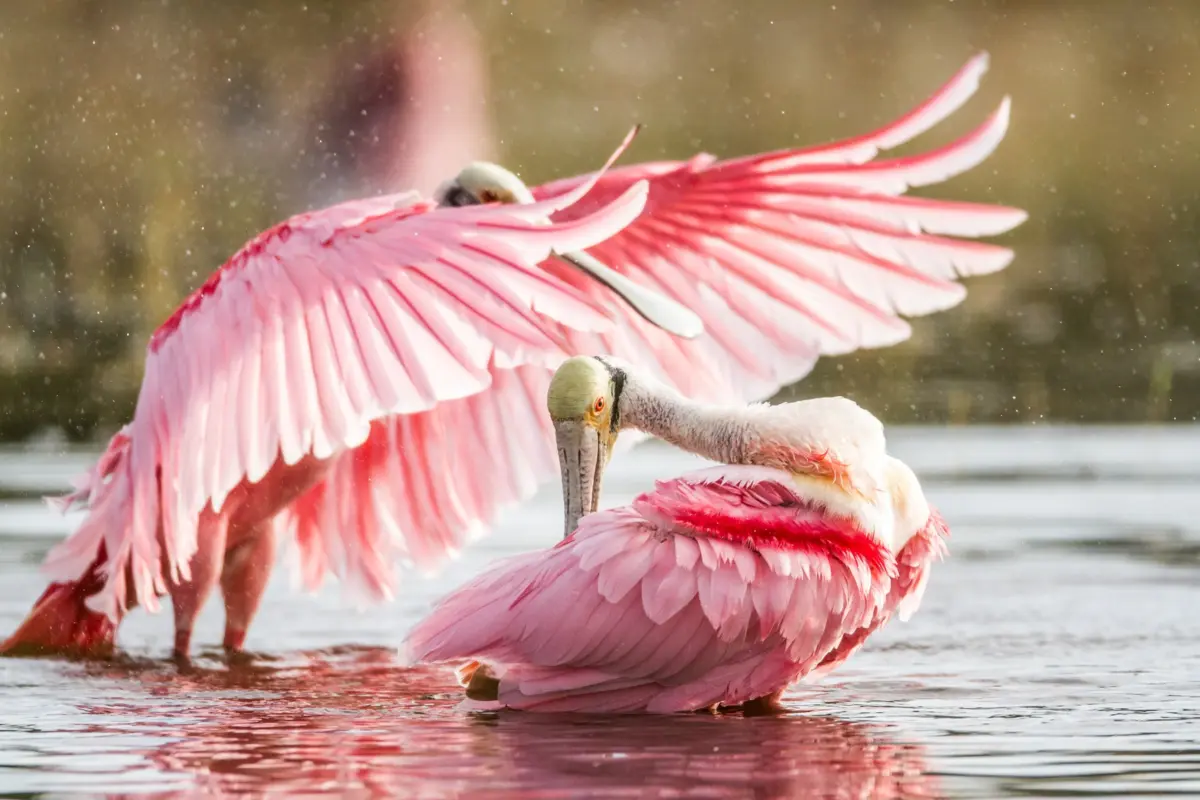
While the American Flamingo commands headlines, the Roseate Spoonbill (Platalea ajaja) has quietly expanded its geographic footprint northward along the Gulf Coast and into interior wetlands. Decimated by the 19th-century plume trade, spoonbill populations rebounded slowly under strict federal protections. In recent years, changing hydrological conditions, wetland restoration efforts, and warming winter temperatures have prompted these distinctive waders to push north of their traditional strongholds in southern Florida and coastal Texas, establishing new foraging and breeding ranges that challenge historical distribution maps.
Supporting Context & Metrics: The Science of Pink Plumes
To understand why these birds are pink is to understand the varied evolutionary mechanisms of avian coloration. The pink hues observed across North America’s avifauna are not produced by a single biological process; rather, they are marvels of diet, physics, and genetics.
1. Dietary Carotenoids: The Chemical Palette
For the American Flamingo and the Roseate Spoonbill, pinkness is quite literally a reflection of what they eat.
- The Mechanism: These waders consume aquatic invertebrates—such as brine shrimp, crabs, crayfish, and small fish—that feed on microscopic, single-celled algae. These algae produce natural red, orange, and yellow pigments known as carotenoids.
- The Process: As the birds digest these organisms, the fat-soluble carotenoid pigments are extracted and deposited into their growing feathers and skin. A flamingo chick hatches with dull, grayish-white down; it takes up to three years of consuming a carotenoid-rich diet to attain the species’ signature vibrant pink plumage. The saturation of their color often serves as an indicator of health and foraging success.
2. Structural Iridescence: The Physics of Hummingbird Gorgets
North America’s smallest pink-bearing birds—Anna’s Hummingbird, the Calliope Hummingbird, and the Broad-tailed Hummingbird—do not rely on pigments for their dazzling pink and magenta gorgets (throat patches).
- The Mechanism: The color is a result of structural coloration created by microscopic, air-bubble-filled platelet structures within the barbules of their feathers.
- The Process: When light strikes these complex nanostructures, certain wavelengths interfere constructively while others are cancelled out, resulting in brilliant, metallic iridescence. When a male hummingbird turns its head just right to catch the sunlight, these micro-pancake structures flare into an electric pink or magenta that can be seen from yards away.
3. Genomic Expression: The Finches
Among North America’s finches—specifically the Purple Finch, Cassin’s Finch, and the three Rosy-Finch species—red and pink plumage is controlled at the genomic level.
- The Mechanism: These birds metabolize dietary carotenoids differently than flamingos or spoonbills. Through internal biochemical pathways, they chemically alter ingested pigments into new compounds deposited into their feathers during the annual molt.
- The Variability: The resulting shades—ranging from soft rose-pink to deep maroon—depend on age, sex, nutritional health, and genetic lineage, making identification between closely related finches a fascinating challenge for field birders.
Field Guide: Categorizing North America’s Pink Birds
Primary Waders: Flamingos and Spoonbills
| Species | Primary Range | Distinctive Features | Diet-Dependent Color? |
|---|---|---|---|
| American Flamingo | Caribbean; increasingly year-round in South Florida (Everglades, Keys) | Entirely pink body, long neck, heavily curved black-tipped bill for inverted feeding. | Yes (Carotenoids from shrimp/algae) |
| Roseate Spoonbill | Gulf Coast, southern Florida, expanding northward | White neck, greenish head, flattened spoon-shaped bill for sweeping muck. | Yes (Carotenoids from aquatic crustacea/fish) |
The Iridescent Hummers
- Anna’s Hummingbird (Calypte anna): A West Coast fixture stretching from British Columbia down to southern Arizona. Unlike most hummingbirds, males feature iridescent pink crowns as well as gorgets that flash electric pink in the light.
- Calliope Hummingbird (Selasphorus calliope): The smallest long-distance migrant in the world. Breeding in the Pacific Northwest and Intermountain West, the male sports a patchy, flaring gorget shifting from pink to deep magenta.
- Broad-tailed Hummingbird (Selasphorus platycercus): A resident of high-elevation western forests and mountain meadows. Males flash a rose-pink gorget and produce a distinctive metallic, buzzing wing-whistle in flight.
The Resilient Finches
- Purple Finch (Haemorhous purpureus): Distributed across the eastern US, Great Lakes, and Pacific Coast, with boreal breeding grounds. Males exhibit raspberry-pink to maroon plumage that intensifies during irruption winters.
- Cassin’s Finch (Haemorhous cassinii): A nomadic western conifer specialist. Males feature a soft pink breast and face, capped by a bright red crown.
- Rosy-Finches (Black, Brown-capped, and Gray-crowned): Rare, high-elevation alpine specialists of the American West. The Black Rosy-Finch features a striking combination of dark body feathers and bold pink wing/belly highlights, making it a prized "holy grail" species for dedicated listers.
Future Outlook: Conservation, Climate, and Habitat Management
As natural habitats face mounting pressures from human development, hydrology alterations, and climate change, the future of North America’s pink-plumed avians depends heavily on proactive conservation initiatives.
Wetland Restoration and Water Management
For the American Flamingo and Roseate Spoonbill, the preservation and restoration of coastal wetlands are paramount. Projects such as the Comprehensive Everglades Restoration Plan (CERP) in South Florida play a critical role in re-establishing natural water flows, which in turn support the robust prey populations—small fish, shrimp, and aquatic invertebrates—necessary for maintaining both bird populations and their iconic pigmentation.
Climate Pressures on Alpine Finches
Conversely, the high-altitude Rosy-Finches face an uncertain future. Confined to the highest peaks of the Rocky Mountains, the Great Basin, and western mountain ranges, these cold-adapted species are acutely vulnerable to global warming. As alpine treelines shift upward and snowpacks diminish, their specialized high-elevation foraging and breeding habitats shrink, threatening isolated populations with genetic bottlenecks and habitat loss.
Citizen Science and Monitoring
Platforms such as the Cornell Lab of Ornithology’s eBird and Audubon’s tracking databases have revolutionized how ornithologists monitor these species. By recording vagrant flamingo sightings, tracking finch irruption years, and submitting checklists from remote mountain passes, everyday birders provide essential data points that help wildlife managers draft effective conservation policies.
Summary Recommendations for Birders and Homeowners
For those eager to observe these remarkable birds in the wild or invite pink visitors to backyard spaces, adherence to targeted observation strategies yields the best results:
- For Hummingbirds: Install standard nectar feeders filled with a simple 4:1 ratio of water to refined white sugar (avoiding red dyes). Planting native flowering perennials along the Pacific and Intermountain West corridors will naturally attract Anna’s, Calliope, and Broad-tailed Hummingbirds.
- For Finches: Equip backyard feeders with black-oil sunflower seeds and safflower seeds to reliably draw in Purple and Cassin’s Finches, particularly during winter irruption cycles.
- For Waders and Rarities: Consult regional eBird maps before embarking on trips to coastal Florida or Texas for spoonbills, and look to specialized high-altitude viewing areas—such as Sandia Crest, New Mexico—to catch a glimpse of the elusive high-elevation Rosy-Finches in their natural alpine habitats.