The opening of Nestlé Purina PetCare’s major manufacturing and distribution facility in Clermont County, Ohio, was initially celebrated as a milestone for regional economic development. Backed by an estimated $10.5 million public incentive package—comprising state tax credits, local tax abatements, and discounted land grants—the project was designed to spur industrial growth and create hundreds of local jobs. However, the facility’s opening has ignited a broader debate regarding public economic incentives, regulatory enforcement, and corporate transparency in pet food marketing.
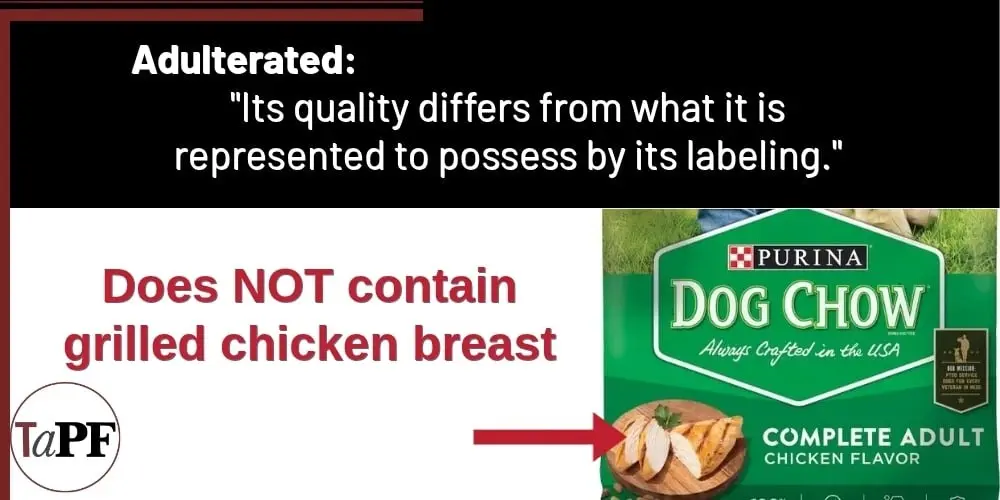
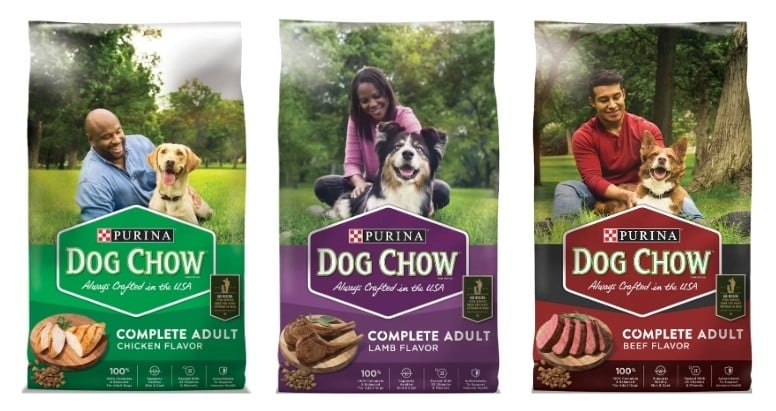
Consumer advocacy groups, led by veteran advocate Susan Thixton of TruthaboutPetFood.com and the Association for Truth in Pet Food, have raised critical questions regarding the alignment of public funding with state and federal statutory standards. At the center of the controversy is a stark contrast between the visual marketing on Purina Dog Chow packaging—featuring illustrations of prime cuts of meat such as grilled chicken breast, roasted lamb chop, and thick-cut steak—and the actual structural ingredients listed in the deck, which rely heavily on feed-grade rendered proteins like "chicken by-product meal" and "meat and bone meal."
Advocates argue that such packaging practices may violate Ohio commercial feed laws, specifically statutes governing product misbranding and adulteration, as well as federal standards enforced by the U.S. Food and Drug Administration (FDA). The ongoing debate raises a fundamental policy question for lawmakers and citizens alike: Should state governments grant substantial tax incentives to corporations without conditioning those funds on strict compliance with consumer protection and feed-labeling statutes?
Detailed Chronology
[Phase 1: Project Announcement & Site Selection]
 Clermont County & State of Ohio finalize economic development deal for Purina plant.
                         │
                         ▼
[Phase 2: Public Incentive Allocation]
 ~$10.5M total package granted ($6.8M initial incentives, $1.7M land discount, $2M Job Creation Credit).
                         │
                         ▼
[Phase 3: Facility Completion & Commercial Operations]
 Multi-million dollar plant launches operations in Williamsburg Township / Batavia, OH.
                         │
                         ▼
[Phase 4: Consumer Advocacy Investigation]
 Product labels audited; discrepancies identified between front-of-bag imagery and ingredient listings.
                         │
                         ▼
[Phase 5: Policy Challenge & Calls for Investigation]
 Pet food advocates urge Ohio lawmakers to audit tax credits and enforce state feed regulations.
Site Selection and Deal Structuring
The origin of the project dates back nearly six years, when state and local officials sought to attract Nestlé Purina PetCare to Clermont County, Ohio. Operating through regional economic bodies alongside state officials, local planners structured a public support package to secure the corporation’s commitment to construct a manufacturing and distribution complex in Williamsburg Township near Batavia.
Authorization of Tax Subsidies
To lock in the development, state and local authorities executed a series of incentive agreements valued at approximately $10.5 million. The deal featured:
$6.8 million in direct initial incentives from state, county, and township authorities.
$1.7 million land discount provided by Clermont County to reduce site acquisition costs.
$2.0 million ten-year Job Creation Tax Credit approved by the Ohio Tax Credit Authority, contingent on the company creating at least 300 full-time operational jobs.
Facility Operationalization
Following years of construction and infrastructure preparation, the multi-million-dollar processing facility officially entered commercial production. The plant was integrated into Purina’s national supply chain network to process, package, and distribute dry pet food lines—including flagship brands such as Purina Dog Chow—across domestic markets.
Regulatory and Packaging Audit
Post-launch, consumer advocacy organizations conducted routine evaluations of packaging produced and distributed under the brand. Advocates documented front-of-bag packaging displaying graphics of grilled chicken breast, roasted lamb chops, and roasted beef steaks. Cross-referencing these graphics with the regulatory ingredient panels revealed that the products contained no intact muscle meat from these specific sources, but rather artificial or natural "flavors" alongside rendered ingredients such as chicken by-product meal and meat and bone meal.
Public Challenge and Legislative Petitions
In response to these findings, consumer advocates issued formal calls to action requesting that Ohio state legislators launch a review into the $10.5 million public funding allocation. The challenge calls on state agricultural regulators to strictly enforce state commercial feed laws regarding product representation and ingredient sourcing.
Supporting Context & Metrics
Financial Breakdown of Public Subsidies
The state and local government deployed significant financial resources to attract Purina’s investment. The total public financial commitment breaks down as follows:
Funding Mechanism
Granting Entity
Estimated Value
Conditional Terms
Initial Incentives Package
State of Ohio, Clermont Co., Williamsburg Twp.
$6,800,000
Infrastructure, site preparation, and development support
Land Value Discount
Clermont County
$1,700,000
Direct write-down of land purchase price
Job Creation Tax Credit
Ohio Tax Credit Authority
$2,000,000
10-year credit tied to creating 300 full-time jobs
Total Public Contribution
—
$10,500,000
—
Evaluating the public subsidy per job created yields a key policy metric:
$$textSubsidy Per Job = frac$10,500,000300text Jobs = $35,000text per job$$
While economic developers argue that long-term tax generation and localized economic multipliers outweigh initial state outlays, critics note that taxpayer funding carries an implicit obligation for absolute regulatory transparency and compliance.
Product Analysis: Marketing Graphics vs. Ingredient Reality
The core discrepancy raised by consumer protection advocates lies in the difference between visual representations on product packaging and the actual ingredient formulations.
Front-of-Bag Packaging Graphics        Actual Structural Ingredients
┌───────────────────────────────┐     ┌────────────────────────────────┐
│  • Grilled Chicken Breast     │  ≠  │  • Chicken By-Product Meal     │
│  • Roasted Lamb Chop          │     │  • Meat and Bone Meal          │
│  • Thick-Cut Beef Steak       │     │  • Added Flavorings            │
└───────────────────────────────┘     └────────────────────────────────┘
Rendered Ingredients Defined
Chicken By-Product Meal: Consists of the ground, rendered, clean parts of the carcass of slaughtered poultry, such as necks, feet, undeveloped eggs, and intestines, exclusive of feathers (except in trace amounts). It differs fundamentally from human-grade poultry muscle meat.
Meat and Bone Meal (MBM): A dry, rendered product derived from mammal tissues, inclusive of bone, exclusive of added blood, hair, hoof, horn, hide trimmings, manure, stomach, and rumen contents.
Feed-Grade vs. Human-Grade Safety Considerations
Advocates highlight that rendered proteins utilized in commercial feed grade products operate under legal frameworks distinct from human food standards:
Sourcing Vulnerabilities: Under standard commercial feed definitions, rendered meals may be derived from animal tissues that do not pass USDA human-consumption inspections unless specifically certified as such by the manufacturer.
FDA Pentobarbital Residue Studies: Historical research conducted by the FDA Center for Veterinary Medicine (CVM) in 2002 established a statistical association between certain rendered animal ingredients—specifically Meat and Bone Meal (MBM), Beef and Bone Meal (BBM), Animal Fat (AF), and Animal Digest (AD)—and the trace presence of pentobarbital, an animal euthanizing agent. While modern manufacturing quality assurances have improved, feed-grade rendered meals remain subject to heightened regulatory oversight regarding raw material origin.
Applicable Legal Frameworks
The intersection of state commercial feed codes and federal guidelines forms the legal basis of the advocacy challenge:
                  Legal Framework Governing Pet Food
                                  │
         ┌────────────────────────┴────────────────────────┐
         ▼                                                 ▼
Ohio Revised Code § 923.48                      Federal FD&C Act Standard
State law governing commercial feeds.           Federal adulteration baseline.
Focus: Misbranding & Adulteration.              Focus: Raw material sourcing.
         │                                                 │
         ▼                                                 ▼
Prohibits labeling that differs                 Requires feed ingredients to
from actual composition or                      originate from approved, non-
misleads consumer expectations.                 condemned animal tissue sources.
Ohio Commercial Feed Law (Ohio Revised Code Section 923.48)
State statutory law explicitly governs the distribution and labeling of commercial animal feed within Ohio. Under ORC § 923.48, a commercial feed or pet food is classified as adulterated or misbranded if:
"Its composition or quality falls below or differs from what it is purported or represented to possess by its labeling."
Advocates argue that displaying images of human-grade muscle meats (e.g., steaks, chops, chicken breasts) on packaging where those specific cuts are absent violates the spirit—and potentially the letter—of this statute, even if small text mentions "flavor."
Federal Food, Drug, and Cosmetic Act (FD&C Act)
At the federal level, Section 402(a)(5) of the FD&C Act stipulates that food or feed is deemed adulterated if it is derived in whole or in part from an animal that has died otherwise than by slaughter. Unless a manufacturer provides explicit audit tracking proving that rendered ingredients (like MBM or chicken by-product meal) are sourced strictly from USDA inspected and passed livestock, questions regarding regulatory compliance persist.
Official Statements & Industry Perspectives
The Economic Development Position
State officials and local economic growth organizations, including JobsOhio and Clermont County economic directors, have consistently defended the public incentives awarded to the project. In public statements regarding the facility’s construction and operation, officials emphasized the economic benefits to the region:
"The arrival of Purina represents a historic industrial investment in Clermont County. The $10.5 million incentive package unlocked hundreds of advanced manufacturing and logistics jobs, stabilized the local tax base, and created significant secondary supply-chain opportunities across southern Ohio."
— Regional Economic Development Statement
Economic agencies maintain that state tax credits are rigorous, performance-based mechanisms that require companies to fulfill strict capital investment and payroll milestones before credits are fully realized.
The Consumer Advocacy Counterpoint
In contrast, consumer advocate Susan Thixton of TruthaboutPetFood.com and the Association for Truth in Pet Food argues that state agencies must apply equal rigor to enforcing regulatory laws when public dollars are awarded:
"Taxpayers should not be funding corporations that use misleading packaging to sell low-quality feed ingredients under the guise of premium cuts of meat. If a state grants over ten million dollars in public tax credits, it has a moral and regulatory obligation to ensure that the recipient abides by state feed laws without regulatory leniency. Consumers deserve complete honesty on product packaging."
— Susan Thixton, Pet Food Consumer Advocate
Advocates assert that state departments of agriculture frequently exercise "enforcement discretion" regarding pet food labeling, allowing industry practices—such as using graphic representations of whole meats for mere flavor variations—to continue unchecked despite statutory prohibitions against misleading representations.
Future Outlook & Policy Implications
The debate surrounding Purina’s Clermont County facility touches on broader policy trends in state economic incentive oversight, commercial feed regulation, and consumer transparency.
                         Future Policy Trajectories
                                     │
      ┌──────────────────────────────┼──────────────────────────────┐
      ▼                              ▼                              ▼
Legislative Oversight        Feed Code Reform          Supply Chain Traceability
Enhanced conditional audit   Modernization of AAFCO    Demand for human-grade
standards for corporate      and state guidelines      verification and fully
subsidy recipients.          for package graphics.     transparent sourcing decks.
1. Re-examination of Corporate Subsidy Criteria
State lawmakers face mounting pressure from consumer protection groups to amend economic development programs. Proposed legislative reforms include requiring public subsidy contracts to mandate compliance audits across all state regulatory agencies—including agricultural and consumer protection divisions—before tax credits are disbursed.
2. Evolving Standards for Pet Food Labeling
The controversy comes amidst a broader national dialogue regarding pet food transparency. Regulatory bodies such as the Association of American Feed Control Officials (AAFCO) and the FDA are under increasing pressure from pet owners to update labeling regulations. Future updates may mandate explicit front-of-pack disclosures whenever packaging depicts foods or ingredients not contained in structural quantities within the product.
3. Heightened Consumer Demand for Supply-Chain Verification
As pet owners become increasingly discerning regarding pet nutrition, the market share for "human-grade" and fully traceable pet foods continues to expand. The scrutiny facing traditional feed-grade manufacturers utilizing rendered ingredients may accelerate corporate shifts toward fully verified, USDA-inspected ingredient supply chains.
Conclusion
The $10.5 million incentive package provided to Purina highlights the tension between economic development goals and regulatory oversight. As citizens and advocates petition Ohio representatives for a formal review, the outcome may establish a significant precedent for how state governments balance corporate subsidies against consumer protection and statutory enforcement.