
Executive Overview
In the contemporary conservation dialogue, a false dichotomy has long persisted: the preservation of pristine wilderness versus the degradation of working agricultural landscapes. However, a profound paradigm shift is underway across California, challenging the notion that human livelihoods and ecological health must exist in opposition.
Through the lens of the Audubon Conservation Ranching (ACR) program—an initiative spearheaded by Audubon California—a new generation of environmental scientists and land managers is discovering that livestock, ranch communities, and native biodiversity are not only compatible, but fundamentally interdependent.
This report explores the transformative journey of an ACR intern whose fieldwork across California’s foothills, oak woodlands, and coastal rangelands dismantled preconceived notions of environmental management. By examining the intersection of adaptive managed grazing, intergenerational ranching knowledge, and avian bio-indicators, this article highlights a regenerative model of conservation. In this framework, human beings do not stand outside nature as destructive interlopers; rather, when guided by intention and historical precedent, they function as a vital keystone species.
Ultimately, this narrative examines how redefining our relationship with working lands can secure a vibrant, resilient future for both agricultural communities and the fragile ecosystems they sustain.
Detailed Chronology: A Journey Across California’s Working Landscapes
Phase I: Immersion and the Revelation of Adaptive Grazing
The journey into California’s working lands began not in a quiet classroom, but with a rapid, immersive introduction to the realities of contemporary land management. Only two weeks into the Audubon Conservation Ranching internship, the author was thrust into the Society for Range Management (SRM) conference in Monterey. This high-energy, forward-thinking gathering served as a crucible for new ideas, compressing months of traditional academic theory into a single week of intensive dialogue.
It was at the SRM conference that the foundational pillars of modern conservation ranching came into sharp focus. The internship introduced a dynamic conservation model where land, wildlife, cattle, and rural communities are bound together in a symbiotic feedback loop. Central to this model is adaptive managed grazing—a sophisticated management strategy designed to enhance biodiversity by deliberately mimicking the natural disturbance patterns of historic herbivores, such as native megafauna.
Through these frameworks, the artificial boundaries separating environmental protection from agricultural production began to dissolve. The realization that cattle operations can actively foster biodiversity, rather than diminish it, provided a radical new lens through which to view the California landscape.
Phase II: The Secret Language of Birds and the Science of Point Counts
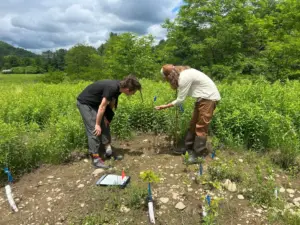
As the field season progressed into the vibrant peak of California’s spring in April, the focus shifted from broad landscape management to the micro-ecosystems of oak woodlands and grasslands. Spending time at a pristine ranch near Lake Berryessa offered a window into the state’s rich environmental history. Here, collaborating with specialists from Point Blue Conservation Science, the intern learned the rigorous methodology of avian point counts.
Birds act as the ultimate ecological barometers. Because they occupy virtually every available niche and possess the mobility to flee degraded habitats, sudden shifts in avian species presence, breeding behaviors, or population densities provide immediate insight into ecosystem health long before such changes register in soil or vegetation metrics.
Mastering avian identification by sight and sound transformed the landscape from a scenic backdrop into a dynamic, ongoing conversation. Armed with binoculars and identification applications like Merlin, the author developed an acute observational reflex. Every unfamiliar call in a new environment triggered an immediate mental cataloging process, sharpening environmental awareness and laying the groundwork for a lifelong engagement with ornithology and field ecology.
Phase III: The Art of Stillness and the Wisdom of Intergenerational Stewards
Perhaps the most transformative phase of the internship involved unlearning the frantic pace of modern life in favor of the deliberate, patient cadence required to truly understand the land. Biological surveys demand absolute stillness. During point counts, standing quietly in a single location allows a researcher’s physical presence to fade until the surrounding wildlife resumes its natural behavior.
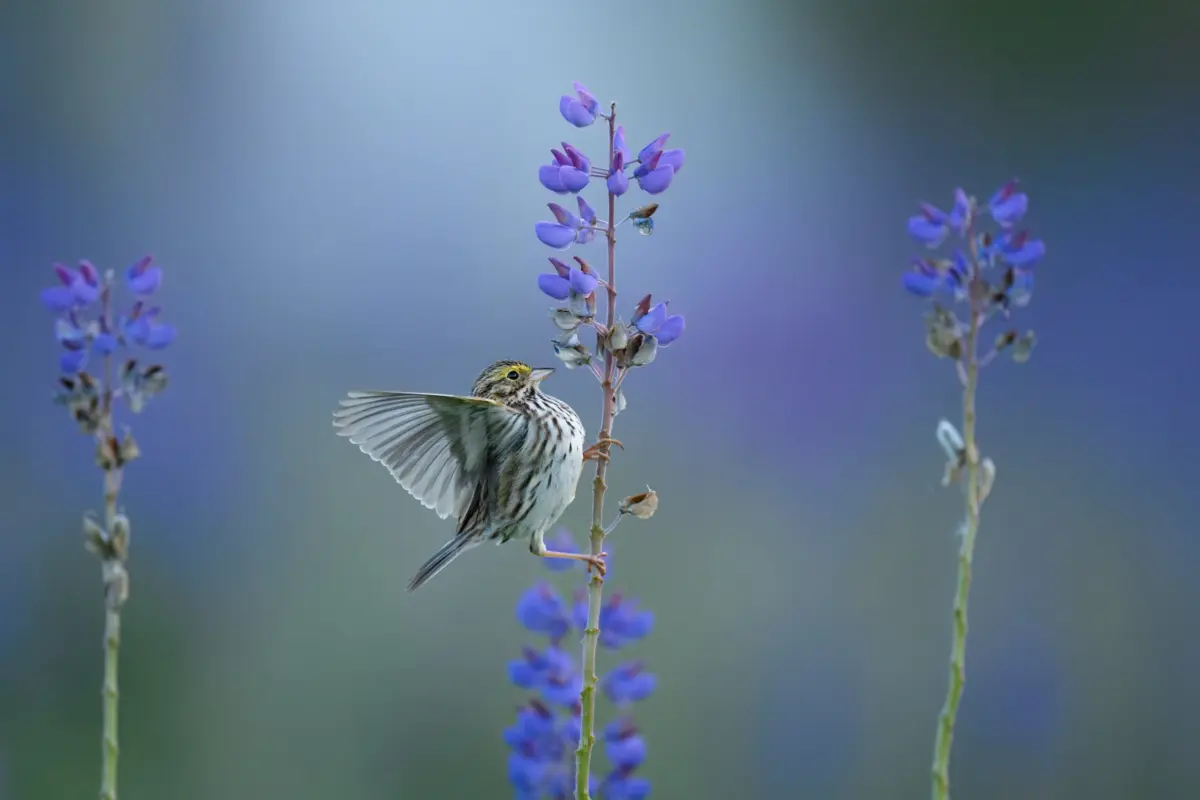
This lesson was crystallized during a quiet afternoon on a wind-swept ridge in Bodega Bay. Mid-conversation with fellow land stewards, the sharp, alarmed call of a Savannah Sparrow pierced the coastal breeze. Recognizing the bird’s behavioral cue, the group stopped, stepped back, and observed the sparrow subtly returning to its ground nest nearby. Had the team prioritized rigid schedules and operational efficiency, they would have trampled the nest site and missed the avian warning entirely.
This moment bridged the gap between academic observation and the deep, intergenerational knowledge held by California ranchers. Many of the families managing these working lands are fourth- or fifth-generation stewards. While they may lack formal academic terminology for every avian species, their daily rhythms—synced with dawn choruses and seasonal cycles of drought and abundance—grant them an intuitive, holistic understanding of soil health, plant succession, and wildlife corridors.
Supporting Context & Metrics: The Science and Economics of Conservation Ranching
To understand the gravity of the Audubon Conservation Ranching program, one must examine the ecological and socio-economic data underpinning working lands conservation in North America.
The Ecological Imperative of Grazing
For millennia, North American grasslands co-evolved with massive herds of migratory herbivores, such as American bison and tule elk. These animals practiced herd-effect grazing: heavy, concentrated trampling followed by long periods of rest. This process broke up soil crusts, incorporated organic matter, stimulated root growth, and distributed nutrients.
Modern intensive agriculture largely suppressed these natural disturbance regimes, leading to homogenized grasslands, fuel accumulation, and declining biodiversity. ACR-certified ranches replicate these historic conditions through planned rotational grazing.
- Soil Carbon Sequestration: Well-managed rotational grazing encourages deep root systems and enhances microbial activity in the soil, effectively turning working rangelands into significant carbon sinks.
- Water Infiltration: Increased organic matter in the soil significantly improves water holding capacity, buffering watersheds against the catastrophic impacts of both drought and torrential rainfall.
- Avian Habitat Recovery: Grassland bird populations have experienced steeper, more consistent declines in North America than almost any other group of birds. Conservation ranching protocols mandate specific grazing thresholds and rest periods that protect nesting seasons for vulnerable species like the Western Meadowlark, Grasshopper Sparrow, and Loggerhead Shrike.
The Human Element: Economics Meets Ecology
Conservation easements and outright land buyouts, while vital, cannot preserve every acre of threatened habitat in California. The economic reality is that agricultural land must generate revenue to remain in private hands. By linking sustainable management practices with market incentives—such as the "Audubon Certified" bird-friendly beef label—ACR provides ranchers with economic viability while holding them to rigorous ecological standards.
This model recognizes that rural agricultural communities are the frontline defenders of open space. Without economically viable ranching operations, California’s foothills face the imminent threat of fragmentation, subdivision, and urban sprawl.
Official Statements & Expert Perspectives
The philosophy of integration between agriculture and conservation is echoed by leaders across the environmental science and agricultural sectors:
"Conservation cannot happen in a vacuum, nor can it succeed by locking gates and excluding people. The future of California’s rich biodiversity depends entirely on our ability to partner with the men and women who wake up every morning to manage these vast working landscapes. They are not separate from nature; they are its most persistent guardians."
— Field Coordinator, Audubon Conservation Ranching Program"Learning to listen to the land requires us to abandon our human-centric rush. When we slow down—truly slow down—we begin to hear the intricate, vital feedback loops of our watersheds, our soils, and our avian populations. That shift in perspective is the foundation of true ecological literacy."
— Reflections from an ACR Alumni Field Intern
Future Outlook: Reimagining Human Stewardship on the Range
As the six-month Audubon Conservation Ranching internship concludes, the impact of this immersive experience extends far beyond professional development. It represents a fundamental rewiring of how human involvement in natural systems is conceptualized.
The lessons learned across the dirt tracks, foothill oak savannas, and coastal bluffs of California point toward an optimistic future for conservation. This future rejects the false choice between pristine wilderness and productive agriculture. Instead, it embraces a nuanced, multi-layered mosaic where human livelihoods, native ecosystems, and Indigenous stewardship practices are mutually reinforcing.
Looking forward, the challenge for environmental policy and community engagement lies in scaling these integrative models. By continuing to support working lands, championing adaptive management, and listening to the generational wisdom of ranchers, conservationists can help secure vibrant ecosystems where both the planet and its human inhabitants thrive.
The path forward requires keeping an open mind, sharpening our collective eye for detail, practicing patience, and—above all—listening to the land.