
Executive Overview
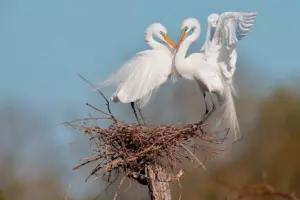
The arrival of autumn signals one of the most anticipated moments of the year for Audubon magazine. While migratory birds traverse continents toward their non-breeding grounds, the global birding and conservation communities turn their attention to a different kind of migration: the submission and evaluation of the world’s finest avian imagery.
The magazine is celebrating the 2026 Audubon Photography Awards, marking the second consecutive year of an innovative dual-contest structure. By maintaining parallel tracks—one dedicated to photographers based in the United States and Canada, and another for those working in Chile and Colombia—Audubon has successfully expanded its reach across the Americas. This regional bifurcation honors the shared flyways and ecological interconnectedness of the Western Hemisphere while addressing the unique conservation challenges facing distinct ecosystems from the Arctic tundra to the high Andean páramo.
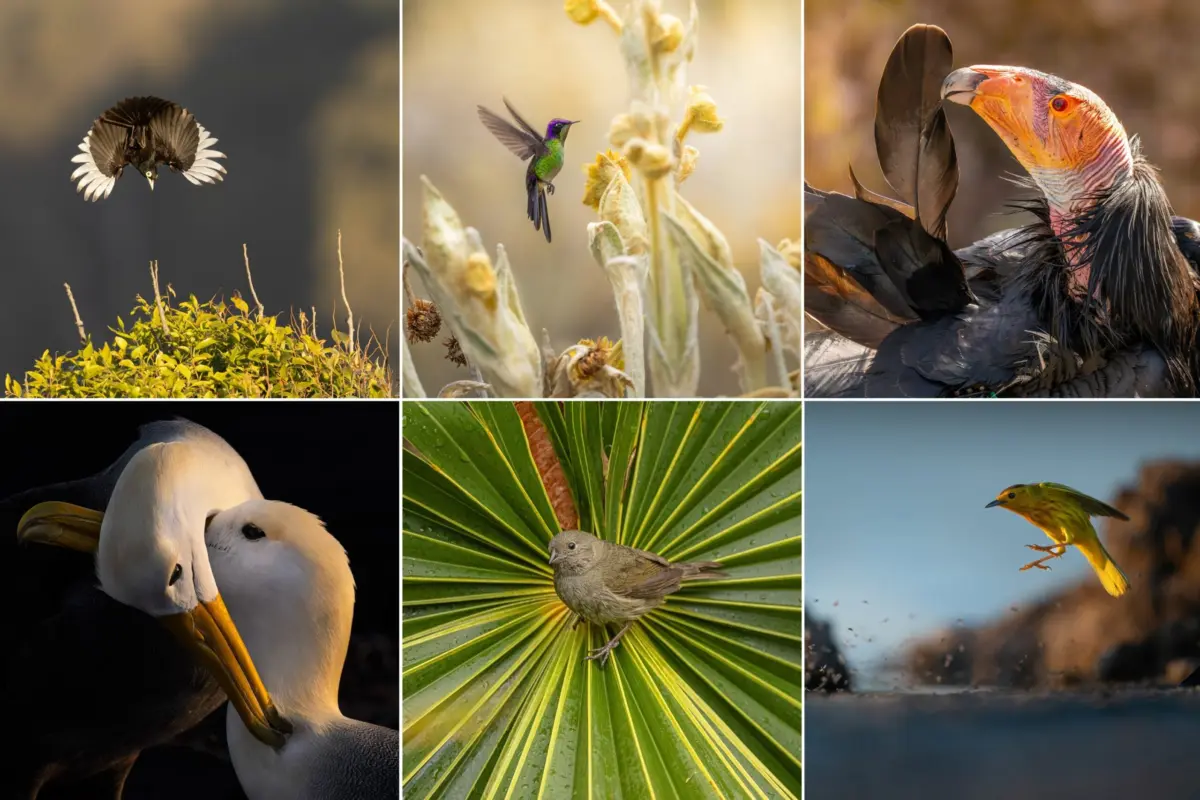
Following a rigorous, anonymous review process, a panel of expert judges selected 17 exceptional winners and 15 honorable mentions. Yet, the sheer volume and brilliance of the entries defied strict categorization. Editors curated an additional 100 standout photographs from both contests, offering a sweeping visual compendium that underscores both avian biodiversity and extraordinary technical prowess.
Detailed Chronology & Photographic Journeys
Behind every successful wildlife photograph lies a narrative of patience, fieldcraft, and often profound physical endurance. The 2026 entries highlight the lengths to which photographers go to document the avian world.
The High Latitudes and Coastal Edges
In the extreme south, encounters with pelagic and sub-polar species demand arduous maritime expeditions. Sailing aboard the Chilean Navy’s research vessel Cabo de Hornos on a 31-day expedition along the Salas y Gómez Ridge, photographer Sergio Trucco weathered severe storms before capturing a Buller’s Albatross sweeping past fleeting rainbows. Similarly, at the southernmost tip of Chile, Omar Barroso Putare braved stormy seas and biting winds across peat bogs to photograph a Striated Caracara letting out a raw, defiant cry against the relentless southern gales.
In the sub-Antarctic waters of Fournier Bay, family-oriented exploration yielded moments of stark, minimalist beauty. Nadia Haq captured a pale Snow Petrel darting past a massive, sculpted iceberg, highlighting the dramatic contrast between illuminated snow and deep marine shadows.
Along North American coastlines, photographers utilized creative shutter speeds to convey motion rather than simply freezing it. In San Diego, California, Sandeep Dhar employed an in-camera multiple-exposure technique to layer nine sequential frames of a foraging Sanderling flock, capturing the continuous, rapid rhythm of the shore meeting the tide. Nearby, Kevin Lohman slowed his shutter speed to 1/20 of a second, panning with a flock of Sanderlings along Moss Landing State Beach to evoke the energetic pulse of the Pacific surf.
Rainforests, Wetlands, and High Altitude Páramos
The tropical and alpine environments of South America offered intimate portraits of specialized species. In the high Andean páramo of Colombia, Sergio Andrés Dueñas Trejo spent hours battling high altitudes, thick clouds, and freezing temperatures to photograph a female Buffy Helmetcrest navigating high-Andean wildflowers.
In the cloud forests of Antioquia, Juan Daniel Mejía Arango achieved a multi-year ambition at the Jardín de Rocas Nature Reserve. Capitalizing on a precise alignment between his vantage point, a solitary ray of sun breaking through dense canopy vegetation, and the silhouette of an adult male Andean Cock-of-the-Rock, he secured a masterclass in natural lighting.
In urban and semi-urban interfaces, photographers revealed how wildlife adapts to encroaching human landscapes. In Panguilemu, Chile, Harold Gillibrand Guerra utilized a tripod at 10:00 p.m. to frame a juvenile Lesser Horned Owl being fed by its father against the distant, ambient lights of Coyhaique—a poignant juxtaposition of wild resilience and encroaching civilization.
Supporting Context & Metrics
The Audubon Photography Awards serve a dual purpose: celebrating aesthetic mastery and raising urgent awareness for species facing severe conservation pressures. A statistical analysis of the 2026 entries reveals a profound preoccupation with habitat loss, climate change, and anthropogenic threats.
Conservation Status of Featured Species
- Critical Vulnerability: Multiple winning and featured images spotlight critically endangered or declining populations, including the Waved Albatross in the Galápagos and the Andean Condor across its fragmented South American range.
- Habitat Fragmentation: Entries from the Pacific Northwest (Short-eared Owls in Skagit Valley) and the high Andes (Andean Condors in the Cocora Valley) underscore the rapid shrinkage of native grasslands, cloud forests, and alpine zones.
- Marine and Coastal Pressures: Images such as Ivey Kennedy’s documentation of an Anhinga entangled in commercial fishing netting in Nayarit, Mexico, bring hard metrics to the forefront. According to conservation data, commercial fisheries bycatch hooks and entangles hundreds of thousands of seabirds annually.
Technological Evolution in Wildlife Imaging
The technical metadata accompanying the 2026 collection reflect rapid advancements in mirrorless camera systems and telephoto engineering. Photographers increasingly rely on high-resolution full-frame bodies—such as the Nikon Z8 and Canon EOS R5—paired with versatile super-telephoto lenses (ranging from 100-500mm zooms to fixed 600mm and 800mm primes).
Despite the prevalence of advanced autofocus and high burst rates (often exceeding 20-30 frames per second), many of the most striking images required intentional technical limitations. Slow panning speeds (down to 1/4 second for Whooper Swans and 1/20 second for shorebirds) demonstrate that artistic intent frequently supersedes sheer technological capability.
Official Guidelines & Ethical Frameworks
As wildlife photography surges in popularity, Audubon maintains an authoritative stance on ethics in the field. The organization’s published guidelines emphasize that the welfare of the bird must always supersede the capture of an image.
- Minimizing Disturbance: Photographers are strictly advised against using playback calls excessively, flushing nesting birds, or altering natural habitats to gain a clearer view.
- Transparency Behind the Shot: The detailed "Behind the Shot" narratives required by the competition provide accountability, ensuring that photographers operate within ethical boundaries—such as crawling through mud to achieve eye-level perspectives without flushing vulnerable shorebirds, rather than forcing proximity.
- Educational Outreach: By providing comprehensive gear recommendations, how-to guides, and ethical codes through its dedicated photography portal, Audubon actively cultivates a responsible generation of conservation-minded image-makers.
Future Outlook
The 2026 Audubon Photography Awards demonstrate that avian photography is evolving from a niche hobby into an essential tool for global conservation storytelling. By expanding the contest across North and South America, Audubon has fostered a transnational dialogue centered on shared migratory pathways and fragile ecosystems.
Looking ahead, the initiative aims to deepen its engagement with youth and regional communities, particularly in biodiverse nations like Colombia and Chile, where local "bird guardians" are stepping up to document and protect their natural heritage. As climate change, industrial expansion, and habitat degradation continue to threaten avian populations worldwide, these 100+ captured moments serve not only as testaments to photographic skill, but as urgent visual pleas for the preservation of the natural world.