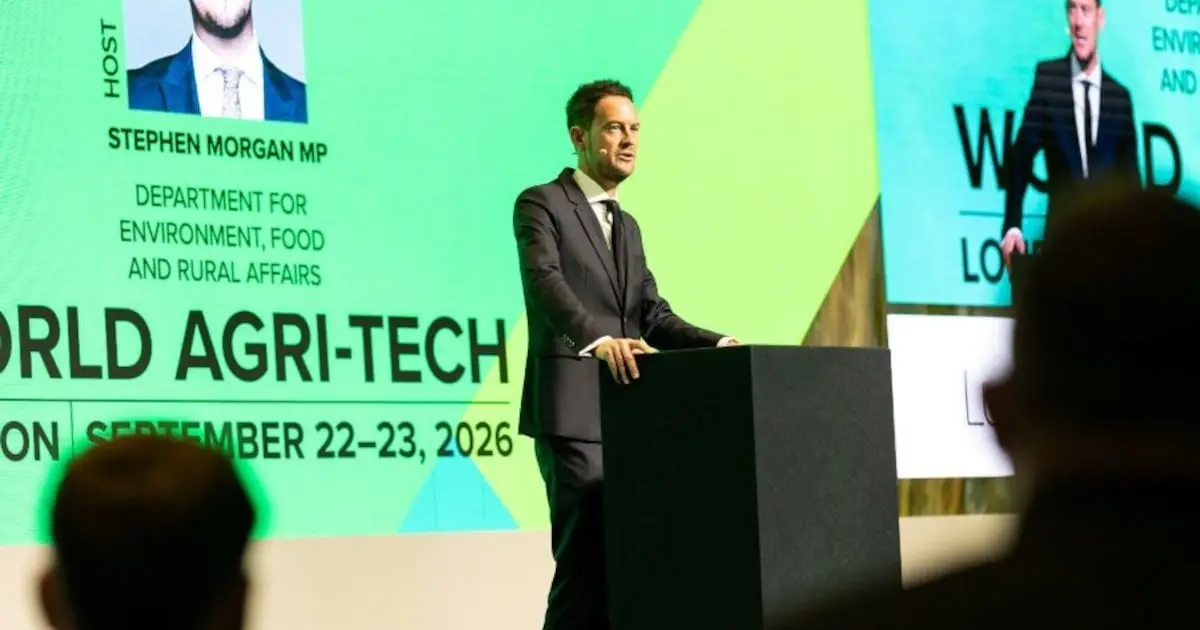

LONDON — Speaking before an assembly of international scientists, investors, and agricultural leaders at the World Agri-Tech Innovation Summit in London on September 22, senior government officials laid out a defining vision for the future of British farming. At the core of the announcement is a delicate diplomatic and regulatory balancing act: pursuing closer ties and a sanitary and phytosanitary (SPS) agreement with the European Union while aggressively preserving the UK’s autonomous, science-led regulatory environment for agricultural biotechnology and precision breeding.
The remarks directly address a mounting anxiety within the UK’s burgeoning agricultural biotechnology sector. As Whitehall moves toward closer alignment with EU food and agricultural rules, industry stakeholders have grown increasingly concerned that Brussels’ more restrictive stance on New Genomic Techniques (NGTs) could stifle Britain’s hard-won regulatory edge. However, the government’s message in London was unambiguous: Westminster intends to maintain a differentiated, innovation-friendly framework for domestic research, field trials, and commercial deployment, signaling that the UK remains firmly "open for business" to global ag-tech investors.
Executive Overview
The strategic pivot outlined at the World Agri-Tech Innovation Summit highlights the UK’s determination to position itself as a global laboratory and commercial hub for advanced agricultural science. By ring-fencing domestic research and development from future European regulatory entanglements, the government hopes to capitalize on years of targeted investment in precision breeding, agricultural automation, artificial intelligence, and robotics.
Key takeaways from the summit include:
- Regulatory Autonomy: The UK government has committed to safeguarding an independent, science-based regulatory approach for plant biotechnology and field trials within any future SPS agreement with the EU.
- Commercial Momentum: Since late 2022, 37 gene-edited crops have been cleared for research and development trials, with six crops confirmed by the Department for Environment, Food and Rural Affairs (Defra) for commercial marketing in England since November 2025.
- Substantial Financial Backing: Defra has earmarked £123 million in the current fiscal year to drive productivity, field-test cutting-edge technologies, and streamline innovation pipelines.
- Ecosystem Support: The launch of a new Central Hub designed to help small and medium-sized enterprises (SMEs) navigate complex regulations, alongside dedicated funding rounds via Innovate UK’s AgriScale initiative.
Detailed Chronology: Policy Shifts and Regulatory Milestones
The trajectory of the UK’s ag-tech sector over the past several years reflects a deliberate, methodical shift away from legacy European restrictions toward an enabling framework designed to accelerate innovation.
The Post-Brexit Regulatory Pivot (2022–2024)
Following its departure from the European Union, the UK recognized an opportunity to reform outmoded legislative frameworks governing genetic research. Historically bound by the EU’s stringent Genetically Modified Organism (GMO) directives—which treated precision breeding techniques like CRISPR virtually identically to traditional transgenics—British lawmakers moved quickly to establish a separate path.
The passage of the Genetic Technology (Precision Breeding) Act laid the groundwork for a tiered regulatory approach. Rather than focusing on the process of gene editing, the new legislation focused on the traits produced—traits that could, theoretically, have been achieved through traditional breeding methods. This unlocked a wave of renewed confidence among academic institutions and private-sector developers who had previously taken their research abroad.
Accelerated Field Trials and Commercial Approvals (2025–2026)
Momentum has accelerated visibly over the past year. Since late 2022, the UK has authorized 37 distinct gene-edited crops for comprehensive research and development field trials. These trials have served as crucial proving grounds for next-generation agricultural solutions.
Crucially, the commercial pipeline has also begun to yield tangible results. Defra confirmed that six crops have been greenlit for precision-bred marketing in England since November 2025. Among these are breakthrough varieties tailored to address pressing nutritional and environmental challenges:
- Vitamin D-Enhanced Tomatoes: Engineered to help address dietary deficiencies through naturally enriched produce.
- High-Lipid Barley: Specially formulated to significantly reduce methane emissions from livestock when incorporated into feed.
- Extended-Harvest Strawberries: Bred to prolong the domestic growing and harvesting season, enhancing supply chain resilience and reducing import dependencies.
The 2026 World Agri-Tech Summit Address
The policy address on September 22 marked a crucial juncture. By directly addressing the looming negotiations over an EU-UK SPS agreement, officials sought to calm market nerves. While closer sanitary alignment with Brussels is vital for seamless cross-border food trade, the government insisted that the agreement’s text will explicitly carve out domestic sovereignty over R&D rules, ensuring that proportionate, science-based regulations for field trials remain insulated from external political shifts.
Supporting Context & Metrics: Powering the £123 Million Innovation Push
Regulatory freedom alone cannot sustain an industrial revolution; it must be matched by capital investment and systemic infrastructure. To that end, the government’s strategy is underpinned by a robust financial commitment aimed at bridging the "valley of death" where many early-stage ag-tech innovations fail to scale commercially.
Financial Commitments and Targeted Sectors
Defra has committed £123 million this year directly to agricultural productivity initiatives, field testing, and tech adoption. The funding is strategically allocated across several high-impact pillars:
- Precision Agriculture & Smart Farming: Variable-rate application systems, advanced field sensors, and data-driven crop management.
- Automation & Robotics: Autonomous weeding, harvesting machinery, and drone-assisted crop monitoring to combat acute farm labor shortages.
- Advanced Genetics: Expanding national capabilities in gene editing, cisgenics, and climate-resilient breeding programs.
- Natural Resource Management: Advanced soil health monitoring technologies and smarter, efficiency-driven water management systems.
Institutional Mechanisms: ADOPT and AgriScale
To ensure that these investments translate into real-world utility, the government has deployed targeted institutional instruments:
- The ADOPT Fund: Designed specifically to ensure that emerging agricultural technologies are rigorously tested under real, everyday farming conditions rather than idealized laboratory environments. This builds crucial end-user trust among working farmers.
- Innovate UK’s AgriScale Initiative: Aimed at helping high-potential ag-tech companies scale their operations toward commercial viability. The 2026/27 AgriScale program features an £8 million Experimental Development round focused heavily on manufacturing scale-up projects, complemented by a £5 million Industrial Research round targeting specific technology and engineering gaps in the domestic market.
Streamlining the Regulatory Maze
Beyond biotechnology, the government has recognized that regulatory friction plagues non-biotech ag-tech sectors just as severely. Following a comprehensive review of wider agri-tech regulation, the government announced the establishment of a Central Hub. This dedicated body will act as a navigation tool for SMEs struggling to decode complex regulatory compliance pathways and standards. Furthermore, Whitehall is actively collaborating with industry stakeholders to establish clear, predictable regulatory frameworks for agricultural robotics and autonomous field machinery.
Official Statements and Industry Perspectives
The policy articulation at the World Agri-Tech Innovation Summit was designed to resonate across multiple stakeholder groups—from risk-averse primary producers to ambitious venture capitalists.
Addressing delegates directly, government representatives emphasized that the UK’s scientific heritage must be translated into commercial dominance:
"We recognise that we have great strength in research and development on genetics in the UK and we are focused on preserving the UK’s innovative regulations in the SPS agreement," officials told the summit.
Emphasizing that negotiations remain fluid, they added: "Under the agreement we will continue to set our own rules for research and development and, most importantly, continue to have proportionate and science-based regulations for field trials of plants developed through biotechnology."
Highlighting the extraordinary nature of the domestic research pipeline, the government pointed to ongoing projects funded by a dedicated £12.5 million precision breeding program. These initiatives include Virus Yellows-resistant sugar beet, British hop varieties engineered to withstand accelerating climate change, and specialized dandelions capable of producing natural rubber with unprecedented efficiency.
"This work is world-leading," speakers asserted, framing the achievements as undeniable proof of the UK’s unmatched capabilities in agricultural science and crop genetics.
This optimistic narrative forms a core pillar of the government’s broader Farming Roadmap, an ambitious strategic blueprint mapping out the trajectory of British agriculture through to 2050. By placing productivity, financial profitability, and environmental resilience at the center of the agricultural economy, the roadmap seeks to reassure a farming sector grappling with volatile input costs, climate unpredictability, and tightening environmental mandates.
Future Outlook: The Global Pitch to Investors
As the UK navigates the complexities of post-Brexit trade diplomacy with its largest continental neighbor, the ultimate test of its ag-tech strategy will lie in its execution. The government’s calculated gamble is that international investors and technology developers will prioritize a progressive, highly innovative domestic market—even one operating adjacent to a more restrictive regulatory bloc—over uniform mediocrity.
Technologies such as precision application tools, autonomous agricultural machinery, advanced environmental sensors, and artificial intelligence-driven farm management systems are no longer viewed as futuristic luxuries. They are economic imperatives designed to lower farm input costs, boost yield density, and build climate resilience.
By pairing these technological imperatives with a clear regulatory shield for gene editing and precision breeding, the UK is attempting to carve out a unique economic identity. The closing message delivered in London was a direct, unapologetic appeal to global capital:
"The UK is open for business. I urge innovators, researchers and investors to make the UK the partner of choice and work with our farmers to develop the technologies that will transform farming, boost productivity and secure our future."
For an agricultural sector standing at a historical crossroads, the coming years will determine whether this ambitious vision can successfully bridge the gap between regulatory theory and agricultural reality, cementing Britain’s status as a global powerhouse in agricultural innovation.