
Executive Overview
For decades, the humble potato has presented an immense logistical and financial paradox for the global agricultural sector. Highly prized by consumers and foundational to multi-billion-dollar snack empires, potatoes are notoriously fragile. Their susceptibility to bruising during harvesting and transit accounts for millions of dollars in annual revenue losses, supply chain inefficiencies, and avoidable food waste. While agritech innovators have historically attempted to resolve this through hardware enhancements—redesigning blades, altering conveyor speeds, and cushioning drop zones—a critical human and operational vector has remained largely neglected: operator training and upskilling.
Enter an unprecedented cross-industry collaboration between consumer packaged goods (CPG) behemoth PepsiCo and agricultural machinery manufacturing leader Grimme. Joined by immersive learning technology provider Altoura, the coalition has engineered a pioneering solution to supply chain degradation: high-fidelity digital replicas, or "digital twins," of Grimme’s EVO and SE series potato harvesters.
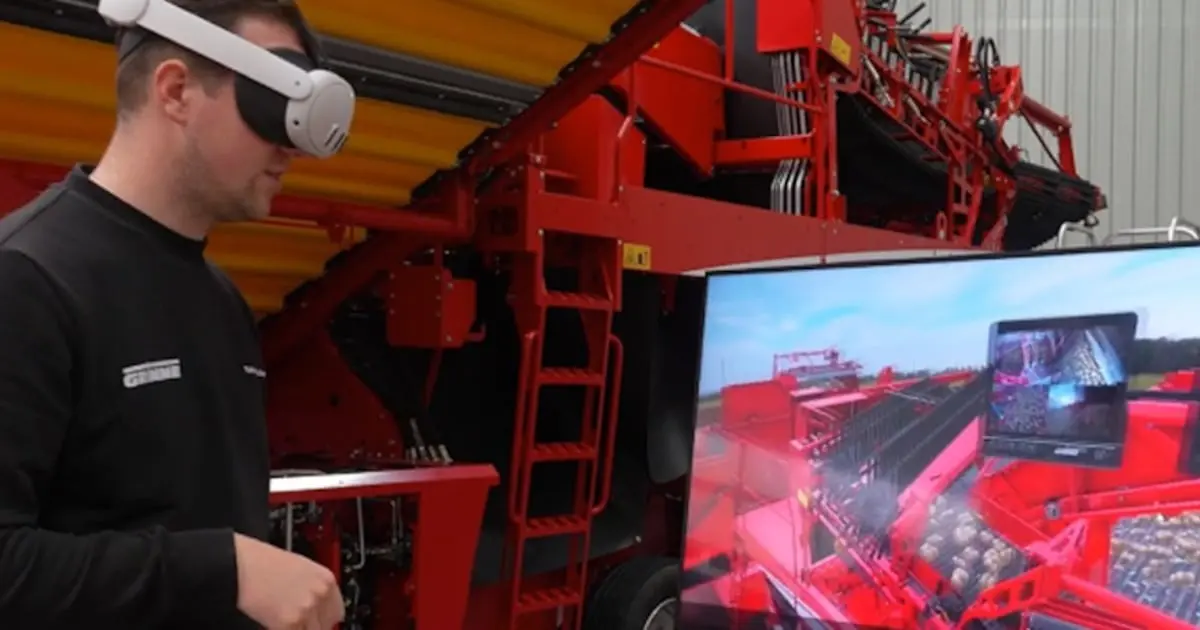
Unveiled globally following rigorous international pilot tests, this immersive training ecosystem allows farm operators, technicians, and agronomists to virtually inspect multi-ton machinery, remove mechanical panels, calibrate settings, and master harvesting techniques long before stepping foot inside a tractor cab. Designed natively for Virtual Reality (VR) headsets yet engineered for fluid cross-platform compatibility—spanning tablets, smartphones, and desktop computers—the platform circumvents infrastructure barriers by operating entirely offline once downloaded via the Altoura application.
The financial and operational implications are staggering. Initial pilot deployments across Latin America and Europe yielded an astounding 87% increase in bruise-free potato yields, alongside a 1.7-fold reduction in severe crop damage. As the agricultural sector grapples with chronic labor shortages, generational skills gaps, and geographical fragmentation, this initiative signals a transformative paradigm shift. By bridging advanced industrial simulation with on-the-ground farming realities, PepsiCo and Grimme are proving that the key to modern agricultural resilience lies not just in the iron of the machine, but in the digital empowerment of the human operator.
Detailed Chronology: From Concept to Global Field Deployment
The genesis of this technological leap did not happen overnight. It represents a systematic convergence of industrial manufacturing simulation and primary agricultural production, rooted in a timeline of cross-sector experimentation and international validation.
Phase 1: Identifying the Vector of Loss
For years, agricultural strategists at PepsiCo—which sources millions of tons of potatoes annually to fuel its massive snack portfolio, including Lay’s and Ruffles—recognized that post-harvest losses began upstream. Mechanical harvesting is a violent, high-throughput process. Even minor miscalibrations in harvester chain speeds, roller angles, or digging depths can cause internal and external bruising. Bruised potatoes not only spoil faster during storage and transport but are routinely rejected during quality control inspections, resulting in devastating financial hits for contract farmers and reduced raw material yields for processors.
Traditional training methods relied on manual instruction, shadowing seasoned operators, or learning by trial-and-error directly in the field. Given the seasonal nature of agricultural labor, high turnover rates, and language barriers among migrant workforces, this approach was profoundly inconsistent. Recognizing that hardware adjustments alone could not eliminate operator error, PepsiCo’s global agriculture leadership began looking toward advanced simulation technologies already proving successful in industrial manufacturing.
Phase 2: Cross-Pollinating Industrial Tech into Agriculture
The conceptual framework for the potato harvester digital twin was heavily inspired by PepsiCo’s broader corporate digitization strategies. Earlier, the CPG giant made waves by announcing an industry-first artificial intelligence and digital twin collaboration with industrial giants Siemens and Nvidia, designed to optimize manufacturing plants through complex simulation and real-time data modeling.
Rob Meyers, Vice President of Global Agriculture at PepsiCo, saw an immediate parallel. If digital twins could train factory workers to safely and efficiently operate complex industrial machinery without risking physical assets, the same principles could be applied to complex agricultural implements operating in remote fields.
PepsiCo partnered with Grimme—a titan in potato harvesting technology known for its sophisticated EVO and SE series harvesters—and enlisted Altoura, a specialist in immersive learning technology, to build the software framework. The objective was clear: construct millimeter-accurate 3D digital replicas of Grimme harvesters that could simulate real-world physical forces, mechanical mechanics, and operator workflows within a virtual environment.
Phase 3: Global Pilot Testing and Regional Refinement
With the platform developed, the coalition initiated a robust, multi-region pilot program. Last year, PepsiCo and Grimme deployed the digital twin training platform in real-world agricultural environments across Brazil and Mexico. These Latin American deployments tested the software’s resilience, user engagement, and impact on crop quality under diverse climatic and soil conditions.
Following the success of the Latin American pilots, the program expanded to Eastern Europe, with rigorous testing phases in Poland and Romania—two critical agricultural hubs for European potato production. To ensure industry-wide awareness and buy-in, the technology was subsequently showcased at PepsiCo’s prestigious Global Agro University in Germany, drawing agricultural experts, suppliers, and farm operators from across the continent.
Rather than imposing a monolithic, one-size-fits-all software package, the rollout was executed with calculated localization. Recognizing that farm operators in Brazil face vastly different linguistic, operational, and agronomic conditions than those in Poland, the teams continuously refined the software. Language supports, regional machinery configurations, and localized training modules were integrated to ensure high adoption rates among diverse farming communities.
Supporting Context & Metrics: The Economics of Immersion
To fully appreciate the significance of the PepsiCo-Grimme collaboration, one must examine the hard metrics and socioeconomic pressures driving modern agriculture. The financial justification for immersive learning in farming is built upon the staggering cost of inefficiency.
The True Cost of Potato Bruising
Potatoes are roughly 80% water, encased in a delicate skin prone to scuffing, pressure bruising, and impact fracturing. When harvested by multi-row machinery digging deep into dense soil, tubers are rapidly elevated, separated from dirt, and transferred via a series of web chains, rollers, and conveyors.
If an operator sets web speeds too fast relative to the ground speed, potatoes bounce aggressively against metal bars, causing internal black spot bruising that may not be immediately visible upon harvest but leads to rapid rot during storage. Conversely, if cleaning mechanisms are set too slow, excessive soil accumulation increases friction and crushing forces.
Industry estimates suggest that physical damage during harvesting and handling results in tens of millions of dollars in lost revenues annually across global supply chains. For individual farmers operating on razor-thin profit margins, a single subpar harvest can wipe out seasonal profitability.
Quantifying the Impact of Virtual Training
The pilot data released by PepsiCo provides empirical validation of the digital twin approach. By transitioning from traditional field-based onboarding to immersive VR and cross-device training, the pilot programs achieved:
- An 87% increase in bruise-free potatoes, drastically improving marketable yield.
- A 1.7x reduction in severe bruising incidents, eliminating the most catastrophic forms of crop degradation.
Beyond raw crop metrics, the technology addresses profound operational hurdles related to workforce dynamics:
- Accessibility and Offline Capability: Acknowledging that rural farming communities often lack reliable, high-speed broadband connections, Altoura and its partners engineered the application to be fully functional offline once downloaded. Operators can complete training modules on tablets, smartphones, or desktop computers without requiring active Wi-Fi or mobile service in the field.
- Cost-Benefit Ratio: While deploying enterprise-grade immersive technology incurs upfront software and hardware development costs, Meyers emphasizes that these expenses represent only a fraction of the financial risk associated with annual crop bruising. The return on investment (ROI) is realized almost immediately through preserved crop value.
Official Statements and Industry Insights
The collaborative philosophy driving this initiative underscores a broader transformation within agribusiness. Rather than viewing technology as an intimidating barrier, industry leaders are framing digital tools as force multipliers for human expertise.
Rob Meyers, Vice President of Global Agriculture at PepsiCo, spoke extensively with agricultural intelligence platforms regarding the strategic imperatives behind the rollout. He emphasized that the primary objective of introducing virtual reality to farming was not to add technological complexity, but to democratize decades of accumulated agronomic wisdom.
"Adapting to local realities is often more important to driving adoption at scale," Meyers explained during his briefing with agricultural analysts. "As we expand into new markets, we’re continuing to refine the experience, including language support and training content. The goal isn’t to introduce complexity. It’s to make proven expertise available to more operators, in more places, before they enter the field."
Meyers also pointed directly to the labor crisis confronting modern farming:
"One of agriculture’s biggest challenges is delivering consistent, high-quality training to operators who may be seasonal, geographically dispersed, or working in different languages and markets. The opportunity with digital tools is their ability to make expert training more accessible and scalable. Of course, cost is always an important consideration for the adoption of any technology. The loss of revenue for a farmer due to bruising can be very high, and the VR technology costs are only a fraction of this risk."
Industry observers note that partnerships of this caliber—bridging multinational consumer brands, heavy machinery manufacturers, and immersive software developers—represent the bleeding edge of the "AgTech 4.0" era. By taking responsibility for upstream supply chain education, corporations like PepsiCo are actively fortifying their raw material pipelines against climate volatility, labor shortages, and economic instability.
Future Outlook: Can VR Solve Agriculture’s Structural Labor Crisis?
As the PepsiCo-Grimme digital twin initiative transitions from international pilot programs to scaled, commercial deployment, it raises a profound question for the broader agricultural landscape: Can immersive learning and virtual reality become the definitive answer to the global agricultural labor crisis?
The Escalating Labor Deficit
Agriculture globally is facing an unprecedented demographic crunch. An aging farming population, combined with severe rural-to-urban migration and restrictive immigration policies in key agricultural economies, has resulted in a chronic shortage of skilled machinery operators. Farming operations are increasingly forced to rely on seasonal, transient labor with little to no prior experience operating multi-hundred-thousand-dollar machinery.
Traditionally, training a novice operator meant risking expensive farm equipment to human error and sacrificing valuable crop yields during the learning curve. In high-stakes agricultural windows—where weather conditions dictate a narrow harvest window—there is simply no time for prolonged, trial-and-error mentorship.
The Scalability of Immersive Simulation
Digital twins and VR training platforms fundamentally decouple skill acquisition from physical machinery and real-world consequences. An operator can experience the auditory cues of a straining harvester, visualize soil flow dynamics across internal webs, and practice emergency shutdown procedures dozens of times in a risk-free virtual environment.
Experts predict that the success of the PepsiCo-Grimme partnership will serve as a powerful catalyst for wider adoption across other critical agricultural sectors. Similar digital twin methodologies are currently being conceptualized for:
- Combine Harvesters: Optimizing grain separation and reducing shatter loss in wheat, corn, and soy production.
- Viticulture and Orchard Equipment: Training specialized operators for delicate grape, apple, and citrus harvesting machinery where bruising results in immediate spoilage.
- Precision Spraying and Fertilization Rigs: Simulating chemical application rates to minimize environmental runoff and optimize input costs.
Looking Ahead: The Convergence of AI, IoT, and VR
The next frontier for agricultural immersive tech lies in the integration of real-time Internet of Things (IoT) sensor data and Artificial Intelligence. Imagine a future where a physical Grimme harvester operating in a Romanian field encounters unique soil compaction conditions. That live telemetry data could be instantly fed back into the cloud-hosted digital twin, automatically generating a new, hyper-specific training scenario for operators preparing to harvest adjacent fields the following week.
Furthermore, as consumer-grade VR and augmented reality (AR) hardware becomes lighter, cheaper, and more durable, the barriers to field-level adoption will continue to dissolve. Smart agricultural glasses could eventually overlay real-time operational guidance onto an operator’s field of vision while actively driving, merging the digital twin experience directly with physical reality.
Conclusion
The collaboration between PepsiCo, Grimme, and Altoura transcends a mere corporate press release or a flashy tech experiment. It represents a fundamental recalibration of how the agricultural supply chain addresses its most persistent vulnerabilities. By recognizing that protecting the fragile potato begins with empowering the human mind behind the wheel, these industry leaders have mapped out a resilient blueprint for the future of farming—proving that when technology meets agronomy, the harvest is bountiful, efficient, and built to last.