
Executive Overview
The landscape of pet-friendly travel has undergone a profound transformation over the past several years, driven by massive shifts in domestic migration patterns, regulatory adjustments within the aviation sector, and the unprecedented disruptions of a global health crisis. For the dedicated community of pet travelers known collectively as "Dog Jaunt Nation," the journey has been marked by long stretches of silence, intense cross-country relocations, and a sudden, enforced pause in global mobility.
This report examines the recent reactivation of Dog Jaunt, a premier digital resource for pet travel enthusiasts, following a multi-year hiatus dedicated to complex family relocations. As international borders closed and travel restrictions took hold, the platform’s founder navigated grueling transcontinental road trips to relocate both in-laws and parents to the Pacific Northwest. Now, as the world adapts to a post-lockdown era, the platform returns not with active flight itineraries, but with updated regulatory charts, community engagement initiatives, and a renewed focus on the therapeutic value of the human-animal bond during times of collective anxiety.
Through an analysis of airline policy shifts, logistical challenges of long-distance pet transit, and the psychological role of online travel communities, this feature details how pet owners are preparing for the future of travel. With comprehensive updates to U.S. and international in-cabin airline policies, Dog Jaunt re-establishes itself as an authoritative guide for navigators of the skies and highways, proving that while physical travel may be temporarily restricted, the appetite for adventure among pet owners remains undiminished.
Detailed Chronology: From Transcontinental Relocations to the Global Pause
To understand the current state of Dog Jaunt, one must retrace the logistical marathon that kept the platform offline for several years. The narrative began not with a vacation, but with a series of major family restructurings that required moving aging relatives across thousands of miles to settle in Seattle, Washington.
Phase One: The Relocation Era (2017–2019)
For consecutive years, the platform’s operations took a backseat to the demanding reality of eldercare logistics. The mission: safely transport elderly family members—first the in-laws, subsequently the author’s own parents—from their respective long-term residences across the United States to the Pacific Northwest.
These massive logistical undertakings required months of planning, temporary housing adjustments, and meticulous coordination. During this period, updates to the blog ceased, leaving followers wondering about the status of the platform’s mascot and chief canine traveler, Chloe.
Phase Two: The Cross-Country Road Trips and Canine Resilience
To manage the stress of continuous relocation efforts, the family relied heavily on vehicular travel, systematically mapping and traversing nearly every major east-west route across the American landscape. While the initial focus was strictly utilitarian, these journeys ultimately transformed into geographical explorations.
On the final transcontinental transit, the itinerary diverged significantly from the traditional paths. Breaking away from the legendary Route 66 well before reaching Gallup, New Mexico, the travel party redirected their journey toward Moab, Utah, immersing themselves in the dramatic landscapes of the American Southwest.
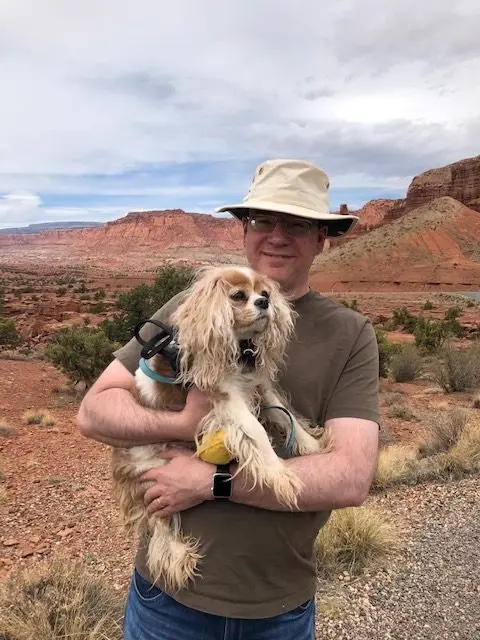
At the center of these journeys was Chloe, who weathered the thousands of miles with remarkable vitality. Far from experiencing travel fatigue, the canine companion adapted seamlessly to life on the road. Photographic documentation from the period captured Chloe in high spirits, most notably during a stop at Capitol Reef National Park in Utah. Observers noted a distinctive transformation in her appearance: exposure to the elements and the iron-rich soils of the region had tinted her fur a striking, nearly uniform "Capitol Reef Red," turning her into a living emblem of American road-trip culture.
Phase Three: The Pandemic Interruption
Just as the grueling family relocations concluded and the prospect of leisure travel reappeared on the horizon, the global health crisis struck. International borders slammed shut, commercial aviation ground to a near-halt, and governments implemented strict stay-at-home orders.
The irony was stark: after years of forced immobility due to family caregiving duties, the author found herself grounded once again—this time alongside the rest of the global population. Rather than abandoning the platform entirely, however, the sudden halt served as a catalyst for a thoughtful re-entry into the digital space, focusing on preparedness, archival updates, and community connection.
Supporting Context & Metrics: The Evolution of Pet Travel Policies
As global mobility slowly recovers, the regulatory environment governing animal transport has shifted dramatically. Navigating the rules of commercial carriers requires constant vigilance, prompting Dog Jaunt to update its foundational resources: the comprehensive charts tracking U.S. and international airline pet policies.
The Regulatory Maze of U.S. Carriers
Domestic air travel with pets has always been subject to a complex patchwork of rules dictated by individual airline corporate policies, aircraft configurations, and federal safety guidelines. Over the past few years, major U.S. carriers have revised their frameworks regarding:
- In-Cabin vs. Cargo Hold Transport: Increasing restrictions on emotional support animals (ESAs) have forced pet owners to rely on traditional pet-in-cabin rules (typically requiring animals to fit comfortably in an approved carrier under the seat ahead) or specialized cargo services.
- Breed Restrictions: Certain brachycephalic (short-nosed) breeds face ongoing bans on cargo transport due to respiratory risks, making in-cabin capacity crucial for owners of specific dogs and cats.
- Reservation Caps: Airlines strictly limit the number of pets allowed per flight cabin, often operating on a first-come, first-served basis that requires immediate action upon booking human tickets.
By bringing the U.S. airline pet policy matrix up to date, the platform provides travelers with a centralized, reliable tool to compare carrier fees, carrier size limitations, and documentation requirements without needing to sift through hundreds of pages of corporate policy updates.
International In-Cabin Travel Realities
For those looking beyond domestic borders, international travel introduces an exponentially higher layer of bureaucracy. Quarantine laws, rabies titer blood tests, microchip ISO compliance standards, and destination-specific import permits vary wildly by country.
Furthermore, international airlines enforce strict parameters for in-cabin animal travel. While some European and Latin American carriers maintain relatively welcoming stances toward small pets in the cabin, others impose strict weight limits (frequently capping the combined weight of the pet and carrier at 8 kilograms, or roughly 17.5 pounds) or ban in-cabin transit entirely on long-haul oceanic routes.
The updated international policy charts on Dog Jaunt serve as an essential preliminary screening tool. While readers may currently browse these charts wistfully from their living room couches under prevailing travel restrictions, the data provides the necessary foundation for future international itineraries.
Official Statements & Community Outreach
The revitalization of Dog Jaunt is rooted deeply in the concept of shared experience. Recognizing that the platform’s greatest asset was never merely its logistical databases, but the community built around them, the relaunch emphasizes direct communication and participatory storytelling.
Founder’s Perspective on Community and Introversion
In a reflective statement regarding the platform’s return, the founder addressed the paradox of running a prominent travel blog as a self-described textbook introvert:
"The thing I valued most about Dog Jaunt — and this is odd, coming from a textbook introvert — was the community we created together. Especially in this anxious time, it’ll be a great source of comfort to be back in touch with Dog Jaunt Nation."
This sentiment underscores the psychological function of special-interest digital communities. During periods of isolation and heightened societal anxiety, shared hobbies—such as planning pet-friendly adventures—provide a sense of normalcy, agency, and social connection.
Reopening Channels of Communication
To foster this re-engagement, multiple avenues for community interaction have been reactivated:
- Direct Email Submissions: Travelers have been invited to share their personal pet-travel narratives, logistical hurdles, and success stories via dedicated correspondence channels (
[email protected]). - Blog Comment Archives: Emphasizing the permanence and searchable value of traditional blogging platforms over ephemeral social media feeds, the author highlighted the blog’s comment section as a lasting historical record for the pet travel community.
- Social Media Integration: The Dog Jaunt Facebook page has been re-ignited to capture immediate reactions, daily check-ins, and casual snapshots from community members across the country.
With permission from contributors, upcoming features will showcase how members of "Dog Jaunt Nation" kept the spirit of exploration alive during periods of confinement, sharing backyard camping tales, local park discoveries, and preparations for future journeys.
Future Outlook: Preparing for the Next Era of Pet Mobility
As the world looks toward a more stable travel climate, the intersection of pet ownership and mobility is projected to experience significant growth. Several key trends are shaping the future of canine-inclusive travel:
1. The Rise of Domestic Road Tripping
Given the lingering uncertainties surrounding international aviation regulations and health protocols, domestic road travel is expected to remain the dominant mode of vacationing with pets for the foreseeable future. Platforms like Dog Jaunt are pivoting to provide more granular, regional road-trip guides, highlighting pet-friendly national parks, roadside motels, and dining establishments that welcome four-legged companions.
2. Heightened Standards for Animal Welfare in Transit
Airlines and regulatory bodies face increasing scrutiny regarding the safety and comfort of animals in transit. Future policy updates are anticipated to focus heavily on standardized crate sizing, improved climate-control monitoring in cargo holds, and clearer definitions for service and companion animals, reducing ambiguity for traveling owners.
3. The Enduring Value of Digital Communities
The enforced pause on global travel has demonstrated that communities centered around niche interests provide vital emotional support. By maintaining an active dialogue, updating vital travel metrics, and celebrating resilient travel companions like Chloe, Dog Jaunt illustrates that the spirit of exploration cannot be permanently grounded by external crises.
As Dog Jaunt Nation regroups, exchanges stories, and gazes forward to better days, the platform stands ready to guide the next generation of pet-friendly adventures—proving that no matter how long the detour, the journey is always better when shared with a faithful companion by your side.