
Executive Overview
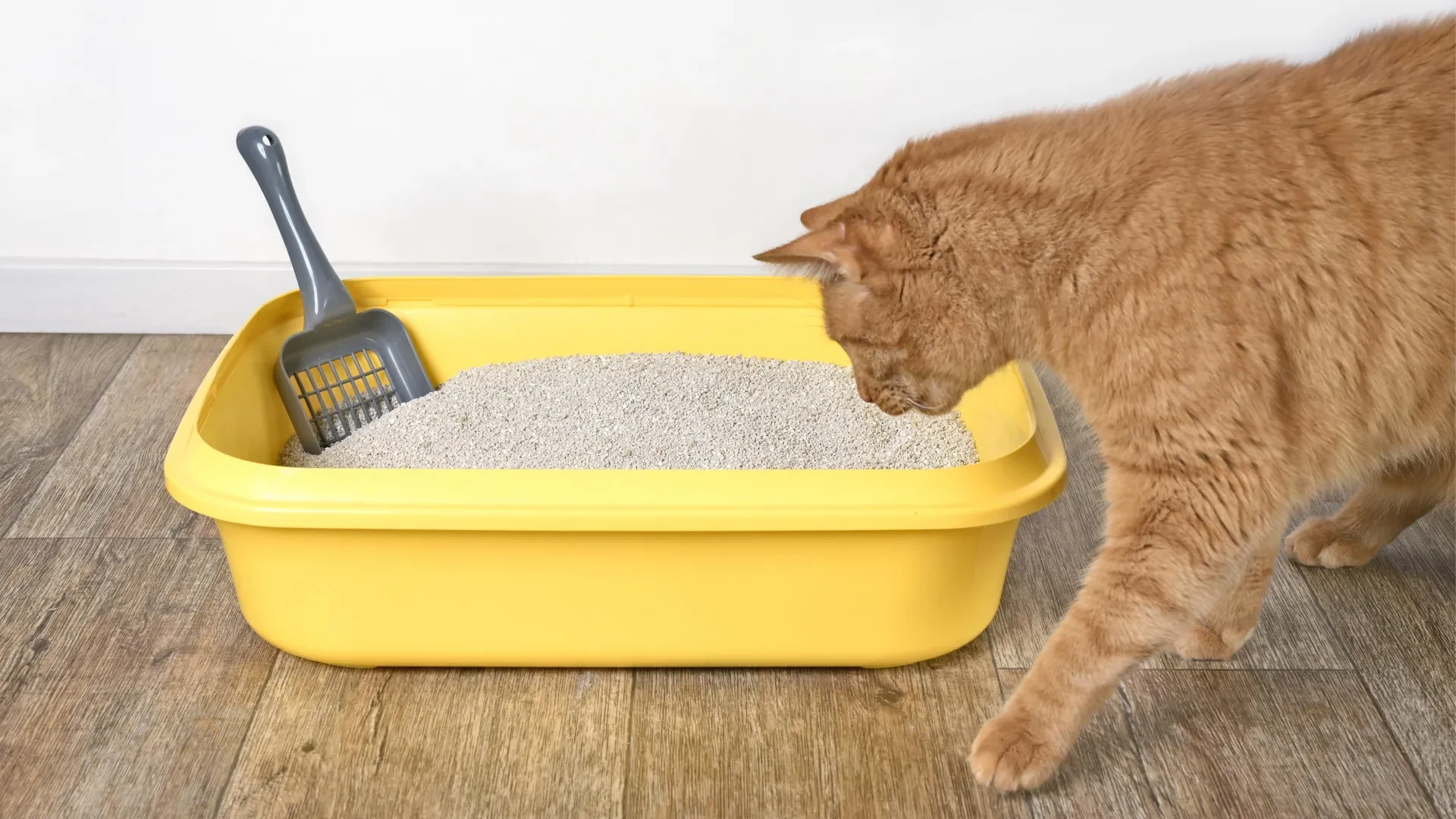
In the intricate, highly communicative world of domestic and wild felines, scent is the ultimate medium of information exchange. Long after a cat has vanished from its immediate physical surroundings, its presence lingers through chemical traces left in urine and territory markings. These olfactory billboards present an evolutionary paradox: most odor molecules are notoriously unstable, evaporating, breaking down, or chemically altering shortly after deposition. If a scent is in a perpetual state of flux, how do other animals accurately decode who originally left it?
An international team of researchers spanning institutions in Japan, Germany, and Spain—spearheaded by Iwate University—has uncovered a compelling answer. Their groundbreaking study, published in the journal Current Biology, reveals that domestic cats utilize a previously unknown group of unusual fatty acids to create a durable, highly individualized chemical signature in their urine.
By identifying 13 distinct branched-chain fatty acids (BFAs) unique to feline excretions, the research team has solved a major puzzle in animal communication. Furthermore, the investigation sheds light on a century-old biological mystery involving lipid droplets within the feline kidney, while demonstrating that this unique chemical machinery spans the entire cat family (Felidae), from house cats to apex predators like lions and tigers. Beyond expanding our fundamental understanding of mammalian behavior and physiology, these findings open the door to novel wildlife conservation monitoring techniques and advanced approaches to managing domestic pet odors.
Detailed Chronology
The discovery of the feline BFA signature was not an overnight breakthrough; rather, it was the result of a systematic, multi-phase investigation that moved from behavioral observation down to molecular chemistry and renal physiology.
Phase 1: Establishing Long-Term Olfactory Memory
Before the research team could isolate the specific chemical culprits responsible for individual recognition, they had to rigorously confirm that domestic cats possess the cognitive capacity to distinguish between the urine of different individuals over extended periods.
Using controlled behavioral assays, the scientists tracked how cats interacted with repeated scent exposures. When a cat encountered a specific urine sample multiple times, its investigative behavior—measured by the duration of active sniffing—gradually declined as the novelty wore off. However, the moment urine from an unfamiliar cat was introduced, the animals experienced a resurgence of interest, immediately increasing their sniffing time.
Remarkably, this habituation and dishabituation pattern persisted even when the exposure gaps spanned several months. This indicated that cats form remarkably robust, long-term memories of specific individual urine scents. To quantify this further, the researchers monitored the flehmen response—the characteristic open-mouthed grimace cats display when processing complex chemosensory data via the vomeronasal organ. Cats exhibited the flehmen response significantly more often when encountering unfamiliar urine than when smelling their own. As familiar samples were repeated, the flehmen response waned, only to spike again when a new scent donor was introduced.
"After confirming that cats can distinguish individual urine odors, we used the flehmen response as a clue to identify urinary molecules that may contribute to individual scent recognition," explained Professor Masao Miyazaki of Iwate University, who led the research project.
Phase 2: Isolating the 13 Branched-Chain Fatty Acids
Guided by behavioral metrics, the scientists narrowed their analytical focus to the lipid fraction of the urine. Through advanced chemical profiling, they isolated 13 unique branched-chain fatty acids (BFAs). A thorough review of existing biochemical literature confirmed that these specific compounds had never before been documented in the excretions or secretions of any other mammal.
The true brilliance of the system lay not in a single compound, but in the collective pattern. Each cat possessed a distinct BFA profile defined by the precise combination and relative abundance of these 13 fatty acids. While these profiles varied drastically from one individual to another, they remained remarkably stable within the same animal over time. Genetics also played a measurable role: related cats exhibited more overlapping BFA patterns, yet every single animal maintained its own distinct signature, even within multi-cat family households.
Crucially, these compounds exhibited high chemical durability. While highly volatile odorants degrade rapidly upon exposure to air, BFAs are semi-volatile and evaporate at a much slower rate. In laboratory tests where urine-soaked samples were stored at a standard 25°C, the distinctive BFA profiles remained remarkably stable for at least 24 hours.
Phase 3: Proving Perceptual Discrimination
To confirm that these chemical profiles were actively utilized by the animals rather than serving as passive metabolic waste, the researchers conducted targeted behavioral validation tests.
By artificially manipulating urine samples—keeping all other lipid components constant while altering only the donor-derived BFA fraction—the team observed how the cats reacted. Test subjects that had fully habituated to a baseline sample immediately renewed their sniffing behavior when the BFA fraction was swapped. This direct behavioral reaction provided definitive proof that cats can actively perceive and distinguish the fine-scale chemical differences encoded by these specific fatty acids.
Phase 4: Solving the Century-Old Kidney Mystery
During the biochemical analysis, the researchers stumbled upon an unexpected anatomical clue. While examining various tissues, they detected BFAs exclusively within the kidneys, specifically localized inside neutral lipid droplets stored within the renal cortex.
For over a century, feline biologists have noted the unusually high concentration of lipid droplets inside cat kidneys, yet their biological purpose has remained an enduring enigma. The Iwate University study suggests a brilliant physiological mechanism: these renal droplets may act as a dedicated storage reservoir for BFA-containing lipids.
By maintaining a biological buffer in the kidneys, a cat’s body can insulate its signature chemical profile from short-term dietary shifts, hydration changes, or physiological fluctuations. This renal reservoir ensures that the individual’s chemical "calling card" remains steady over time.
Phase 5: Broadening the Scope Across the Feline Family
Seeking to determine whether this adaptation was unique to house cats or a broader evolutionary trait, the research team expanded their inquiry to other members of the Felidae family.
Analysis revealed that BFA-related compounds and renal lipid droplets are present across a wide array of wild cat species, including:
- Lions (Panthera leo)
- Tigers (Panthera tigris)
- Leopards (Panthera pardus)
- Jaguars (Panthera onca)
- Lynxes (Lynx lynx)
- The Iriomote cat (Prionailurus bengalensis iriomotensis)
While the fundamental chemical architecture is shared across the cat family, the exact BFA profiles and the distribution patterns of renal lipid droplets varied distinctly between species. Even geographically isolated subspecies—such as the Iriomote cat and the Tsushima leopard cat, both native to Japan—showed measurable variations. This suggests that BFA chemistry evolved alongside feline speciation, diversifying over millennia. However, whether wild felids consciously utilize these exact profiles for individual recognition remains an avenue for future field study.
Supporting Context & Metrics
To appreciate the significance of this discovery, one must examine the broader challenges of mammalian chemical communication and the specific biological metrics recorded during the study.
Overcoming the Volatility Problem
In the animal kingdom, leaving a scent mark is akin to leaving a physical message. However, environmental factors such as heat, UV radiation, and microbial activity rapidly break down volatile organic compounds.
| Communication Strategy | Mechanism | Primary Mammalian Example | Durability |
|---|---|---|---|
| Protein-Based Signals | Major Urinary Proteins (MUPs) | Mice (Mus musculus) | High (slow degradation) |
| Semi-Volatile Lipids | Branched-Chain Fatty Acids (BFAs) | Domestic and Wild Cats (Felidae) | Moderate to High (stable $ge$ 24h at 25°C) |
While mice utilize Major Urinary Proteins (MUPs) to anchor identity signals in their urine, scientists had long struggled to find an equivalent, non-protein-based identity system in many other carnivorous mammals. Cats appear to have evolved an alternative strategy centered on semi-volatile, lipid-derived BFAs, bolstered by renal storage buffers that guarantee signal continuity.
Key Study Metrics at a Glance
- Total BFAs Identified: 13 unique branched-chain fatty acids never previously recorded in mammalian excretions.
- Environmental Stability: Distinctive BFA profiles remained stable for a minimum of 24 hours at 25°C under laboratory conditions.
- Taxonomic Reach: Confirmed across multiple felid species, spanning domestic cats, lions, tigers, leopards, jaguars, lynxes, and island-dwelling wildcats.
- Historical Context: Sheds light on renal lipid droplet abundance that has puzzled anatomists for over 100 years.
Official Statements
The collaborative nature of the research brought together experts from multiple disciplines across Asia and Europe, all of whom underscored the profound implications of the discovery.
"After confirming that cats can distinguish individual urine odors, we used the flehmen response as a clue to identify urinary molecules that may contribute to individual scent recognition."
— Professor Masao Miyazaki, Iwate University (Lead Researcher)
Professor Miyazaki emphasized the unexpected bridge between behavioral biology and renal anatomy:
"Lipid droplets in the cat kidney have been known for more than a century, but why cats have so many of them has remained a mystery. Our findings suggest that one of their functions may be to support a stable chemical signature in urine. How BFAs stored in renal lipids are ultimately released into urine is an important question for future research."
Co-researchers from Germany and Spain highlighted that isolating these 13 compounds marks a paradigm shift in how science understands carnivore communication, proving that semi-volatile lipids can carry complex social data just as effectively as high-molecular-weight proteins.
Future Outlook
While the current study is rooted in fundamental, curiosity-driven bioscience rather than immediate commercial product development, the downstream applications of these findings are both vast and promising.
1. Advanced Pet Odor Management
For domestic cat owners, understanding the precise chemical composition of BFA profiles could lead to next-generation enzymatic or chemical cleaning solutions. Rather than simply masking odors with perfumes, targeted interventions could break down or neutralize the specific branched-chain fatty acids responsible for persistent marking smells, improving coexistence between humans and companion animals.
2. Biomedical Insights into Renal Lipid Accumulation
The discovery that renal lipid droplets serve as a storage reservoir for signaling molecules bridges a critical gap in veterinary medicine. Understanding why lipid accumulation is a normal, highly specialized physiological adaptation in healthy cats could help researchers better understand pathological lipid storage disorders in both animals and humans.
3. Non-Invasive Wildlife Conservation Monitoring
Perhaps the most exciting ecological application lies in conservation. Tracking endangered wild felids—such as snow leopards, Amur tigers, or island-dwelling wildcats—traditionally requires invasive techniques like trapping, radio-collaring, or direct observation.
If field biologists can validate that individual BFA profiles remain consistent across multiple environmental samples, conservationists could theoretically collect urine samples from snow-covered or muddy terrain to accurately census, identify, and track rare wild cats entirely non-invasively. This would eliminate the stress and risks associated with capturing elusive apex predators.
Conclusion
What began as an inquiry into how domestic cats decode the complex olfactory environment of their territory has rippled outward, solving a century-old renal mystery and reshaping our understanding of mammalian chemical communication. By anchoring their identity in a unique cocktail of 13 branched-chain fatty acids, cats achieve an evolutionary feat: a message that outlasts the messenger, written in the indelible ink of biology.