
Executive Overview
The landscape of global mobility has shifted dramatically over the past several years, testing the resilience of travelers, expatriates, and pet owners alike. For Dog Jaunt, a premier digital community dedicated to canine travel, the hiatus that began as a deeply personal family relocation project has now intersected with a historic global health crisis. In an ironic twist of timing, just as founder and author of Dog Jaunt completed the arduous task of relocating both sets of elderly parents across the country to Seattle, the onset of widespread travel restrictions brought the tourism and aviation sectors to a near-complete standstill.
Despite these unprecedented circumstances, the Dog Jaunt community—affectionately known as "Dog Jaunt Nation"—is staging a welcome return. The platform is pivoting from active transit logs to a vital hub of shared resilience, updated logistical resources, and nostalgic reflection. At the center of this revival is Chloe, the resident travel-tested canine companion whose adventures have inspired thousands of owners to explore the world with their pets.
While commercial aviation remains restricted and international borders fluctuate, the imperative for pet-friendly travel resources has not diminished. This report examines the background of Dog Jaunt’s recent dormancy, the current state of pet airline policies during the pandemic era, the psychological value of digital communities during times of crisis, and the strategic roadmap for the platform’s reintegration into the digital travel ecosystem.
Detailed Chronology: From Cross-Country Relocations to a Global Standstill
To understand Dog Jaunt’s recent absence, one must examine the logistical marathon undertaken by its founder over the preceding years. The primary focus shifted away from digital publishing toward complex, multi-stage family relocation projects.
Phase One: Relocating the In-Laws
The initial phase involved orchestrating the cross-country move of the author’s in-laws. Moving elderly family members across state lines requires meticulous planning, medical continuity, and specialized transportation arrangements. For a family accustomed to managing canine logistics, the principles of coordination translated well, yet consumed significant time and emotional bandwidth, sidelining regular blog updates and community engagement.
Phase Two: Moving the Author’s Parents
Before the dust could settle from the first relocation, the author embarked on an even more demanding undertaking: moving her own parents to Seattle from their long-time home. This phase involved cross-country transit routes spanning thousands of miles. Rather than opting for direct, high-speed transit, the journeys transformed into extended road trips, mapping major American thoroughfares and exploring the nuanced geographies of the American West.
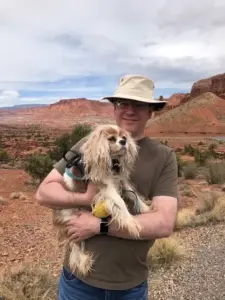
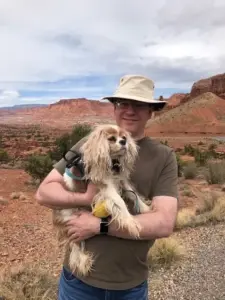
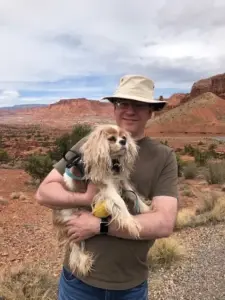
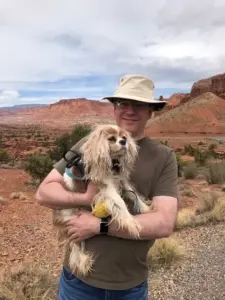
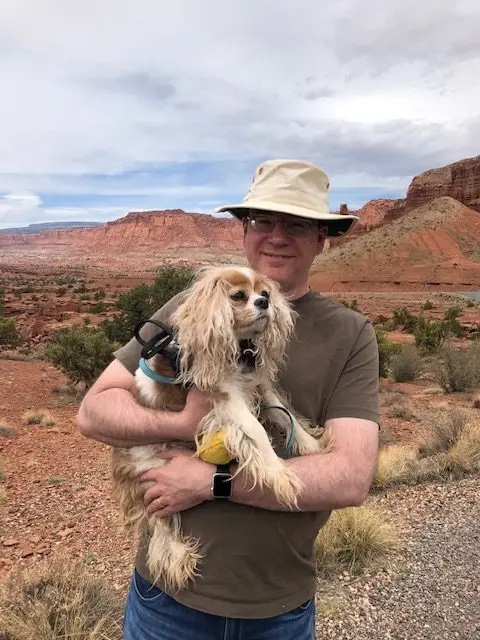
During these journeys, the travel party—featuring the ever-resilient Chloe—traversed classic routes, eventually branching off the historic Route 66 well before reaching Gallup, New Mexico. Instead, the itinerary drew them toward the striking geological formations of Moab, Utah, and Capitol Reef National Park. As documented in the field notes, Chloe’s white-and-gold fur took on a distinct, nearly uniform "Capitol Reef Red" hue from the rich mineral dust of the Utah landscape—a visual testament to the immersive nature of road-based pet travel.
Phase Three: The Pandemic Interruption
By the time the final boxes were unpacked and both sets of parents were comfortably settled in the Pacific Northwest, the external world had fundamentally altered. The emergence of the COVID-19 virus halted non-essential travel worldwide. Aviation authorities implemented sweeping safety protocols, international borders closed, and the community of globe-trotting pet owners found themselves grounded in their living rooms.
Rather than signaling the permanent closure of Dog Jaunt, however, this pause has provided a natural inflection point. With travelers grounded, the focus has shifted inward—fostering community solidarity, updating critical compliance databases, and preparing for the eventual resumption of safe pet travel.
Supporting Context & Metrics: The State of Pet Travel Policies
As Dog Jaunt resumes active operations, its first order of business is the meticulous auditing and updating of its industry-standard travel charts. In the realm of pet travel, regulatory frameworks and airline policies are notoriously volatile. The pandemic era has introduced a new layer of complexity, with airlines frequently adjusting cabin allowances, health certificate requirements, and cargo-hold environmental controls.
U.S. Airline Pet Policies: A Complex Patchwork
Navigating domestic pet travel in the United States requires understanding that no two commercial carriers operate under identical rulebooks. While some major domestic airlines maintain relatively permissive in-cabin policies for small dogs and cats—subject to carrier dimensions, weight limits, and fee structures—others have introduced stringent documentation requirements, including veterinary health declarations and behavioral attestations.
The newly updated Dog Jaunt U.S. Airline Pet Policies chart serves as an authoritative baseline for owners planning future domestic itineraries. Key metrics monitored within the industry include:
- In-Cabin Allocations: Limits on the total number of pets permitted per flight, which often operate on a strict first-come, first-served basis.
- Carrier Specifications: Varying tolerances for soft-sided versus hard-sided travel containers, with strict enforcement of under-seat clearance dimensions.
- Fee Structures: Fluctuating one-way pet fees that range anywhere from $95 to $250+ per direction, depending on the carrier.
International In-Cabin Regulations
For international travelers, the regulatory environment is exponentially more complex. Import permits, microchip ISO compliance, rabies titer blood tests, and destination-specific quarantine laws dictate whether a pet can fly in-cabin or must travel as manifest cargo.
The refreshed Dog Jaunt International Airline Pet Policies chart provides a centralized repository for tracking which global carriers permit in-cabin transit across international borders. As global aviation slowly recovers, these updated metrics offer pet owners a clear roadmap of compliance requirements, minimizing the risk of denied boarding at international departure gates.
+--------------------------------------------------------------------------+
|                     PET TRAVEL COMPLIANCE CHECKLIST                      |
+--------------------------------------------------------------------------+
| [x] ISO-Compliant Microchip Implantation                                 |
| [x] Current Rabies Vaccination & Titer Testing (Destination Specific)    |
| [x] Verified Airline In-Cabin / Cargo Booking Confirmation               |
| [x] USDA / Government Endorsed Health Certificates                       |
| [x] Approved Carrier Dimensions (Verified against specific airline rules)|
+--------------------------------------------------------------------------+
Official Statements and Community Perspectives
The resurgence of Dog Jaunt underscores a broader sociological phenomenon: the vital importance of niche digital communities during periods of systemic isolation. While the site’s author openly identifies as a textbook introvert, the organic community built around the platform over the years proved to be its most enduring asset.
The Value of Niche Community in Times of Crisis
In official communications released alongside the site’s relaunch, the author emphasized that the primary motivation for returning is the psychological and emotional comfort derived from shared experiences.
"The thing I valued most about Dog Jaunt — and this is odd, coming from a textbook introvert — was the community we created together. Especially in this anxious time, it’ll be a great source of comfort to be back in touch with Dog Jaunt Nation."
This sentiment resonates deeply across travel communities worldwide. When physical mobility is restricted, the digital space serves as a proxy for shared exploration. By inviting readers to share their own quarantine stories, coping mechanisms, and archival travel memories, Dog Jaunt is re-establishing a vital support network for pet owners navigating uncertainty.
Engagement Channels: Blogs vs. Social Media
As part of its operational restart, Dog Jaunt is reactivating its digital touchpoints, including its official Facebook page and direct email intake channels ([email protected]). However, editorial emphasis remains firmly anchored on the core blog platform.
Industry analysts note that while social media platforms offer rapid, ephemeral engagement, blog archives provide permanent, searchable repositories of institutional knowledge. The author reminds the community that "comments here on the blog are forever, while on Facebook they just scroll away." This philosophy ensures that travel tips, troubleshooting advice, and personal anecdotes remain accessible to new generations of pet owners for years to come.
Future Outlook: Preparing for the Return of Global Mobility
Looking ahead, the horizon for pet travel is cautiously optimistic. While public health considerations remain paramount, pent-up demand for travel—both domestic road trips and international journeys—suggests that once restrictions fully lift, the travel sector will experience a significant surge.
Strategic Priorities for Dog Jaunt
- Continuous Policy Monitoring: Maintaining real-time accuracy across all airline policy charts to reflect post-pandemic regulatory changes.
- Crowdsourced Content Integration: Publishing curated reader stories, survival tips, and virtual adventure logs submitted by members of Dog Jaunt Nation.
- Expanded Road Trip Guides: Building upon the recent extensive cross-country journeys to provide detailed, pet-centric itineraries for American scenic byways, national parks, and pet-friendly accommodations.
- Community-Driven Resilience: Cultivating a supportive digital environment that addresses traveler anxiety, promotes responsible pet ownership, and celebrates the unbreakable bond between humans and their animal companions.
Conclusion
The story of Dog Jaunt’s return is emblematic of a larger narrative of adaptation and endurance. From navigating complex family relocations across thousands of miles of American highway to weathering a global health crisis with a resilient golden-furred companion named Chloe, the platform proves that true community transcends physical distance. As Dog Jaunt Nation gathers once more around updated policy charts and shared campfire stories, it stands ready to face the future of travel—together, one journey at a time.