
Executive Overview
For decades, the journey of a potato from the fertile earth to a crisp bag of chips has been fraught with hidden perils. Despite their robust appearance, potatoes are notoriously delicate. Subject to the slightest mishandling during harvest, transport, and processing, they bruise easily—a vulnerability that translates to millions of dollars in lost revenue annually for farmers and consumer packaged goods (CPG) giants alike. Addressing this supply chain leak has traditionally focused on upgrading mechanical components or altering post-harvest logistics. However, a groundbreaking collaboration between snack food titan PepsiCo and agricultural machinery manufacturer Grimme is targeting the issue at its root: operator technique, workforce upskilling, and advanced training.
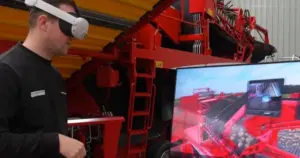
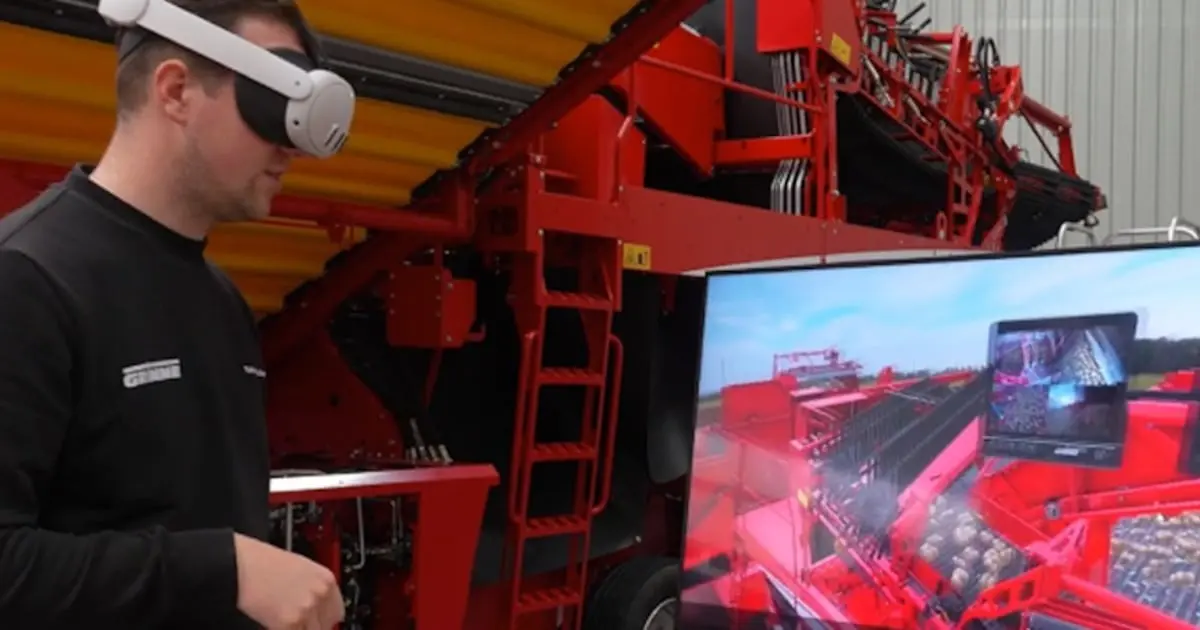
Unveiling the results of a multi-continental pilot program, PepsiCo and Grimme—in partnership with immersive learning technology provider Altoura—have introduced high-fidelity digital twins of Grimme’s EVO and SE series potato harvesters. This immersive training platform allows machine operators to virtually inspect complex agricultural equipment, remove maintenance panels, practice calibration, and simulate harvesting scenarios without stepping foot in a muddy field.
Designed primarily for virtual reality (VR) headsets, the platform is engineered for versatility, offering seamless accessibility via tablets, smartphones, and standard desktop computers. Crucially, once the training module is downloaded via the Altoura application, operators can access the curriculum completely offline, making it viable for remote agricultural regions lacking robust Wi-Fi or cellular infrastructure.
The financial and operational implications are staggering. During initial pilot deployments across Brazil and Mexico, the digital twin training platform achieved an 87% increase in bruise-free potato yields, alongside a remarkable 1.7-fold reduction in severe crop bruising. As PepsiCo and Grimme scale this technology into Eastern Europe and showcase its capabilities at global agricultural forums, the initiative signals a transformative shift in ag-tech. By fusing industrial metaverse concepts with traditional farming, the partnership is proving that virtual reality may well be the definitive key to solving agriculture’s persistent skilled labor shortage.
Detailed Chronology: From Manufacturing Concept to Global Agricultural Rollout
The genesis of the virtual potato harvester did not begin in a field, but rather within the high-tech corridors of industrial manufacturing. To understand how a CPG powerhouse like PepsiCo pivoted toward virtual reality for agriculture, one must trace a deliberate, multi-year evolution of digital transformation across the company’s vast enterprise operations.
Phase 1: Cross-Industry Innovation and the Industrial Metaverse
Earlier in the development cycle, PepsiCo’s broader manufacturing division made headlines by partnering with tech titans Nvidia and Siemens. This initiative leveraged artificial intelligence and industrial digital twins to optimize factory floor operations, simulate production lines, and streamline operator training.
Rob Meyers, Vice President of Global Agriculture at PepsiCo, watched these industrial trials with keen interest. Recognizing that farming faced parallel hurdles—namely, operating complex, expensive machinery with a seasonal, transient workforce—Meyers and his team began exploring whether digital twin technology could cross the chasm from factory floor to agricultural furrow.
Phase 2: Partnering with Grimme and Altoura
With the conceptual framework established, PepsiCo joined forces with Grimme, a premier German manufacturer of advanced potato, beet, and vegetable harvesting machinery. To bring the engineering data to life, the partnership enlisted Altoura, a specialist in immersive learning and spatial computing.
The objective was to construct hyper-accurate digital replicas of Grimme’s flagship EVO and SE series potato harvesters. Unlike basic 3D CAD models, these digital twins replicated the exact physics, mechanical workflows, and operational nuances of the physical machines. Operators could interact with digital components as if they were standing in front of a multi-million-dollar harvester: adjusting web speeds, altering roller angles, and diagnosing blockages in real-time.
Phase 3: Global Pilot Testing (Brazil, Mexico, Poland, and Romania)
Deploying advanced software in rural farming communities requires rigorous field testing. Last year, PepsiCo and Grimme initiated pilot programs in Latin America, specifically targeting farms in Brazil and Mexico. These regions were chosen for their diverse climate conditions, varying soil types, and distinct operational workforces.
The results from the Latin American pilots exceeded expectations, validating the hypothesis that virtual pre-training directly correlates with physical care in the field. Buoyed by these metrics, the companies expanded the rollout into Eastern Europe, conducting trials in Poland and Romania—two critical sourcing regions for PepsiCo’s European snack operations. The technology was also prominently showcased at PepsiCo’s Global Agro University in Germany, introducing the platform to agronomists, regional farm managers, and supply chain executives from across the continent.
Supporting Context & Metrics: Quantifying the Impact of Virtual Training
In agriculture, technological investments must justify themselves through hard yields and bottom-line protection. The potato supply chain is notoriously unforgiving; internal bruising (blackspot) often remains invisible until the crop reaches processing facilities, resulting in immediate rejection or heavy discounting.
The Mathematics of Potato Bruising
When a potato is harvested, it travels across multiple webs, separation units, and cleaning rollers before landing in a bunker. If ground speed is too high relative to chain speed, or if drop heights are excessive, cellular walls rupture, leading to enzymatic discoloration. Traditionally, mitigating this required extensive trial-and-error by equipment operators, many of whom learned on the job—at the expense of the crop.
The PepsiCo-Grimme digital twin program changes this dynamic by shifting the learning curve out of the field and into the virtual space. The metrics gathered from the pilot deployments highlight the efficacy of this approach:
- 87% Increase in Bruise-Free Yields: Farms participating in the digital twin training program saw a dramatic surge in pristine, undamaged potatoes harvested per acre.
- 1.7x Reduction in Severe Bruising: Catastrophic crop damage, which renders entire batches unusable for premium potato chip production, was nearly halved.
- Fractional Cost-to-Risk Ratio: While advanced software and VR hardware entail upfront deployment costs, these expenses represent a mere fraction of the millions of dollars in annual revenue lost to preventable bruising.
Overcoming Infrastructure Deficits in Rural Farming
A major hurdle in ag-tech adoption is the digital divide. Many remote farming regions lack reliable, high-speed broadband or consistent cellular coverage. To ensure widespread adoption, the development team engineered the Altoura application to be self-contained.
Once an operator downloads the training modules via a Wi-Fi connection—whether at a cooperative hub, regional office, or local home—the application operates entirely offline. Whether an operator is using a standalone VR headset in the field cab, an iPad while sitting in a truck, or a desktop computer at an agronomist’s office, the learning experience remains fluid and accessible without the need for an active data connection.
Official Statements: Insights from Industry Leadership
The integration of spatial computing into farming represents a paradigm shift. In exclusive commentary and public announcements, corporate leaders have emphasized that the ultimate goal of the technology is not complexity, but radical accessibility and localized relevance.
Rob Meyers, VP of Global Agriculture at PepsiCo, highlighted the importance of cultural and operational localization during his discussion with industry analysts:
"Adapting to local realities is often more important to driving adoption at scale. As we expand into new markets, we’re continuing to refine the experience, including language support and training content. The goal isn’t to introduce complexity. It’s to make proven expertise available to more operators, in more places, before they enter the field."
Meyers also emphasized how the cross-pollination of ideas within PepsiCo accelerated the agricultural initiative:
"We had seen some of the work that our wider PepsiCo business was doing around using digital twins to improve operator training in the manufacturing space and felt there was a lot of applicability that could help us on the farming side."
Addressing the macro-economic pressures facing modern agriculture—particularly labor dynamics—Meyers pointed out that virtual reality directly targets the industry’s structural vulnerabilities:
"One of agriculture’s biggest challenges is delivering consistent, high-quality training to operators who may be seasonal, geographically dispersed, or working in different languages and markets. The opportunity with digital tools is their ability to make expert training more accessible and scalable. Of course, cost is always an important consideration for the adoption of any technology. The loss of revenue for a farmer due to bruising can be very high, and the VR technology costs are only a fraction of this risk."
Grimme’s engineering leadership similarly noted that physical machinery can only be optimized if the human element—the operator—understands the delicate balance between harvesting speed and mechanical gentleness. By democratizing expert knowledge through interactive 3D simulations, the partnership ensures that every machine deployed in the field operates at peak efficiency.
Future Outlook: Can Virtual Reality Solve Agriculture’s Workforce Crisis?
As the agricultural sector braces for an aging demographic of traditional farmers, coupled with a shrinking pool of reliable seasonal labor, the imperative to innovate training methodologies has never been more urgent. The success of the PepsiCo-Grimme-Altoura collaboration offers a compelling glimpse into the future of farming—one where the "metaverse" is not a futuristic abstraction, but a practical tool for feeding a global population.
Scaling Beyond Potatoes
While the current deployment focuses specifically on Grimme EVO and SE series potato harvesters, the architectural framework of the Altoura-powered digital twin platform is inherently modular. Industry analysts predict that similar virtual training frameworks will soon be adapted for other fragile, high-value specialty crops, such as sugar beets, onions, and various orchard fruits where mechanical harvesting risks high crop loss.
The Evolution of the Agritech Workforce
Looking ahead, the role of the farm operator is poised to evolve from mechanical laborer to digital agronomist. As machinery becomes increasingly sophisticated—integrated with artificial intelligence, automated yield-mapping, and real-time telemetry—the training required to operate these assets must keep pace. Virtual reality and digital twins provide a risk-free environment where operators can fail, learn, and master complex machinery without damaging expensive capital equipment or wasting valuable food supplies.
Ultimately, PepsiCo and Grimme have demonstrated that solving massive global supply chain challenges does not always require entirely new heavy machinery. Sometimes, the most revolutionary innovation is simply teaching the people operating the machines how to handle the earth’s bounty with care—one virtual simulation at a time.