For pet owners navigating the complex labyrinth of commercial aviation, the challenge of cabin-approved pet transport is a formidable one. Regulations are strict, dimensions are uncompromising, and finding a carrier that balances airline compliance with the physical comfort of a larger or taller dog can feel like an impossible task. This friction point is felt most acutely by owners of "tweener" breeds—dogs that exceed the micro-dimensions of under-seat allowances yet fall well below the weight threshold for cargo holds.
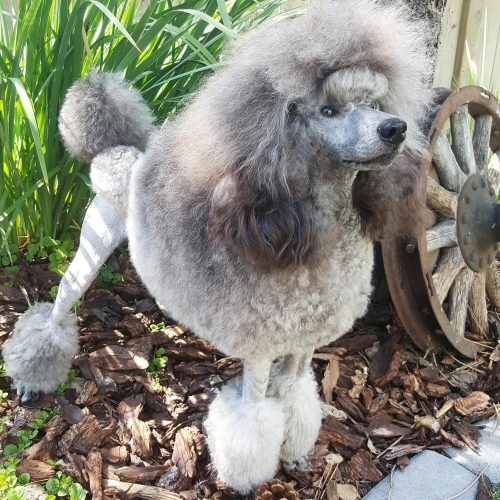
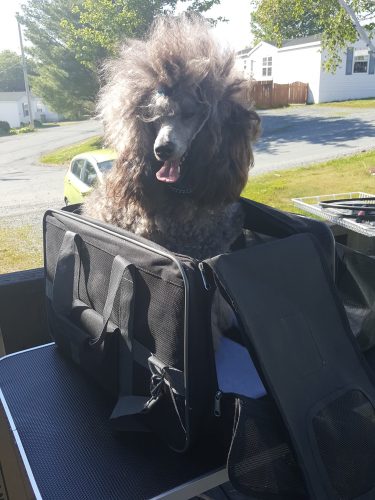
Enter Keri, a professional dog groomer, and her companion Flint: a tall, long-legged, and gloriously coiffed Miniature Poodle. Facing a multi-leg journey across Canada aboard various Air Canada aircraft, Keri was warned by cynics that Flint’s towering frame would preclude him from flying in-cabin. Undeterred, she embarked on a meticulous research, procurement, and engineering process that ultimately culminated in a masterclass of pet-travel hacktivism.
Rejecting standard industry assumptions and utilizing a blend of behavioral conditioning, veterinary backing, and daring structural modifications, Keri transformed a budget-friendly, expandable pet carrier into a bespoke, aircraft-compliant haven. Her journey spanned four distinct aircraft models—the Embraer 175, Airbus A320-200, Embraer 190, and Bombardier Q400—providing an invaluable real-world dataset for pet parents worldwide. This report chronicles Keri and Flint’s rigorous preparation, structural alterations, in-flight experiences, and the broader implications of their successful journey for the future of in-cabin pet travel.
Detailed Chronology: From Concept to Cabin
The endeavor began months prior to departure, triggered by a logistical dilemma familiar to frequent flyers with animals: how to secure a comfortable, compliant space for a dog whose long legs and voluminous coat defied standard carrier specifications. Initial correspondences with pet-travel authorities pointed toward premium options, such as the Teafco Argo Petagon. However, the realization of a successful trip would require far more than off-the-shelf purchases; it demanded a chronological progression of testing, training, and modification.
Phase One: Carrier Procurement and Canine Selection
Faced with a one-month countdown to departure, Keri began evaluating the market’s leading options. Standard offerings like the large Sherpa (19” L x 11.75” W x 11.5” H) and the large Bergan (19” L x 10” W x 13” H) were immediately disqualified as structurally inadequate for Flint’s height.
She ultimately ordered two heavy-hitting contenders:
The Teafco Argo Petagon Carrier (21” L x 12” W x 13” H): Universally praised for its high-end manufacturing, reflective safety tape, robust straps, and premium materials, it featured a cooling tray insert. However, its rigid dimensions, combined with the height-reducing cooling tray and a restrictive zip-path that caught Flint’s voluminous poodle hair, made it an immediate source of friction. Flint himself expressed clear displeasure, showing a distinct reluctance to enter.
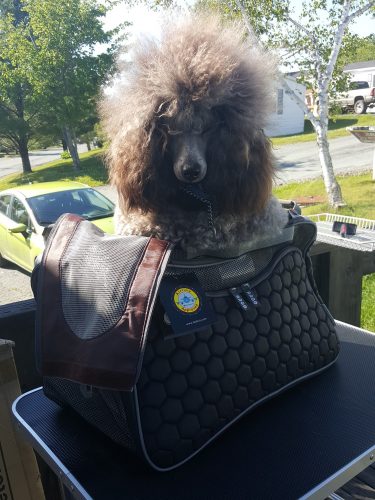
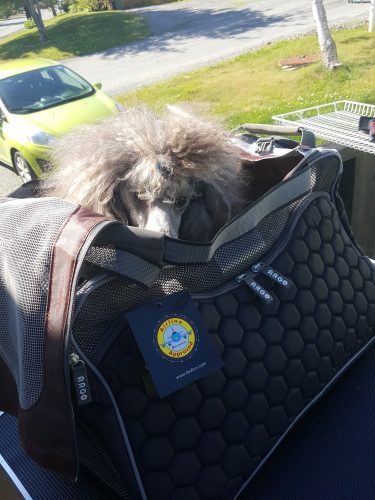
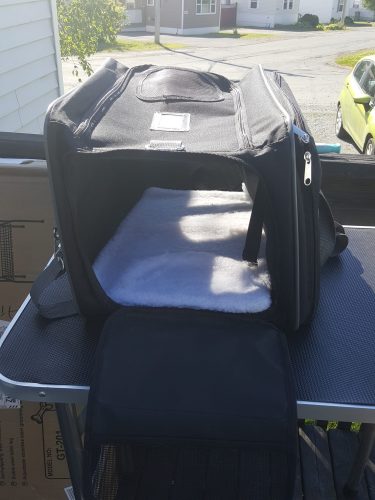
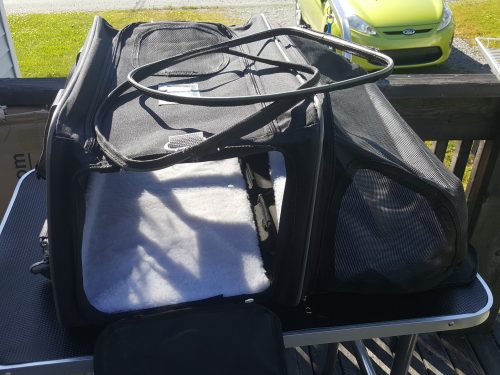
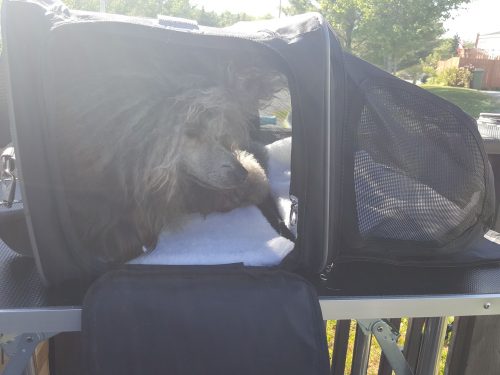
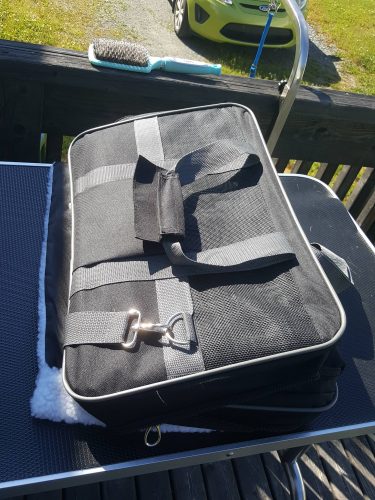
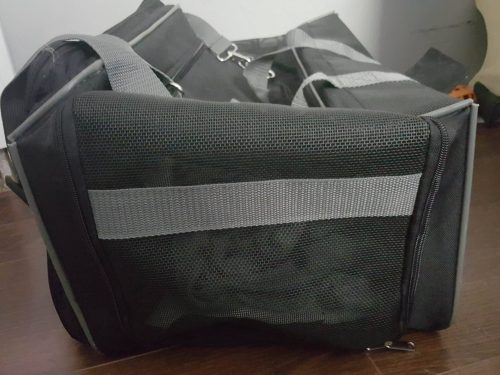
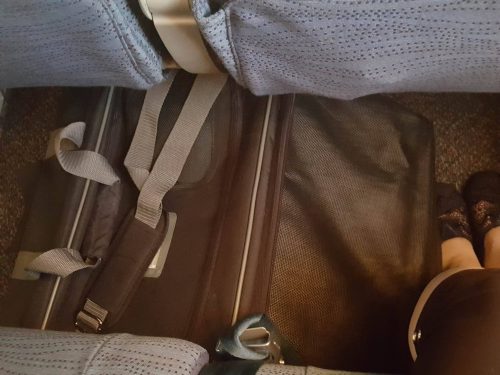
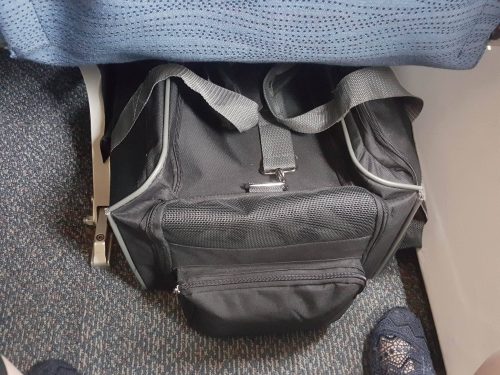
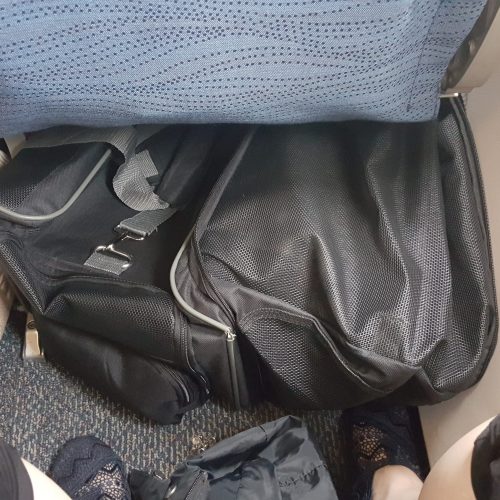
The Pettom Expandable Foldable Travel Carrier (19” L x 12” W x 12” H, expanding to 22.5” W): Though visibly cheaper and constructed from inferior materials compared to the Argo, the Pettom held a winning feature: dual zippered ends. This allowed Flint to walk in autonomously. More importantly, its pop-out mesh "pup tent" nearly doubled the width of the carrier, offering crucial lateral space for long poodle legs. Flint chose the Pettom organically, making it the undisputed winner.
Phase Two: Radical Engineering and Structural Modification
While the Pettom offered transformative expansion capabilities, its factory design presented structural hazards. Keri immediately removed the zippered-in supports for the expandable section, recognizing they posed an entrapment risk for a dog moving around in-flight.
More critically, the carrier’s rigid frame posed a threat of non-compliance with strict under-seat height limits. Displaying remarkable engineering moxie, Keri executed a high-stakes modification:
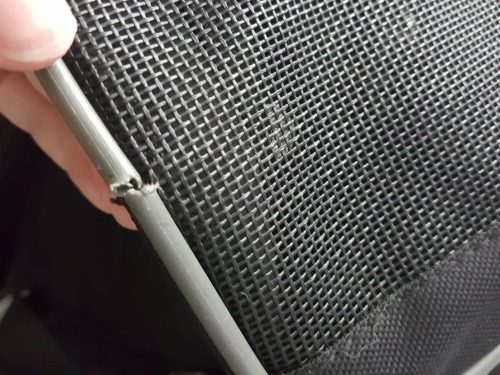
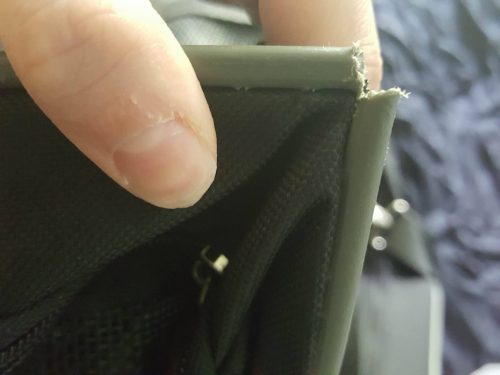
The Wire Frame Cuts: Armed with heavy-duty bolt cutters, she carefully severed the four wire frame supports running around the kennel, taking extreme precautions to avoid nicking the surrounding fabric or mesh.
The 9-Inch Rule: She executed the cuts at the 9-inch mark to guarantee clearance under cramped aircraft seats.
The Result: The modifications transformed the rigid rectangular structure into a flexible housing unit. When empty, the sides tipped inward, but under Flint’s weight or movement, they adapted fluidly to varying spaces without sacrificing structural integrity. (Note: Keri later advised sanding or taping the exposed wire ends to prevent minor scrapes during handling).
Phase Three: Behavioral Conditioning and Veterinary Sign-Off
Physical preparation was matched by meticulous behavioral conditioning over a four-week span:
Week One: The carrier remained open with treats tossed inside, allowing Flint to build positive associations and practice scooting into the space independently.
Week Two: Short intervals with the carrier zipped closed were introduced.
Week Three: Flint was placed inside the carrier during his one-hour afternoon naps, always positioned at Keri’s feet and reinforced with consistent rewards. Eventually, a simple tap on the carrier or a gentle hand placement signaled him to enter and settle.
To preempt potential pushback from airline gate agents, Keri leveraged Flint’s familiarity with kennel environments from her professional grooming salon. She also brought the carrier to their veterinarian, securing an official written referral approving the carrier and its sizing accommodations for Flint.
Keri’s itinerary aboard Air Canada provided a comprehensive stress-test across four distinct regional and mainline aircraft. Below is an analytical breakdown of performance metrics per aircraft:
Aircraft Model
Seat Pitch
Seat Width
Carrier Configuration
Expansion Status
In-Flight Observations
Embraer 175
32"–34"
18"
Economy Window Seat
Fully Expanded
Cried pre-takeoff; silent post-takeoff. Utilized empty adjacent seat space to fully deploy mesh extension.
Airbus A320-200
35" (Preferred)
17.8"
Preferred Seating Window
Half-Deployed
Upgraded for legroom on a 5-hour flight. Carrier pushed back and tilted; pup tent half-deployed.
Embraer 190
31"–33"
18"
Economy Seat (Horizontal)
Fully Expanded
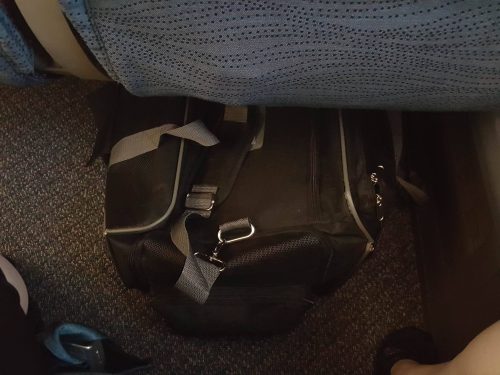
Loaded horizontally into foot space. Expanded over feet post-takeoff; stowed during descent.
Bombardier Q400
31"
17"
Economy Window Seat
None (Closed)
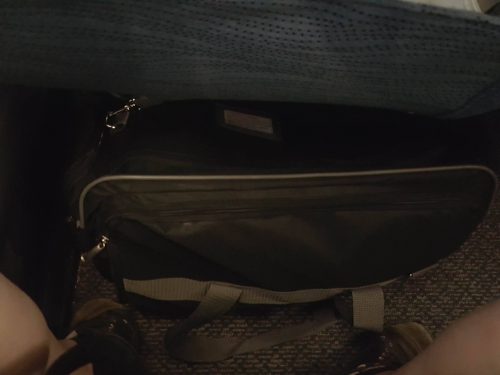
Smallest space encountered. Carrier fit snugly with zero room for expansion; required strict containment.
Official Statements & Industry Perspectives
The aviation industry maintains rigid guidelines regarding live animal transport in cabins. While official carrier size maximums are frequently posted by airlines, the reality beneath passenger seats is defined by irregular floor hardware, life-raft canisters, and localized heating ducts.
Pet-travel expert and Dog Jaunt founder highlighted the significance of Keri’s modifications:
"The Smart Space [the ideological predecessor to the Pettom] was very appealing for long flights, but my modifications were too timid to allow it to flex around under-seat obstructions. Keri’s bold approach worked well… cutting the supports on the bag proved to be a HUGE benefit. I had no issues sliding it under any of the seats with this alteration."
From an operational standpoint, major carriers like Air Canada require that pets remain inside a fully enclosed, leak-proof carrier that fits completely under the seat ahead, without blocking emergency egress. Keri’s strategy of keeping the carrier fully zipped during taxi, takeoff, and landing—while utilizing expansion zones exclusively during cruising altitude when seat configuration permitted—highlights a responsible balance between passenger compliance and animal welfare. Furthermore, securing veterinary documentation served as a crucial buffer against subjective gate-agent interpretations.
Future Outlook: The Evolution of In-Cabin Pet Travel
The successful execution of Flint’s multi-leg journey signals a growing paradigm shift in how pet owners approach commercial aviation. As pet ownership rates climb and dogs increasingly integrate into lifestyle and travel routines, the demand for adaptable, high-performance travel gear will intensify.
Key Takeaways for the Future of Pet Aviation:
The Death of "One-Size-Fits-All": Manufacturers must recognize that rigid, static carrier designs fail to account for the dynamic, highly varied geometry of modern aircraft cabins. Flexible or semi-rigid frameworks represent the next frontier in pet luggage design.
Advocacy Through Preparation: Keri’s rigorous desensitization protocol and preemptive veterinary sign-off establish a gold standard for pet parents. As security and gate personnel face rising volumes of traveling animals, documented preparation will differentiate compliant travelers from unprepared ones.
Design Innovation Needed: Luggage brands would do well to study modifications like Keri’s—integrating internal frames that offer structural safety while remaining collapsible or yieldable under pressure without requiring bolt cutters.
Ultimately, Keri and Flint’s journey proves that with resourcefulness, meticulous behavioral training, and a willingness to challenge conventional equipment limitations, the skies can remain open for larger, long-legged canine companions.