
Executive Overview
For urban pet parents, apartment dwellers, and anyone trying to maintain a sleek, minimalist home aesthetic, managing pet supplies can feel like a constant battle against clutter. Among all feline necessities, the traditional rectangular litter box is often the most intrusive—demanding 3 to 4 square feet of prime floor space and stubbornly refusing to blend into modern home decor.
Enter the corner cat litter box: an ingenious architectural solution designed to tuck snugly into a standard 90-degree room junction, reducing its footprint to roughly 2 square feet while retaining the internal capacity required for feline sanitation.
However, maximizing floor space must never come at the expense of your cat’s behavioral health. Veterinary guidelines from organizations like the American Association of Feline Practitioners (AAFP) and the International Society of Feline Medicine (ISFM) emphasize that litter box aversion is a primary driver of inappropriate elimination and subsequent animal shelter surrenders. Selecting the right corner box requires a delicate balance between spatial efficiency and feline ergonomics.
This comprehensive guide analyzes the top-rated corner litter boxes on the market, evaluates essential buying criteria—such as size ratios, material durability, and odor-control mechanisms—and addresses frequently asked questions to ensure your home remains both fresh and feline-friendly.
Detailed Chronology & Evolution of Space-Saving Litter Solutions
The pet supply industry’s approach to spatial optimization has evolved significantly over the past two decades, driven by shifting demographic trends toward high-density urban living.
Phase I: The Traditional Paradigm (Pre-2010s)
Historically, litter box designs defaulted to standard rectangular shapes. These units assumed endless floor space in utility rooms, basements, or expansive mudrooms. While functional, they created severe layout bottlenecks in smaller homes, forcing owners to place litter boxes in high-traffic hallways, kitchens, or living areas where they were visually and olfactory intrusive.
Phase II: The Advent of Geometric Innovation (2010–2018)
As city-center living surged, manufacturers began exploring triangular and angular geometries. Early iterations of corner pans hit the market, primarily focusing on raw space reduction. However, many early models suffered from poor ergonomic sizing—cramping larger cats and sparking concerns over behavioral avoidance. Odor management was basic, relying on passive plastic hoods without advanced filtration.
Phase III: The Modern Multi-Functional Era (2019–Present)
Today’s market reflects a sophisticated merging of pet ergonomics, advanced materials science, and interior design. Modern corner solutions range from heavy-duty molded plastic pans with activated Zeolite filters to high-end, furniture-grade wooden enclosures that double as end tables, media consoles, or TV stands. Brands now incorporate non-slip bases, antimicrobial coatings, and multi-cat capacities, transforming an eyesore into an integrated home fixture.
Supporting Context, Metrics & Top Product Reviews
Choosing the right corner litter box requires examining real-world options against strict veterinary standards. Vets universally recommend that a litter box measure at least 1.5 times your cat’s body length (measured from the tip of the nose to the base of the tail), with a litter depth of 2 to 3 inches to facilitate natural digging and burying behaviors.
Below is an exhaustive breakdown of the market’s leading corner litter boxes, categorized by their distinct strengths.
1. IRIS USA Large Enclosed Corner Cat Litter Box
- Best For: Overall Performance & Daily Usability
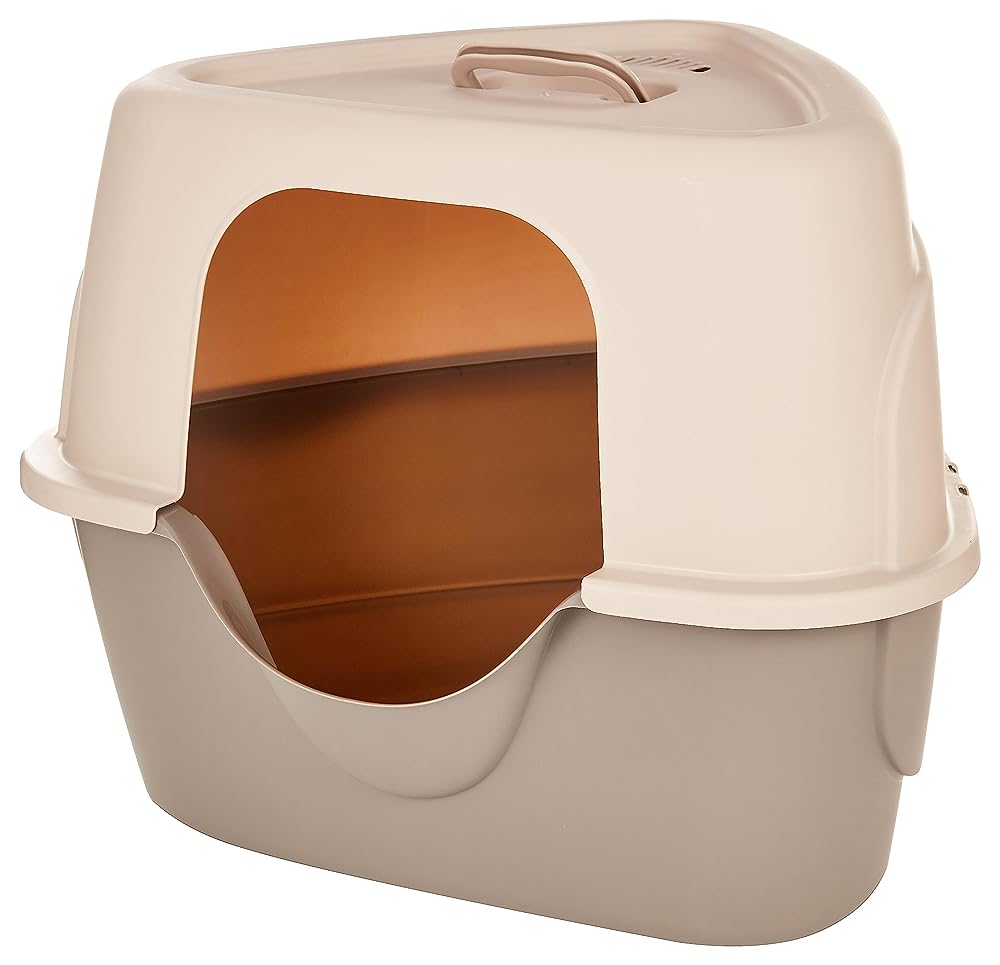
- Dimensions & Design: Fits standard 90-degree corners utilizing roughly 2 square feet of floor space. Features an enclosed hood, front door flap, integrated carrying handle, and securing buckles.
- Why It Ranks #1: The IRIS USA model strikes the optimal balance between privacy, scatter containment, and footprint efficiency. The inclusion of a matching scoop and a reliable front door flap makes it a robust, all-in-one system for single or multi-cat households.
2. Van Ness Corner Enclosed Cat Pan (CP9)
- Best For: Advanced Odor Control on a Budget
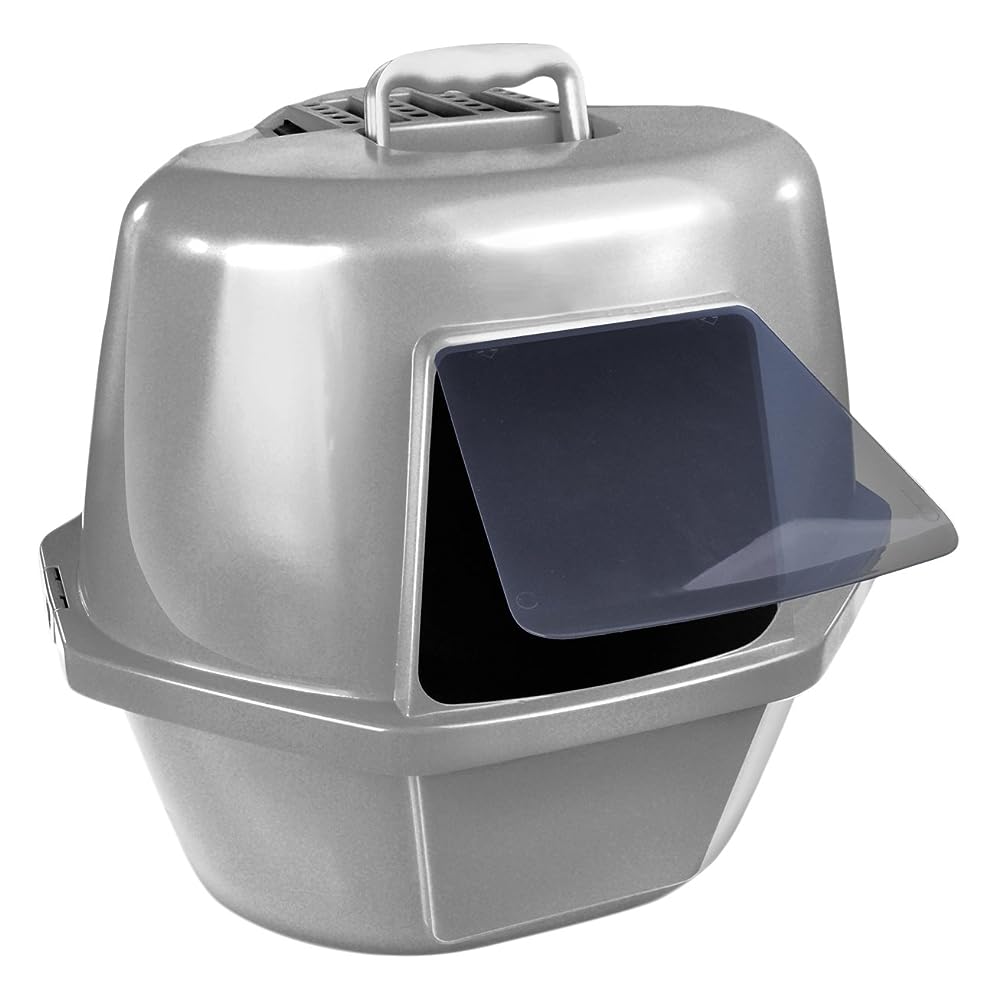
- Key Feature: Utilizes a replaceable Zeolite air filter embedded in the hood to adsorb ammonia and other pungent molecules rather than merely masking them.
- Performance: Constructed from high-polished, stain-resistant plastic manufactured in the USA, this unit excels at preventing persistent odors from permeating living spaces while keeping costs low.
3. GDLF Litter Box Enclosure Corner Furniture Style Cat House
- Best For: Aesthetic Integration & Multi-Functionality
- Design: A premium furniture-style cabinet that serves simultaneously as an end table, nightstand, or TV stand. It features a two-story layout, a built-in sisal scratching pad, and space to house two separate litter pans.
- Value: Perfect for homeowners who want to completely eliminate the visual footprint of a litter box while protecting the pan from other household pets.
4. Amazon Basics No-Mess Hooded Corner Cat Litter Box
- Best For: Budget-Conscious Space Saving
- Features: Heavy-duty molded plastic triangle frame, removable hood for easy maintenance, and an integrated charcoal filter.
- Utility: An accessible, straightforward choice for buyers needing reliable scatter and leak protection without premium price tags.
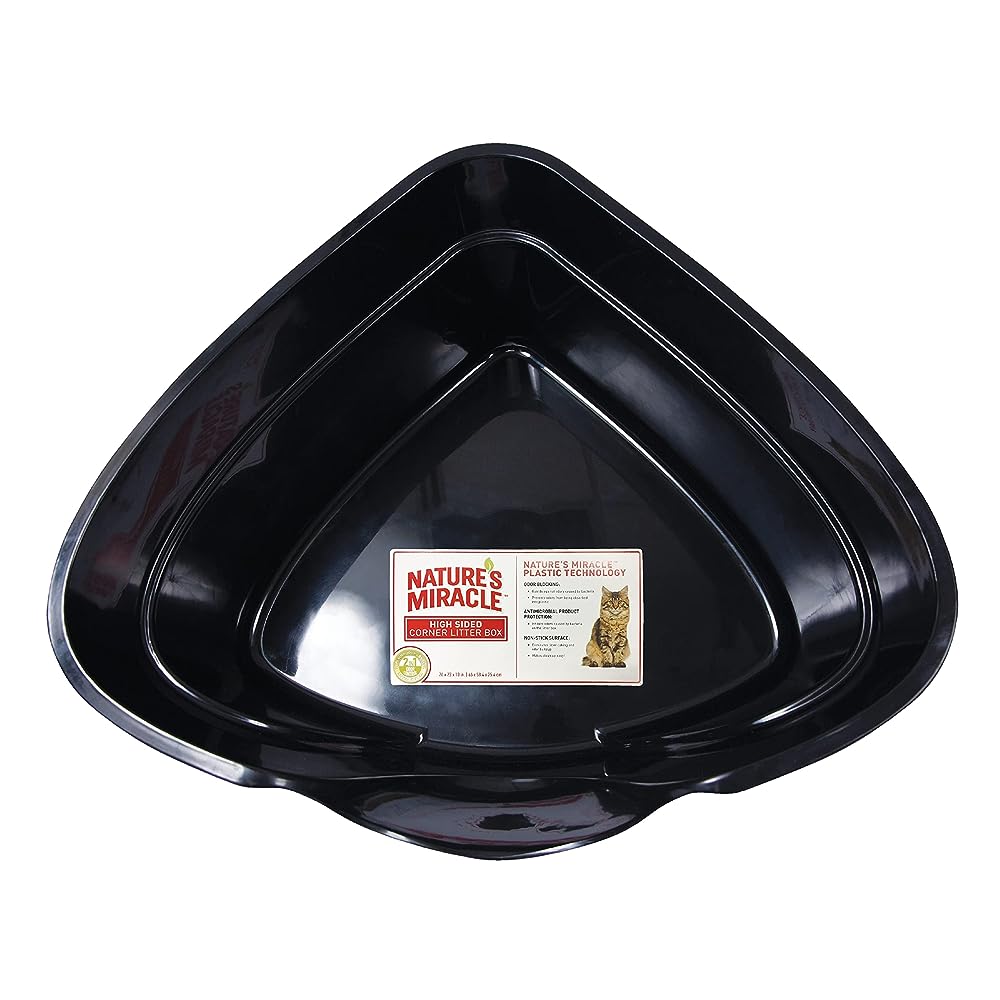
5. Nature’s Miracle Advanced High Sided Corner Litter Box (P-5913)
- Best For: Easy Cleanup & Non-Stick Maintenance
- Features: Features extra-high walls to catch urine spray and high-kick scatter, paired with an advanced non-stick surface treatment.
- Benefits: Drastically reduces scraping effort during full-pan cleanouts and helps maintain rigorous hygiene standards.
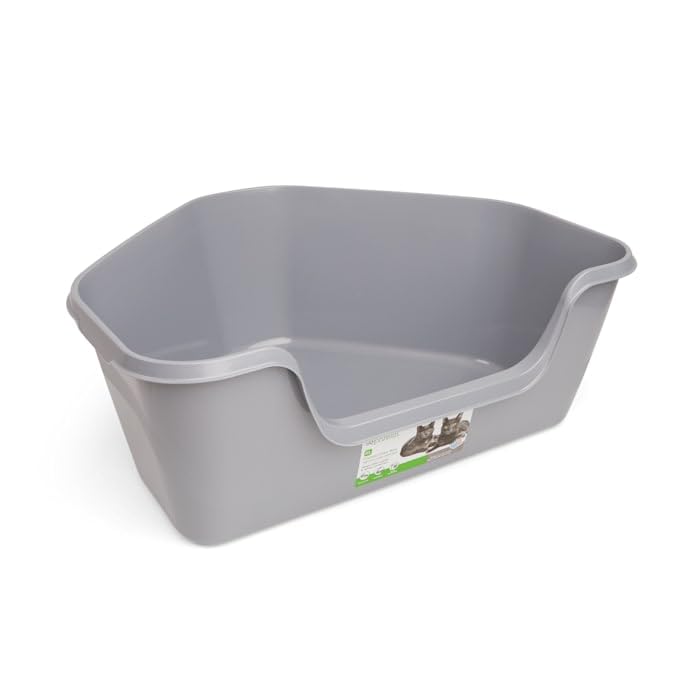
6. So Phresh High-Back Corner Grey Litter Box
- Best For: Multi-Cat Households
- Dimensions: 26.25” L x 21.5” W x 10” H.
- Utility: Built with an elevated perimeter to contain enthusiastic digging and vertical spraying, making it durable enough for heavy daily use across multiple felines.
7. So Phresh Corner Privacy Hood & Cat Litter Pan
- Best For: Discreet Privacy
- Dimensions: 22” W x 17.88” D x 15.25” H.
- Design: Combines an active carbon filter with a flip door for easy scoop access, providing a secluded bathroom experience for skittish cats.
8. Corner Litter Box Enclosure (TV Stand & Storage Cabinet)
- Best For: Budget-Friendly Hidden Furniture
- Function: Features magnetic cabinet doors and an open storage shelf, seamlessly blending into living rooms as a media console while concealing standard corner pans.
Official Guidelines & Veterinary Insights
To understand why certain design choices matter, we must look to authoritative veterinary literature, notably the AAFP and ISFM Feline Environmental Needs Guidelines.
The Psychology of Litter Box Avoidance
Cats are fastidious creatures with acute survival instincts. If a litter box feels cramped, smells overpowering, or leaves them feeling vulnerable to ambush, they will seek alternative locations—such as carpets, rugs, or laundry piles. According to veterinary behaviorists, litter box aversion is among the leading reasons cats are surrendered to animal shelters.
- The Hood Debate: While covered boxes offer owners privacy and odor control, some cats detest enclosed spaces. If a cat feels trapped or unable to monitor its surroundings while eliminating, it may reject the box entirely. Owners must observe their pet’s behavior closely when introducing a hooded model.
- Substrate Depth: Regardless of the box’s shape, maintaining a consistent litter depth of 2 to 3 inches is vital. This depth allows cats to execute their natural predatory burying sequence comfortably.
Odor Adsorption vs. Masking
According to guides published by PetMD and the Cornell Feline Health Center, effective odor control relies on chemical adsorption rather than artificial fragrance masking.
- Activated Charcoal and Zeolite: These materials possess microscopic pores that trap and neutralize volatile organic compounds (VOCs) and ammonia gas.
- The Golden Rule: No filter can substitute for mechanical hygiene. Daily scooping of clumps and a complete litter change every 1 to 2 weeks remain non-negotiable practices for feline health.
Future Outlook: What’s Next for Feline Sanitation?
As smart home technology and pet care continue to converge, the future of the corner litter box points toward integration and automation.
- Smart Sensors and Health Tracking: Future corner enclosures will likely feature integrated weight sensors and infrared monitoring to track elimination frequency, duration, and volume—providing early warning signs of urinary tract infections, diabetes, or kidney issues.
- Compact Self-Cleaning Mechanisms: While automatic self-cleaning boxes have traditionally required large, bulky rectangular frames, engineering advancements are paving the way for triangular, automated raking systems designed specifically for 90-degree corner footprints.
- Sustainable Materials: Driven by eco-conscious consumer demand, manufacturers are shifting away from virgin petroleum-based plastics toward recycled ocean plastics, biodegradable composites, and antimicrobial bamboo polymers that offer superior scratch resistance without environmental degradation.
Frequently Asked Questions (FAQ)
Q: Why should I consider a corner litter box for my cat?
A: Corner litter boxes fit snugly into room junctions, reducing their spatial footprint to roughly 2 square feet compared to the 3 to 4 square feet required by standard rectangular models. They are ideal for apartments and smaller living spaces.
Q: Is a corner litter box suitable for larger cats?
A: It depends on the model. While many corner boxes are spacious, cats over 12 lbs or those longer than average require careful measurement. Always ensure the internal diagonal space meets the veterinary rule of thumb: at least 1.5 times your cat’s length from nose to tail base.
Q: Can I use regular cat litter in a corner box?
A: Yes. The triangular geometry does not require specialized litter. Standard clumping clay, crystal litter, or alternative substrates like walnut shell litter work effectively when filled to a depth of 2 to 3 inches.
Q: How often should I clean a corner litter box?
A: Scoop solid waste and liquid clumps at least once daily. Perform a 100% full litter refresh and wash the basin with mild, unscented soap every 1 to 2 weeks to prevent bacterial buildup and box aversion.

Q: Do corner boxes truly control odors better than standard boxes?
A: The shape alone does not alter odor, but many corner models feature integrated hoods equipped with activated charcoal or Zeolite filters that actively adsorb airborne odors between cleanings.