
Executive Overview
Long before a puppy learns to sit, heel on a loose leash, or navigate a crowded transit hub to guide a handler through the world, a profound transformation is already underway behind the scenes. In the quiet, dimly lit whelping boxes of specialized breeding and training facilities, weeks before their eyes and ears unlock to the sights and sounds of the world, neonatal puppies are undergoing rapid neurodevelopment. Every breath, every shift in body temperature, and every touch lays the invisible foundation for their future temperament.
At organizations like Dogs Inc, preparing future guide dogs and service dogs begins long before formal obedience training. It starts on day one through a deliberate, science-based practice known as Early Neurological Stimulation (ENS). Far from being a shortcut to training or an attempt to engineer a "perfect" dog, ENS is a carefully researched protocol designed to introduce mild, calibrated stressors during a critical developmental window. Combined with subsequent socialization periods, structured transitional milestones, and lifelong positive reinforcement, these early exercises form the bedrock of emotional resilience, adaptability, and poise required of elite working dogs.
This report examines the intricate science of neonatal puppy development, the precise mechanics and philosophy of Early Neurological Stimulation, and how early-life interventions ripple outward to shape life-changing canine partners.
Detailed Chronology: From the Neonatal Stage to Adolescent Adulthood
To understand the profound impact of Early Neurological Stimulation, one must first examine the chronological roadmap of a puppy’s earliest months of life. Canine development is divided into distinct, highly sensitive stages, each presenting unique physiological milestones and neurological opportunities.

The Neonatal Stage (Birth to Two Weeks)
During the first two weeks of life, newborn puppies exist in a state of absolute dependency. Blind, deaf, and incapable of regulating their own body temperatures, puppies spend the vast majority of their time alternating between nursing and deep sleep, huddled tightly against their mother and littermates.
Despite their apparent vulnerability, the neonatal stage is a period of blistering neurological activity. The brain and central nervous system are forming complex neural pathways at an astonishing rate. It is precisely during this delicate window—typically spanning from day three to day sixteen—that Early Neurological Stimulation is introduced. Because puppies at this stage cannot yet process complex environments, ENS utilizes tactile and postural challenges to gently stimulate their developing neurological systems without overwhelming their fragile systems.
The Transitional Stage (Two to Four Weeks)
As puppies cross the two-week threshold, a dramatic physiological shift occurs. Their eyes and ears finally open, flooding their developing brains with sensory information for the very first time. Around four weeks of age, puppies begin to take their first wobbly steps, emit their first barks, and experience the eruption of their baby teeth.
This marks the beginning of the transitional period, where nutrition begins to shift from exclusively maternal milk to soft weaning foods, and interactions with littermates expand exponentially. Puppies learn the fundamental basics of social interaction and bite inhibition through play and feedback from their mother and siblings, discovering that rough bites result in an immediate pause in play.

The Socialization Window (Three to Twelve Weeks)
Widely recognized by animal behaviorists as the single most critical behavioral window in a dog’s life, the socialization period runs concurrently with and extends far beyond the transitional stage. Beginning around three weeks and peaking in intensity through week twelve, a puppy’s brain is primed to build positive associations with novel stimuli.
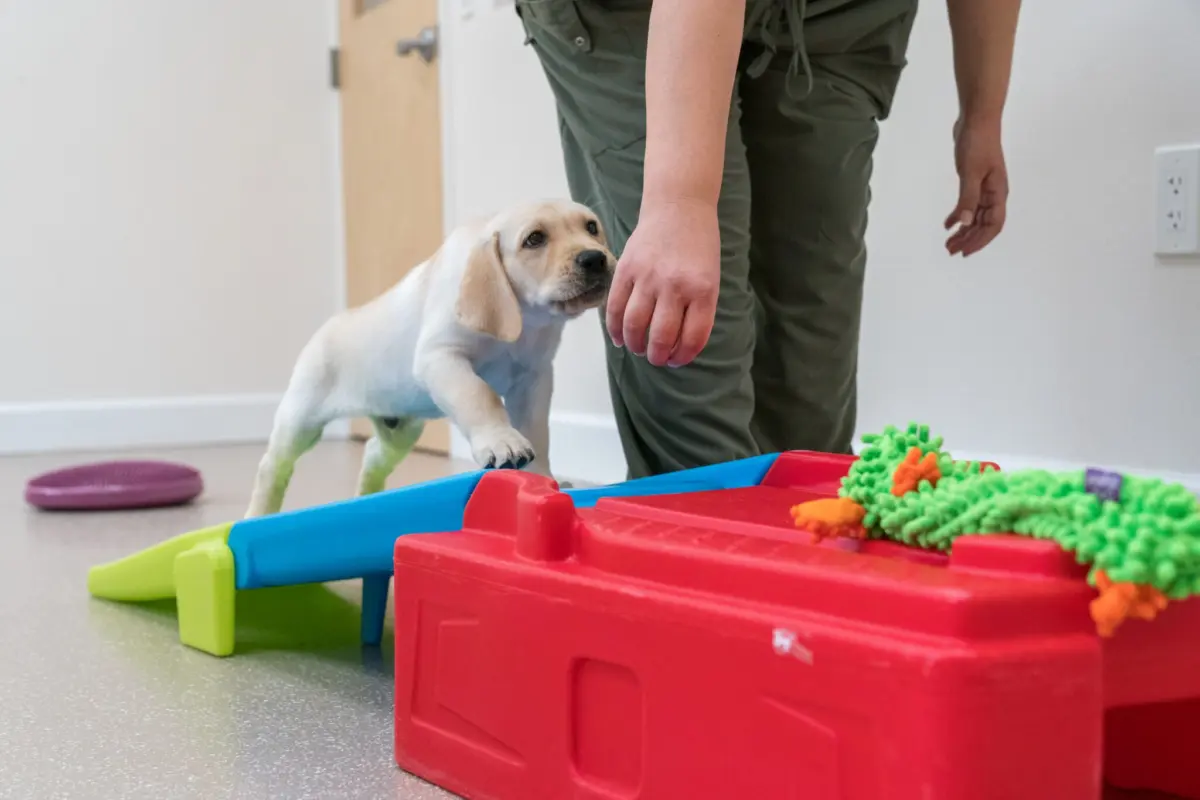
During this window, future service dogs must be thoughtfully exposed to a vast array of people, sounds, floor textures, everyday objects, and environments. By eight weeks of age—the typical benchmark when puppies transition to their volunteer puppy-raising homes—many of these experiences have begun laying the cognitive groundwork for a confident, well-adjusted adult dog.
However, this period also requires immense mindfulness. Most puppies experience an average of four distinct "fear periods" as they grow into adolescence. During these phases, negative or frightening experiences can leave a lasting imprint, making structured, positive reinforcement essential to prevent anxiety and reactivity.
Adolescence and Maturity (Six Months to One Year)
As puppies transition into the adolescent stage—which can begin as early as six months—they frequently begin testing boundaries, much like human teenagers. Concurrently, they approach reproductive maturity. Between six and twelve months of age, physiological and hormonal shifts take hold; female dogs typically experience their first heat cycle, while male dogs undergo hormone-driven behavioral adjustments.

It is during this phase that the resilience built during the neonatal and socialization stages is truly put to the test. Dogs equipped with a strong early foundation navigate these adolescent boundary-pushing phases with greater emotional stability, responding predictably to continued training, environmental enrichment, and positive reinforcement.
Supporting Context & Metrics: The Science of ENS
To appreciate the value of Early Neurological Stimulation, one must look closely at its origins and physiological mechanisms. Originally developed as the "Biosensor" program and later popularized as the "Bio-Sensor" or ENS method, the protocol was heavily researched by military canine programs to improve stress tolerance and cardiovascular performance in working dogs.
+-----------------------------------------------------------------+
|              THE FIVE-STEP ENS DAILY PROTOCOL                   |
|         (Performed once daily from Day 3 to Day 16)             |
+-----------------------------------------------------------------+
| 1. Tactical Stimulation (Tickling between toes)                 |
| 2. Head Held Erect      (Vertical positioning)                  |
| 3. Head Pointed Down    (Inverted positioning)                  |
| 4. Supine Position      (Held gently on back)                   |
| 5. Thermal Stimulation  (Placed on a damp, cool towel)          |
+-----------------------------------------------------------------+
| * Note: Each exercise lasts strictly 3 to 5 seconds.            |
+-----------------------------------------------------------------+
The Five-Step Protocol
The ENS regimen consists of five brief exercises performed once daily on each puppy between the third and sixteenth days of life. Each exercise is designed to introduce a specific, mild physical stressor for a duration of just three to five seconds:
- Tactical Stimulation: Using a cotton swab or finger, the handler gently tickles the skin between the puppy’s toes on any one foot for 3 to 5 seconds.
- Head Held Erect: The puppy is held perpendicularly to the ground, with its head pointing straight up, supporting its body against the handler’s hand.
- Head Pointed Down: The puppy is held firmly, with its head inverted and pointed downward toward the ground.
- Supine Position: The puppy is held gently on its back, allowing its muzzle to relax upward.
- Thermal Stimulation: The puppy is placed paws-down on a damp, cool towel that has been chilled in a refrigerator for a short period, avoiding freezing temperatures.
Biological Impact and Hypothesized Benefits
Because the neonatal puppy’s central nervous system is still unmyelinated and rapidly growing, these brief, controlled stressors act as a form of physiological calisthenics. Controlled studies and decades of operational observation by working dog organizations indicate that ENS stimulates the endocrine system, improves cardiovascular performance, enhances stress tolerance, and strengthens the immune system.

Documented and observed benefits of Early Neurological Stimulation include:
- Improved Cardiovascular Performance: Enhanced heart rate efficiency and cardiovascular health.
- Stronger Heart Beats: Increased physical vigor and cardiac reserve.
- Hormonal Tolerance: Greater resistance to chronic stress through optimized adrenal gland output.
- Greater Disease Resistance: Enhanced baseline immune system competence.
However, researchers and canine experts emphasize that ENS is not a silver bullet. A puppy’s final temperament, emotional stability, and working capacity are the culmination of a complex matrix involving genetics, maternal care, early nutrition, comprehensive socialization, environmental enrichment, and rigorous ongoing training. ENS is simply the first chapter in a much longer, carefully authored book.
Future Outlook: Preparing Dogs for the Ultimate Mission
Guide dogs and service dogs shoulder an immense responsibility. They are tasked with navigating complex, unpredictable environments—from bustling airports and crowded subway cars to quiet medical facilities—while maintaining absolute focus, composure, and emotional equilibrium alongside handlers who rely on them for independence and safety.
These extraordinary capabilities cannot be forged overnight. They are the direct result of a continuous, unbroken chain of intentional care that begins in the whelping box.
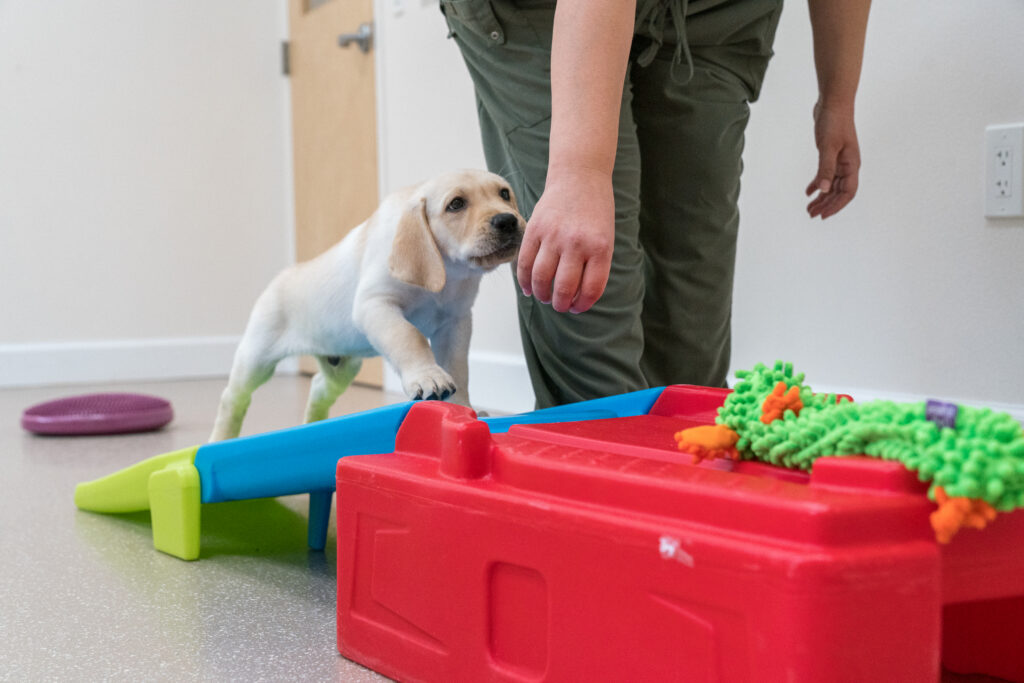
Organizations that invest heavily in foundational protocols like Early Neurological Stimulation recognize that every stage of development builds directly upon the last. By optimizing the neonatal window through ENS, facilities establish a neurological baseline that allows puppies to absorb the subsequent lessons of the socialization window with confidence and curiosity. As these puppies graduate into the hands of volunteer puppy raisers, enter formal obedience and task training, and eventually transition into active service, the dividends of those early, gentle, three-second exercises become unmistakably clear.
As breeding and canine science continue to evolve, the integration of structured early interventions ensures that future generations of service dogs are better equipped than ever to meet the demands of a complex world. For organizations like Dogs Inc, this meticulous attention to detail from day one guarantees that every dog sent out into the world is not merely trained, but deeply prepared to change a life.