
Executive Overview
The Philippine agricultural landscape is undergoing a structural overhaul. Decades of chronic bottlenecks—ranging from impassable dirt tracks in remote provinces to heavily fragmented supply chains that leave farmers vulnerable to predatory middlemen—are finally being met with a coordinated, two-pronged government and private sector response. Backed heavily by the Department of Agriculture (DA), a fresh wave of strategic initiatives has been deployed to fix both ends of the agricultural value chain.
On the upstream infrastructural front, the national government has unlocked a massive PHP9.06bn ($144m) memorandum of agreement with the Department of Public Works and Highways (DPWH) to construct and pave hundreds of kilometers of farm-to-market roads across northern Luzon. These rural arteries are designed to slash hauling costs, cut down post-harvest losses, and physically connect isolated agricultural heartlands to national markets.
Simultaneously, downstream interventions are forging direct lines between local agricultural cooperatives and modern retail giants. In a landmark development, the DA is actively forging a partnership with DALI Everyday Grocery—one of the country’s fastest-growing discount supermarket chains. By bypassing traditional multi-layered layers of middlemen, this collaboration promises to integrate smallholder farmers directly into a booming commercial network boasting over 1,400 stores nationwide.
Together, these synchronized interventions signal a profound shift in Philippine agricultural policy: moving away from reactive band-aid solutions and toward a resilient, modernized, and economically viable food supply chain.
Detailed Chronology: Bridging the Gap from Farm to Shelf
The convergence of infrastructural upgrades and modern retail integration did not happen overnight; it is the culmination of years of diagnosed systemic failures within the Philippine food economy. The timeline of these current interventions highlights an aggressive push by the current administration to tackle structural inefficiencies across the country.
The Upstream Campaign: Unlocking Northern Luzon
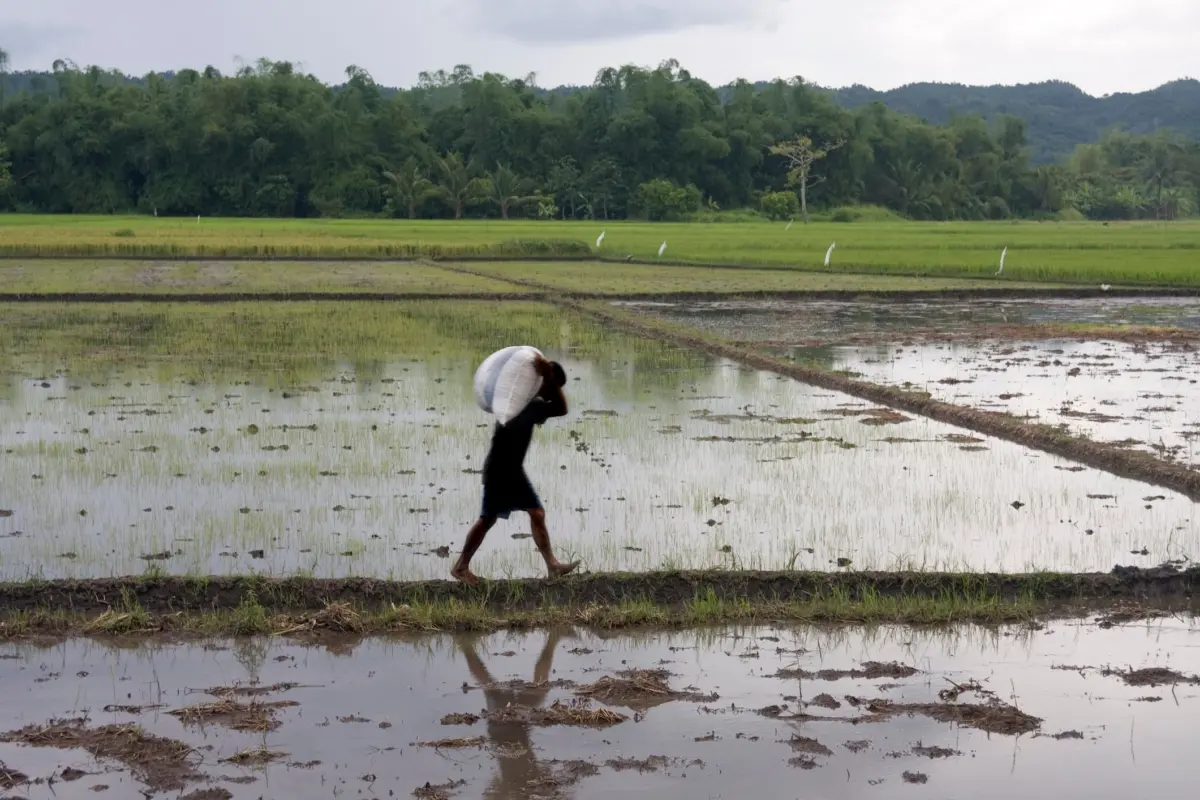
For generations, the agricultural sector in Northern Luzon—comprising key food-producing provinces famed for their high-land vegetables, root crops, and grains—has suffered from infrastructural neglect. During the monsoon seasons, unpaved and poorly maintained trails routinely transform into impassable mud tracks. Farmers have historically been forced to watch their harvests rot at the farm gate, or worse, pay exorbitant transport fees to manual laborers and specialized 4×4 truck operators just to move small volumes of produce to the nearest trading post.
Recognizing that logistical friction is the single greatest hidden tax on Philippine agriculture, the DA and the DPWH finalized a landmark agreement covering 605 distinct farm-to-market road (FMR) projects. Spanning an aggregate 604 kilometers across 26 provinces in northern Luzon alone, this PHP9.06bn ($144m) allocation represents one of the single largest concentrated investments in rural transport infrastructure in recent history.
This regional push does not exist in a vacuum. It forms the foundational bedrock of a much larger national master plan. Under the current national expenditure framework, robust budget allocations have unlocked funding for over 1,600 FMR projects nationwide, targeting an astonishing 2,200 kilometers of newly paved or rehabilitated rural roads. By systematically erasing these logistical dead zones, the government aims to guarantee that farm inputs (such as fertilizers, seeds, and fuel) can flow cheaply into farming communities, while finished harvests can exit swiftly before spoiling.
The Downstream Revolution: The DA-DALI Partnership
While roads ensure physical mobility, market access dictates economic survival. Recognizing that traditional wet markets and unorganized local traders often squeeze farmers out of fair profit margins, the DA initiated high-level talks with DALI Everyday Grocery to establish direct commercial channels.
The partnership stems from strategic dialogues between Agriculture Secretary Francisco Tiu Laurel Jr. and DALI board director Thirdie Icasas. The core objective of these discussions is elegantly simple yet historically difficult to execute: plug local farming cooperatives directly into the inventory stream of a hyper-expanding retail juggernaut.
DALI’s operational footprint makes it an ideal catalyst for this transformation. Operating on a European-style neighbourhood-store model that emphasizes basic necessities and tightly curated product assortments, the discount retailer has scaled at a breathtaking pace. Currently operating 1,403 stores that service upward of 10 million Filipino consumers every single month, the chain maintains an aggressive expansion velocity of opening roughly one new store every single day.
With firm targets set to hit 1,600 stores by the close of the year and a long-term strategic horizon aiming for a staggering 16,000 stores nationwide by 2035, DALI represents an expanding, guaranteed sponge for domestic agricultural output.
The retailer’s initial foray into local agricultural sourcing centered on potatoes—a staple crop heavily cultivated in the Cordillera regions. By testing direct procurement models with potato farmers, DALI proved that large-scale discount retail could successfully bypass complex brokerage systems. To scale this model sustainably, the company is actively scouting locations for dedicated warehouse and consolidation facilities near primary agricultural hubs such as Benguet and Pangasinan. These hubs will allow produce to be aggregated, cleaned, and sorted near the source before being dispatched directly to Metro Manila storefronts, dramatically slashing transit times and handling losses.
Supporting Context & Metrics: The Mathematics of Agricultural Transformation
To fully grasp the significance of these dual interventions, one must examine the hard metrics defining the contemporary Philippine agricultural sector. For decades, the sector has labored under structural disadvantages that stifle productivity and trap rural communities in cycles of poverty.
Quantifying the Logistical Tax
- The Cost of Isolation: Prior to the deployment of comprehensive FMR networks, post-harvest losses in the Philippines routinely hovered between 15% to 20% for high-value crops and grains, primarily driven by poor road conditions and a severe lack of cold-chain infrastructure. In remote areas of Northern Luzon, transport costs could account for up to 30% of a farmer’s total operating expenses.
- National Scale: The current fiscal rollout encompasses over 1,600 FMR projects spanning approximately 2,200 kilometers nationwide. The specific northern Luzon tranche accounts for PHP9.06bn ($144m) spread across 604 kilometers and 26 provinces, directly addressing the country’s primary vegetable and grain baskets.
The Scale of Modern Retail Disruption
- Store Footprint: DALI Everyday Grocery currently commands a network of 1,403 neighborhood stores.
- Consumer Reach: The retailer services over 10 million unique Filipino customers every month.
- Growth Velocity: With a current pace of opening one store per day, DALI is targeting 1,600 operating units by the end of the year, with an astronomical long-term expansion ceiling of 16,000 stores slated for 2035.
- Cold Storage and Hub Integration: To backstop this retail explosion, the DA is concurrently accelerating its network of regional food hubs. This includes the flagship 46-hectare Clark Food Hub, alongside strategic facilities planned in Quezon, Batangas, Bukidnon, and Cebu, complemented by specialized cold-storage infrastructure situated adjacent to the Benguet Agri-Pinoy Trading Center.
Official Statements and Industry Perspectives
The convergence of public infrastructure and private enterprise has drawn praise from government leaders, economic analysts, and agricultural stakeholders alike.
Expressing deep optimism regarding the DALI partnership, Agriculture Secretary Francisco Tiu Laurel Jr. emphasized the transformative potential of reliable, institutionalized off-take agreements for smallholder farmers.
"I am pleased with the outcome of our meeting because DALI can provide a ready market for our local farm products and potentially become a contract-growing partner for our farmers," Secretary Tiu Laurel stated. "This can help give them more stable markets, encourage them to produce more, and ultimately raise their incomes."
Economic analysts point out that contract growing removes the terrifying market volatility that has long plagued Filipino farmers, who traditionally plant crops blindly based on what prices were high the previous season, only to suffer from massive oversupply and crashing prices at harvest time. By establishing pre-agreed volumes and floor prices through direct retail partnerships, farmers gain the financial predictability required to invest in higher-yield farming technologies, certified seeds, and modern equipment.
Furthermore, infrastructure czars at the DPWH have underscored that the PHP9.06bn northern Luzon road network is not merely an engineering project, but an economic lifeline. By reducing transit times from remote mountain farms to lowland urban markets, the infrastructure directly democratizes market access, allowing small-scale cooperatives to compete on an even footing with large, consolidated agricultural conglomerates.
Future Outlook: Building a Resilient, Integrated Food Supply Chain
As the Philippines looks toward the horizon of 2035 and beyond, the success of these synchronized initiatives will serve as a definitive litmus test for the nation’s food security policies.
The integration of robust rural infrastructure with ultra-modern discount retail models charts a clear, actionable roadmap for modernizing the agricultural sector. However, challenges remain. Seamlessly transitioning millions of fragmented smallholder farmers into organized cooperatives capable of meeting the strict quality, volume, and delivery consistency demanded by modern retail giants will require sustained institutional hand-holding, technical training, and financial credit support.
Moreover, the success of downstream retail partnerships must be mirrored by the rapid completion of the DA’s planned network of regional food hubs—including the massive 46-hectare Clark Food Hub and auxiliary cold-storage facilities in Quezon, Batangas, Bukidnon, Cebu, and Benguet. Without adequate cold-chain infrastructure to bridge the gap between farm-gate consolidation and urban retail shelves, even the best paved roads will be insufficient to prevent spoilage and waste.
Ultimately, if the Department of Agriculture, the Department of Public Works and Highways, and private sector partners like DALI can maintain this collaborative momentum, the Philippine agricultural sector will be well-positioned to break free from historical constraints. By lowering logistical hurdles, eradicating predatory middlemen, and guaranteeing stable, direct-to-retail markets, the country is laying the vital groundwork for a modernized, prosperous, and food-secure future.