In a dramatic escalation of regulatory enforcement within the pet food industry, the United States Department of Justice (DOJ)—acting on behalf of the Food and Drug Administration’s Center for Veterinary Medicine (FDA CVM)—has filed a federal civil complaint seeking a permanent injunction against Washington-based manufacturer Darwin’s Pet Food (operating legally under Arrowhead Pet Food and Arrowhead Livestock). The legal filing seeks to halt the manufacturing, processing, and distribution of the company’s direct-to-consumer raw pet food products, alleging systemic safety violations and the repeated distribution of adulterated animal feed.
According to court documents, the federal government asserts that unless restrained by court order, Darwin’s will continue to violate Section 331(a) of the Federal Food, Drug, and Cosmetic Act (FD&C Act) by introducing into interstate commerce products that are adulterated under 21 U.S.C. § 342(a)(4). The FDA contends that the firm’s products have been prepared, packed, or held under insanitary conditions, exposing them to bacterial contamination—specifically Salmonella and Listeria monocytogenes—that poses potential risks to both companion animals and their human owners.
While federal officials frame the lawsuit as a necessary measure to protect public health, the legal action has triggered severe backlash from pet food safety advocates and consumer watchdog groups. Critics point out that while the FDA moves aggressively to dismantle a fresh-food producer, major commercial manufacturers of kibble and canned foods—responsible for massive, multi-brand recalls involving deadly toxins, nutrient misformulations, and lethal euthanizing agents—have historically faced no such injunctive action.
The enforcement action has reopened a broader debate on whether the FDA applies a double standard: penalizing raw pet food producers while granting regulatory leniency to multinational commercial manufacturers and rendering operations whose standard sourcing practices directly conflict with statutory adulteration provisions.
Detailed Chronology: Regulatory Actions and Comparative Recall Histories (2017–2025)
The DOJ’s complaint against Darwin’s Pet Food details an extensive regulatory audit spanning eight years, from 2017 through 2025. During this timeframe, the FDA issued multiple warning letters, safety alerts, and recall requests following routine inspections and product sampling that tested positive for foodborne pathogens.
However, an examination of federal regulatory records over the exact same period reveals that several major industrial pet food manufacturers experienced far more frequent, widespread, and severe product contamination events without facing federal court injunctions.
The J.M. Smucker Company: Timeline of Major Recalls
The J.M. Smucker Company, a dominant player in the traditional wet and dry commercial pet food sector, managed a series of significant recalls between 2017 and 2020:
January 3 & 6, 2017: Issued back-to-back voluntary recalls for multiple lots of wet canned cat food under the 9Lives, EverPet, and Special Kitty brand lines due to critically deficient levels of thiamine (Vitamin B1), a deficiency capable of causing fatal neurological impairment in felines.
February 14, 2018: Withdrew vast distribution volumes of wet dog food brands, including Gravy Train, Kibbles ‘n Bits, and Skippy, after federal testing confirmed the presence of pentobarbital—a controlled substance used primarily to euthanize animals—in finished canned goods.
December 7, 2018: Initiated another recall of 9Lives wet canned cat food owing to additional thiamine deficiency concerns.
December 5, 2019: Pulls specific lots of Special Kitty wet canned cat food following unannounced quality control failures.
July 3, 2020: Recalled specific batches of Natural Balance Ultra Premium Chicken & Liver Pate canned cat food due to dangerously elevated levels of choline chloride, which led to systemic toxicity symptoms in domestic pets.
Sunshine Mills: Timeline of Widespread Formulative and Pathogenic Failures
Contract manufacturer Sunshine Mills experienced a continuous sequence of safety alerts throughout the 2017–2025 window, primarily driven by ingredient misformulation and fungal contamination:
November 2, 2018 – December 5, 2018: Sunshine Mills engaged in a rolling, multi-brand recall involving elevated Vitamin D levels. Excess Vitamin D causes acute renal failure and systemic organ calcification in dogs. Brands affected included Natural Life, Nutrisca, Orlando, ANF, Elm Pet Foods, and Kroger’s store brand Abound (distributed nationwide through retail banners like King Soopers and City Market).
August 26, 2020: Issued a voluntary recall for Nature’s Menu dry dog food due to potential contamination with Salmonella.
September 3, 2020: Expanded nationwide recalls for Family Pet, Heartland Farms, and Paws Happy Life dry formulations following dangerous levels of aflatoxin—a toxic fungal byproduct produced by Aspergillus molds that causes severe liver damage and death.
June 4, 2021: Recalled dry dog food under the Sportsman’s Pride, Sprout, Intimidator, and FRM Gold Select labels due to widespread Salmonella contamination.
July 29, 2021: Issued another major aflatoxin-related recall across six prominent product lines, including Triumph, Evolve, Wild Harvest, Nurture Farms, Heart to Tail, and Elm Pet Foods.
Despite the scale and severe toxicity associated with pentobarbital, aflatoxins, and systemic vitamin miscalculations, neither The J.M. Smucker Company nor Sunshine Mills faced injunctive DOJ proceedings aimed at forcing facility shutdowns.
Supporting Context & Metrics: Statutory Frameworks and The Rendering Dilemma
The Legal Definition of Adulteration Under Federal Law
The federal complaint against Darwin’s relies explicitly on Title 21 of the United States Code (U.S.C.). The statutory core of the government’s argument rests upon two key sections of the FD&C Act:
21 U.S.C. § 331(a): Prohibits the introduction or delivery for introduction into interstate commerce of any food, drug, device, tobacco product, or cosmetic that is adulterated or misbranded.
21 U.S.C. § 342(a)(4): Mandates that a food shall be deemed adulterated "if it has been prepared, packed, or held under insanitary conditions whereby it may have become contaminated with filth, or whereby it may have been rendered injurious to health."
The FDA maintains that the presence of pathogens like Salmonella in raw pet food products inherently satisfies the definition of adulteration under § 342(a)(4), operating under a zero-tolerance policy for raw meat diets.
       +-----------------------------------------------------------------+
       |         FEDERAL FOOD, DRUG, AND COSMETIC ACT (FD&C ACT)        |
       +-----------------------------------------------------------------+
                                       |
                 +---------------------+---------------------+
                 |                                           |
                 v                                           v
    21 U.S.C. § 342(a)(4)                       21 U.S.C. § 342(a)(5)
  "Insanitary Conditions & Filth"             "Diseased / Non-Slaughter Animals"
  • Prepared, packed, held unsanitarily       • Sourced from diseased livestock
  • Risk of contamination with filth          • Sourced from non-slaughter deaths
  • Strictly enforced against RAW diets       • Selectively unenforced via FDA CPGs
The Rendering Industry Conflict: 21 U.S.C. § 342(a)(5)
The enforcement action highlights a glaring regulatory contradiction within the pet food sector: the FDA’s discretionary non-enforcement of 21 U.S.C. § 342(a)(5) when applied to rendered ingredients used in traditional kibble and canned foods.
Under § 342(a)(5), a food is explicitly defined as adulterated:
"…if it is, in whole or in part, the product of a diseased animal or of an animal which has died otherwise than by slaughter."
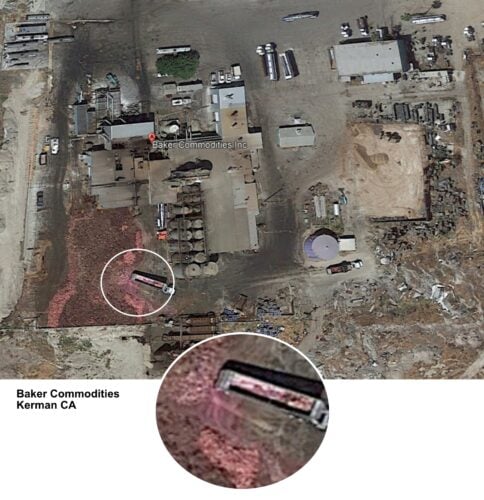
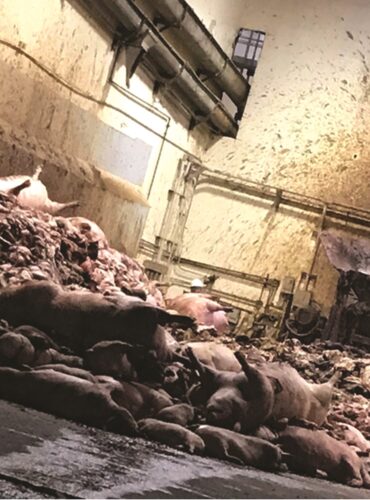
In traditional pet food manufacturing, rendering plants collect animal tissue from a variety of non-slaughter sources—including livestock that died of disease, roadkill, and fallen farm stock ("4-D" animals: Dead, Dying, Diseased, or Disabled). These raw materials are regularly left outdoors in open-air collection bins, exposed to flies, rodents, and severe environmental decay, directly meeting the legal definition of being "held under insanitary conditions whereby it may have become contaminated with filth" (§ 342(a)(4)).
Through internal Compliance Policy Guides (CPGs), the FDA historically exercises administrative discretion to allow rendered ingredients derived from non-slaughtered or diseased animals into commercial kibble, provided the final product undergoes thermal processing (extrusion) to destroy bacterial pathogens.
Advocates argue that this policy creates an uneven playing field: raw pet food operations sourcing human-grade meat are held to strict zero-tolerance standards, while major industrial processors using rendered ingredients from compromised livestock operate under regulatory exemptions.
Official Statements and Regulatory Arguments
The FDA CVM frames its legal proceedings against Darwin’s Pet Food as an essential intervention to protect public health and maintain feed safety across state lines.
In an official public statement accompanying the DOJ filing, Timothy Schell, Ph.D., Director of the FDA’s Center for Veterinary Medicine, reiterated the agency’s duty to uphold statutory standards:
"Every American pet owner deserves confidence that the food they feed their animals is safe and will not pose health risks to their families. The FDA will continue to take strong action against companies that repeatedly manufacture and distribute adulterated pet food products."
Conversely, consumer protection organizations and pet food safety activists assert that the government’s enforcement strategy demonstrates selective prosecution. Susan Thixton, prominent pet food consumer advocate and founder of TruthaboutPetFood.com and the Association for Truth in Pet Food, issued a public critique challenging the integrity of the CVM’s enforcement metrics:
*"If the FDA is truly interested in protecting the public—as this lawsuit claims—then pet owners should expect identical enjoinment actions to be filed immediately against major commercial repeat offenders.
Using this newly emphasized FDA precedent, we must address the reality of pet food ingredients. Rendering facilities routinely store raw material under conditions contaminated with filth, sourcing diseased animals and animals that have died otherwise than by slaughter.
Unless the FDA is prepared to confirm to the public that it operates with open bias and abuses its administrative power, pet owners should see DOJ filings against dozens of major commercial pet food manufacturers within days. If we do not, it evidences clear mismanagement of federal authority."*
Future Outlook: Administrative Complaints and Industry Implications
The DOJ’s legal action against Darwin’s Pet Food sets a momentous legal precedent for the entire animal feed industry. The outcome of the federal case could fundamentally alter how regulatory compliance is enforced across direct-to-consumer fresh pet food manufacturers, raw food processors, and traditional commercial conglomerates.
Potential Impact on the Raw Pet Food Sector
If the DOJ succeeds in securing a permanent injunction against Darwin’s, raw pet food companies across the United States will face heightened legal vulnerability. The FDA’s zero-tolerance standard for Salmonella in raw pet food—treated under § 342(a)(4) as automatic adulteration regardless of ingredient quality—could compel raw manufacturers to adopt costly processing technologies, such as High-Pressure Processing (HPP), or shift away from interstate distribution entirely.
Advocacy Action: Impending Oversight Challenge
In response to the federal court filing, consumer advocate groups are preparing formal administrative and legal challenges. The Association for Truth in Pet Food has announced plans to file a formal complaint with the Government Accountability Office (GAO) if the FDA does not apply its adulteration enforcement standards consistently across commercial kibble manufacturers and rendering facilities.
The anticipated GAO complaint will detail alleged regulatory inconsistencies, including:
Selective Enforcement of Adulteration Statutes: The aggressive application of 21 U.S.C. § 342(a)(4) against fresh and raw food companies alongside the systemic non-enforcement of 21 U.S.C. § 342(a)(5) for rendering plants.
Mismanagement of Regulatory Resources: The preferential protection of commercial ultra-processed food lines experiencing persistent chemical, drug, and fungal contaminants over smaller fresh-food operations.
Lack of Standardized Public Warnings: Disparities in how voluntary recalls, corporate warning letters, and mandatory public notices are handled across different market segments.
As the lawsuit moves forward in federal court, the case stands as a key test for the FDA’s Center for Veterinary Medicine. The proceedings will determine whether federal courts validate the agency’s targeted approach to raw food producers, or whether administrative pressure will force broader structural reforms across the pet food manufacturing sector.