Long before a puppy takes its first deliberate step, learns to walk on a leash, or answers a foundational command, an intricate, high-speed biological orchestration is already underway. In the quiet, vulnerable landscape of the neonatal stage, a canine’s brain and nervous system are developing at an exponential rate. While these newborns remain blind, deaf, and entirely dependent on their mother and littermates, foundational changes are actively shaping how they will perceive, learn from, and interact with the world for the rest of their lives.
At organizations like Dogs Inc, where the stakes of animal behavior and emotional resilience are extraordinarily high, preparing future guide dogs and service dogs begins long before formal training ever commences. It starts at birth.
One of the primary, science-backed methodologies utilized during this critical window is Early Neurological Stimulation (ENS). Comprising a series of brief, highly controlled tactile exercises administered during the first two weeks of life, ENS is designed to jumpstart neurological pathways and improve stress responses. Yet, ENS is merely the opening chapter of a lifelong, deeply intentional developmental narrative.
This comprehensive report examines the meticulous science of early puppy development, exploring how neonatal stimulation, structured socialization periods, and progressive milestones intersect to forge elite service and guide dogs capable of changing human lives.
Detailed Chronology: From Neonatal Vulnerability to Adolescent Maturity
To understand how a puppy evolves from a fragile, eyes-closed newborn into a focused, resilient working partner, one must examine the distinct chronological developmental windows that define canine infancy and adolescence. Each stage presents unique physiological markers, learning capacities, and behavioral vulnerabilities.
The Neonatal Stage (Birth to 2 Weeks)
During the neonatal phase, puppies inhabit a world dominated by two primal drives: warmth and nourishment. They are incapable of regulating their own body temperatures, rendering them entirely reliant on their mother’s body heat and the shared warmth of their littermates. Their eyes and ears are tightly sealed, shutting out visual and auditory stimuli.
Despite this apparent helplessness, the neonatal period is a window of immense neurological plasticity. The brain is rapidly forming neural connections, and the central nervous system is primed to register external stimuli. It is precisely within this delicate 14-day window that Early Neurological Stimulation is introduced. Because puppies are so young, ENS is not a training regimen; rather, it is a sequence of brief, mild physical challenges engineered to stimulate neurological development without inducing distress.
The Transitional Stage (2 to 4 Weeks)
As puppies cross the threshold into the transitional stage, their world dramatically expands. Around two weeks of age, their eyes and ears begin to open, flooding their developing brains with new sights and sounds. By four weeks old, puppies are typically finding their footing, attempting to walk, and even beginning to voice their presence with soft barks.
Simultaneously, their primary teeth start to erupt, signaling a nutritional shift away from exclusive nursing toward soft, mashed gruel and eventually solid food. This period marks the beginning of active environmental exploration, as puppies begin to interact directly with their littermates in earnest, learning foundational social signals and basic bite inhibition through play.
The Socialization Period (3 to 12 Weeks)
Widely recognized by animal behaviorists as the single most critical window in a dog’s psychological development, the socialization period overlaps with the tail end of the transitional stage and extends through the third month of life. During this phase, a puppy’s brain is exceptionally receptive to forming positive associations with novel stimuli.
Weeks 3 to 8: Puppies actively learn canine communication from their mother and littermates. Time spent within the litter is irreplaceable for developing emotional regulation, social fluency, and boundaries.
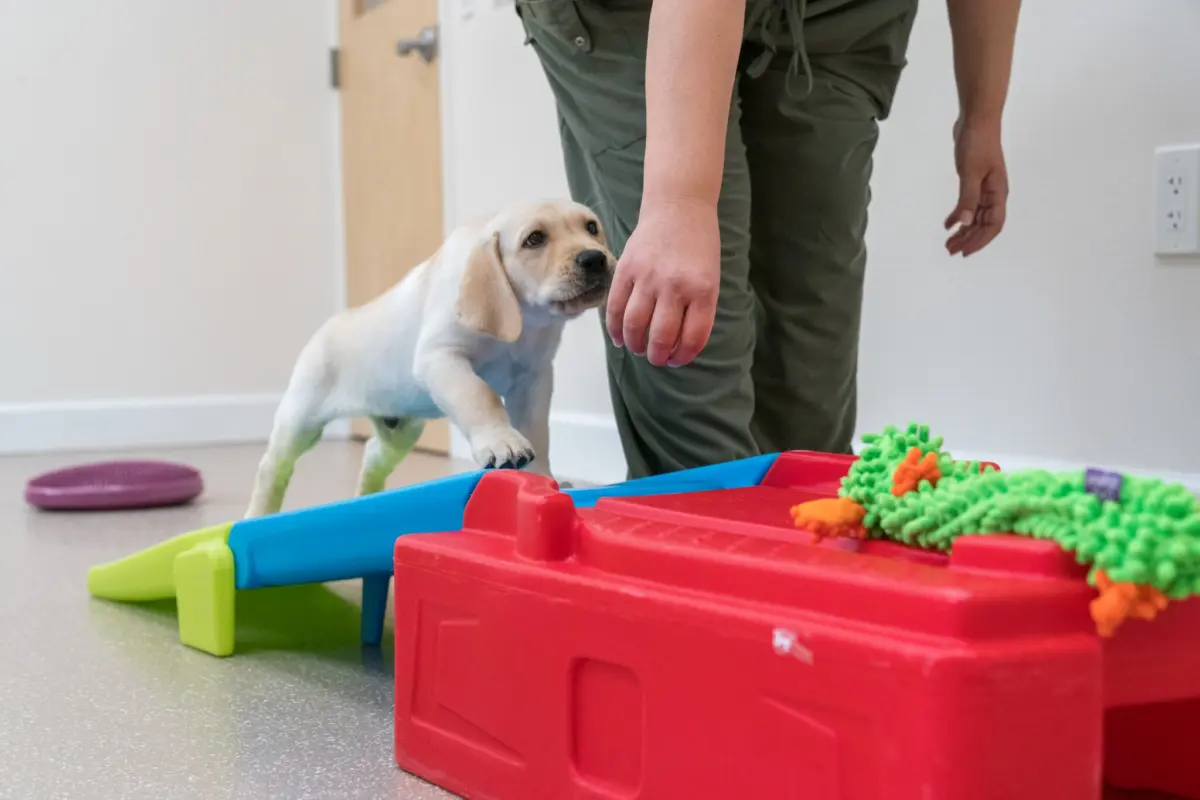
Weeks 8 to 12: By the two-month mark, many puppies transition to their puppy-raising homes. This is a critical time for systematic, positive exposure to diverse sounds, human faces, novel floor textures, varied environments, and unfamiliar objects.
Experts emphasize that by week 12, robust exposure to varied stimuli helps build unshakeable confidence. Conversely, a lack of positive socialization during this window can lead to adult anxiety, fear-based reactivity, and behavioral deficiencies. Furthermore, veterinary and behavioral science notes that puppies experience an average of four distinct "fear periods" during their growth cycle—phases where negative or startling experiences can leave lasting psychological impressions. Thoughtful, gradual exposure combined with positive reinforcement is vital to guiding them through these sensitive milestones.
The Adolescent Stage and Beyond (6 Months to 1 Year and Beyond)
As dogs mature into adolescence—which can begin as early as six months of age—they frequently begin testing boundaries, mimicking the behaviors of human teenagers. Reproductive maturity typically occurs between six and 12 months. For female dogs, this encompasses the onset of their first heat cycle and the broader hormonal shifts associated with reproductive maturity, while male dogs begin exhibiting distinct hormone-driven behaviors.
Throughout this adolescent phase, continuous reinforcement of basic obedience, structured crate training, and gentle exposure to other species, animals, and public environments ensure that the dog remains stable, confident, and reliable. Formal advanced training and specialized puppy classes (often recommended around 16 weeks and onward) refine these traits, culminating in a fully mature, well-adjusted working partner.
Supporting Context & Metrics: Decoding Early Neurological Stimulation (ENS)
Early Neurological Stimulation was originally developed through military canine programs seeking to improve the performance and stress tolerance of working dogs. Today, elite breeding and training organizations like Dogs Inc utilize adapted, scientifically supported protocols during the neonatal window.
What is ENS?
ENS involves a series of five distinct, gentle physical exercises performed once daily between the third and sixteenth day of a puppy’s life. Each exercise lasts for approximately three to five seconds per puppy. Because the neonatal nervous system is rapidly developing, these mild, controlled physical stressors elicit beneficial biological responses.
The standard daily routine typically includes:
Tactile Stimulation: Tickling the puppy’s foot gently between the toes using a Q-tip or finger.
Head Erect: Holding the puppy perpendicular to the ground, with its head pointing straight up.
Head Down: Holding the puppy gently with its head pointed downward toward the ground.
Supine Position: Holding the puppy flat on its back, resting comfortably in the handler’s hands.
Thermal Stimulation: Placing the puppy on a damp, cool towel for a brief, controlled duration.
Physiological Impacts and Metrics
While ENS is brief, research and decades of operational observation suggest it yields measurable physiological enhancements. The controlled, mild stressors prompt the pituitary gland and adrenal cortex to release beneficial stress hormones in micro-doses. Over time, this conditioning is theorized to:
Enhance stress tolerance and emotional recovery when encountering novel environments later in life.
Optimize the brain’s adaptability and neurological capacity.
However, experts caution against viewing ENS as a magic bullet. A puppy’s ultimate temperament, health, and suitability for working life are the product of a complex matrix: genetics, prenatal care, neonatal stimulation, targeted socialization, ongoing environmental enrichment, and elite professional training must all align harmoniously. ENS is simply the foundation upon which all subsequent developmental building blocks rest.
Official Perspectives: The Dogs Inc Philosophy
The philosophy at Dogs Inc centers on a holistic, uncompromising commitment to canine welfare and operational excellence. Organizations dedicated to producing guide and service dogs understand that elite capabilities cannot be manufactured overnight through force or hurried training schedules; they must be thoughtfully cultivated from the moment of birth.
"Preparing future guide dogs and service dogs starts long before formal training begins. Every touch, every gentle challenge, and every stage of development is part of a deliberate architecture designed to foster resilience, confidence, and emotional maturity," notes the developmental framework at Dogs Inc.
Service and guide dogs face immense operational demands. They must navigate chaotic urban landscapes, ignore intense auditory and visual distractions, process rapid environmental shifts, and remain steadfastly calm beside handlers who depend on them for physical independence and safety.
According to organizational leadership, this level of poise is the direct result of early investment. By initiating developmental support during the neonatal stage via ENS, extending into the structured socialization windows, and partnering with dedicated volunteer puppy raisers, Dogs Inc ensures that every dog is equipped with the psychological toolkit required for life-changing partnerships.
Future Outlook: The Evolution of Canine Development
As animal behavior science advances, the methodologies surrounding service dog rearing continue to evolve. Modern genomic research, sophisticated behavioral tracking metrics, and refined socialization paradigms are allowing organizations to predict, support, and enhance canine capabilities with unprecedented precision.
The future of service dog development points toward an increasingly integrated approach—one that bridges cutting-edge neonatal intervention with lifelong continuing education. As insights into neuroplasticity expand, protocols like ENS will continue to be refined, ensuring that tomorrow’s guide and service dogs enter the world with the strongest possible biological and psychological foundation.
Ultimately, the journey of a service dog is a testament to the power of intentional care. From a fragile, blind newborn undergoing gentle neonatal stimulation to a confident, life-changing partner navigating the complexities of the human world, every phase of development matters. Through rigorous science, compassionate handling, and lifelong learning, organizations like Dogs Inc prove that shaping a hero truly does begin on day one.