
Executive Overview
In the realm of canine ownership, few subjects generate as much confusion, cultural anxiety, and passionate debate as the distinction between the American Bulldog and the American Pitbull Terrier. Because of their muscular builds, blocky heads, and historical roots in blood sports, these two distinct breeds are frequently conflated by the general public, the media, and even municipal legislators. However, to view them as interchangeable is to fundamentally misunderstand their unique genetic blueprints, historical trajectories, behavioral profiles, and care requirements.
While both breeds share a distant common ancestor in the historic Old English Bulldog, they evolved through divergent breeding programs tailored to different tasks. The American Bulldog developed primarily as a versatile farm guardian, stock dog, and hunter of large game, favoring sheer mass, power, and defensive capabilities. Conversely, the American Pitbull Terrier emerged from deliberate crosses between bulldogs and terriers, engineered to possess heightened agility, tenacity, and a streamlined physique.
This comprehensive investigative report examines the morphological, behavioral, and historical realities of both breeds. By separating canine science from cultural myth—such as the persistent myth of the "locking jaw"—this analysis provides prospective owners, canine professionals, and policymakers with an authoritative guide to understanding these two powerhouse breeds.
Detailed Chronology: From Working Origins to Modern Companions
To fully comprehend the contemporary American Bulldog and Pitbull, one must trace their lineage through centuries of human utility, economic shifts, and selective breeding practices.
The Foundational Ancestry: The Old English Bulldog
The story of both breeds begins with the extinct Old English Bulldog, a dog forged in the crucible of medieval blood sports such as bull-baiting and bear-baiting. These foundational dogs were structurally distinct from today’s English Bulldogs; they were taller, more athletic, and possessed exceptional jaw strength and tenacity. When the Cruelty to Animals Act of 1835 effectively outlawed these blood sports in the United Kingdom, the utility of the Old English Bulldog plummeted, steering the canine type toward two very different evolutionary paths.
The American Bulldog: Preservation and Farm Utility
As settlers immigrated to North America, they brought working bulldogs with them to serve as all-around farm dogs. These immigrants needed dogs capable of catching feral cattle and wild boars, guarding homesteads against predators, and working alongside farmers.

- The Working Roots: Unlike their urban counterparts in England, American working bulldogs were selected for functional health, speed, and endurance rather than cosmetic show standards.
- The Brink of Extinction: Following World War II, the American Bulldog population dwindled drastically, nearly vanishing across the rural American South.
- The Rescue Mission: The preservation of the breed is largely credited to Dr. John D. Johnson and Alan Scott. Beginning in the mid-20th century, Johnson traveled the rural South to locate and catalog surviving working bulldogs, meticulously establishing a breeding program that saved the breed from extinction and laid the groundwork for modern breed standards.
The Pitbull: The Bulldog-Terrier Synthesis
The American Pitbull Terrier has a parallel yet distinct genesis. Following the ban on large-scale baiting sports in Britain, breeders sought to create a faster, more agile canine by crossing the remaining Old English Bulldogs with various indigenous terrier breeds, such as the Old English Terrier and Black and Tan Terrier.
- Importation to America: These bulldog-terrier crosses were brought to the United States, where they were deployed in various capacities, including general farm work, hunting, and unfortunately, organized dog fighting.
- Recognition and Standardization: Despite its controversial utilization in blood sports, fanciers sought to legitimize the breed’s stable traits—such as high intelligence, human-directed loyalty, and extreme athleticism. In 1898, UKC founder C.Z. Bennett officially recognized the breed as the American Pit Bull Terrier, creating a distinct registry separate from the American Kennel Club (AKC), which later recognized a show-ring variant as the American Staffordshire Terrier.
Supporting Context & Metrics: Morphology and Physical Comparison
A side-by-side evaluation of physical traits reveals stark differences in scale, proportions, and athletic specialization. While both dogs project an image of undeniable strength, their engineering serves different mechanical advantages.
| Metric / Trait | American Bulldog | American Pitbull Terrier |
|---|---|---|
| Height (Adult) | Males: 22–27 inches (56–69 cm) Females: 20–24 inches (51–61 cm) |
Males: 18–21 inches (46–53 cm) Females: 17–20 inches (43–51 cm) |
| Weight (Adult) | Males: 75–125 lbs (34–57 kg) Females: 60–100 lbs (27–45 kg) |
Males: 35–65 lbs (16–29 kg) Females: 30–50 lbs (14–23 kg) |
| Skeletal Build | Heavy-boned, stocky, broad-chested, and imposing | Lean, muscular, athletic, and balanced |
| Coat & Colors | Short, single coat; predominantly white with patches of brindle, red, brown, or black | Smooth, glossy coat; wide array of solid and mixed colors including blue, fawn, red, black, and brindle |
| Energy Output | Moderate to high; driven by endurance and heavy tasks | Extremely high; driven by speed, agility, and task execution |
| Average Lifespan | 10 to 12 years | 12 to 15 years |
Morphological Analysis
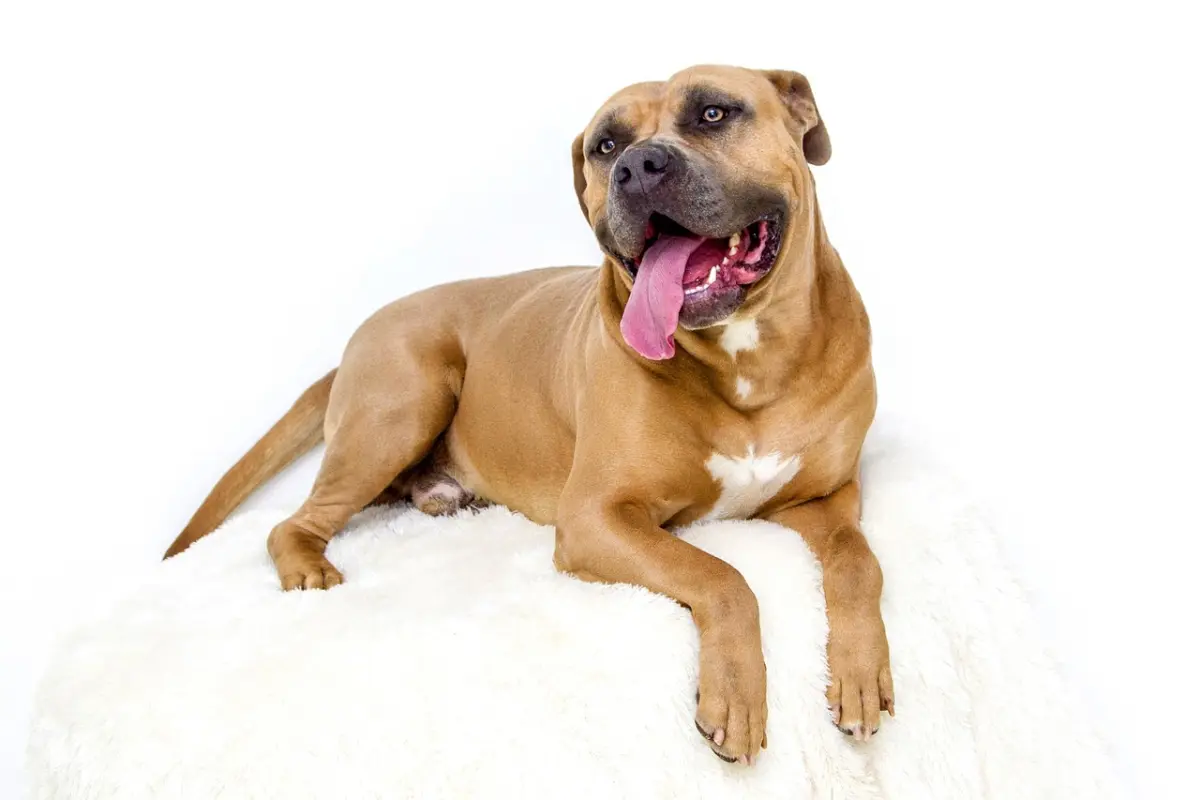
The American Bulldog is a heavy-duty laborer. Its broad skull, powerful jaws, and deep, wide chest are designed for impact absorption and physical containment of large livestock. They are substantially heavier and taller than Pitbulls, making them formidable physical barriers.
In contrast, the American Pitbull Terrier is built like a middleweight prizefighter. Their lighter frame allows for explosive acceleration, high vertical leaps, and superior agility. While they possess immense jaw strength relative to their body weight, their structural design prioritizes agility and stamina over raw mass.
Behavioral Profiles, Temperament, and Training
Understanding the psychological and behavioral tendencies of these breeds is essential for responsible ownership. Both breeds possess intense loyalty to their human families, but their historical selection pressures dictate how they interact with their environment and other animals.
The American Bulldog: The Confident Guardian
- Temperament: American Bulldogs are characterized by unshakeable confidence, deep-seated loyalty, and a natural protective instinct. They view their human family as their pack and take territorial guardianship seriously.
- Social Dynamics: Due to their guarding heritage, they can be aloof or suspicious of strangers. While they can be surprisingly tolerant of household pets when raised together, their high prey drive and dominant posture require careful, deliberate socialization during puppyhood.
- Trainability: Highly intelligent and eager to please, American Bulldogs respond exceptionally well to consistent, positive reinforcement training. However, their independent and stubborn streak means owners must establish clear leadership early on.
The American Pitbull Terrier: The High-Octane Companion
- Temperament: Pitbulls are famously affectionate, people-oriented dogs that thrive on human contact. Often dubbed "velvet hippos," they display an effusive, joyful demeanor toward people, seeking physical touch and constant engagement.
- Social Dynamics: Because of their historical background in dog-to-dog combat, modern Pitbulls exhibit a higher propensity for animal-directed aggression than many other breeds. While many Pitbulls live harmoniously with other pets, genetic predispositions require owners to manage multi-pet households vigilantly.
- Trainability: Possessing a relentless work ethic and high emotional intelligence, Pitbulls excel in obedience, agility, and weight-pulling sports. They require structured outlets for their boundless mental and physical energy to prevent destructive behaviors.
Official Perspectives and Veterinary Science
To cut through cultural bias, breed-specific legislation (BSL), and sensationalized media reporting, it is crucial to examine the consensus among veterinary organizations, animal behaviorists, and regulatory bodies.

Debunking Canine Myths
- The "Locking Jaw" Fallacy: Veterinary anatomists and biomechanical studies have repeatedly confirmed that neither the American Bulldog nor the Pitbull possesses any specialized anatomical mechanism, bone structure, or muscular lock that allows their jaws to "lock" shut. Their reputation stems from their tenacity—a psychological trait rooted in their history as working and fighting dogs, where they maintained their grip under duress.
- Inherent Aggression Toward Humans: Major animal welfare organizations, including the American Veterinary Medical Association (AVMA) and the ASPCA, emphasize that canine aggression is not an immutable trait exclusive to specific breeds. While genetics play a role, environmental factors—such as socialization, training, abuse, neglect, and owner stewardship—are the primary determinants of a dog’s behavior toward humans. Pitbulls, in particular, historically scored exceptionally high on American Temperament Test Society (ATTS) evaluations, frequently outscoring popular family breeds like Golden Retrievers and Beagles in human-directed stability.
The Challenge of Breed-Specific Legislation (BSL)
Municipalities worldwide have historically enacted bans or strict restrictions on "pit bull-type dogs" and large bulldogs out of public safety concerns. However, modern criminological and veterinary research suggests that BSL is largely ineffective at reducing dog bite incidents. Furthermore, visual identification of these breeds—even by animal control professionals and veterinarians—is notoriously inaccurate, as mixed-breed dogs frequently possess physical traits shared across the molosser and terrier spectrum.
Future Outlook: Responsible Ownership in the 21st Century
As urban spaces become denser and public scrutiny of power breeds intensifies, the future of both the American Bulldog and the American Pitbull Terrier rests squarely on the shoulders of responsible breeding and educated ownership.
The Imperative of Early Socialization
Both breeds require an investment of time that far exceeds that of lower-energy companion dogs. Prospective owners must commit to:
- Early Socialization: Exposing puppies to novel environments, sounds, people, and well-managed animal interactions during their critical developmental windows (8 to 16 weeks of age).
- Physical Outlet Management: Providing a minimum of 60 to 90 minutes of vigorous daily exercise. For American Bulldogs, care must be taken during hot weather, as their brachycephalic tendencies make them susceptible to heat exhaustion. For Pitbulls, high-intensity games like fetch, flirt-pole work, and agility training are vital for emotional equilibrium.
- Mental Stimulation: Utilizing puzzle toys, obedience drills, and structured tasks to channel their considerable intelligence constructively.
Conclusion
The American Bulldog and the American Pitbull Terrier are magnificent, athletic, and deeply loyal companions, but they are not suitable for passive or novice pet owners. By acknowledging their distinct historical backgrounds, respecting their physical and behavioral needs, and rejecting sensationalized myths, society can move toward a more enlightened, humane approach to understanding and housing these extraordinary canine athletes.