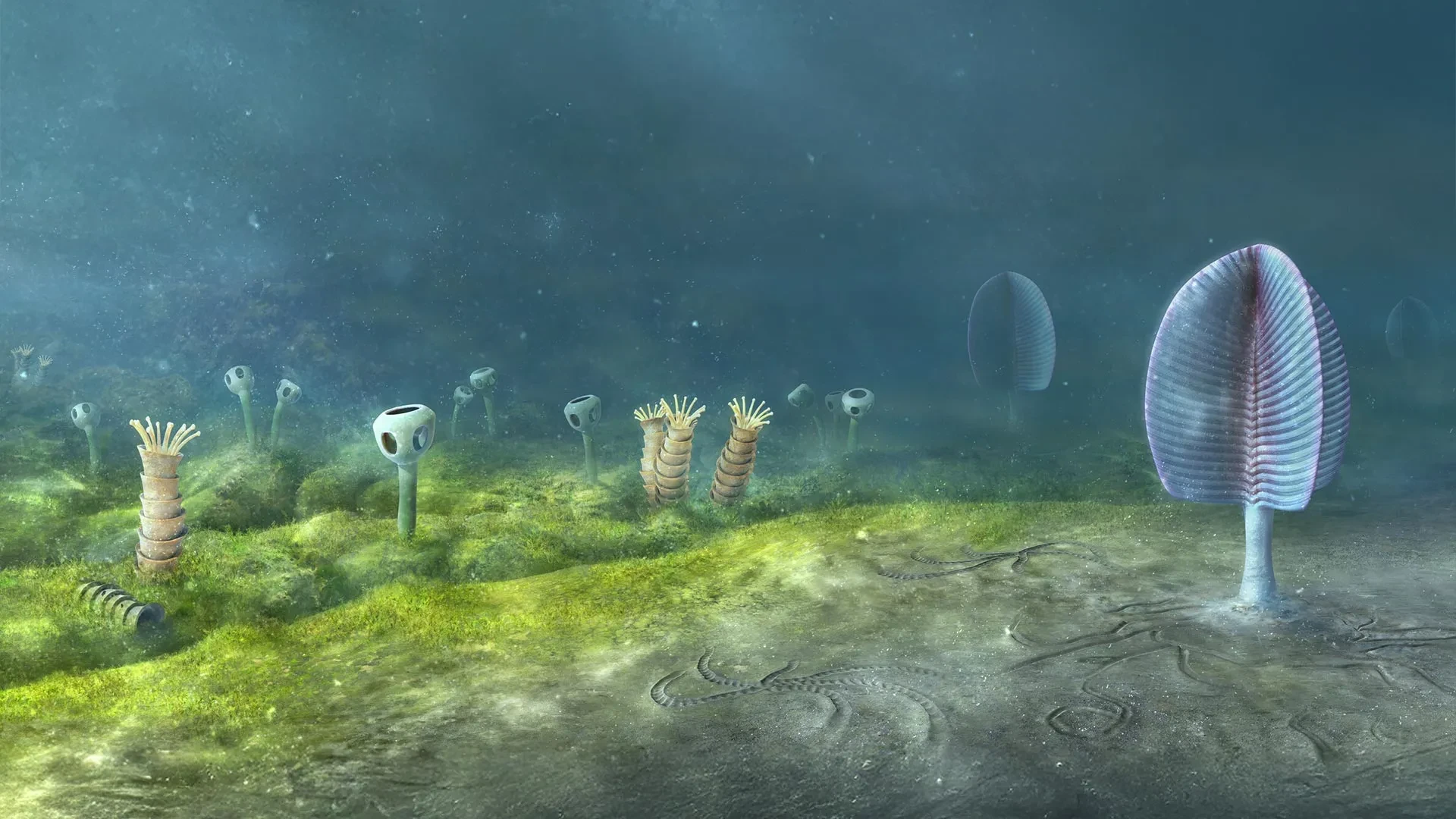

Executive Overview
In what may represent a paradigm shift for evolutionary biology, a major international study reveals that the animal kingdom may have emerged up to 200 million years earlier than previously indicated by the traditional fossil record. Published in the October 2 issue of Science Advances, the research undermines a foundational assumption long utilized by paleontologists and evolutionary biologists to anchor the timeline of early animal origins.
For decades, the standard scientific consensus rested on the premise that exceptionally well-preserved microfossil deposits lacking animal remains served as definitive proof that animals simply did not exist at the time of their formation. However, new empirical evidence analyzed by researchers from the University of Oxford, University of California Berkeley, ETH Zürich, and Yale University shatters this logic. By demonstrating that even remarkably preserved ecosystems can completely fail to capture existing animal life, the study opens the door to a radical possibility: that the first animals walked, swam, or drifted through primeval waters deep within the Neoproterozoic Era, potentially before the catastrophic "Snowball Earth" glaciations that reshaped the planet.
This comprehensive report examines the methodology behind the breakthrough, the geological context of the key fossil sites in China and Mongolia, the recalibration of molecular clocks, and the profound implications this research holds for the study of ancient life on Earth.
Detailed Chronology: From the Cambrian Explosion to Pre-Ediacaran Beginnings
To understand the magnitude of the new findings, one must look at how scientists have traditionally reconstructed the timeline of life on Earth.
The Cambrian Illusion
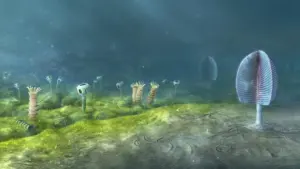
For centuries, the earliest chapters of complex animal life appeared deceptively straightforward. In the fossil record, complex multi-cellular organisms make a seemingly abrupt appearance shortly before and during the Cambrian Period, spanning roughly from 539 to 487 million years ago. This explosive diversification—often termed the "Cambrian Explosion"—produced the precursors of most modern animal phyla.
Yet, this sudden burst of fossilized biodiversity posed an evolutionary paradox. Evolutionary theory and genetic models strongly suggested that the lineages leading to these complex organisms must have diverged long beforehand. Bridging this gap required scientists to look deeper into the geological record, pushing past the Cambrian into the Ediacaran Period (635 to 539 million years ago) and beyond.
The Weng’an Biota Benchmark
At the heart of the modern debate is the Weng’an Biota in South China, a fossil deposit roughly 590 million years old. Preserved within rocks of the Ediacaran age, the Weng’an Biota is renowned for its microscopic preservation. It captures fragile, microscopic organisms in breathtaking, cellular-level detail.
Because scientists found no definitive animal fossils within this extraordinary deposit, a powerful consensus emerged: the Weng’an Biota set a maximum age limit for the origin of animals. The scientific reasoning was straightforward—if animals had already existed in the global oceans 590 million years ago, an environment capable of preserving micro-embryos and delicate cellular structures with such pristine fidelity surely would have captured them. Consequently, textbooks and academic models anchored the birth of the animal kingdom to the post-Weng’an timeline.
The Kheseen Biota Breakthrough
The recent study led by the University of Oxford systematically dismantled this foundational assumption by examining the Kheseen Biota in Mongolia.
The research team analyzed more than 140 rock samples utilizing advanced scanning electron microscopy. These samples included material gathered from previously undocumented locations across the region. The Kheseen Biota is roughly 40 million years younger than the Weng’an Biota, though the two deposits share overlapping species of microfossils. Crucially, the global geological record provides undeniable proof that animals already existed elsewhere on Earth—such as in Namibia and South China—by the time the Kheseen Biota formed.
Despite utilizing cutting-edge microscopy to uncover exquisitely preserved microfossils—including complex acritarchs (tiny spherical organisms featuring intricate spines and branching projections) and embryo-like fossils containing distinct internal cells—the researchers found zero evidence of animal remains.
The Kheseen Biota effectively proved that exceptional fossil preservation does not guarantee the entrapment of animal life, even when it is known to have existed concurrently in the marine ecosystem.
Supporting Context & Metrics: Recalibrating the Molecular Clock
With the Weng’an Biota disqualified as a reliable cutoff point for the origin of animals, the researchers had to re-evaluate how older geological formations are used to establish evolutionary timelines.
Tapping into Older Geological Constraints
By invalidating the logic that the absence of animal fossils equals the absence of animals, the research team bypassed the Ediacaran constraints and pushed their investigative gaze much further back in time—specifically to deposits dating between 850 and 730 million years ago.
Key formations examined in this broader context include:
- The Svanbergfjellet Formation (Norway)
- The Bitter Springs Group (Australia)
- The Chuar Group (Arizona, USA)
These ancient, fossil-rich deposits possess the environmental and chemical characteristics capable of preserving delicate organic remains. While confirmed animal body fossils have not yet been discovered within them, they have historically been leveraged to define the absolute maximum possible ages for the dawn of animal life.
Molecular Clock Analysis
To translate these geological constraints into a timeline, the researchers deployed sophisticated molecular clock analyses. This interdisciplinary technique cross-references genetic mutations across living species with fossil calibration dates and estimated rates of evolutionary mutation. By measuring genetic divergence, scientists can mathematically estimate when common ancestral lineages split from one another.
When the research team integrated the older geological constraints (ranging from 850 to 730 million years ago) rather than the younger Ediacaran Weng’an site into their models, the calculated origin of animals shifted dramatically backward. The timeline expanded by approximately 200 million years, placing the emergence of the animal kingdom squarely between 800 and 700 million years ago.
The Chemical Fossil Clue
This radical recalibration aligns closely with alternative lines of proxy evidence that have puzzled scientists for years. Organic geochemists have long studied chemical fossils—known as biomarkers—extracted from ancient rock layers. Specific lipid biomarkers found in rocks dating back at least 650 million years bear a striking molecular signature consistent with the biological makeup of modern sponges.
If sponges or sponge-like precursors were thriving 650 million years ago, they must have evolved from even simpler, soft-bodied ancestors considerably earlier. Because these primordial organisms lacked hard skeletal structures, bones, or mineralized shells, their chances of surviving the destructive processes of fossilization were vanishingly small. Their preservation required an exceptionally rare alignment of post-mortem chemical conditions that geologists are only beginning to understand.
Official Statements & Expert Insights
The implications of the study have reverberated across the global paleontology and evolutionary biology communities, highlighting both the excitement of new discoveries and the cautious humility required when studying deep time.
Reflecting on the significance of the Mongolian fossils, Associate Professor Ross Anderson, senior author of the study from the Oxford University Museum of Natural History, noted:
"The Kheseen Biota breaks the argument that the exceptional microfossils of Weng’an mean we would have seen animal fossils in the assemblage had they existed at the time. The Kheseen microfossils are just as well-preserved, yet animals continue to be absent—despite the fact we know at that point they existed."
Professor Anderson added that this absence likely stems from environmental segregation or micro-environmental chemical barriers:
"This suggests animals may have occupied environments different from those represented in the Kheseen deposits, or that the chemical conditions responsible for fossilization there were not suitable for preserving animal remains."
Orin Lole Durbin, a PhD student at Virginia Tech who served as the lead author of the study during his undergraduate studies at the University of Oxford, emphasized the nuanced nature of the findings:
"Pre-Ediacaran animal body fossils still elude us, and this analysis does not prove that animals existed 800 million years ago. However, our new fossil evidence from Mongolia undermines one of the main arguments for restricting animal origins to the Ediacaran interval. Meanwhile, our molecular-clock analyses show how much further back their evolutionary history could extend."
Concluding with a perspective on the ongoing quest to pinpoint the exact genesis of the animal kingdom, Professor Anderson summarized:
"Until that evidence becomes available, the precise birth date of the animal kingdom remains uncertain."
Future Outlook: The Intersection of Geology, Genetics, and Astrobiology
The publication of this study in Science Advances marks not the end of a scientific debate, but the opening of a rigorous new chapter in evolutionary research. The traditional reliance on isolated, well-preserved fossil beds as absolute chronological boundaries is officially obsolete. Consequently, researchers must adopt a multi-pronged strategy to track down the elusive shadow of Earth’s first animals.
1. Broadening the Geological Search
Future paleontological expeditions will need to cast a wider net, exploring deposits from a vastly diverse array of geographical locations, paleo-environments, and localized chemical preservation regimes. By studying strata that represent marginal, deep-sea, or unusual chemical environments during the Neoproterozoic, scientists may stumble upon micro-niches where early soft-bodied metazoans were preserved.
2. Synthesizing Multidisciplinary Evidence
The hunt for early animal life can no longer rely on body fossils alone. The scientific community increasingly recognizes that answering these deep-time questions requires synthesizing:
- Animal body fossils (where exceptionally preserved).
- Trace fossils (such as ancient burrows, trackways, or bioturbation patterns left in sediment).
- Chemical biomarkers (stable isotope ratios and lipid signatures locked within ancient shales and carbonates).
3. Astrobiological Parallels
Beyond Earth, these methodological shifts carry profound implications for astrobiology. As space agencies probe the subsurface oceans of icy moons like Europa and Enceladus, or analyze ancient mudstones on Mars, scientists are confronted with the reality that complex or microscopic life may exist without leaving obvious macroscopic traces in its geological record. Understanding the limits of fossilization on Earth provides a vital calibration framework for detecting extraterrestrial biosignatures.
Ultimately, the revelation that animals may have evolved up to 200 million years earlier than previously thought forces humanity to look at the history of our planet with renewed wonder. The tapestry of life is far deeper, more resilient, and more ancient than our oldest visible threads suggest—waiting patiently for modern science to decode its hidden past.