
Executive Overview
As the global agricultural sector stands at the formidable crossroads of climate volatility, labor scarcity, and tightening environmental regulations, innovation has transitioned from a competitive advantage to a fundamental survival mechanism. Acknowledging this high-stakes paradigm shift, TIME magazine has unveiled the agriculture category of its prestigious annual Best Inventions list for 2026. Handpicked from a vast global pool of nominations evaluated by the publication’s editors and correspondents on criteria of originality, efficacy, ambition, and societal impact, six standout technologies have been recognized.
These innovations form a vital cornerstone of TIME’s broader ranking of 300 products and ideas designed to make the world "better, smarter, and more fun." Spanning advanced crop genetics, autonomous field robotics, AI-driven pollinator management, circular economy upcycling, and nutrient recovery, the 2026 class underscores a collective industry pivot toward intelligent, sustainable, and high-efficiency farming systems.
Rather than focusing on incremental adjustments, this year’s laureates are fundamentally redefining the mechanics of food production. From seed optimization driven by light-activated science to automated vineyard robots combating resilient plant pathogens with ultraviolet rays, the 2026 cohort offers a compelling blueprint for the future of farming. This special report examines the driving forces behind these breakthrough technologies, details their operational impact, and assesses how they are reshaping global agricultural economics.
Detailed Chronology: The Evolution of the 2026 Agri-Tech Vanguard
The journey of the 2026 agricultural winners to TIME’s prestigious list reflects years of rigorous research, field trials, and commercial scaling. While the official recognition arrives in 2026, the developmental trajectory of these six technologies illustrates a synchronized maturation across multiple scientific disciplines.
Phase One: Foundation and R&D (2020–2023)
At the dawn of the decade, the agricultural sector faced unprecedented supply chain disruptions and escalating input costs. During this foundational period, companies like Saga Robotics began deploying their autonomous Thorvald platform in controlled environments and early commercial trials, testing UV-C light treatments as a non-chemical defense against powdery mildew. Simultaneously, pioneers in biologicals and seed tech, such as BioLumic, laid the groundwork for non-GMO trait development, exploring how specific light spectra could prime seeds for accelerated growth and climate resilience.
Phase Two: Scaling and Market Penetration (2024–2025)
By the mid-2020s, labor shortages in specialty crops reached a critical threshold, accelerating the adoption of field automation. Burro introduced scalable autonomous transport platforms to mitigate harvest bottlenecks, while Beewise deployed AI-powered robotic hives to combat global honeybee decline. Concurrently, software developers and biotechnology firms turned their attention to the circular economy, utilizing early-stage artificial intelligence to map agricultural waste streams and extract high-value commercial compounds through platforms like the 2nd Nature AgWaste Portal.
Phase Three: Global Validation and Industry Recognition (2026)
The culmination of these multi-year efforts crystallized in 2026. Thorvald scaled its footprint to manage approximately 30% of the United Kingdom’s tabletop strawberry production and roughly 2,500 acres of California vineyards. Nutrient recovery also entered the mainstream spotlight, with innovations like VunaNexus Aurin demonstrating the commercial viability of transforming human urine into regulatory-compliant agricultural fertilizers. It was against this backdrop of maturity and proven commercial scale that TIME formally codified these six technologies as the defining agricultural inventions of 2026.
Supporting Context & Metrics: The Six Breakthrough Technologies
To fully appreciate the significance of TIME’s 2026 selection, one must examine the specific mechanics, metrics, and real-world applications that propelled these innovations to the forefront of global agriculture.
1. BioLumic (xTraits Platform): Light-Activated Seed Genetics
- Category: Crop Genetics & Seed Innovation
- The Innovation: BioLumic utilizes patented light-treatment technology to activate specific genetic pathways in seeds prior to planting. This process, known as the xTraits platform, enhances root development, stress tolerance, and overall yield potential without altering the seed’s DNA.
- Impact & Context: As climate pressures intensify drought, salinity, and temperature volatility, farmers require crops that hit the ground running. BioLumic’s non-GMO approach addresses the urgent need for rapid-deployment resilience, giving seeds a stronger biological start and reducing early-stage crop failure rates.
2. Burro Grande 44: The All-Purpose Farm Assistant
- Category: Robotics & Labor Augmentation
- The Innovation: Engineered as an adaptable, autonomous transport and utility robot, the Burro Grande 44 navigates complex terrain to shoulder the physical burdens of manual farm labor—most notably hauling harvested fruit from field workers to central collection points.
- Impact & Context: Addressing a severe global labor deficit, automation has shifted from a novelty to a critical operational backbone. By streamlining logistics within the orchard and field, the technology directly amplifies human output.
3. Beewise Robi: Artificial Intelligence in Apiary Management
- Category: Pollinator Health & Management
- The Innovation: Beewise combines advanced robotics with artificial intelligence to monitor, protect, and manage bee colonies in real-time. The Robi system automates critical hive interventions—such as temperature regulation, pest control, and feeding—preventing colony collapse disorder.
- Impact & Context: Approximately one-third of the human diet relies on insect pollination, primarily by honeybees. With commercial beekeeping facing severe mortality rates due to varroa mites and environmental stressors, AI-driven apiary management safeguards the foundational pollination services required for global fruit, nut, and vegetable production.
4. 2nd Nature AgWaste Portal: Unlocking Circular Economies
- Category: Circular Agriculture & Upcycling
- The Innovation: Leveraging artificial intelligence, the 2nd Nature AgWaste Portal scans and analyzes agricultural side streams and food industry processing waste to identify commercially valuable compounds, repurposing what was once discarded into viable economic inputs.
- Impact & Context: Agriculture and food processing generate millions of tons of organic byproduct annually. By providing "a second life for scraps," this platform converts environmental liabilities into revenue streams, cutting down on methane-producing waste while supplying secondary markets with valuable biochemicals and organic matter.
5. Saga Robotics Thorvald: Autonomous UV-C Disease Control
- Category: Crop Protection & Precision Robotics
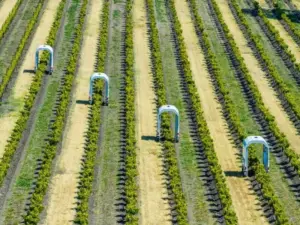
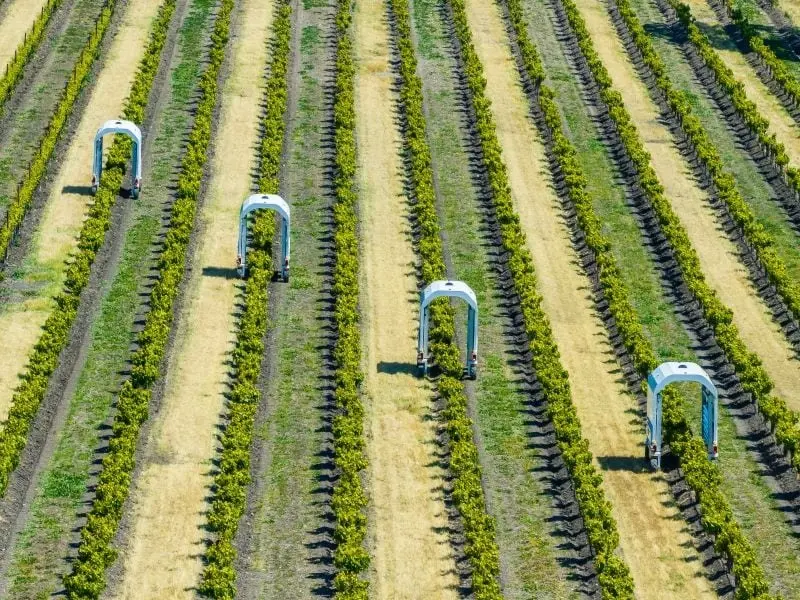
- The Innovation: The autonomous Thorvald robot traverses specialty crop fields—particularly vineyards and soft fruit polytunnels—emitting precise doses of ultraviolet-C (UV-C) light during nighttime operations to eradicate powdery mildew without chemical residues.
- Impact & Context: Powdery mildew is a persistent, yield-destroying fungal threat that has traditionally required heavy applications of synthetic fungicides. By substituting chemicals with targeted light, Thorvald significantly shrinks the chemical footprint of viticulture. Its commercial footprint has exploded: in 2026, Thorvald treats an estimated 30% of the UK’s tabletop strawberry production and approximately 2,500 acres of California vineyards.
6. VunaNexus Aurin: Nutrient Recovery from Circular Sanitation
- Category: Nutrient Recycling & Sustainable Fertilizers
- The Innovation: VunaNexus has pioneered the commercialization of Aurin, a high-grade, safe liquid fertilizer derived from recycled human urine. The advanced treatment process sanitizes and stabilizes the nutrient-rich liquid, capturing vital nitrogen, phosphorus, and potassium.
- Impact & Context: Synthetic fertilizer production is energy-intensive and heavily reliant on finite mined mineral reserves, presenting a major carbon footprint for agriculture. Nutrient recovery from human waste streams closes a critical loop, offering a sustainable, locally sourced alternative that reduces waterway pollution and synthetic dependency.
Official Statements and Industry Insights
The gravity of TIME’s 2026 recognitions has reverberated across boardrooms, research institutions, and farm gates worldwide, prompting reflection from industry leaders on the trajectory of modern food production.
Commenting on the integration of automation into daily farm workflows, Charlie Andersen, CEO of Burro, highlighted the multiplicative effect of robotics on human labor during his interview with TIME:
"When you have a robot running around carrying the fruit people pick back to central points, each person is 30% more productive."
Industry analysts note that this statistic encapsulates the modern philosophy of agricultural robotics: technology is not designed to replace the nuanced eye and hand of the agricultural worker, but rather to eliminate the dead-weight logistics that drain daily productivity.
Similarly, representatives from Saga Robotics have emphasized that the rapid scaling of the Thorvald platform across British strawberry farms and Californian vineyards signals a permanent shift in consumer-driven sustainability. With retailers facing intense pressure from both regulators and eco-conscious shoppers to lower chemical residue limits on fresh produce, autonomous non-chemical disease management has transitioned from an experimental pilot project into an essential commercial risk-mitigation tool.
Future Outlook: The Next Frontier in Agricultural Innovation
As the agricultural sector digests the implications of TIME’s 2026 Best Inventions list, several key trends emerge regarding where farming technology is headed over the next decade.
1. Hyper-Precision and Chemical-Free Farming
The rapid adoption of Saga Robotics’ UV-C technology and BioLumic’s light-activated seeds signals a definitive trend toward physics- and biology-based interventions over chemical applications. As regulatory bodies in Europe, North America, and beyond phase out traditional agrochemicals due to environmental and health concerns, the market valuation for precision, non-chemical alternatives is projected to surge exponentially.
2. Autonomous Fleets and Collaborative Labor Ecosystems
The success of Burro Grande 44 points toward a future where farms operate via heterogeneous fleets of autonomous machinery. Rather than massive, soil-compacting tractors dominating the landscape, future farms will likely utilize swarms of lightweight, electric, AI-guided robots capable of specialized tasks—from selective harvesting and weeding to real-time crop health monitoring and targeted nutrient delivery.
3. The Complete Closure of Agricultural Loops
The inclusion of circular economy platforms like the 2nd Nature AgWaste Portal and nutrient recovery systems like VunaNexus Aurin highlights an industry-wide commitment to circularity. In the coming years, "waste" will cease to exist in sophisticated agricultural models. Every byproduct—from harvest residue to human and animal effluent—will be captured, processed, and reintroduced into the production cycle, drastically lowering agriculture’s overall carbon and resource footprint.
Ultimately, TIME’s recognition of these six game-changing inventions serves as a testament to human ingenuity in the face of daunting planetary challenges. By marrying artificial intelligence, advanced robotics, biological sciences, and circular economics, the vanguard of modern agriculture is not merely adapting to a changing world—it is actively engineering a more resilient, productive, and sustainable future for global food systems.