
Executive Overview
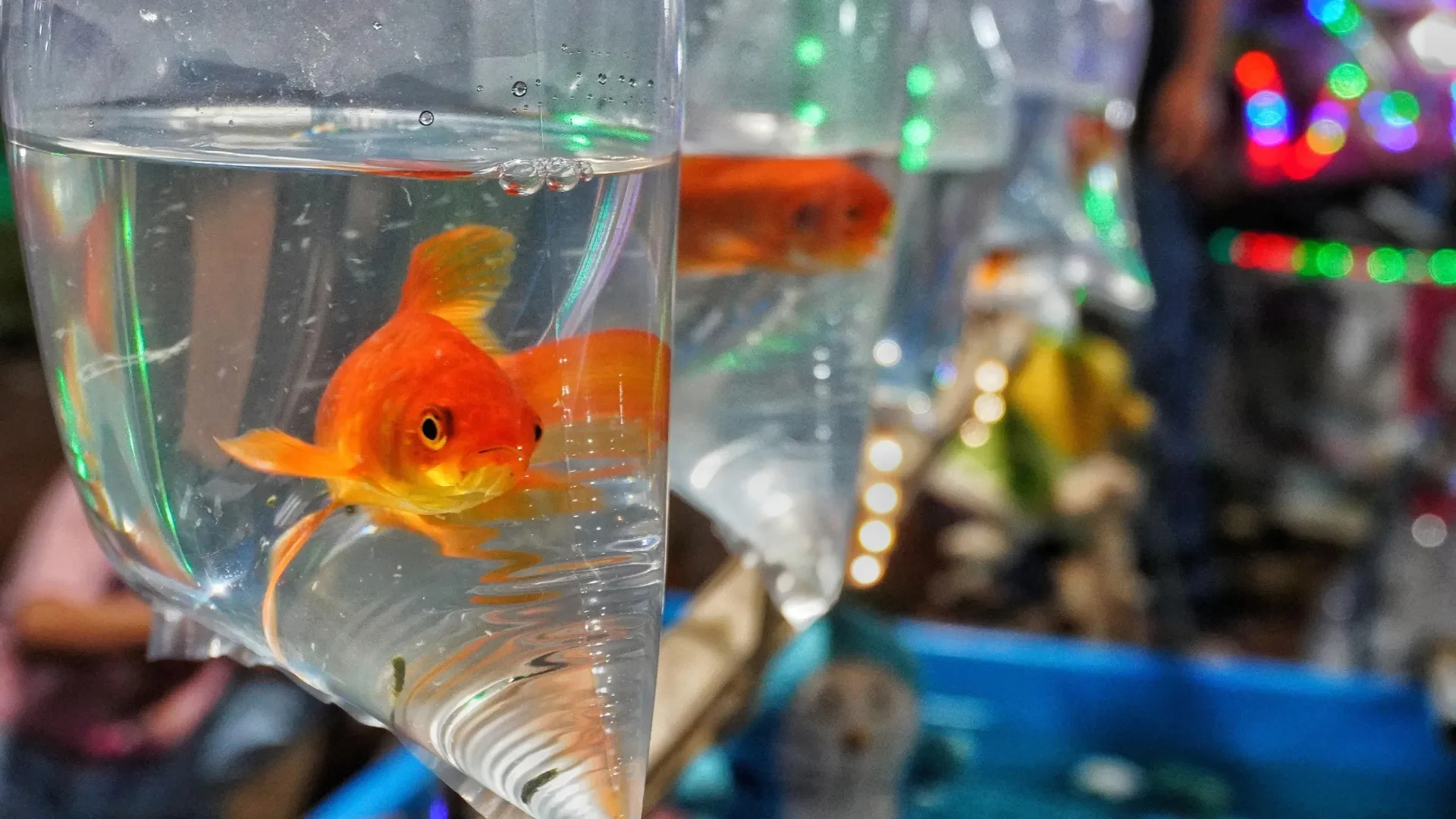
For generations, the humble goldfish (Carassius auratus) has occupied a secure place in human culture as the quintessential household pet. Often housed in small glass bowls on kitchen counters or modest backyard garden ponds, these seemingly harmless, shimmering swimmers are frequently purchased as low-maintenance companions for children or decorative centerpieces for landscaping. Yet, behind this benign domestic facade lies a startling ecological reality that scientists are only beginning to fully comprehend.
A landmark peer-reviewed study conducted by a collaborative team of researchers from The University of Toledo and the University of Missouri has delivered a sobering verdict: when released or escaped into the wild, goldfish are not merely passive additions to local fauna; they are formidable ecological disruptors capable of instigating severe, cascading failures in freshwater ecosystems. Published in the prestigious Journal of Animal Ecology, the research provides the most robust experimental evidence to date that these ubiquitous pets can dramatically and rapidly alter lake environments, pushing delicate aquatic webs past the brink of collapse.
The implications of this research extend far beyond academic curiosity, sounding an urgent alarm for pet owners, natural resource managers, local conservation authorities, and policymakers worldwide. As the global pet trade continues to facilitate the unprecedented movement of aquatic species across continents, the cultural practice of releasing unwanted pets into local waterways—often perceived by well-meaning citizens as a humane act of liberation—is revealed to be a driver of environmental degradation. According to the study, released goldfish frequently experience exponential growth in the wild, transforming into massive, resilient invaders that stir up lake sediments, outcompete native species for dwindling resources, and destabilize the very foundations of freshwater habitats.
This comprehensive report examines the methodology, findings, and broader implications of the Toledo-Missouri study. By dissecting the ecological mechanisms through which goldfish trigger "regime shifts" in lakes, evaluating official statements from the researchers, and exploring actionable alternatives for unwanted pets, this article provides a definitive look at one of the most insidious, overlooked threats facing modern freshwater ecosystems.
Detailed Chronology: Unveiling the Science of Invasion
To understand how a fish traditionally associated with domestic tranquility can become an environmental menace, one must examine the rigorous methodology and progressive findings of the multi-institution research team led by Dr. William Hintz, associate professor in the Department of Environmental Sciences and Lake Erie Center at The University of Toledo, alongside co-authors Hannah Barrett and Dr. Rick Relyea of the University of Missouri.
Designing the Experiment: Simulating Real-World Lakes
For years, anecdotal observations of oversized goldfish thriving in stormwater retention ponds, local rivers, and urban lakes suggested that the species was remarkably hardy. However, isolating the precise ecological impacts of goldfish from other environmental variables in natural, open-water systems proved exceptionally difficult for field biologists. To overcome this hurdle, Dr. Hintz and his colleagues turned to controlled, large-scale outdoor freshwater mesocosms.
These mesocosms were meticulously engineered to mimic real-world lake conditions, acting as miniature, self-contained ecosystems complete with sediment, water columns, primary producers (such as phytoplankton and aquatic vegetation), invertebrate communities, and native fish species. By utilizing these large experimental tanks, the research team could manipulate specific variables—such as the presence and density of goldfish—while maintaining precise control over external factors that typically confound field studies.
Examining Diverse Aquatic Trophic States
Recognizing that freshwater ecosystems vary wildly in their baseline chemical and biological characteristics, the researchers designed their study to test goldfish impacts across two distinct freshwater conditions:
- Oligotrophic Waters: Nutrient-poor ecosystems characterized by clear water, low primary productivity, and limited nutrient concentrations.
- Eutrophic Waters: Nutrient-rich ecosystems characterized by high primary productivity, frequent algal blooms, and abundant nutrient loading.
By introducing Carassius auratus into both oligotrophic and eutrophic mesocosms and monitoring them over extended periods, the team sought to determine whether the severity of the goldfish’s impact was contingent upon the lake’s baseline trophic state. The results were startling: regardless of whether the water was nutrient-poor or nutrient-rich, the introduction of goldfish triggered substantial, systemic ecological disruption.
Isolating Goldfish Effects from General Fish Abundance
A critical challenge in invasion biology is proving that an introduced species causes damage because of its unique biological traits, rather than simply because the overall density of fish in the ecosystem has increased. To address this methodological hurdle, the researchers deployed a sophisticated experimental design combining both additive and substitutive approaches.
In additive designs, goldfish were added to existing populations to observe cumulative impacts, while substitutive designs replaced portions of native fish communities with equivalent biomasses of goldfish. Through rigorous statistical modeling and comparative analysis, the research team isolated the specific mechanisms driven by goldfish. Their findings were conclusive: while minor fluctuations in aquatic vegetation could occasionally be correlated with general fish abundance, the most severe, destructive ecological changes—such as massive resuspension of benthic sediments, rapid depletion of zooplankton, and the sudden proliferation of filamentous algae—were directly and exclusively connected to the physical presence and behavior of goldfish.
Supporting Context & Metrics: The Mechanics of a "Regime Shift"
The most alarming conclusion of the University of Toledo and University of Missouri study is that invasive goldfish are capable of driving a "regime shift" within experimental lake ecosystems. In ecological science, a regime shift represents a critical threshold where an ecosystem, having absorbed sustained environmental stress, crosses a tipping point and rapidly reorganizes into a fundamentally different, highly degraded functional state. Once a lake undergoes a regime shift, returning it to its original, healthy condition is notoriously difficult, requiring massive financial investments and years of active ecological restoration.
How Goldfish Destabilize Aquatic Ecosystems
To appreciate how a palm-sized pet can induce a regime shift, one must examine the behavioral and physiological traits that make Carassius auratus such a successful, and destructive, invasive species:
- Benthic Foraging and Sediment Resuspension: Goldfish are bottom-feeders (benthivores). As they root through lake sediments in search of detritus, macroinvertebrates, and plant roots, they constantly stir up fine particles of silt and mud. This continuous bioturbation dramatically increases water turbidity, blocking sunlight from reaching submerged aquatic vegetation (SAV). Without adequate sunlight, native plants die off, destroying the critical habitat, spawning grounds, and nursery areas that native fish and amphibians rely upon.
- Nutrient Recycling: By disturbing benthic sediments, goldfish release locked-up nutrients—particularly phosphorus and nitrogen—back into the water column. This internal nutrient loading fertilizes the water, frequently triggering explosive growths of noxious phytoplankton and filamentous algae that choke out other aquatic life.
- Dietary Versatility and Predation: Goldfish are generalist omnivores with voracious appetites. In the wild, they consume massive quantities of zooplankton, insect larvae, snails, and aquatic plants. By stripping the water column of zooplankton—which naturally feed on algae—goldfish indirectly remove a vital biological check on algal blooms, accelerating the degradation of water quality.
- Extreme Physiological Tolerance: Native to slow-moving, shallow waters, goldfish possess exceptional physiological adaptations. They can tolerate remarkably low dissolved oxygen levels that would prove fatal to many native gamefish and sportfish. Furthermore, they exhibit high thermal tolerance, surviving in near-freezing winter waters under thick ice as well as in warm, shallow summer ponds.
Global Trade and the Vector of Introduction
The ecological threat posed by goldfish is amplified by the sheer scale of the global pet trade. As one of the most widely distributed ornamental fish species on Earth, millions of goldfish are bred, transported, and sold annually. This massive commercial pipeline ensures a continuous, high-volume supply of potential invaders into households worldwide.
When pet owners tire of maintaining their aquariums or when garden ponds overflow during heavy rain events, goldfish frequently find their way into natural waterways. Because these fish are exceptionally hardy, individuals released into local streams, rivers, and lakes routinely survive the transition, adapt to wild conditions, and undergo accelerated growth. Field biologists have frequently documented wild-caught goldfish scaling up from diminutive pet-store inhabitants to massive, dinner-plate-sized specimens weighing several pounds—a stark visual testament to their uninhibited growth potential in unconfined environments.
Official Statements and Expert Insights
The gravity of the study’s findings has prompted leading environmental scientists to issue urgent warnings to the public and natural resource agencies. The data gathered from the mesocosm experiments leaves little room for ambiguity regarding the environmental cost of releasing captive aquatic animals.
Dr. William Hintz, associate professor in UToledo’s Department of Environmental Sciences and Lake Erie Center and lead investigator of the study, emphasized the critical disconnect between public perception and ecological reality:
"It is critically important to inform the public that their pets can become pests that will harm freshwater ecosystems. The evidence is now clear—releasing a goldfish into the wild might be seen as an act of kindness, but it can turn into a major ecological threat."
Dr. Hintz’s warning targets a deeply ingrained psychological quirk among well-meaning pet owners. To an individual unable or unwilling to care for a pet, taking the fish to a local park pond and "setting it free" is frequently rationalized as a humane, compassionate alternative to euthanasia or neglect. However, as the research demonstrates, this act of perceived kindness introduces an aggressive, destructive biological agent into a fragile environment where native species have no evolutionary defenses against it.
Echoing these concerns, co-author Dr. Rick Relyea—professor in the University of Missouri College of Agriculture, Food and Natural Resources, and director of Mizzou’s Johnny Morris Institute of Fisheries, Wetlands and Aquatic Systems—detailed the physiological transformation that occurs when domestic goldfish enter natural habitats:
"If goldfish are released into the wild, they rapidly grow into very large fish that stir up lake sediments, consume large numbers of prey, and compete with native fish."
Relyea’s observation highlights the phenotypic plasticity of Carassius auratus. Constrained by the physical dimensions of a glass bowl or a standard home aquarium, goldfish experience stunted growth. Once liberated into the vast, nutrient-rich expanse of a natural lake or river, these biological constraints vanish, allowing the fish to realize their full genetic potential in terms of body mass and longevity. In doing so, they exert an outsized ecological footprint that disrupts established aquatic food webs.
Future Outlook: Prevention, Policy, and Public Action
Mitigating the threat posed by invasive goldfish requires a paradigm shift in how environmental agencies, pet industry stakeholders, and the general public approach the management of ornamental aquatic species. Because eradicating established wild populations of goldfish from large lakes and river systems is extraordinarily difficult, labor-intensive, and costly—often requiring toxic piscicides or extensive electrofishing operations that can inadvertently harm native species—prevention must remain the absolute priority.
Recommendations for Natural Resource Management
Based on the empirical findings of the University of Toledo and University of Missouri study, scientists and conservation policymakers are urging natural resource agencies to adopt a proactive management framework:
- High-Priority Invasive Classification: State and federal wildlife departments must formally classify Carassius auratus as a high-priority invasive species when found outside of contained aquaculture facilities, allocating appropriate funding for early detection and rapid response protocols.
- Monitoring Stormwater Infrastructure: Urban retention ponds and stormwater management systems frequently act as primary entry points and breeding grounds for released pets. Municipalities should increase ecological surveillance in these high-risk water bodies to catch invasive populations before they breach natural watersheds.
- Stricter Regulation of Retail Disposal: Collaborating with pet retail chains to implement take-back programs or safe surrender policies can significantly reduce the incidence of direct releases into the wild.
Educational Initiatives and Consumer Responsibility
At the heart of the goldfish invasion crisis is a fundamental lack of public awareness. Bridging this knowledge gap requires targeted educational campaigns spearheaded by schools, aquariums, pet stores, and environmental advocacy groups. Consumers must be taught to recognize that releasing an animal into an unfamiliar environment is rarely a rescue mission; more often, it is an ecological disaster in the making.
For pet owners facing circumstances where they can no longer care for their goldfish, the research team outlines several responsible, environmentally safe alternatives:
- Return to Retailers: Many local pet stores and aquarium shops are willing to take back healthy fish or accept them as surrenders for rehoming.
- Private Adoption Networks: Utilizing local community boards, aquarium societies, or hobbyist groups to find fellow enthusiasts with established home ponds or large tanks.
- Contacting Local Authorities: Consulting with state departments of natural resources or university extension offices for guidance on safe, humane disposition options.
- Humane Euthanasia: While emotionally difficult, humane euthanasia via clove oil sedation—recognized by veterinary standards as a painless method for fish—is infinitely preferable to introducing an invasive species that will suffer while decimating an entire natural ecosystem.
Conclusion: A Call to Stewardship
The research led by Dr. William Hintz, Hannah Barrett, and Dr. Rick Relyea serves as a vital wake-up call. It bridges the gap between laboratory science and everyday consumer behavior, demonstrating that human actions in domestic spaces carry profound, ripple-like consequences across the natural world. As freshwater ecosystems face mounting pressures from climate change, habitat fragmentation, and chemical pollution, adding invasive ornamental species to the mix is a risk our lakes and rivers cannot afford to bear. Through a combination of rigorous regulatory oversight, proactive municipal management, and, above all, heightened public consciousness, society can ensure that the innocent household goldfish remains a source of domestic joy rather than a catalyst for ecological ruin.