
Executive Overview
The landscape of modern agriculture is undergoing a profound, technology-driven renaissance. As compounding pressures—ranging from volatile climate patterns and escalating labor shortages to strict environmental regulations—threaten global food security, innovators are racing to rewrite the rules of farming, crop cultivation, and animal husbandry.
Nowhere is this dynamic transformation more evident than in TIME magazine’s prestigious Best Inventions of 2026 list. Highlighting 300 groundbreaking products and ideas designed to make the world "better, smarter, and more fun," the publication’s dedicated agriculture category zeroes in on six technological breakthroughs. These innovations span cutting-edge crop genetics, heavy-duty agricultural robotics, advanced pollinator management, artificial intelligence-driven circular economies, and novel nutrient recycling.
Together, these six winners—BioLumic, Burro Grande 44, Beewise Robi, 2nd Nature AgWaste Portal, Saga Robotics’ Thorvald, and VunaNexus Aurin—paint a vivid picture of the modern farm. They demonstrate that the future of agriculture is not merely about producing more food, but about producing it smarter, cleaner, and with an acute awareness of ecological boundaries. Selected through a rigorous global evaluation process assessing originality, efficacy, ambition, and impact, these technologies represent the vanguard of a multi-billion-dollar shift toward sustainable, high-efficiency farming.
Detailed Chronology and Breakdown of the 2026 Agricultural Innovators
The journey of these six technologies to the pages of TIME magazine reflects years of R&D, field trials, and commercial scaling. Below is a detailed look at each category winner, how their technologies function, and the specific impact that secured their place among the world’s best inventions.
+-----------------------------------------------------------------------------------+
|                     TIME'S 2026 AGRICULTURE INNOVATION MATRIX                     |
+--------------------+------------------------------+-------------------------------+
| CATEGORY           | INNOVATION / COMPANY         | CORE TECHNOLOGY               |
+--------------------+------------------------------+-------------------------------+
| Crop Genetics      | BioLumic (xTraits)           | Light-activated seed priming  |
| Farm Automation    | Burro Grande 44              | Autonomous fruit transport    |
| Pollinator Health  | Beewise Robi                 | AI-powered beehive management |
| Circular Economy   | 2nd Nature AgWaste Portal    | AI for agricultural waste     |
| Disease Control    | Saga Robotics (Thorvald)     | UV-C light powdery mildew fix |
| Nutrient Recovery  | VunaNexus Aurin              | Fertilizer from human urine   |
+--------------------+------------------------------+-------------------------------+
1. Crop Genetics: BioLumic and the Power of Light-Activated Traits
For decades, seed enhancement has relied heavily on chemical seed treatments, breeding cycles, or genetic modification. BioLumic has disrupted this paradigm by pioneering a novel biological category: photobiological seed treatment.
The company’s flagship xTraits platform uses specific light recipes to activate natural mechanisms within seeds before planting. By exposing seeds to precise wavelengths of light, BioLumic triggers targeted genetic expressions that enhance root development, bolster early-stage vigor, and increase resilience against abiotic stressors like drought and heat. TIME recognized the technology for "giving crops a stronger start," highlighting a growing industry preference for seed-level interventions that bypass the regulatory hurdles of GMOs while delivering tangible yield and resilience gains under climate pressure.
2. Farm Automation: Burro Grande 44 Tackles the Labor Crisis
Labor scarcity remains one of the single most disruptive forces in specialty crop production worldwide. As aging rural populations and restrictive immigration policies shrink the available workforce, farms are increasingly turning to autonomy.
Enter the Burro Grande 44, an all-purpose farm robot designed to integrate seamlessly into human-heavy harvesting operations. Rather than attempting to replace human pickers entirely—a notoriously difficult feat for delicate specialty crops—the Burro Grande 44 acts as an autonomous pack mule. It trails workers, carrying harvested fruit directly to central collection points.
This human-robot collaboration dramatically reduces downtime for harvesters. As CEO Charlie Andersen explained to TIME: "When you have a robot running around carrying the fruit people pick back to central points, each person is 30% more productive." This multiplier effect makes existing labor forces significantly more efficient without sacrificing crop quality.
3. Pollinator Health: Beewise Robi and AI-Driven Apiculture
Commercial agriculture relies heavily on managed honeybee colonies to pollinate roughly one-third of the human diet. However, declining hive health, colony collapse disorder, and varroa mites pose continuous threats to global food webs.
Beewise Robi brings artificial intelligence and robotics to the apiary. The autonomous robotic beehive system monitors internal hive conditions—including temperature, humidity, pest presence, and swarming behaviors—in real time. Powered by AI, Beewise Robi can autonomously administer treatments, such as thermal treatments for mites or supplemental feeding, long before a human beekeeper would typically detect a problem. TIME’s recognition underscores the vital intersection between technology and pollinator preservation, proving that safeguarding biodiversity is now a high-tech endeavor.
4. Circular Agriculture: 2nd Nature AgWaste Portal
Every year, millions of tons of agricultural side streams, food processing leftovers, and crop residues go to waste, representing both a missed economic opportunity and an environmental liability.
The 2nd Nature AgWaste Portal leverages artificial intelligence to analyze these complex waste streams, mapping out where valuable chemical compounds, fibers, and biochemicals can be extracted. Described by TIME as providing "a second life for scraps," the platform functions as a matchmaking engine for the circular economy. It connects agricultural producers looking to offload waste with downstream manufacturing, cosmetic, pharmaceutical, and bioenergy companies seeking sustainable, low-cost raw materials.
5. Disease Control: Saga Robotics and the Thorvald Platform
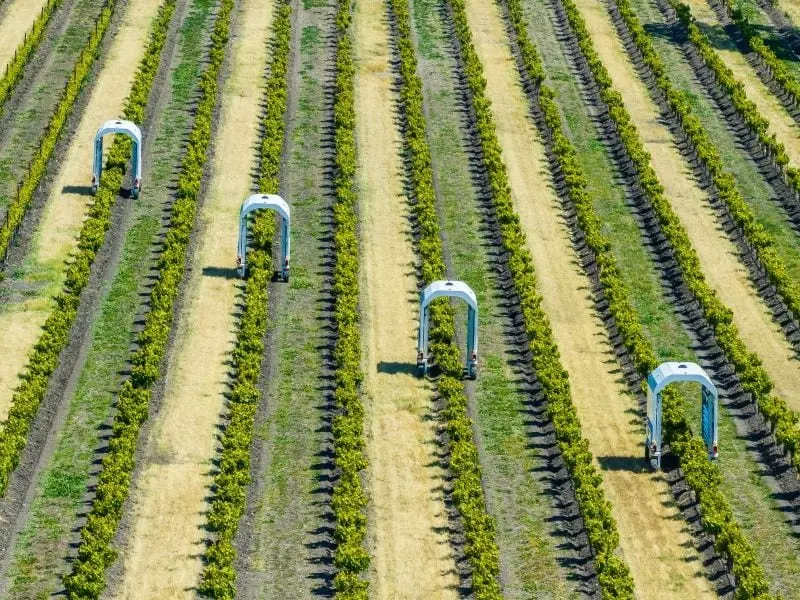
Fungal diseases, particularly powdery mildew, cost specialty crop growers billions of dollars annually in lost yields and fungicide applications. Saga Robotics has captured international attention with Thorvald, an autonomous, modular robot that patrols vineyards and fields to fight disease without chemicals.
Instead of spraying conventional fungicides, Thorvald emits targeted bursts of UV-C light during nighttime hours, neutralizing mold spores effectively and preventing outbreaks. The impact of this technology has scaled dramatically. By 2026, Thorvald is actively treating an estimated 30% of the United Kingdom’s tabletop strawberry production and managing disease across approximately 2,500 acres of California vineyards. By reducing chemical runoff and preventing resistance buildup, Saga Robotics is redefining modern crop protection.
6. Nutrient Recycling: VunaNexus Aurin and the Future of Circular Fertility
Synthetic fertilizers are energy-intensive to manufacture and frequently contribute to waterway eutrophication through agricultural run-off. To close the nutrient loop, VunaNexus has developed Aurin—a commercial fertilizer product derived from safely processed and recycled human urine.
Referred to by TIME as "garden fertiliser from urine," Aurin captures essential nitrogen, phosphorus, and potassium from municipal or controlled wastewater streams, sanitizes it, and transforms it into a stable, highly effective liquid fertilizer. As farmers face volatile fertilizer prices and mounting pressure to decarbonize their operations, innovations in nutrient recovery like Aurin offer a decentralized, highly sustainable alternative to fossil-fuel-derived inputs.
Supporting Context & Metrics: The Macro Trends Driving 2026 AgTech
The inclusion of these six innovations in TIME’s Best Inventions list is not happenstance; it is a reflection of broader structural shifts within the global agricultural economy.
1. The Capital Shifting to Climate-Resilient Ag
Venture capital and corporate investment in agricultural technology have evolved. While the 2020–2022 boom was characterized by speculative investments in indoor vertical farming and broad-stroke automation, 2025 and 2026 investments lean heavily toward unit economics, climate resilience, and immediate ROI. Technologies like BioLumic’s seed treatments and Saga Robotics’ UV-C weed/mildew mitigation address tangible, line-item expenses for farmers (such as chemical costs and yield loss) while simultaneously lowering carbon footprints.
2. Labor Shortages Reaching a Tipping Point
According to recent agricultural labor indices, farm labor deficits have worsened across North America and Europe, pushing up operating costs and, in some cases, leaving crops unharvested to rot in the fields. The commercial adoption of platforms like the Burro Grande 44 highlights an industry forced to pivot from pure experimentation to mandatory automation adoption.
3. Regulatory Pressures on Chemistry
With the European Union and parts of North America steadily phasing out traditional chemical crop protection tools—including various neonicotinoids and conventional fungicides—growers face a looming "toolbox deficit." Non-chemical interventions, such as Saga Robotics’ UV-C light treatments and biological seed priming, are transitioning from niche alternatives to mission-critical operational tools.
Official Perspectives and Industry Reactions
The recognition by TIME has drawn praise from agricultural leaders, technologists, and environmental advocates alike, validating years of intensive research and development.
- On Farm Labor and Productivity: Reflecting on the inclusion of the Burro Grande 44, industry analysts noted that robotics in agriculture is finally crossing the chasm from cool demonstrations to practical utility. Charlie Andersen’s focus on human-robot collaboration rather than total displacement has been widely cited as the winning philosophy for near-term agricultural robotics.
- On Sustainable Disease Management: Representatives from Saga Robotics have frequently emphasized that the widespread adoption of Thorvald in both the UK and California proves that growers are eager to abandon heavy chemical reliance if viable, cost-effective biological or physical alternatives are available. Treating 30% of UK tabletop strawberries marks a watershed moment for commercial ag-robotics.
- On Circularity: The nod toward 2nd Nature AgWaste Portal and VunaNexus Aurin signals a cultural shift within agriculture. Farming is no longer viewed purely as a linear extraction process (input seed and fertilizer, output crop), but as an interconnected biological loop where waste streams are simply unrecognized resources.
Future Outlook: What the 2026 List Tells Us About the Next Decade
As we look toward the remainder of the decade, the technologies celebrated on TIME’s 2026 Best Inventions list offer a clear roadmap for the future of farming.
1. Integration Over Isolation
The next frontier for these winning technologies lies in interoperability. Imagine a future where a farm utilizes BioLumic-treated seeds optimized for vigor, planted or monitored by autonomous systems like Burro Grande, protected from disease at night by Saga Robotics’ Thorvald units, supported by Beewise automated pollination, and fertilized by recycled municipal nutrients like VunaNexus Aurin—all coordinated via an AI farm management system. The siloed technologies of today will inevitably become the integrated ecosystems of tomorrow.
2. Policy and Public Acceptance
While technological hurdles are rapidly falling, regulatory frameworks must adapt to accelerate adoption. Seed innovations like BioLumic’s light-activated traits benefit from bypassing traditional GMO stigma, but widespread adoption of circular products—such as human-derived fertilizers (VunaNexus Aurin)—will require ongoing consumer education, transparent labeling, and progressive regulatory approvals.
3. Democratization of AgTech
A critical challenge for the coming years will be ensuring that these advanced inventions are accessible not just to massive corporate mega-farms, but to small- and medium-scale growers. As modular robotics, AI software-as-a-service (SaaS) platforms, and pay-per-use biological treatments mature, developers will increasingly need to focus on scalability and cost-efficiency for independent farmers.
In sum, TIME’s 2026 Best Inventions in agriculture serve as more than just a curated list of cool gadgets—they are a testament to human ingenuity in the face of planetary adversity. They demonstrate that the ancient art of farming is being successfully supercharged by modern science, ensuring that global agriculture can sustainably feed future generations.