
Executive Overview
Japan’s agricultural sector stands at a defining historical crossroads. Following the high-profile resignation of Kazuo Yana—who stepped down amid damaging allegations regarding the partisan withholding of municipal road-funding campaigns—the Ministry of Agriculture, Forestry, and Fisheries (MAFF) has welcomed a new leader: Agriculture Minister Takebe. Stepping into the role during a period of acute administrative turbulence, Takebe has signaled an uncompromising commitment to continuity, stability, and sweeping structural reform.
In his inaugural press conference, Takebe laid out an ambitious, high-stakes agenda centered on national food security, generational succession, the revitalization of rural economies, and sweeping overhauls of traditional rice paddy and livestock policies. Drawing on a political lineage deeply rooted in agricultural policy—his father similarly served as the Minister of Agriculture, Forestry, and Fisheries—Takebe faces an unforgiving landscape marked by demographic decline, surging input costs, volatile international trade dynamics, and profound climate pressures.
The newly minted minister assumes control at a critical juncture for the world’s third-largest economy. With Japan’s revised Basic Law on Food, Agriculture and Rural Areas serving as the statutory compass, the administration is racing to meet an aggressive target of JPY 5 trillion (approximately US$31.6 billion) in agricultural, forestry, and fisheries exports by 2030. However, meeting these financial milestones requires solving foundational vulnerabilities at home: aging farming populations, dwindling arable land, and fierce domestic resistance to external trade pressures, such as prospective imports of U.S. potatoes.
This comprehensive report examines the leadership transition at MAFF, evaluates Takebe’s strategic priorities for the next half-decade, and analyzes the structural, economic, and geopolitical factors shaping the future of Japanese agriculture.
Detailed Chronology: The Path to Leadership and Immediate Priorities
The sequence of events leading to Takebe’s appointment underscores the fragile political ecosystem surrounding Japan’s rural governance. Kazuo Yana’s abrupt departure, triggered by accusations of weaponizing infrastructure funding against municipalities that failed to support his electoral campaigns, left a sudden leadership vacuum at MAFF. For an administration prioritizing regional revitalization, the scandal threatened to stall critical legislative and regulatory initiatives at a time when domestic food security is an increasingly urgent national security concern.
Dispatched to steady the ship, Takebe moved quickly to establish administrative continuity. At his inaugural briefing with domestic and international media, he sought to reassure industry stakeholders, cooperative unions (Nokyo), and regional municipalities that the ministry’s policy trajectory would experience no institutional lag.
"First and foremost, I believe we cannot allow agricultural, forestry, and fisheries administration to stagnate," Takebe declared to reporters. Emphasizing the interconnected nature of Japan’s economic architecture, he added, "Without a strong agricultural, forestry, and fisheries sector, the regional economy cannot survive. Without a vibrant regional economy, the Japanese economy cannot regain its vitality."
The 100-Day Horizon and Policy Momentum
Takebe inherits a ministry deeply engaged in rolling out structural transformations designed to reshape Japanese farming over the next five years. Among the immediate operational milestones on the minister’s desk are:
- The Rice Policy Overhaul: Re-evaluating traditional production quotas, integrating rare genetic variants into rice breeding programs, and expanding the commercial viability of gluten-free rice flour.
- Supply Chain Resilience: Transitioning domestic livestock, forestry, and fisheries operations toward sustainable frameworks capable of withstanding extreme weather events and geopolitical supply disruptions.
- Trade Defense Mechanisms: Managing contentious bilateral agricultural negotiations, most notably addressing domestic producers’ anxieties regarding potential concessions on U.S. potato imports.
Supporting Context & Metrics: The State of Japanese Agriculture
To fully grasp the magnitude of Takebe’s mandate, one must examine the baseline socioeconomic metrics defining modern Japanese farming. Japan is facing a structural demographic crisis that threatens the viability of its rural communities.
+--------------------------------------------------------------------------+
|                       KEY METRICS & TARGETS (MAFF)                       |
+-----------------------------------+--------------------------------------+
| Target Export Volume (2030)       | JPY 5 trillion (approx. US$31.6bn)   |
| Primary Geographic Focus          | Hokkaido (accounts for 80% of        |
|                                   | national potato production)          |
| Core Legislative Framework        | Revised Basic Law on Food,           |
|                                   | Agriculture and Rural Areas          |
| Primary Strategic Horizon         | 5-Year Structural Transformation     |
+-----------------------------------+--------------------------------------+
Demographic Pressures and Farmland Consolidation
The average age of Japanese farmers has climbed steadily past 67 years, with a continually shrinking pool of young entrants willing or able to take over multi-generational family farms. This "succession crisis" has led to an alarming accumulation of abandoned or underutilized farmland (kokaichi). Without aggressive regional planning and institutionalized farmland consolidation, vast tracts of fertile land risk falling permanently out of agricultural production.
Input Costs and Technological Adoption
Japanese agriculture remains heavily reliant on imported raw materials, particularly chemical fertilizers, feed grains, and fuel. Geopolitical instability in Eastern Europe and the Middle East, coupled with fluctuations in the strength of the Japanese Yen, has driven input costs to historic highs. In response, MAFF is championing technological innovations to insulate domestic producers from global price shocks:
- Plant Factories: Controlled-environment agriculture (CEA) facilities designed to yield high-value crops independent of external weather anomalies.
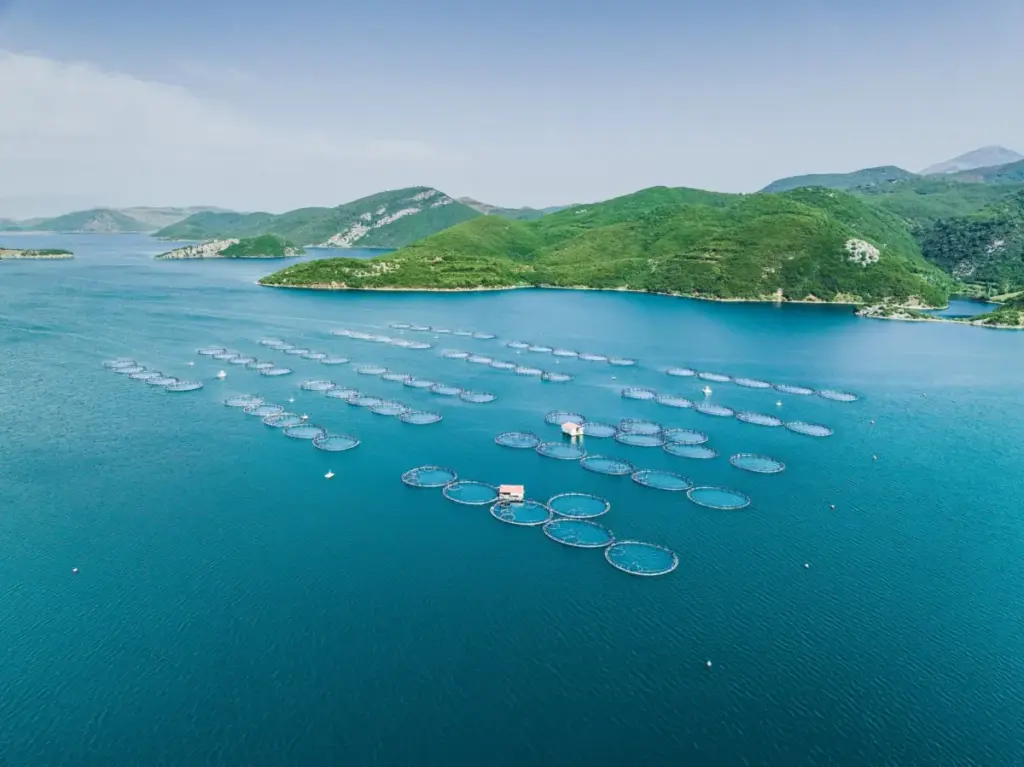
- Land-Based Aquaculture and Aquaponics: Innovative, fertilizer-free integrated systems—such as those combining strawberry and trout farming—that maximize resource circularity.
- Input Self-Sufficiency: Strategic investments aimed at boosting domestic fertilizer production capabilities and scaling up local feed grain output.
Official Statements and Strategic Vision
During his initial press appearances, Takebe articulated a multi-layered vision focused on safeguarding the nation’s food supply, driving productivity, and capturing international market share. His strategy relies heavily on balancing defensive protectionism for domestic producers with offensive export-oriented growth.
Securing Successors and Protecting Farmland
Addressing the core structural vulnerabilities of the sector, Takebe highlighted three non-negotiable pillars for rural survival:
- Securing Successors: Creating economic incentives, vocational pathways, and modern lifestyle accommodations to attract a new generation of tech-savvy agri-entrepreneurs.
- Protecting Farmland: Utilizing regional consolidation plans to transfer fragmented plots to efficient, scaled farming corporations or collaborative agricultural cooperatives.
- Enhancing Farmer Incomes: Raising baseline productivity while suppressing operational costs, ensuring that farming remains a commercially viable enterprise rather than a subsidized preservation project.
Strengthening Food Supply Capacity
Reflecting the mandates embedded within the revised Basic Law on Food, Agriculture and Rural Areas, Takebe emphasized that national security and food security are now inextricably linked.
"In order to strengthen food security, we will promote the expansion of demand both domestically and internationally and strengthen supply capacity by maintaining the production base and improving productivity and added value so that we can meet the expanded demand," Takebe stated.
This dual-track approach involves encouraging domestic consumers to embrace locally sourced, value-added products while aggressively positioning Japanese agricultural goods, food-service technologies, and rural infrastructure services in high-growth overseas markets.
The "Hot Potato" Trade Challenge: Hokkaido at the Center
No issue better illustrates the delicate tightrope Takebe must walk between international trade diplomacy and domestic political survival than the mounting controversy over potential U.S. potato imports.
The issue holds intense personal and political significance for Takebe. Hailing from Hokkaido—Japan’s northern agricultural powerhouse, which single-handedly accounts for an astounding 80% of the nation’s total potato production—Takebe is acutely aware of the existential panic sweeping local farming communities. Growers fear that an influx of foreign produce could devastate domestic prices, introduce plant pathogens, and permanently undermine the regional agricultural economy.
Addressing these grassroots concerns head-on, Takebe adopted a resolute, uncompromising tone regarding bilateral trade discussions. He assured Hokkaido producers and agricultural cooperatives that the ministry would not compromise on phytosanitary safety or risk management standards.
"We will strive to ensure food security while firmly implementing agricultural structural reforms to overcome this extremely difficult situation," Takebe asserted.
The handling of the U.S. potato dossier will serve as an immediate litmus test for the new minister’s diplomatic leverage and his willingness to stand up for domestic producers against external trade pressures from Washington.
Future Outlook: Can MAFF Deliver on Its 2030 Vision?
As Takebe settles into his tenure at MAFF, the road ahead is fraught with systemic challenges, yet rich with potential. The convergence of demographic decline, climate volatility, and volatile global commodity markets means that incremental policy adjustments will no longer suffice. Japan’s agricultural sector requires radical, forward-thinking structural reinvention.
The success of Takebe’s administration will ultimately be judged by a few critical benchmarks over the next several years:
- Export Expansion: Whether Japan can successfully scale its agricultural and fisheries exports toward the JPY 5 trillion mark by 2030 without draining domestic supply chains.
- Generational Renewal: Whether innovative policies regarding land consolidation, digital farming, and financial incentives can reverse the decades-long decline in the farming population.
- Trade Resilience: Whether MAFF can successfully navigate high-stakes trade disputes—such as the Hokkaido potato conflict—without alienating vital international allies or sacrificing domestic food sovereignty.
By projecting a steady hand at the helm, Takebe has successfully averted administrative paralysis following the departure of his predecessor. However, the true test of his leadership lies ahead. If he can leverage this period of critical transition to modernize Japan’s farming base, protect its fragile rural economies, and future-proof its food supply, Takebe may well cement his legacy as the architect of a modern agricultural renaissance in the Reiwa era.