
Executive Overview
Long before a puppy learns to sit, heel on a loose leash, or navigate a crowded intersection to guide someone safely through the world, an intricate, high-stakes developmental symphony is already playing out behind the scenes. In the specialized realm of guide and service dog breeding, the trajectory toward transforming an otherwise ordinary puppy into a calm, focused, and life-changing canine partner does not begin in the training ring. It begins in the quiet, climate-controlled whelping box, days before the newborn even opens its eyes or ears to the world.
At organizations like Dogs Inc, preparing future service dogs is a meticulous, science-driven endeavor. From birth, puppies are integrated into a carefully calibrated regimen of early handling and environmental structuring. Among the foundational cornerstones of this process is a specialized science-based practice known as Early Neurological Stimulation (ENS).
While ENS is only one chapter in a much larger, multi-year evolutionary roadmap of growth, socialization, and formal education, it reflects an overarching philosophy: that elite service dogs are the product of deliberate, informed stewardship from the very first breath. This comprehensive report explores the neonatal foundations, developmental windows, neurobiological mechanisms, and lifelong learning stages that shape the future standard-bearers of canine assistance work.
Detailed Chronology: From the Neonatal Whelping Box to Adolescent Maturity
Understanding how a service dog is forged requires tracing their maturation along a precise chronological timeline. Canine development is divided into distinct, highly sensitive periods, each carrying unique neurobiological milestones and specialized management requirements.
1. The Neonatal Stage (Birth to 2 Weeks)
During the initial fortnight of life, newborn puppies exist in an entirely sensory-deprived bubble. Born completely blind and deaf, and unable to regulate their own body temperatures, they rely exclusively on their mother and littermates for survival, warmth, and sustenance.

Despite their seemingly fragile, dormant appearance, profound physiological developments are taking place. The brain and central nervous system are experiencing explosive growth. During this fragile window, puppies spend the vast majority of their time nursing and sleeping—activities critical for neurological consolidation and physical growth.
It is precisely within this neonatal window—specifically between the third and sixteenth days of life—that Early Neurological Stimulation (ENS) is introduced. Because the pups cannot yet process complex sights or sounds, ENS utilizes brief, gentle, tactile challenges designed to stimulate the developing nervous system without causing distress.
2. The Transitional Stage (2 to 4 Weeks)
As the neonatal stage draws to a close, puppies cross a dramatic developmental threshold. Around two weeks of age, their eyes unseal and their ear canals open, abruptly exposing them to a flood of new sights and sounds.
By the time they reach four weeks of age, puppies begin to walk with greater coordination, voice their first barks, and erupt in playful interactions with their littermates. This period also marks the emergence of deciduous baby teeth, signaling a nutritional transition from exclusive nursing to soft weaning diets and, eventually, solid food. Learning during this transitional phase shifts from purely reflexive responses to active environmental exploration.
3. The Socialization Window (3 to 12 Weeks)
If the neonatal stage is about internal neurological wiring, the socialization period is about external adaptation. Spanning from three to twelve weeks of age, this window is perhaps the most critical developmental phase in a dog’s life.

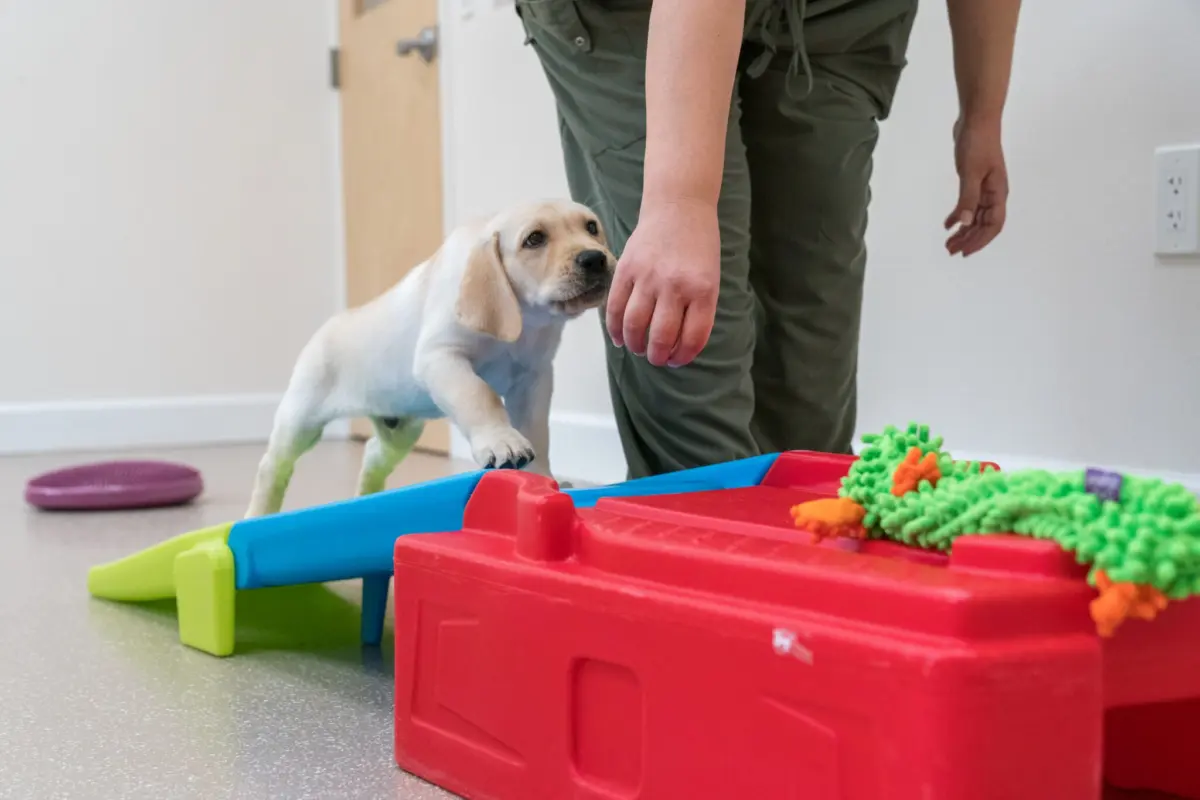
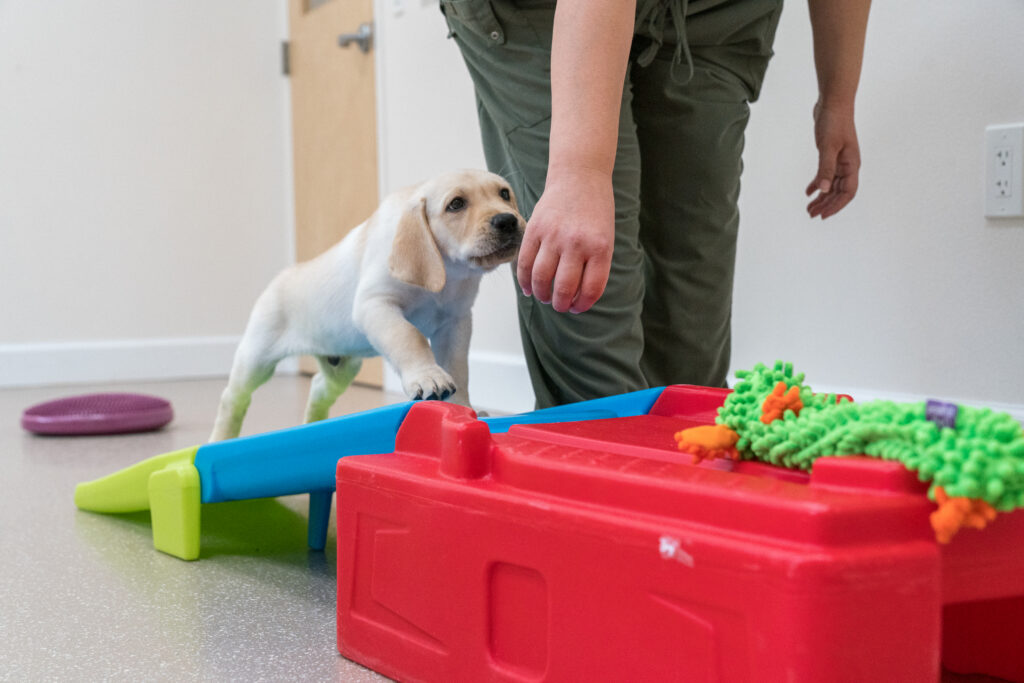
During these weeks, puppies rapidly build associations with their surroundings. They learn vital social skills, canine etiquette, and bite inhibition from interactions with their mother and peers. Concurrently, human handlers introduce them to an array of novel stimuli: diverse sounds, various surface textures, new physical environments, and handling by different people.
By eight weeks of age, many of these structured exposures lay the foundational architecture for a stable, friendly, and resilient adult dog. Extending through the twelfth week, comprehensive exposure to varied stimuli prevents the onset of fear-based anxieties and aggression, laying the groundwork for emotional stability.
4. Early Training and the Adolescent Milestones (3 to 6+ Months)
Around three months of age, young dogs enter a phase where short, positive-reinforcement training sessions yield remarkable dividends. Basic cues, structured routines, and crate training are integrated to foster independence and emotional regulation.
However, this progression is rarely linear. As puppies mature into the adolescent stage—which can manifest as early as six months of age—they frequently begin testing boundaries, mimicking the behavioral challenges of human teenagers. Furthermore, this period coincides with hormonal shifts and sexual maturity (typically between six and twelve months), during which female dogs experience their initial heat cycles and males exhibit hormone-driven drives.
Compounding these challenges, canine developmental psychology recognizes that puppies navigate an average of four distinct "fear periods" during their growth. These temporary, hormonally and cognitively driven phases mean that even confident puppies can suddenly display hesitations toward familiar or novel objects, demanding immense patience, positive reinforcement, and thoughtful handling from their puppy raisers.

Supporting Context & Metrics: The Science of ENS and Environmental Enrichment
To truly appreciate the value of early interventions, one must examine the empirical framework supporting Early Neurological Stimulation. Originally developed for military breeding programs and later popularized by renowned breeding authorities, ENS leverages brief, controlled physical stresses to "exercise" the neurological system.
What is Early Neurological Stimulation (ENS)?
ENS involves performing five specific, highly gentle exercises once daily per puppy, typically between days three and sixteen. Each exercise lasts approximately three to five seconds. The standardized routine includes:
- Tactile Stimulation: Holding the puppy in one hand and gently tickling the pad of one foot using a Q-tip or finger.
- Head Up: Holding the puppy perpendicular to the ground, with its head pointing straight up.
- Head Down: Holding the puppy securely with its head pointed downward toward the ground.
- Supine Position: Holding the puppy flat on its back, resting in the palm of the handler’s hand.
- Thermal Stimulation: Placing the puppy feet-down on a damp, cool towel that has been refrigerated for a brief period.
Physiological and Behavioral Impacts
Scientific observation indicates that these mild, routine stressors prompt advantageous biological feedback loops. Proponents and veterinary researchers suggest that ENS can yield several profound physiological enhancements:
- Improved Cardiovascular Performance: Strengthening of the heart rate and circulatory efficiency.
- Enhanced Stress Tolerance: Greater adaptability and resilience when confronted with novel environmental stressors later in life.
- Stronger Adrenal Gland Function: Improved hormonal regulation under pressure.
- Greater Disease Resistance: Enhanced baseline immune function, helping the animal weather physical challenges more robustly.
It is critical to note that ENS is not a form of obedience training, nor is it intended to overwhelm or distress the animal. Rather, it is a precise biological tune-up administered during a window of maximum neural plasticity. Furthermore, ENS is never a substitute for ongoing socialization, genetic selection, good health management, and environmental enrichment; it is simply the first vital link in an unbroken chain of developmental preparation.
Official Perspectives & Institutional Philosophy
Preparing dogs for high-responsibility roles requires an unwavering commitment to operational excellence and animal welfare. Organizations dedicated to this craft view every phase of a dog’s life through a lens of continuous care.

"Long before a puppy learns to sit, walk on a leash, or one day guide someone through the world, a lot is already happening behind the scenes," notes the developmental team at Dogs Inc. "At Dogs Inc, preparing future guide dogs and service dogs starts long before formal training begins. Early Neurological Stimulation is just one small piece of the bigger picture, but it reflects the thoughtful approach that helps support healthy development from the very beginning."
Industry experts emphasize that elite service dog performance is not left to chance. It is the cumulative result of selective breeding programs, rigorous veterinary oversight, dedicated volunteer puppy raisers, and structured educational milestones.
Organizations emphasize that early puppy development is not an assembly line designed to mass-produce "perfect" dogs. Instead, it is an individualized nurturing process aimed at fostering emotional maturity, psychological resilience, and intrinsic adaptability. Because early experiences carry profound weight—with positive exposures building confidence and negative, unmanaged traumas potentially cementing lifelong behavioral deficits—institutions like Dogs Inc maintain strict protocols at every stage of the journey.
Future Outlook: Building Life-Changing Partners for Tomorrow
The journey of a service dog does not conclude when they graduate from the neonatal whelping box, nor does it halt after the socialization and adolescent phases. As dogs progress toward adulthood, their education continuously expands.
By the time young dogs reach approximately 16 weeks of age, structured group puppy classes become instrumental in refining social intelligence. Gentle, carefully managed exposure to other dogs, domestic animals, and diverse human communities ensures that these animals remain completely unshakeable in public spaces. Whether they are learning to remain calm amidst the chaos of a bustling transit hub or focusing intently on guiding a handler with visual impairments, their lifelong capability traces directly back to the neurological foundations established in their earliest weeks of life.
Looking forward, the integration of canine science, behavioral genetics, and progressive neurological research promises to continually refine how organizations breed, raise, and train service dogs. By respecting the intricate milestones of canine development—from the tactile warmth of the neonatal whelping box to the complex demands of adult service work—institutions set a gold standard for animal welfare and functional utility.
Ultimately, a service dog’s first weeks pass in the blink of an eye, but they ignite a transformative journey. Through the deliberate application of Early Neurological Stimulation, thoughtful socialization, positive reinforcement, and lifelong mentorship, organizations like Dogs Inc ensure that future guide and service dogs step out into the world equipped to be confident, capable, and truly life-changing partners.