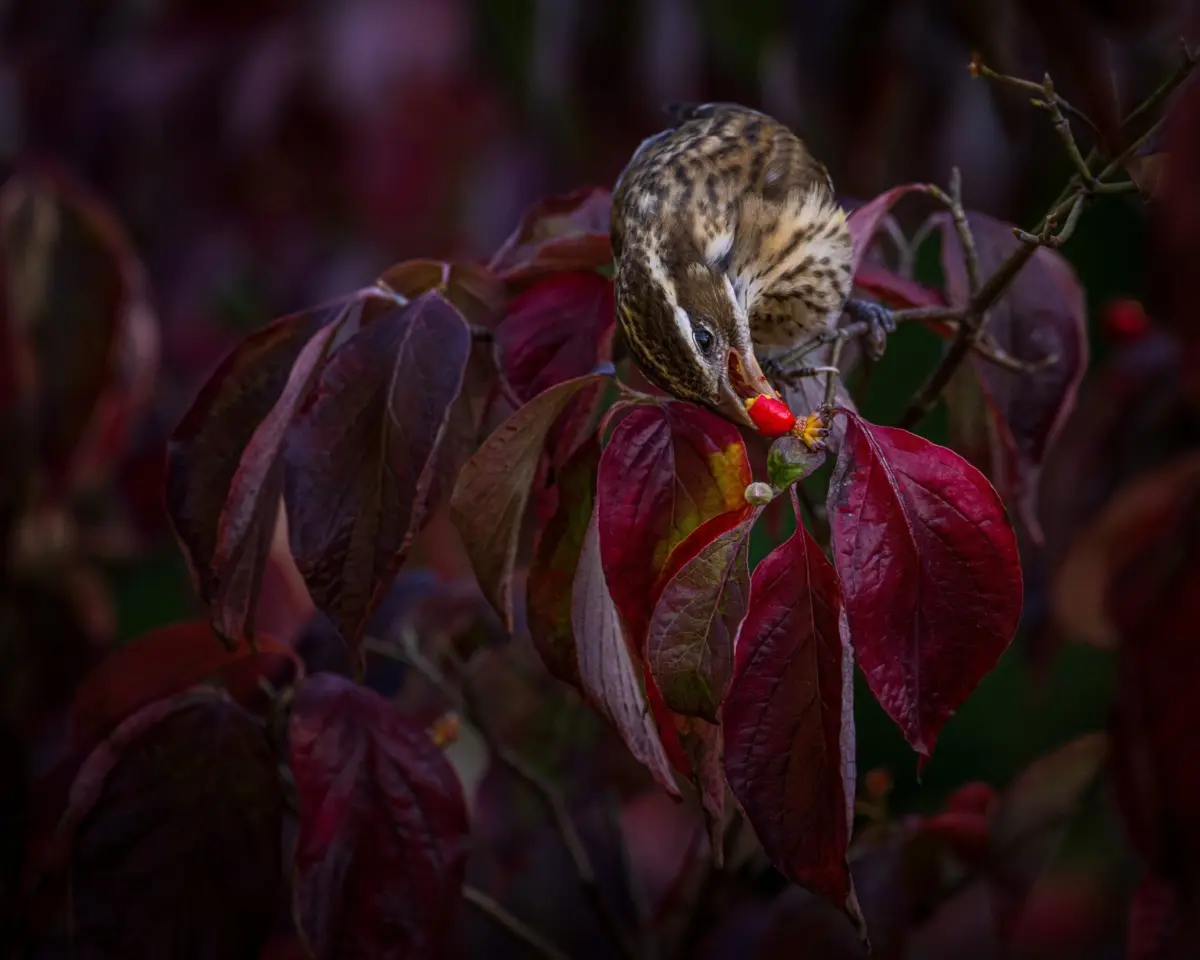

GARNER, N.C. — As the stifling humidity of the Southern summer slowly yields to the crisp, amber-hued mornings of October, a quiet yet profound ecological shift takes place across the Tar Heel State. For garden enthusiasts, conservationists, and backyard birdwatchers alike, the changing season signals an ideal window for ecological restoration. Against this seasonal backdrop, North Carolina Native Plants Week—officially recognized from October 19 to 25—arrives not merely as a horticultural observance, but as a critical rallying cry for regional biodiversity.
Spearheaded by environmental advocates and championed by organizations such as Audubon North Carolina, this dedicated week underscores a vital biological truth: the plants we choose to anchor in our suburban yards, municipal parks, and rural pastures are the foundational architects of local ecosystems. As recent policy wins reinforce the intrinsic value of native flora in state and municipal planning, conservationists are urging residents to leverage the fall planting season to repair fragmented habitats, one native tree and shrub at a time.
Executive Overview: The Urgent Case for Native Flora
To understand the stakes of North Carolina Native Plants Week, one must first look at the invisible threads connecting native vegetation to regional wildlife populations. Over millennia, North Carolina’s complex geography—stretching from the windswept barrier islands of the Outer Banks, across the rolling Piedmont, and up to the mist-shrouded peaks of the Appalachian Mountains—has given rise to more than 3,900 native plant species. These plants co-evolved alongside the state’s indigenous fauna.
Birds, insects, amphibians, and mammals adapted to rely specifically on these plants for survival. However, generations of suburban development, coupled with the widespread introduction of aggressive, non-native ornamental species like English ivy, Bradford pear, and Japanese honeysuckle, have drastically altered the landscape. This substitution of native flora with imported ornamentals has created what ecologists term "green deserts"—landscapes that look lush to the human eye but offer virtually no nutritional value to native wildlife.
The crisis is particularly acute for migratory and resident bird populations. Insects that have evolved to consume non-native plants are often absent or deficient, starving insectivorous birds that require thousands of protein-packed caterpillars to feed their nestlings. By spotlighting October 19–25 as Native Plants Week, environmental advocates aim to reverse this trend. The initiative bridges the gap between scientific consensus and grassroots action, demonstrating how individual property owners can transform sterile lawns into thriving stopover sites and breeding grounds for iconic regional species like the Carolina Wren and the Brown-headed Nuthatch.
Detailed Chronology: From Ancient Ecosystems to Modern Policy Wins
The movement to protect and restore North Carolina’s native plant heritage did not happen overnight; it is the culmination of centuries of ecological evolution followed by decades of hard-fought conservation advocacy and legislative progress.
Pre-Columbian to Early Settlement: The Natural Balance
Long before European settlers mapped the terrain, North Carolina’s landscape was a dynamic mosaic shaped by natural fire regimes, megafauna, and indigenous stewardship. Vast expanses of the Coastal Plain were dominated by Longleaf Pine (Pinus palustris) savannas, an ecosystem supporting hundreds of understory plant species. In the higher elevations, rich cove forests hosted an astonishing diversity of herbaceous perennials and hardwood trees like oaks, hickories, and birches. This complex web of flora sustained immense populations of migratory birds, providing predictable food sources and nesting habitats that remained stable for thousands of years.
The Twentieth Century: The Ornamental Invasion
As the state industrialized and suburbanized through the mid-to-late 20th century, landscape architecture shifted toward uniformity. Developers favored fast-growing, exotic species imported from Asia and Europe because of their rapid propagation and resistance to local pests. Unfortunately, these pests were absent because the local wildlife did not recognize the plants as food sources. The unintended consequence was an ecological disconnect: native insects could not digest exotic leaves, insect populations plummeted, and bird populations followed suit.
Recent Decades: The Rise of Scientific Conservation
By the turn of the 21st century, organizations like Audubon North Carolina began mobilizing around a simple, science-backed premise: restoring bird populations requires restoring their food webs. Researchers quantified the staggering disparity in ecological productivity between native and non-native trees—most notably demonstrating that native oaks support over 500 species of caterpillars, whereas common non-native ornamentals support virtually zero.
Recent Policy Wins and Present-Day Momentum
In recent years, this scientific advocacy has translated into tangible policy victories. Municipalities across North Carolina—from Durham and Wilmington to Asheville and Raleigh—have begun updating their green infrastructure ordinances to prioritize native species in public landscaping projects. Furthermore, state-level discussions regarding stormwater management, urban heat island mitigation, and invasive species control have increasingly incorporated the recommendations of conservation biologists.
North Carolina Native Plants Week acts as the public-facing anchor for these policy wins. It translates legislative and scientific milestones into accessible, actionable guidance for everyday citizens, driving home the message that conservation begins in the backyard.
Supporting Context & Metrics: The Science of the Canopy
To fully appreciate the urgency of planting native trees during the October window, one must examine the intricate ecological relationships governing forest and suburban canopies. The data compiled by avian conservationists and botanists paint a clear picture of why certain species are irreplaceable.
The Power of the Oak (Quercus spp.)
Among North Carolina’s diverse botanical inventory, oaks stand undisputed as the ecological heavyweights. Research shows that native oaks support more Lepidoptera (butterfly and moth) species than any other genus of woody plants in North America. For a breeding pair of Carolina Chickadees or Tufted Titmice, finding enough caterpillars to rear a single clutch of chicks requires foraging among thousands of leaves. A single mature native oak tree functions as a biological engine, churning out the protein-rich insect biomass essential for avian reproduction.
[Native Oak Canopy]
       │
       ├──> Generates 500+ Caterpillar Species (Crucial Protein for Nestlings)
       ├──> Produces Acorns (Essential Fall/Winter Mast for Mammals & Birds)
       └──> Provides Multi-Tiered Structural Roosting & Nesting Sites
Fall Migration: Berries and Fuel
While spring is characterized by insect-hunting and nesting, autumn brings a different ecological imperative: migration. North Carolina sits squarely within the Atlantic Flyway, a vital aerial corridor for millions of migratory birds traveling from northern breeding grounds to Central and South America.
During this grueling journey, species such as thrushes, catbirds, and warblers rely heavily on high-energy fuel sources. Native shrubs and trees—such as American Beautyberry (Callicarpa americana) and various native spicebushes—yield lipid-rich berries precisely timed with the peak of fall migration. These berries provide the dense caloric intake migratory birds need to cross expansive urban and agricultural zones safely.
The 3,900+ Species Inventory
North Carolina’s botanical wealth is staggering. From the iconic state flower, the Flowering Dogwood (Cornus florida), which provides early spring nectar and late-season drupes, to the majestic Longleaf Pine that anchors the sandhills ecosystem, the state’s flora is uniquely tailored to its climate. When property owners integrate these species into urban and suburban forestry plans, they directly counteract habitat fragmentation.
However, planting trees effectively requires moving beyond mere selection to strategic placement and proper care. To assist homeowners and municipal planners, conservation groups have developed targeted resources, including comprehensive tree care guides, ensuring that newly planted saplings survive the stresses of urban environments and mature into robust wildlife sanctuaries.
Official Statements and Expert Perspectives
As North Carolina Native Plants Week unfolds, conservation leaders and wildlife biologists are amplifying their message across media platforms and community forums.
"Native plants are the bedrock of our natural heritage. When we plant a native tree or shrub, we are not merely decorating our yards; we are rebuilding an ancient, life-sustaining dining room and shelter for the birds and pollinators that define North Carolina’s vibrant ecosystems," notes a regional conservation spokesperson.
The emphasis on community action is echoed by urban forestry advocates who point out that private property owners control a significant percentage of the state’s urban and suburban canopy.
"Conservation is no longer something that only happens in remote national forests or state parks," explains a habitat restoration specialist based in the Triangle region. "Every backyard, corporate campus, and municipal median represents a vital stepping stone in the Atlantic Flyway. By choosing native plants during October—the absolute premier window for root establishment in the South—landowners give these plants a fighting chance to establish deep root systems before the summer heat returns next year."
Furthermore, municipal planners have increasingly embraced the intersection of avian conservation and stormwater management. Native plants possess deeper root structures than traditional turfgrass or exotic ornamentals, allowing them to absorb heavy stormwater runoff, mitigate localized flooding, and filter pollutants before they reach local watersheds. This multi-benefit profile has transformed native plant landscaping from a niche environmental hobby into an essential component of modern civic resilience.
Future Outlook: Sustaining the Momentum Beyond October
As North Carolina Native Plants Week draws to a close, the ultimate measure of its success will not be the number of saplings sold during the seven-day window, but the long-term survival and expansion of the state’s native biodiversity network.
Looking ahead, conservation scientists outline several key priorities to ensure that the current momentum translates into permanent ecological gains:
- Expanding Nursery Availability: One of the historic bottlenecks in native plant adoption has been supply chain availability in commercial garden centers, which often stock sterile or invasive exotic cultivars. Encouraging local nurseries to prioritize straight-species native plants remains a critical objective.
- Reforming Homeowners Association (HOA) Covenants: Many residential developments enforce strict landscaping rules that penalize "wild" or naturalized yards. Advocates are pushing for legislative and community-level reforms to protect homeowners who choose to replace manicured lawns with bird-friendly native habitats.
- Deepening Municipal Partnerships: Cities and towns across North Carolina are increasingly recognizing that urban tree canopies are public health assets. Integrating native species requirements into urban master plans will ensure cooler cities, cleaner water, and healthier avian populations.
- Intergenerational Education: Engaging schools, youth groups, and community gardens in native planting projects ensures that the next generation of North Carolinians understands the intrinsic value of their local ecology.
As the leaves turn and the crisp autumn air settles over the mountains, Piedmont, and coast, October 19–25 serves as an invitation to all North Carolinians. By picking up a shovel, selecting a native oak, dogwood, or beautyberry, and planting with purpose, residents can ensure that the skies above Tar Heel state remain alive with the songs of thriving bird populations for generations to come.