
Executive Overview
The landscape of global agriculture is undergoing a profound, technology-driven metamorphosis. As climate change accelerates weather volatility, arable land contracts, labor shortages intensify, and environmental regulations tighten, the world’s farming systems face unprecedented pressures.
Enter the innovators reshaping the horizon. TIME magazine has officially unveiled the agricultural sector of its prestigious annual Best Inventions list for 2026, casting a brilliant spotlight on six groundbreaking technologies. Selected from a rigorous global pool of nominations evaluated by the publication’s editors, correspondents, and industry experts, these innovations represent the vanguard of modern agronomy.
The six winners—spanning advanced crop genetics, autonomous multi-purpose robotics, artificial intelligence-driven apiary management, circular economy waste valorization, non-chemical disease control, and nutrient recovery systems—form a vital subset of TIME’s broader 2026 ranking of 300 products and ideas making the world "better, smarter, and more fun."
Far from speculative sci-fi concepts, these are commercially viable, rapidly scaling tools addressing the immediate realities of farm economics and ecological stewardship. Together, they offer a definitive blueprint for how humanity will cultivate sustenance, steward natural resources, and protect ecosystems for generations to come.
Detailed Chronology of AgTech Milestones
The journey toward the 2026 TIME Best Inventions agricultural cohort did not happen overnight; it is the culmination of years of iterative research, regulatory navigation, and field trials. Examining the trajectory of these six category-defining technologies reveals how modern agriculture has transitioned from trial-and-error chemistry to precision science.
The Seed Genesis: BioLumic’s Light-Activated Traits
Long before seeds hit the furrow, the foundational architecture of crop performance is locked in the germplasm. For years, traditional breeding cycles and chemical seed treatments dominated the market, often requiring lengthy generations to manifest hardiness or yield enhancements.
The turning point for BioLumic came through its pioneering work in photomorphogenic seed treatment. By applying precise, proprietary light treatments to seeds prior to planting, the company’s xTraits platform triggers natural, non-GMO biochemical pathways.
Over the past few years, BioLumic transitioned from controlled laboratory validations to massive commercial deployments—most notably capturing headlines in late 2025 as major South American seed companies integrated the technology into their commercial hybrid pipelines. By the time TIME evaluators reviewed the platform for the 2026 list, BioLumic had firmly established its ability to give crops an accelerated, resilient start against abiotic stresses.
The Fields Turn Autonomous: Burro Grande 44 and Thorvald
While seed innovations fortify crops from within, physical fieldwork has faced severe disruptions due to tightening rural labor markets across North America, Europe, and Asia.
The automation timeline accelerated rapidly between 2023 and 2025. Burro Robotics, known for its nimble harvest-assist platforms, recognized that the logistics of moving harvested produce out of fields remained a massive productivity bottleneck. The development and subsequent market rollout of the Burro Grande 44 marked a generational leap. Designed as an all-purpose heavy-duty farm robot, the Grande 44 bridges the gap between delicate manual harvesting and heavy machinery.
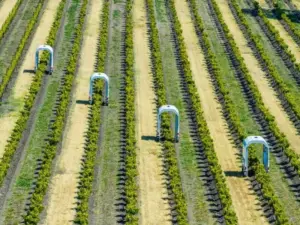
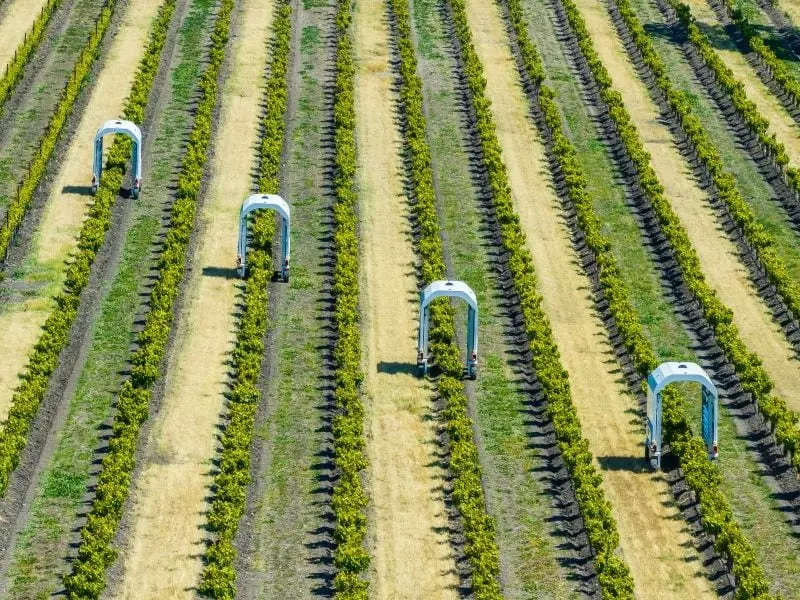
Simultaneously, Saga Robotics was forging a parallel path in perennial specialty crops. Facing mounting regulatory bans and consumer resistance against conventional synthetic fungicides, Saga scaled up its flagship ultraviolet-C (UV-C) light robot, Thorvald.
By 2025, Thorvald was aggressively expanding its international footprint, executing commercial treatments across the UK’s tabletop strawberry industry and establishing a significant operational foothold across thousands of acres of California vineyards. By the 2026 evaluation period, Thorvald was autonomously managing fungal pathogens on roughly 30% of British commercial strawberries—proving that non-chemical crop protection could scale reliably.
The Hive, the Waste Stream, and the Nutrient Loop
As automation took root in open fields and trellised vines, innovators began turning their attention to systemic blind spots: pollination, waste management, and nutrient cycling.
- Beewise and the Smart Hive (2024–2026): With global pollinator populations under constant threat from habitat loss, disease, and pesticides, traditional beekeeping could no longer rely on manual hive checks. Beewise deployed artificial intelligence and robotics through its Robi platform, offering remote, real-time monitoring and micro-interventions that drastically reduced colony collapse rates.
- Unlocking AgWaste (2025–2026): The 2nd Nature AgWaste Portal leveraged the generative and analytical power of artificial intelligence to look at agricultural side-streams not as disposal problems, but as raw economic potential. By mapping the chemical compositions of food processing waste and farm leftovers, the platform began matching suppliers with buyers seeking valuable bio-compounds.
- Closing the Nutrient Circle with VunaNexus Aurin (2026): In an era where geopolitical shocks routinely destabilize global fertilizer supply chains, VunaNexus commercialized a radical paradigm shift: Aurin, a premium garden fertilizer derived entirely from safely processed, recycled human urine. By capturing essential nitrogen, phosphorus, and potassium from urban and agricultural sanitation streams, VunaNexus tapped into an infinite, circular nutrient source.
Supporting Context & Metrics: The Scale of Modern Innovation
To truly appreciate why TIME selected these six technologies, one must look at the quantitative data and socio-economic realities underpinning their rise. The global agricultural technology (AgTech) market is experiencing a structural boom, propelled by stark economic imperatives.
1. The Productivity Multiplier: Labor and Robotics
Labor scarcity has transitioned from a cyclical seasonal headache to a chronic structural crisis for specialty crop producers. According to global agricultural labor indices, farm labor costs have surged by over 40% globally in the last decade, while the available workforce has shrunk.
Burro CEO Charlie Andersen highlighted the direct economic impact of bridging this gap to TIME:
"When you have a robot running around carrying the fruit people pick back to central points, each person is 30% more productive."
By removing the physical burden of hauling heavy crates from human pickers, autonomous platforms like the Burro Grande 44 effectively expand farm operational capacity without requiring scarce additional labor inputs.
2. Conquering Powdery Mildew Without Chemistry
Powdery mildew remains one of the most destructive fungal plant pathogens globally, capable of decimating grapevines, berries, and cucurbits in a matter of days. Traditionally, this required intensive, recurring applications of synthetic fungicides—driving up input costs, risking chemical resistance, and drawing environmental scrutiny.
Saga Robotics’ Thorvald introduces a compelling metric of transformation: by deploying targeted nocturnal UV-C light treatments, the robot disrupts fungal DNA replication without leaving chemical residues or harming the crop. Operating across roughly 30% of the UK’s tabletop strawberry production and 2,500 acres of California vineyards by 2026, Thorvald demonstrates that non-chemical physical interventions can achieve industrial-scale efficacy.
3. Circularity and Nutrient Security
The global fertilizer market has faced severe price volatility, driven by energy crunches and trade disruptions. Innovations like VunaNexus Aurin and the 2nd Nature AgWaste Portal represent a critical pivot toward domestic, localized resource recovery.
By recovering millions of tons of valuable nitrogen and phosphorus that would otherwise be treated as waste or environmental pollutants, these technologies reduce farming’s carbon footprint while insulating producers from volatile commodity markets. Similarly, BioLumic’s seed-priming light technology enhances seedling vigor, allowing crops to achieve superior root development and early-stage resilience against drought—a vital attribute as unpredictable weather patterns threaten global harvests.
Official Statements and Industry Perspectives
The announcement of TIME’s 2026 Best Inventions in agriculture has sparked widespread discussion across the global farming and venture capital communities. Industry leaders emphasize that these awards validate a broader shift: moving away from brute-force chemical farming toward intelligence-led, regenerative precision systems.
"We are no longer just asking farms to produce more; we are asking them to produce smarter, cleaner, and with absolute resilience against systemic shocks," noted a leading AgTech venture analyst following the release of the list. "The technologies recognized by TIME this year—from BioLumic’s light-activated genetics to VunaNexus’s nutrient recycling—prove that the future of farming lies at the intersection of biology, software, and circular economics."
Agricultural producers who have integrated these technologies echo these sentiments. Vineyard managers utilizing Saga Robotics’ Thorvald report a newfound peace of mind regarding regulatory restrictions on chemical sprays, noting that automated UV-C treatments offer consistent disease suppression with zero pre-harvest intervals.
Meanwhile, commercial beekeepers utilizing the Beewise Robi platform credit AI-driven hive management with saving colonies that otherwise would have succumbed to sudden varroa mite infestations or temperature extremes—safeguarding the vital pollination services upon which one-third of the human diet depends.
Future Outlook: Where Agriculture Goes From Here
As the dust settles on TIME’s 2026 Best Inventions selections, the trajectory for agricultural innovation points toward total systems integration. The winners of today are establishing the standard operating procedures of tomorrow.
The Convergence of AI, Robotics, and Biology
The next decade will likely see these disparate technological categories merge into unified farm management ecosystems. Imagine a future where a seed treated via BioLumic’s light-activation platform is planted by a precision autonomous tractor, monitored throughout its lifecycle by AI-driven apiary and crop-health sensors, treated for disease via non-chemical autonomous robots like Thorvald, and whose post-harvest organic waste is routed through AI sorting portals like 2nd Nature to be transformed into local fertilizers.
Regulatory Evolution and Global Adoption
For these innovations to achieve their full potential, regulatory frameworks worldwide must continue to adapt. Traditional agricultural policies built around twentieth-century chemical paradigms are gradually giving way to supportive frameworks for biologicals, circular inputs, and autonomous machinery.
As public demand for sustainable, low-carbon food systems intensifies, retailers and consumer goods conglomerates will increasingly tie procurement contracts to the adoption of these very technologies.
Conclusion
TIME magazine’s recognition of these six agricultural pioneers serves as both a celebration of current ingenuity and a road map for the future. By tackling the pillars of genetics, labor, pollination, waste, disease control, and nutrient recovery, these inventions are doing much more than winning accolades—they are securing the future of global food production.