
Executive Overview
Navigating Dublin’s public transportation network with a companion animal requires careful planning, a clear understanding of disparate departmental policies, and a healthy dose of flexibility. For pet owners, animal lovers, and expatriates relocating to Ireland’s capital, the city’s transit infrastructure presents a fragmented landscape. While the phrase "mixed bag" often understates complex municipal frameworks, it accurately describes the current state of pet-friendliness across Dublin’s buses, trams, coastal electric trains, and intercity rails.
A concise summary of the landscape reveals a clear divide: small dogs traveling in secure carriers or resting comfortably on their owners’ laps enjoy broad access to Ireland’s rail network and have a reasonable chance of boarding buses at the discretion of individual operators. Conversely, larger dogs face significant logistical hurdles, including extra fees, mandatory separation from their owners in non-passenger compartments on specific intercity routes, and absolute bans on certain systems. Most notably, the city’s light rail system, the LUAS, maintains a strict zero-tolerance policy for pets, mirroring the frustrating reality faced by passengers on intercity coach networks like Bus Éireann.
Understanding these varied regulations is essential for anyone hoping to explore Dublin alongside a four-legged friend. This investigative guide breaks down the official policies, investigates the gray areas of municipal transport, and provides a clear breakdown of what pet owners can expect when navigating Ireland’s primary public transit systems.
Detailed Chronology of Transit Policies and Inquiries
To understand how Dublin’s transit operators approach pet travel, it is necessary to examine the evolution of these policies and the direct inquiries made to clarify ambiguous rules. Municipal guidelines are rarely uniform, and discovering the reality of on-the-ground enforcement often requires direct communication with customer service representatives.
The Dublin Bus Inquiry (July 2016)
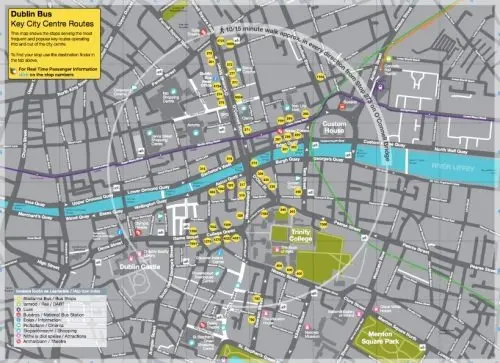
Dublin Bus operates a massive network of routes spanning the city center and suburban rings. However, a preliminary review of its official website yields frustrating results: the digital platform is entirely silent regarding the transport of domestic pets.
To resolve this ambiguity, a formal inquiry was submitted to Dublin Bus customer support. The official response illuminated the heavily decentralized nature of bus operations:
"All guide dogs and assistance dogs are permitted on all of Dublin Bus services however it is up to the discretion of the driver to decide whether any other dog is allowed to board the bus."
This policy shifts the burden of responsibility directly onto the individual driver. Practical deductions suggest that a small dog safely secured inside a travel carrier will likely be welcomed without issue. A small dog held securely in its owner’s arms also stands an exceptional chance of boarding. However, owners traveling with larger, leashed dogs are left to "roll the dice," relying entirely on the mood, discretion, and operational schedule of the driver at the exact moment of arrival.
The Irish Rail and DART Clarification (August 2016)
While Irish Rail (Iarnród Éireann) publishes a clear pet policy for its intercity lines, the application of these rules to commuter services and the Dublin Area Rapid Transit (DART) coastal system remained ambiguous.
Following a direct inquiry to clarify whether local rail networks mirrored intercity standards, customer service confirmed that the core guidelines remain consistent across services. The official response stated:
"Small dogs can be carried free of charge in the passenger compartment of services provided they travel on the owners lap. Guide dogs and Assistance dogs are permitted to travel on all Iarnród Éireann services without restriction. Accompanied dogs, other than those described above, can only be conveyed on Intercity services in a Guards Van (non-passenger compartment) if available (e.g. Dublin/Cork and Dublin/Belfast services only). Charges will apply."
This clarification confirmed that small lap dogs enjoy free passage across DART and commuter trains, while larger dogs are restricted to specialized luggage vans on select intercity corridors—a service entirely unavailable on urban and suburban routes.
Supporting Context & Metrics: Mode-by-Mode Analysis
To assist commuters and travelers in mapping out their journeys, the transit network can be broken down mode-by-mode. Each system operates under distinct administrative bodies, resulting in vastly different user experiences for pet owners.
1. Dublin Bus: The Discretionary Network
- Coverage: Extensive network spanning Dublin’s core and outer suburbs.
- Pet Policy: Unofficial and discretionary.
- The Verdict: Small pets in carriers or held securely are generally accepted; large dogs face high uncertainty.
- Practical Advice: Always travel during off-peak hours when buses are less crowded. Keep carriers zipped and secure, and always ask the driver politely upon boarding.
2. LUAS Light Rail: The Strict Prohibition
- Coverage: Two primary light rail lines (the Red Line and Green Line) serving high-density urban corridors.
- Pet Policy: Strictly prohibited. The official LUAS etiquette guidelines state: "No animals are allowed on board with the exception of guide dogs."
- The Verdict: Zero tolerance. Pet owners must find alternative transportation if their route relies on the tram network.
- Practical Advice: Do not attempt to board the LUAS with a pet, as transit inspectors enforce this rule rigorously, and fines may apply.
3. DART and Commuter Rail (Irish Rail): The Pet-Friendly Coast
- Coverage: The DART coastal line running from Howth and Malahide in the north down to Greystones in the south, alongside regional commuter lines.
- Pet Policy: Small dogs travel free of charge if kept on the owner’s lap or secured in a carrier.
- The Verdict: Highly favorable for small dog owners; restrictive for large dogs on regional routes.
- Practical Advice: Ensure your dog remains seated on your lap or inside a carrier for the duration of the journey to avoid disturbing fellow passengers or violating conductor guidelines.
4. Bus Éireann: The Intercity Paradox
- Coverage: Long-distance intercity bus routes connecting Dublin to towns and cities across Ireland.
- Pet Policy: Despite featuring an iconic hound in its corporate branding—reminiscent of international coach lines—Bus Éireann explicitly bans pet dogs from its vehicles.
- The Verdict: Strictly no pets allowed (outside of official assistance animals).
- Practical Advice: Travelers needing to move between cities with large pets must look toward private car rentals or pet-transport services rather than public intercity coaches.
Official Statements and Regulatory Framework
A deeper analysis of the regulatory framework governing Irish public transport reveals a tension between accessibility, public hygiene, and passenger comfort.
Accessibility vs. Domestic Pets
Under Irish law and the operational guidelines of the National Transport Authority (NTA), public transport operators are legally mandated to accommodate assistance dogs, guide dogs, and therapy animals without restriction. These animals undergo rigorous training to ensure they remain calm in high-stress, crowded environments.
In contrast, domestic pets are viewed through the lens of passenger comfort and municipal hygiene. Because transit operators lack standardized guidelines for behavioral assessment, organizations like Dublin Bus delegate this authority to front-line workers. While this humanizes the process, it introduces inconsistency: a commuter may successfully navigate a route in the morning with a small terrier, only to be denied entry by a different driver on the evening return trip.
The Intercity Logistics Dilemma
The policy regarding larger dogs on Irish Rail intercity routes—requiring them to travel in a "Guards Van" (non-passenger compartment) on specific lines like Dublin–Cork or Dublin–Belfast—highlights an older model of transport logistics. While common in historic European railway networks, this practice is increasingly rare in modern transit systems, where animal welfare advocates raise concerns about separating pets from their owners during transit. Furthermore, because these specialized vans are only available on select routes, travelers heading to regions outside these specific corridors cannot transport large dogs by rail at all.
Future Outlook: Toward a More Canine-Inclusive Dublin?
As Dublin continues to grow into a modern, cosmopolitan European capital, urban planners and transit authorities face increasing pressure to modernize municipal policies to reflect changing demographic and lifestyle trends. Pets are increasingly viewed as core members of modern households, and urban centers across Europe—such as Berlin, Vienna, and Paris—have successfully implemented progressive pet transit policies without compromising public safety or cleanliness.
Potential Policy Reforms
- Standardized Municipal Guidelines: Transitioning away from driver discretion on Dublin Bus toward a formalized, city-wide framework would eliminate commuter anxiety and create predictable travel conditions.
- Off-Peak Tram Access: Pressure is mounting on transport operators to pilot pet-friendly hours on the LUAS light rail system, mirroring successful trials in other major European transit networks where dogs are permitted outside of peak morning and evening commuting windows.
- Digital Transparency: Upgrading official transport websites to clearly outline pet policies would save commuters time and prevent frustrating misunderstandings at boarding points.
Until structural reforms are enacted, pet owners in Dublin must remain vigilant, check ahead, and maintain open communication with transport staff. For small dog owners, the coastal DART trains and flexible bus routes offer reliable pathways through the city. For owners of larger dogs, however, navigating Dublin’s public transit network will require alternative arrangements for the foreseeable future.
For travelers looking to expand their journeys beyond Ireland, comprehensive guides detailing pet-friendly public transit policies across global metropolitan systems can be found through specialized resources like Dog Jaunt’s Public Transit Pet Policies Collection.