

EXECUTIVE OVERVIEW: THE MECHANICS AND ECONOMICS OF CANINE CHEW SELECTION
To the untrained eye, purchasing a dog chew appears to be a simple transaction dictated by price and packaging. However, veterinary dentists, animal behaviorists, and manufacturing experts view the canine chew through a far more complex lens: a cross-section of biomechanical forces, behavioral psychology, and gastrointestinal safety.
A common complaint among pet owners is the rapid destruction of premium treats—such as the widely popular bully stick—often before a morning coffee is finished. Industry data reveals that this is rarely a failure of the product itself, but rather a fundamental mismatch in product sizing. When a dog masticates a chew that is undersized relative to its jaw capacity and biting force, the treat transitions from an enriching, long-lasting activity to a rapidly consumed, high-calorie snack, presenting both financial inefficiencies and acute physical hazards.
This report investigates the critical variables governing the selection of canine chews, with a particular focus on bully sticks. By examining the correlations between canine weight, chew styles, dental hygiene, and the physics of chew containment devices, this analysis provides an authoritative guide for optimizing both safety and cost-efficiency in the modern household.

THE ANATOMY OF A CHEW: HOW SIZE AND STYLE DICTATE SAFETY AND LONGEVITY
The Mastication Matrix: Weight vs. Jaw Pressure
Selecting the appropriate size of a natural chew requires balancing the dog’s physical dimensions with its psychological drive to chew. While body weight provides an accessible baseline, it is the animal’s chew style—ranging from gentle scraping to destructive shearing—that dictates the appropriate dimensions of the treat.
       [Dog Weight / Breed Size]
                  │
                  ▼
         [Baseline Length]
         (5", 7", 9", or 12")
                  │
                  ├────────────────────────┐
                  ▼                        ▼
         [Light/Moderate]           [Power Chewer]
                  │                        │
                  ▼                        ▼
           [Maintain Size]            [Size Up +1]
                  │                        │
                  └───────────┬────────────┘
                              ▼
                   [Biomechanical Match]
When an animal chews, it exerts significant force via the temporalis and masseter muscles. A medium-sized dog (e.g., a 35-pound Border Collie) can easily exert jaw pressure that exceeds the structural integrity of a thin or short chew. If the chew is too short, the dog can position it between its molar and premolar teeth, applying maximum shearing force to cleave the stick into swallowable chunks.
Conversely, a longer stick forces the dog to use its anterior teeth (incisors and canines) to hold and rasp at the tip, naturally slowing down consumption and maximizing dental friction.

The Danger of the Undersized Chew
The primary risk of an undersized chew is choking or gastrointestinal obstruction. Veterinary emergency rooms frequently treat dogs that have swallowed the terminal "stub" of a bully stick or other natural chews.
According to feeding guidelines from leading manufacturers like Redbarn Pet Products, a chew must always be physically larger than the dog’s open mouth. This ensures that a significant portion of the stick remains outside the oral cavity during use, allowing pet owners to monitor the session and intervene before the chew becomes small enough to be swallowed whole.
SUPPORTING CONTEXT & METRICS: AN EMPIRICAL BREAKDOWN OF THE BULLY STICK
The Size-to-Weight Correlation Index
To standardize selection, industry experts have developed a sizing matrix that correlates dog weight, chew style, and product length. The following table outlines the standard recommendations for matching dogs to the optimal bully stick size.
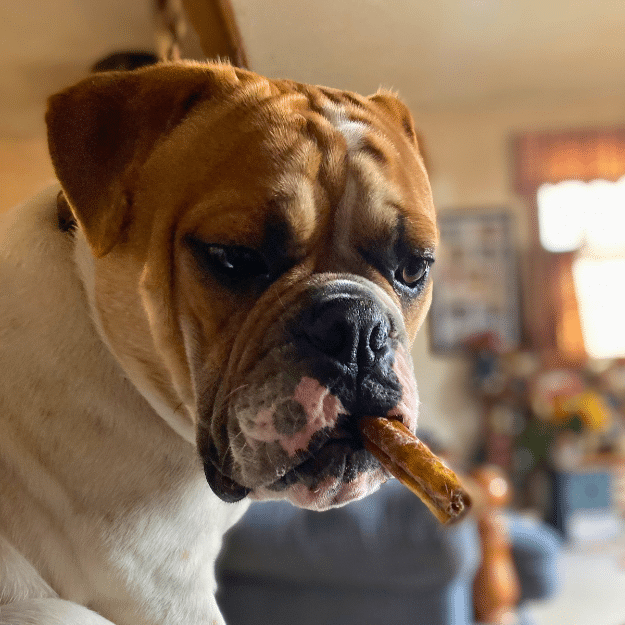
| Dog Classification | Typical Weight Range | Recommended Length | Primary Chew Style | Compatibility with Holders (e.g., Grab-A-Bull®) |
|---|---|---|---|---|
| Small / Toy | Under 25 lbs | 5 inches | Light to Moderate | Yes |
| Medium | 25 to 50 lbs | 7 inches | Moderate | Yes |
| Large | 50 to 90 lbs | 9 inches | Moderate to Strong | Yes |
| Power Chewer | Any Weight | 12 inches | Strong / Aggressive | Yes |
Note: For dogs falling on the boundary between two weight classes, veterinary safety protocols dictate sizing up to the larger option.
Beyond these standard categories, specialty manufacturers produce highly targeted variations. For toy breeds and teething puppies, micro-pieces measuring 3 to 4 inches are available. At the other end of the spectrum, extra-long sticks of 24 and 36 inches serve as high-engagement, supervised event treats rather than daily snacks.
Longevity Dynamics: The Five-Factor Equation
How long a natural beef chew lasts is not a fixed metric. Because bully sticks are natural, single-ingredient agricultural products, they exhibit inherent variations in density, moisture content, and thickness.

The actual lifespan of a chew is determined by five primary variables:
  ┌───────────────────────────────────────────────────────────┐
  │                 THE FIVE-FACTOR EQUATION                  │
  ├─────────────────────────────┬─────────────────────────────┤
  │ Factor                      │ Increases Longevity         │
  ├─────────────────────────────┼─────────────────────────────┤
  │ 1. Length & Thickness       │ 9" to 12" Heavy/Super Thick │
  │ 2. Chew Intensity           │ Passive, methodical rasping │
  │ 3. Jaw Biomechanics         │ Small jaw, limited leverage │
  │ 4. Presentation Method      │ Anchored in a safety holder │
  │ 5. Session Management       │ Timed sessions (15-20 mins) │
└─────────────────────────────┴─────────────────────────────┘- Dimensional Volume (Length and Thickness): Thicker, longer sticks (9" and 12") present more physical mass, requiring systematic degradation by the dog’s enzymes and teeth.
- Chew Intensity: "Power chewers" commit high jaw pressure and constant saliva production, speeding up the softening of the proteins, whereas moderate chewers tend to work intermittently.
- Jaw Biomechanics: A larger jaw covers more surface area per bite, accelerating structural breakdown.
- Presentation Method: A loose chew on the floor allows the dog to stabilize the treat with its paws and apply targeted leverage. A chew secured in an anchoring device cannot be easily manipulated, forcing the dog to work harder for less yield.
- Session Management: Restricting access to 15-to-20-minute intervals allows the stick to dry out and reharden between sessions, significantly extending its overall usable life.
Nutritional and Dental Health Metrics
Bully sticks offer distinct nutritional and dental benefits when integrated correctly into a dog’s diet:
- Dental Abrasion Efficacy: The mechanical action of chewing acts as a natural toothbrush. As the dog rasps the stick, the fibrous, proteinaceous structure of the beef pizzle scrapes away plaque and tartar buildup along the gumline. However, clinical benefits are only achieved through sustained contact; a chew finished in under five minutes does not provide enough friction to disrupt oral biofilms.
- Caloric Load: Bully sticks are highly nutritious, consisting almost entirely of protein. However, they are also calorically dense. Veterinary sources estimate that bully sticks contain approximately 9 to 22 calories per inch, depending on thickness. A thick 7-inch stick can carry over 100 calories. Pet owners must factor these values into their dog’s daily caloric intake to prevent obesity, particularly in small and toy breeds.
Comparative Analysis of Alternative Chews
To help pet owners choose the right product, the table below compares bully sticks with other common chews on the market.

| Chew Type | Raw Material | Digestibility Index | Primary Benefit | Safety Considerations |
|---|---|---|---|---|
| Bully Stick | 100% Beef Pizzle | High | Long-lasting, high protein, single-ingredient | Potential choking hazard on end pieces; natural odor |
| Collagen Chew | Beef Corium (Collagen) | High | Low-odor, supports joint/skin health | Must be sized correctly to prevent rapid swallowing |
| Esophagus Chew | Beef Esophagus | High | Soft texture, ideal for seniors/puppies | Consumed quickly; not suitable for power chewers |
| Rawhide | Split Beef Hide | Low to Moderate | Highly economical, very long-lasting | Risk of internal blockage if large pieces are swallowed |
OFFICIAL STATEMENTS AND QUALITY ASSURANCE STANDARDS
The Redbarn Origin: Sourcing and Safety Integration
To understand how quality standards impact safety, we must look at the supply chain of premium chew manufacturers. Redbarn Pet Products, founded in 1996 by childhood friends Jeff Baikie and Howie Bloxam, represents a case study in vertically integrated quality control. What began as a small-scale operation has grown into a global enterprise producing over 200 food, treat, and chew varieties.
To control raw material sourcing, the founders established a proprietary manufacturing facility in Paraguay. This strategic decision allowed them to bypass third-party brokers and enforce strict quality standards directly at the source. Today, Redbarn’s facilities in the United States, Paraguay, and Brazil comply with the rigorous Safe Quality Food (SQF) certification standards—a global food safety initiative recognized by the Global Food Safety Initiative (GFSI).
To mitigate pathogen risks, such as Salmonella and E. coli, Redbarn performs over 10,000 microbiological and chemical quality assurance tests every month. Their bully sticks are made from a single ingredient—100% beef pizzle—slow-roasted in its natural juices with no artificial preservatives, colorings, or bleaching agents.
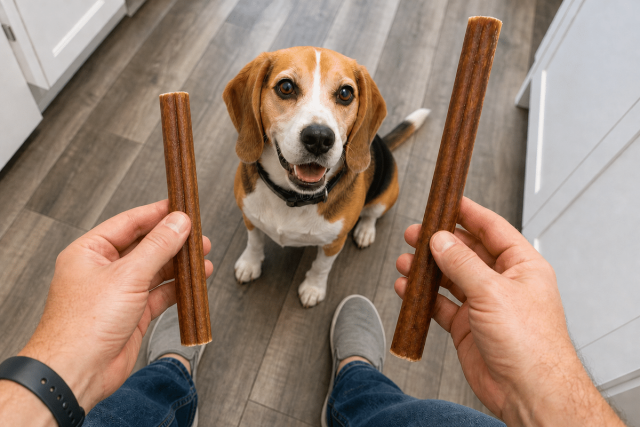
Executive Insights
The importance of consumer trust and manufacturing transparency is echoed by Redbarn’s leadership. Lindsay Tracy, Vice President of Business Development at Redbarn Pet Products, emphasizes the company’s commitment to safety:
"Over the last 30 years, we’ve learned that trust is built into everything we do at Redbarn. From carefully sourcing our ingredients to rigorous testing and quality standards, we’re committed to giving pet parents products they can feel confident giving their dogs."
This dedication to safety is backed by the "Redbarn Promise," a customer service guarantee that helps pet owners find alternative products if a specific chew does not suit their dog’s digestive system or chew style.

FUTURE OUTLOOK: ANCHORING TECHNOLOGY AND THE RISE OF INTERACTIVE CHEWING
The Physics of the Grab-A-Bull® Vice Grip System
The pet product industry is moving away from loose, unanchored chews toward integrated safety systems. This shift is driven by both safety concerns and a desire to make treats last longer.
The primary innovation in this space is the Grab-A-Bull® Chew Holder, which uses a patented Vice Grip System to secure the chew.
          [Tapered Bully Stick]
                     │
                     ▼
         [Insert into Grab-A-Bull]
                     │
                     ▼
          [Manual Thread Tighten]
                     │
                     ▼
       [Mechanical Lock (Vice Grip)]
                     │
                     ├────────────────────────┐
                     ▼                        ▼
           [Prevents Swallowing]       [Wobble Action]
             (Safety Feature)        (Active Engagement)
By inserting a standard-sized bully stick, collagen chew, or esophagus chew into the holder and tightening the manual thread, the terminal 1.5 to 2 inches of the stick are locked inside a durable, non-toxic elastomer housing. This mechanical lock prevents the dog from swallowing the dangerous end piece.
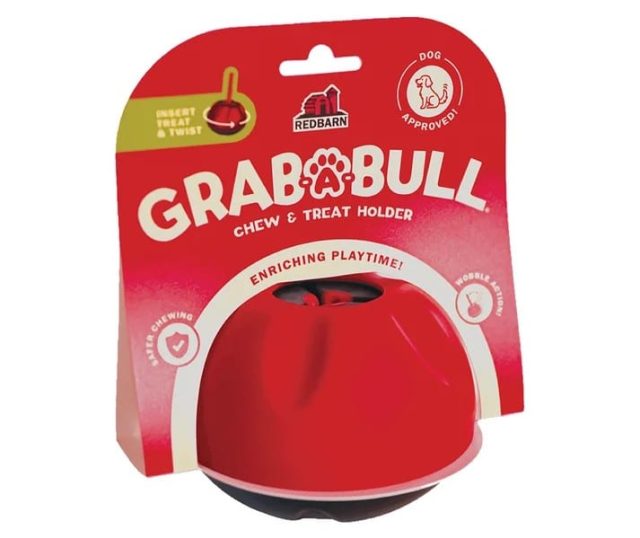
Additionally, the holder’s round shape creates a dynamic "wobble" action. Rather than simply lying flat and chewing, the dog must actively use its paws and jaw to steady the device. This extra physical challenge turns a passive chew into an interactive, mentally stimulating puzzle, extending the treat’s lifespan and keeping the dog engaged for longer.
To ensure hygiene, the Grab-A-Bull® is designed with removable, dishwasher-safe components, making it easy to clean off saliva and hair between uses.
Macro-Trends in Premium Pet Consumables
The rise of safety holders and single-ingredient treats aligns with broader trends in the pet industry:

- Premiumization and Humanization: Pet owners increasingly demand the same level of safety, transparency, and nutritional value for their pets as they do for themselves. This has led to a decline in highly processed synthetic treats in favor of single-ingredient, grass-fed beef products.
- Economic Value Optimization: While premium, slow-roasted bully sticks carry a higher upfront cost—such as a 12-inch 2-pack retailing for approximately $13.99 ($7.00 per unit)—they are highly cost-effective when measured by "hours of quiet engagement." A high-quality bully stick often outlasts plush or rubber toys, which aggressive chewers can destroy in minutes.
To help manage these costs, manufacturers are introducing direct-to-consumer loyalty programs, bulk sizing options, and subscription services (such as Redbarn’s Subscribe & Save, which offers a 10% discount). Additionally, introductory promotions like the IHEARTBULLY15 code (offering 15% off bully products and holders) encourage pet owners to adopt safer, anchored chewing setups.
Ultimately, choosing the right chew is about understanding your dog’s unique needs. By selecting the correct size—5" for small dogs, 7" for medium dogs, 9" for large dogs, and 12" for power chewers—and using modern safety holders, pet owners can protect their dogs’ health while getting the most value out of every treat.