
Executive Overview
In the highly specialized field of working canine development, the path from promising puppy to certified service animal is rigorous, demanding, and characterized by exceptionally high standards. While organizations invest significant financial resources and training hours into preparing dogs for lives of service, a substantial percentage of candidates are ultimately redirected to alternative paths. This phenomenon—often referred to in the service animal industry as a "career change"—highlights the complex interplay between canine genetics, temperament, and environmental sensitivity.
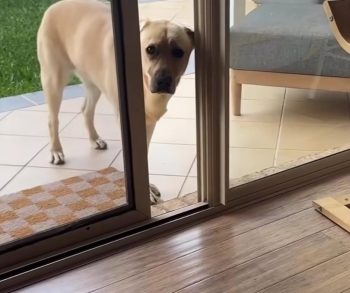
The story of Oreo, a canine candidate originally trained in Australia, serves as a poignant case study in canine behaviorism, occupational transition, and the evolving understanding of animal welfare. Originally earmarked for the demanding role of a guide dog for individuals with low vision, Oreo’s acute sensitivity and situational anxiety eventually led to her release from the program. A subsequent attempt to transition her into therapy work similarly revealed that the sensory demands of public service were incompatible with her psychological profile.
Rather than representing a failure, however, Oreo’s journey underscores a progressive shift within the working dog community: prioritizing the emotional well-being of the animal by aligning their lifestyle with their natural temperament. Adopted by her dedicated foster carers, Ash and her husband, Oreo has transitioned into a domestic environment where her profound sensitivity—once a liability in high-stress public environments—has become her greatest asset as an intuitive family companion.
Detailed Chronology
[Early Life & Selection] ──> [Guide Dog Training] ──> [Anxiety Identified / Released]
                                                               │
[Permanent Adoption] <── [Therapy Dog Training (1 Yr)] <───────┘
         │
         └──> [Domestic Integration & Intuitive Family Comfort Role]
Phase I: The Guide Dog Candidate (Early Life to Initial Assessment)
Oreo’s journey began in Australia, where she was selected as a candidate for a prestigious guide dog training program. In the early stages of her development, she exhibited many of the traits highly prized by service organizations: she was deeply affectionate, eager to please, and highly cooperative.
During her preliminary socialization phase, trainers noted her strong bond with human handlers. However, as the complexity of her training escalated, the sensory-rich environments of urban Australia began to expose vulnerabilities in her temperament. Guide dogs must navigate bustling city streets, unpredictable traffic, loud noises, and crowded public transport while remaining completely focused on their handler’s safety. For Oreo, the cumulative stress of these stimuli triggered a persistent baseline of anxiety. Recognizing that a guide dog must operate with absolute confidence to ensure the safety of a visually impaired handler, program coordinators made the decision to withdraw her from the guide dog track.
Phase II: The Pivot to Therapy Dog Training
Because Oreo possessed an inherently gentle and loving disposition, trainers hypothesized that her skills could be redirected toward therapy work. Unlike guide dogs, who assist a single individual with daily mobility, therapy dogs operate in structured environments—such as hospitals, schools, and nursing homes—to provide emotional support to groups of people.
Oreo underwent approximately one year of specialized therapy dog training. This curriculum focused on desensitization to medical equipment, gentle physical interactions, and calm behavior in novel environments.
Despite showing immense promise during one-on-one sessions, Oreo’s final assessment revealed that the unpredictable triggers of therapy work—varying environmental sounds, sudden movements, and the high emotional energy of clinical spaces—elicited the same sensory overload that had hindered her guide dog career. The evaluators concluded that a career in public service was not in Oreo’s best interest, leading to her official retirement from working canine programs.
Phase III: Permanent Adoption and Domestic Transition
Throughout her training and assessment phases, Oreo had been placed under the care of a temporary foster family: Ash and her husband. Having witnessed Oreo’s struggles, vulnerability, and immense capacity for affection, the couple had formed a profound emotional bond with her.
Upon receiving the official notification that Oreo was being retired from the training registry, Ash and her husband immediately applied for permanent adoption. The transition from a highly structured training regimen to a relaxed domestic lifestyle allowed Oreo to decompress. Free from the pressure of performance evaluations and rigid training schedules, she quickly established her own routines, revealing a quirky, highly communicative personality that flourished in a predictable home environment.
Supporting Context & Metrics
The trajectory of Oreo’s career change is far from unique in the service animal industry. Understanding the metrics behind service dog graduation rates provides essential context for why canine candidates are redirected to domestic life.
The Realities of Service Dog Attrition
According to industry data from organizations such as International Guide Dog Federation (IGDF) and Assistance Dogs International (ADI), the attrition rate for service dog candidates is remarkably high:
- Graduation Success Rate: Only about 35% to 50% of dogs that enter formal service training successfully graduate and are placed with clients.
- Financial Investment: Training a single guide dog to graduation can cost between $40,000 and $60,000 USD (approximately $60,000 to $90,000 AUD), encompassing breeding, veterinary care, socialization, and intensive professional training.
- Primary Attrition Factors:
- Behavioral/Temperamental (60% of releases): Environmental anxiety, high prey drive, sensitivity to sound, or lack of public access confidence.
- Medical (40% of releases): Hip dysplasia, allergies, cardiac anomalies, or early-onset joint issues.
| Training Stage | Typical Duration | Primary Focus | Common Attrition Risks |
|---|---|---|---|
| Puppy Socialization | 0 – 12 Months | Basic obedience, environmental exposure | Low confidence, fear reactivity |
| Formal Harness Training | 12 – 18 Months | Complex navigation, obstacle avoidance | Sound sensitivity, distraction, anxiety |
| Advanced Placement | 18 – 24 Months | Client matching, public transit navigation | Stress under pressure, change in handler dynamics |
The high standard of selection ensures that only dogs capable of navigating high-stress environments without compromised welfare are placed in active duty. For dogs like Oreo, early identification of sensory sensitivities is a vital safeguard against chronic canine distress.
Official Statements and Observational Insights
The Family Perspective
For Ash and her family, Oreo’s transition from a working candidate to a family member brought to light a series of unique, highly communicative behaviors that demonstrated her cognitive depth.
"She is the absolute heart of our family, our first daughter," Ash shared. "Without the pressure of schedules and assessments, we’ve watched her true personality emerge. She has established routines that she expects us to follow to the letter."
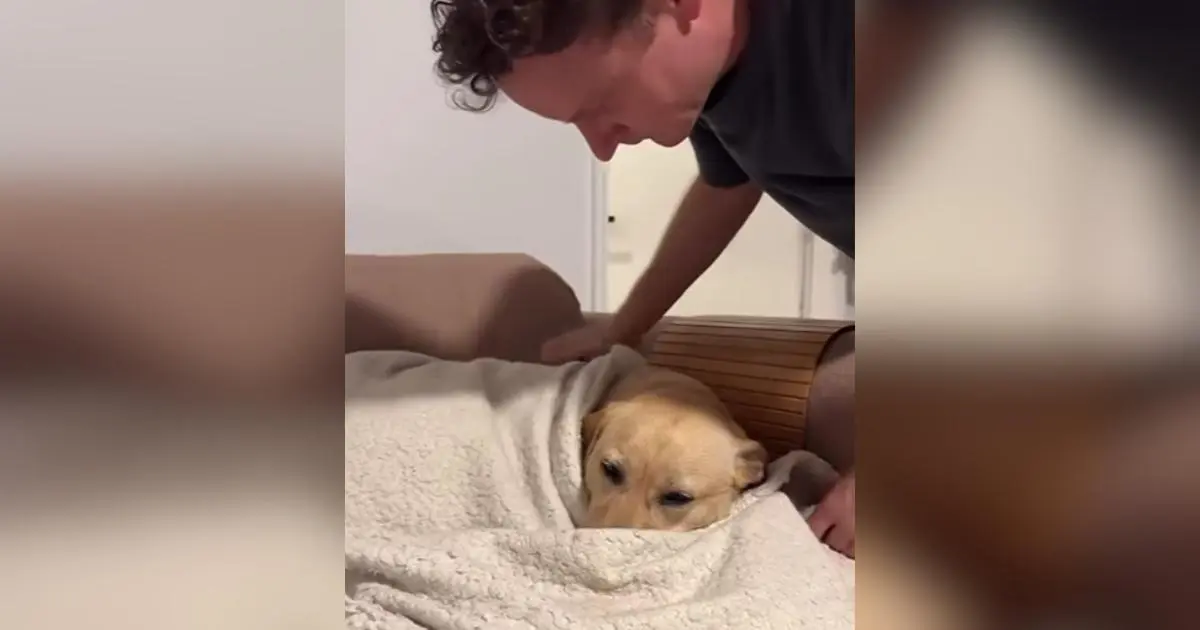
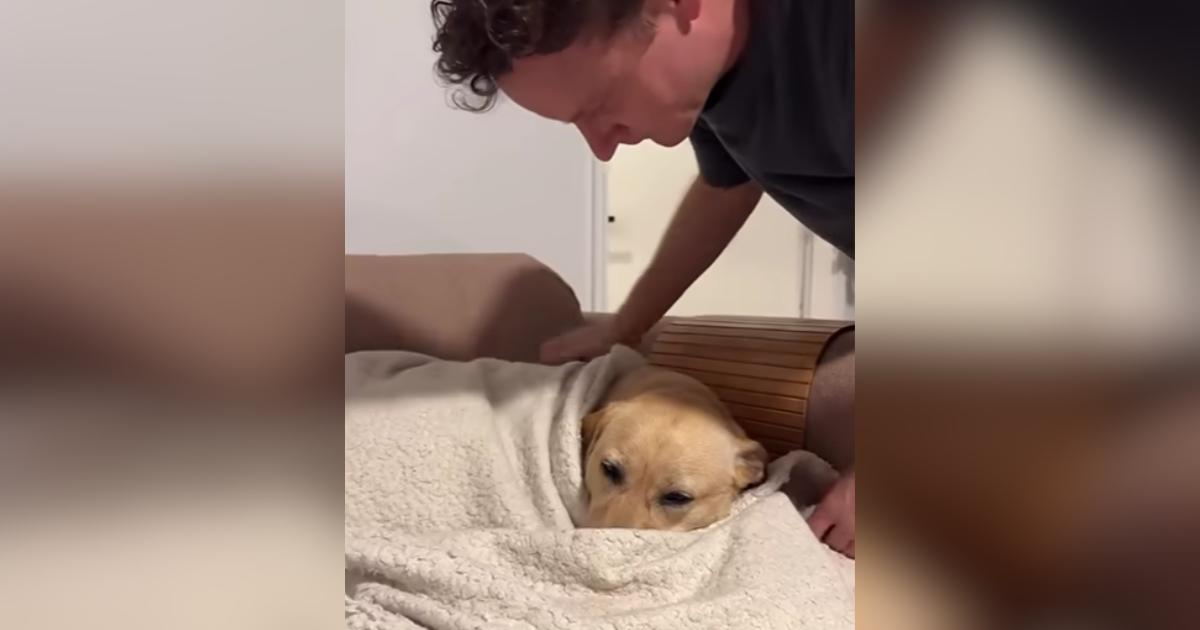
One of Oreo’s most distinct daily rituals involves her bedtime routine. According to her owners, Oreo requires a highly specific blanket arrangement before she can settle for the night:
- The Tucking Protocol: Oreo’s owner must carefully tuck her under a blanket, ensuring it is positioned precisely beneath her chin.
- The Precision Standard: If the blanket is folded incorrectly or feels misaligned, Oreo will remain perfectly still, staring intently at her family members until the arrangement is adjusted to her satisfaction.
[Oreo prepares for bed] ──> [Dad tucks blanket under chin]
                                  │
      ┌───────────────────────────┴───────────────────────────┐
      ▼                                                       ▼
[Fold is correct]                                   [Fold is incorrect]
      │                                                       │
[Oreo sleeps peacefully]                           [Oreo stares silently until fixed]
Adapting to Family Milestones
Oreo’s adaptive capabilities were put to the test when Ash and her husband welcomed a new baby into the household. Rather than regressing or showing signs of anxiety, Oreo adapted seamlessly to the household’s shifting dynamics.
Her daily morning routine shifted to match the family’s new rhythm. While she previously anticipated early morning walks, she now prioritizes domestic comfort. Following her morning meal, she bypasses the front door, heads directly to the living room lounge, positions herself on her favorite pillow, and settles in for a morning nap.

Future Outlook
The evolving philosophy of service dog training organizations globally places a growing emphasis on "forced retirement prevention" and proactive career-change placement. Historically, dogs that failed to meet the rigorous criteria of guide work were sometimes viewed through a lens of lost investment. Today, however, leading behaviorists view these career transitions as highly successful outcomes that protect the welfare of the animal while enriching the lives of adoptive families.
The Value of the "Career-Change" Companion
Dogs like Oreo, who have undergone extensive early socialization and basic training, are highly sought after by the public. Though they may lack the specific temperament required for public access work, they possess:
- Advanced crate and house training.
- High levels of human socialization and basic obedience.
- An intuitive understanding of human emotion.
In Oreo’s case, her natural sensitivity—which proved overwhelming in busy public spaces—has translated into a highly refined sense of empathy within the home. When she senses that a family member is distressed or experiencing emotional fatigue, she will retrieve one of her favorite toys and gently present it to them. This unprompted, self-taught behavior demonstrates that while she could not serve as a certified therapy dog in institutional settings, she has successfully established her own, highly effective therapeutic practice within her household.
As animal welfare standards continue to advance, Oreo’s story stands as a powerful reminder that an animal’s value is not defined by certificates, titles, or professional utility. By recognizing and respecting her emotional boundaries, her family allowed Oreo to step out of a uniform she was never meant to wear and into a life where she could simply be herself.