
Executive Overview
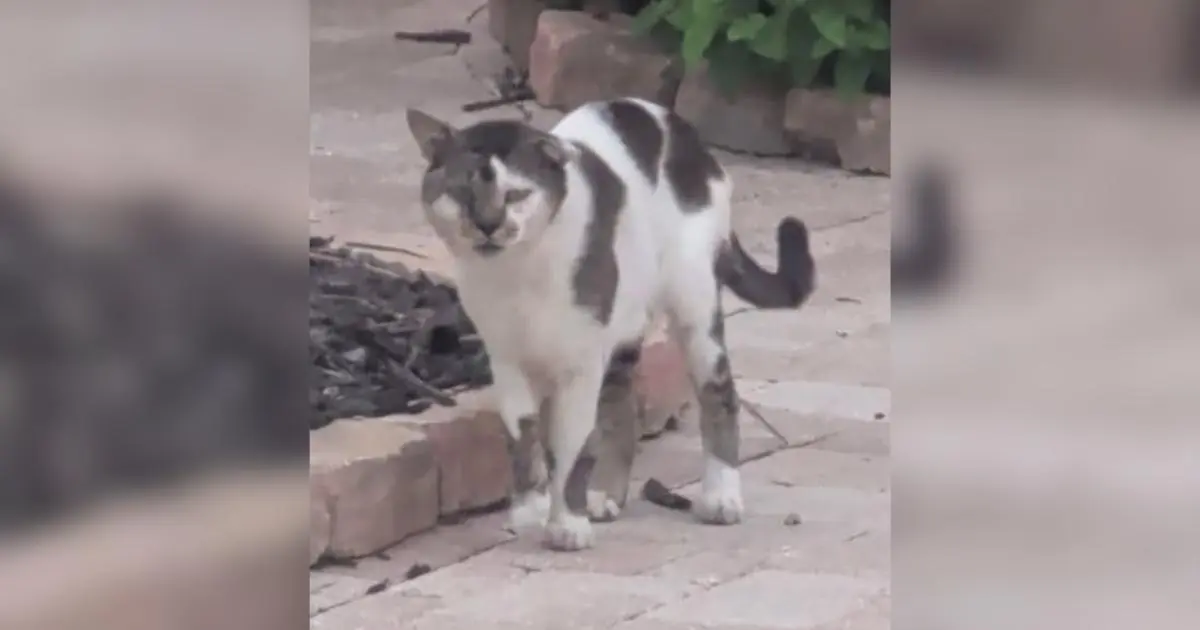
For nearly a decade, a battle-hardened, perpetually limping feline ruled a sprawling Florida neighborhood as an undisputed monarch of the streets. Known simply as "Neighborhood Bill," this charismatic tomcat vanished into dense mangroves, navigated subterranean drainage pipes, and outsmarted human rescuers with legendary persistence. More importantly, he maintained an undefeated streak against captivity while single-handedly sustaining the local feline population.
However, all legendary reigns must eventually come to an end. Following a coordinated, multi-year community intervention led by animal welfare organizations Barn Patrol Inc. and the Suncoast Animal League, Bill’s streak of elusiveness has finally concluded. Rather than returning to the rough-and-tumble environment of his territory, the aging street legend has been officially retired.
Medical evaluations following his capture revealed the physical toll of his decade-long outdoor odyssey, including a poorly healed elbow fracture that dictated his iconic gait. Yet, his capture served a far greater purpose than simply aiding one weary veteran of the asphalt. Bill’s long-overdue apprehension catalyzed a broader Trap-Neuter-Return (TNR) initiative, successfully pulling four vulnerable kittens off the streets and neutralizing the growth of an expanding feral colony. Today, the "reformed neighborhood menace" is trading the unpredictable hazards of drainage pipes and mangrove thickets for the ultimate luxury: a predictable dinner schedule, comprehensive veterinary care, and a permanent indoor retirement home.
Detailed Chronology: Ten Years of Outsmarting the System
The Rise of a Neighborhood Fixture (2015–2020)
The legend of Neighborhood Bill traces back to approximately 2015, when local residents first spotted him navigating the neighborhood as a resilient kitten. Even during his earliest days on the street, observers noted a distinct feature that would come to define his legacy: a pronounced, unyielding limp.
Rather than succumbing to the typical vulnerabilities of an injured feral kitten, Bill adapted. He mastered the geography of his Florida neighborhood, utilizing a complex network of drainage pipes as transit routes and dense mangrove patches as impenetrable fortresses. As the years passed, local residents watched the kitten mature into a formidable tomcat. He became a fixture of neighborhood lore, recognized as much for his indomitable survival instincts as for his refusal to submit to human interference. Year after year, well-meaning locals attempted to trap or rescue him, only to be repeatedly outsmarted by a cat who clearly viewed captivity as an unacceptable infringement on his personal sovereignty.
The Undefeated Streak Shattered
While Bill successfully guarded his freedom, he was concurrently driving a population boom across the local ecosystem. Operating unchecked as an intact male, he fathered an impressive lineage of descendants, contributing heavily to the community’s surging free-roaming cat population.
For nearly ten years, his routine remained unbroken: patrol the territory, evade traps, sire the next generation, and disappear when pressure mounted. But as Bill entered his senior years, the cumulative wear and tear of a decade spent fending for himself on the streets began to catch up with him. The turning point arrived when Barn Patrol Inc., working in tandem with broader community stabilization efforts, finally managed to intercept the elusive feline.
"Neighborhood Bill has finally been acquired," Barn Patrol Inc. announced in a statement that sent ripples of disbelief and amusement through the local community. The decade-long game of cat-and-mouse was over. The neighborhood menace had officially clocked out.
Supporting Context & Metrics: Uncovering the Physical Toll and Colony Dynamics
The Medical Reality of a Lifetime on the Streets
Once Bill was safely secured within a climate-controlled rescue environment, veterinary professionals conducted a thorough examination to assess his overall health and investigate the physical anomaly that had marked his entire life.
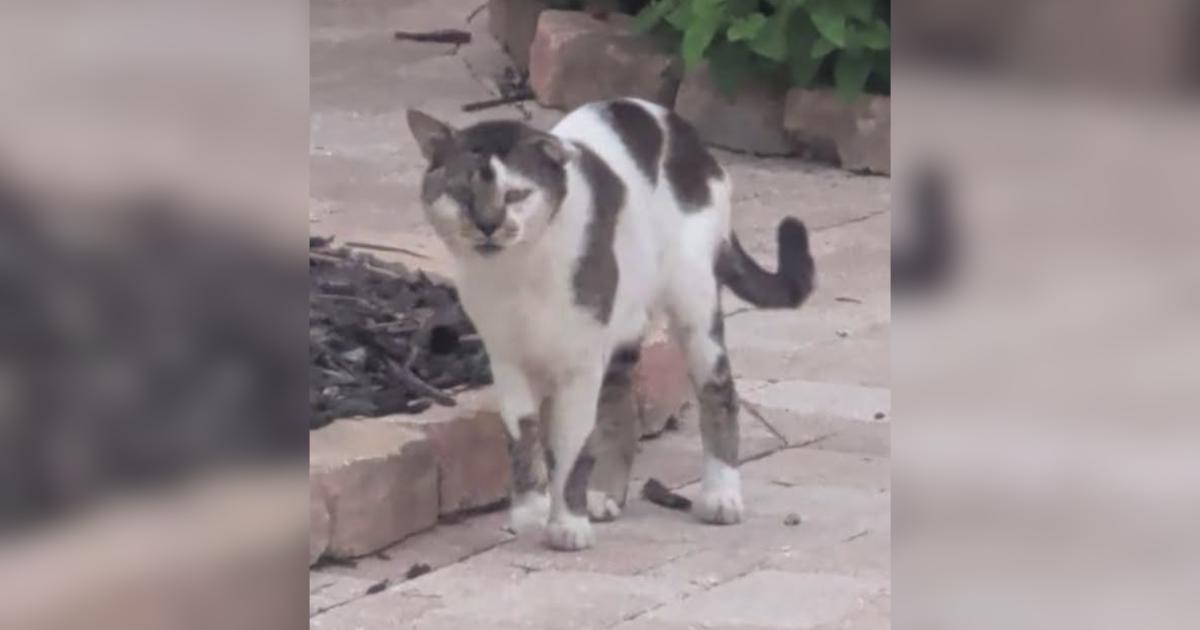
The diagnostic findings provided immediate clarity regarding his trademark limp. Veterinarians discovered that Bill had suffered an elbow fracture early in his life—likely during his kittenhood days around 2015. Because the injury went untreated, it healed improperly, leaving the surrounding muscle permanently contracted and tight. This orthopedic damage forced him into an unusual, characteristic gait that became his signature calling card among human observers.
Despite enduring roughly ten years of high-impact physical activity on a severely compromised joint, the medical news was surprisingly optimistic. Radiographs confirmed that amputation of the limb was unnecessary. However, veterinary teams and rescue operators drew a firm boundary regarding his future: subjecting the compromised elbow to another decade of harsh outdoor survival was completely out of the question.
The Mathematics of Colony Growth and TNR Interventions
Beyond his personal medical needs, Bill’s capture served as a critical linchpin for controlling the local feline demographic. Unsterilized community cats pose significant management challenges for municipalities and rescue groups alike, primarily due to exponential reproductive rates. A single unspayed female and unneutered male—along with their offspring—can theoretically account for the birth of hundreds of kittens over a multi-year span.
Barn Patrol’s operations highlight the stark reality of community cat management:
- Generational Impact: Bill’s prolific fathering of local litters meant his genetics were rapidly saturating the neighborhood.
- Colony Coverage: Prior to Bill’s capture, approximately 50% of the localized cat colony had successfully undergone Trap-Neuter-Return (TNR) processing.
- The Ripple Effect: Targeting one high-profile, elusive alpha cat opened doors to secure four vulnerable kittens from the exact same territory, immediately shielding them from the perils of outdoor existence.
TNR protocols represent the gold standard in humane population control. By humanely trapping free-roaming cats, sterilizing them, administering rabies and core vaccinations, and returning stable candidates to their managed outdoor environments—or redirecting socialized cats and kittens to adoption pipelines—rescues can successfully stabilize and gradually reduce stray populations without the use of lethal controls. In Bill’s case, his capture transformed an isolated rescue mission into a sweeping colony intervention.
Official Statements and Rescue Perspectives
The transition of Neighborhood Bill from street-level terror to pampered indoor retiree elicited widespread praise, humor, and reflection from the animal welfare organizations orchestrating his rehabilitation.
"We aren’t sending him back out to beat up that leg any further," declared representatives from Barn Patrol Inc., emphasizing that the veteran cat’s physical safety outweighed any traditional release criteria for feral cats.
Recognizing that Bill possessed a hidden capacity for domesticity—or at least a well-earned right to physical comfort—the rescue operation coordinated a seamless transfer to the Suncoast Animal League. Suncoast stepped forward to absorb the heavy lifting of his ongoing rehabilitation, committing to comprehensive dental care, advanced veterinary treatments, and eventual placement into a specialized indoor home.
Barn Patrol affectionately categorized Bill as a "reformed neighborhood menace," noting the sheer irony of a cat whose professional résumé boasted evading human capture for a decade while single-handedly driving local population metrics.
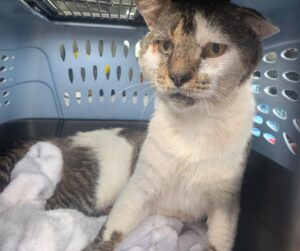
Regarding his prolific lineage, rescue workers leaned into the humor of the situation while underscoring a serious message:
"The era of producing mini-Bills has ended."
This playful declaration signaled not only the close of Bill’s active breeding days but also a turning point for the neighborhood. While Bill hangs up his hat, the human-animal alliance forged through his capture ensures that the pipeline of unmanaged outdoor litters in his specific territory has been decisively cut off.
Future Outlook: From Mangroves to Memory Lane
The final chapter of Neighborhood Bill’s life represents a profound paradigm shift. For a feline who learned to calculate his survival down to the exact second—dodging municipal traps, slipping through corrugated drainage tubes, and evading predators within dense coastal mangroves—transitioning to a predictable indoor environment will require significant adjustment.
Yet, animal behaviorists and shelter operators express profound optimism regarding senior street cats entering retirement. Cats with extensive outdoor backgrounds often adapt remarkably well to domesticity once they realize two fundamental truths: food arrives reliably every single day, and the ambient temperature is always climate-controlled.
What Lies Ahead for Bill:
- Comprehensive Rehabilitation: Suncoast Animal League is managing his post-operative and long-term medical care, ensuring his poorly healed elbow is managed with pain-relief strategies tailored for a senior cat.
- Dental and Preventive Care: Years of scavenging left his dental health in need of professional intervention, a standard procedure for newly rescued senior community cats.
- Permanent Placement: Rather than being returned to a managed colony site, Bill is being prepped for direct adoption or placement in a specialized sanctuary environment where he can live out his golden years on a soft bed rather than hard pavement.
For the human residents of his former Florida neighborhood, the landscape will undeniably feel a bit quieter. The shadow that slipped silently through the mangroves and limped across suburban driveways is officially off the clock. Neighborhood Bill’s legacy will live on not just through the descendants he left behind, but through the sweeping improvements his capture brought to his entire colony.
Ultimately, the story of Neighborhood Bill stands as a testament to resilience. It proves that even the most stubborn, wild-spirited creatures of the urban-wildland interface deserve a soft place to land when their working days are done. The streets may have lost their most experienced patrolman, but Bill has more than earned his quiet, spoiled retirement.