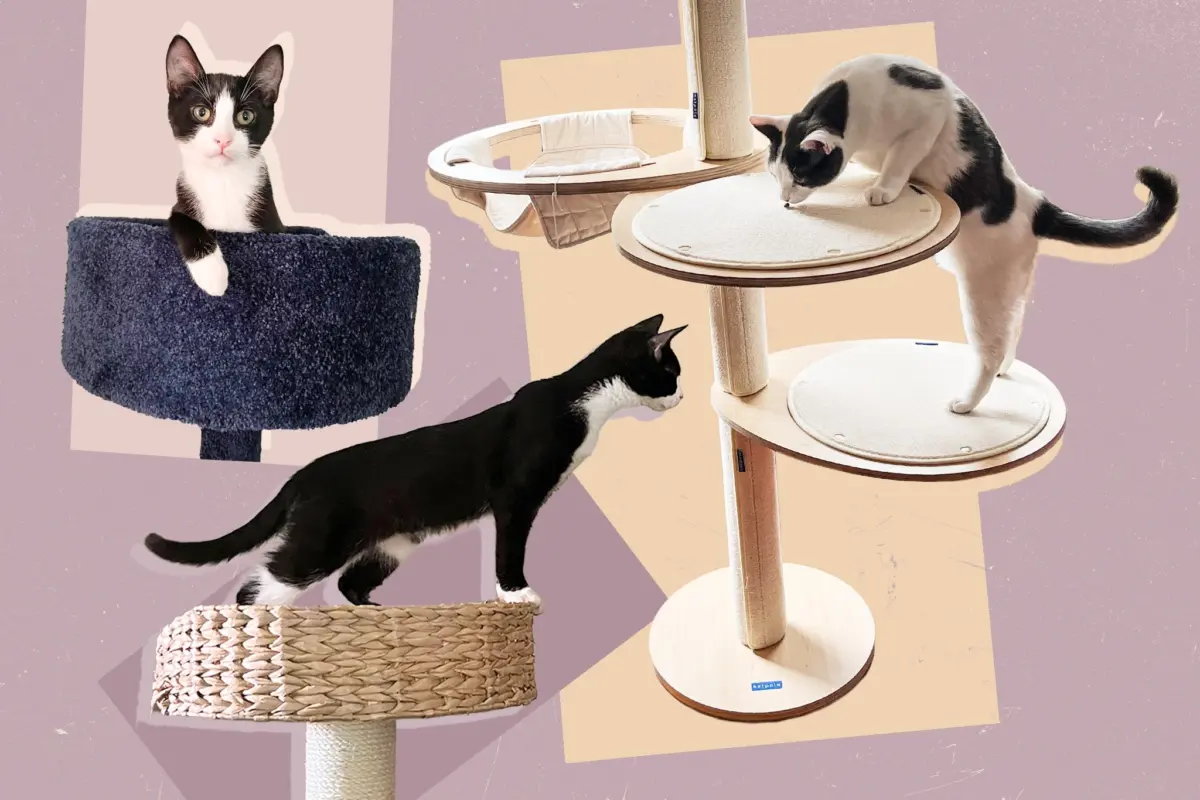

For decades, the domestic cat tree has served as a silent architect of household peace, bridging the often-turbulent gap between human living spaces and feline behavioral needs. First patented in 1968 primarily as a tactical diversion to deter indoor cats from eviscerating living room draperies and scratching up expensive upholstery, the modern cat tree has evolved from a functional wooden post into a sophisticated category of home architecture and pet welfare technology.
Today, experts universally agree that a quality cat tree is as critical to a feline’s livelihood as a properly maintained litter box. According to Adi Hovav, senior feline behavior counselor at the ASPCA, vertical real estate directly fulfills deep-seated evolutionary instincts. Providing a cat with elevated observation points not only instills a profound sense of security—keeping them safely out of reach of children, dogs, or competing pets in multi-animal households—but it is also a medically significant intervention. A landmark 2017 study highlighted that felines denied adequate vertical territory face an increased risk of stress-related urinary tract disorders.
To help consumers navigate an overwhelmingly saturated market filled with thousands of options ranging from cheap $25 imports to luxury $1,600 multi-tier playgrounds, a comprehensive, rigorous testing initiative was undertaken. Over 65 models were evaluated, resulting in 17 units being physically called in for an intensive, multi-stage testing protocol. Nineteen feline testers across six distinct households—ranging from 6-month-old kittens to 22-pound gentle giants, including partially and fully blind cats—put these structures through grueling weeks of sleeping, scratching, jumping, and general daily living. The findings reveal which cat trees truly deliver on durability, safety, and aesthetic integration, and which ones fall short.
Detailed Chronology: From Patent to Premium Furniture
The evolution of the cat tree traces a fascinating trajectory over the past half-century:
- 1968: The first formal patent for a cat tree is filed, conceptualized as a floor-to-ceiling apparatus meant to offer indoor cats an alternative scratching medium and a safe vertical climbing track away from human curtains.
- 1980s–1990s: Companies like New Cat Condos pioneer standardized commercial manufacturing, introducing heavy-duty carpeted models specifically engineered for multiple cats and larger breeds like Maine Coons.
- 2010s: The market sees a surge in design-forward, "modern" aesthetics. Natural branch-style cat trees emerge, moving away from traditional industrial carpet boxes toward organic wood textures, faux fur, and hand-woven paper or water-hyacinth baskets.
- 2017: A critical scientific study cements the medical importance of vertical spaces, linking a lack of elevation directly to feline stress-related cystitis and behavioral conflicts.
- Present Day: The industry diversifies into modular, floor-to-ceiling architectural systems (such as the Omlet Freestyle and Katpole) and bespoke, heirloom-quality artisan furniture crafted from solid hardwoods and organic textiles.
Supporting Context & Metrics: How We Tested
Testing cat trees requires an empirical, multi-variable approach. Each candidate underwent a strict two-stage evaluation process. Phase one involved a week of intensive stress-testing in a controlled environment to verify baseline safety. Surviving models were then distributed to real-world homes housing feline panels of varying ages, physical abilities, and temperaments.
Every tree was judged against rigorous metrics:
- Stability: Evaluated via a standardized "rice-bag drop test," where an 18-pound bag of rice was repeatedly hurled onto platforms to measure structural shift, sliding, or wobbling. Anchoring hardware availability was also documented.
- Material Quality & Durability: Assessed against price points. Inspectors analyzed whether manufacturers used cheap cardboard cores or solid wood, household-grade carpets, or high-grade natural sisal and hemp ropes.
- Ease of Cleaning: Surfaces were subjected to a simulated cat-vomit concoction (utilizing real cat food) during phase one, followed by standardized spot-cleaning and machine-washing assessments for removable cushions.
- Accessibility (Step Spacing): Certified behaviorist Dr. Mikel Delgado notes that optimal vertical step intervals should range between 8 to 12 inches to accommodate aging or mobility-impaired cats safely.
- Modularity & Repairability: Brands offering generous warranties, replacement parts, or modular expansion capabilities were heavily favored over disposable, throwaway models.
- Aesthetics: Evaluation of color consistency, design-forward elements, and how well the structures blended into contemporary home decor.
Official Statements & Industry Insights
Industry leaders and animal behavior experts emphasize that the relationship between cats and their furniture is foundational to domestic harmony.
Dr. Mikel Delgado, a certified applied animal behaviorist and cat behavior consultant, underscores the psychological necessity of vertical living space. "Cat trees can make or break relationships in multi-cat households, or homes where you have a cat and kids or a dog, by giving the cat the ability to stay out of reach of other creatures they might feel uncomfortable with," Dr. Delgado explains. She also highlights the strategic placement of these structures: "The joy of a cat tree is that you can move it and see where your cat likes it best. Most cats will prefer a cat tree in a window where they can bird- or people-watch and get some sunbeams."
Manufacturers are responding to consumer demand for sustainability and longevity. Jon Baker, CEO of New Cat Condos and Prestige Pet Products, notes the company’s commitment to robust construction: "All of our support posts are constructed with solid wood… We also cater to all size cats, but we have a very good niche in actually making functional furniture for big cats."
For those seeking high-end artisanal alternatives, Noah Pettit, CEO of Purrsona, points to traditional craftsmanship. Their flagship treehouses are produced in small batches by furniture makers in Ohio Amish Country using solid maple wood, natural latex, and organic cotton. Meanwhile, Johannes Paul, co-founder of Omlet, emphasizes over-engineering for the real world: "We overload every component to make sure that it’s going to survive real world conditions for 20-plus years."
The Tested Standouts: Top Picks by Category
Following exhaustive trials, several standout cat trees emerged across specific use-case categories:
1. Traditional & Multi-Cat Champion: New Cat Condos Large Cat Tree for Multiple Cats
- Dimensions & Limits: 64 x 24 x 24 inches | 20 lbs per cat limit (80 lbs max capacity)
- The Verdict: While aesthetically traditional, this 65-inch monolith boasts superior build quality from a company with a four-decade track record. It features solid wood support posts, virtually zero assembly frustration (taking under five minutes), and ample stability for heavy breeds like Maine Coons or mobility-impaired cats.
2. Best Modern Design: Mau Cento
- Dimensions & Limits: 45.5 x 23.5 x 18 inches | 23 lbs cat weight limit
- The Verdict: Departing from carpet-covered boxes, the Mau Cento utilizes real tree branches, woven high-grade paper baskets, and plush faux-fur cushions. Though pricey at around $300, its striking visual profile, replacement-part availability, and sturdy construction make it a premier choice for design-conscious owners.
3. Best Value Modern Alternative: Easyego Modern Cat Tree
- Dimensions & Limits: 45.6 x 35.5 x 16.5 inches | 28 lbs cat weight limit
- The Verdict: Offering a tree-branch aesthetic at nearly half the price of the Mau, the Easyego features an exceptionally wide 35.5-inch base that drastically minimizes tipping risks. Its shorter vertical steps also make it remarkably friendly for older or stiff-jointed cats.
4. Best Budget Pick: Feandrea 33.1-Inch Cat Tower
- Dimensions & Limits: 33.1 x 23.6 x 15.7 inches | 16 lbs cat weight limit
- The Verdict: Standing out in a sea of generic low-cost options, the Feandrea features wider cave openings, a generous 22-inch top perch suitable for two cats, machine-washable cushions, and anti-skid base feet paired with wall-anchoring hardware.
5. Best Heirloom Upgrade: Purrsona Heritage Treehouse
- Dimensions & Limits: 56 x 24 x 31 inches | 25 lbs cat weight limit (50 lbs total)
- The Verdict: Hand-finished in Ohio Amish Country from solid maple wood, organic cotton, natural latex, and wool felt, this luxury treehouse functions more like high-end human furniture. It features a lifetime warranty on the wood frame and a semi-enclosed spindle design that provides deep psychological security for nervous felines.
6. Best for Mobility-Impaired Felines: EliteField 40-in Faux Fur Cat Tree
- Dimensions & Limits: 39.5 x 20 x 20 inches | 20 lbs cat weight limit
- The Verdict: Featuring three fanned steps with a gentle 8-inch vertical rise, this model eliminates the punishing leaps required by taller trees, allowing arthritic or senior cats to easily access the top lounge deck.
7. Best Decoy Bookshelf: 4 Cats N Dogs Clifford Cat Tree Bookshelf
- Dimensions & Limits: 68.75 x 36 x 15 inches | 30 lbs cat weight limit
- The Verdict: Weighing a hefty 93 pounds, this engineered wood bookshelf matches standard IKEA Billy shelving while offering internal cubbies and curved cutouts designed explicitly to divert cats away from human book collections.
8. Best Color Statement: Vetreska Chroma Cat Climber
- Dimensions & Limits: 48.4 x 22 x 22 inches | 22 lbs cat weight limit
- The Verdict: Featuring bold primary colors (red, yellow, blue, green) and teddy-fleece bouclé-adjacent fabric, this visually arresting climber delivers thick foam-padded platforms and fully sisal-wrapped posts for maximum personality.
9. Best Modular Floor-to-Ceiling: Omlet Freestyle Cat Tree
- Dimensions & Limits: Up to 14.4 feet maximum height | 65 lbs structural weight limit
- The Verdict: The ultimate customizable vertical playground. Built with an aluminum core and bamboo platforms, it allows users to clip on hammocks, ramps, and dens at any height, offering a 20-plus-year lifespan backed by robust modular engineering.
10. Best Renter-Friendly Tension Pole: Katpole
- Dimensions & Limits: Up to 10.33 feet maximum height | 30 lbs cat weight limit
- The Verdict: Manufactured in Canada, this tension-mounted aluminum pole system requires zero drilling or permanent wall damage, making it ideal for renters. It boasts remarkable stability, replaceable scratch carpets, and a comprehensive 10-year warranty.
Future Outlook
As the pet furniture market matures, the trajectory of cat tree design is clearly bending toward two distinct poles: hyper-functional modular engineering built for longevity and sustainable repairability, and seamless architectural integration that honors human interior design sensibilities.
Moving forward, consumers can expect greater transparency in material sourcing, wider availability of modular replacement parts to reduce environmental waste, and smarter, safer engineering designed to protect aging feline joints. Ultimately, investing in a high-quality vertical sanctuary is no longer viewed as a mere accessory purchase, but as an essential investment in the behavioral health, physical vitality, and domestic harmony of multi-species households.