
Executive Overview
On August 18, 2026, pet food consumer advocacy groups—led by Susan Thixton of TruthaboutPetFood.com and the Association for Truth in Pet Food—filed a formal six-page complaint with the United States Government Accountability Office (GAO). The filing alleges pervasive programmatic mismanagement, misallocation of congressionally appropriated funds, and selective enforcement of federal safety statutes by the Food and Drug Administration’s Center for Veterinary Medicine (FDA CVM).
The complaint presents evidence suggesting that the FDA CVM has systematically abdicated its statutory duty to enforce federal food safety laws across the pet food manufacturing sector. Among the primary grievances is the agency’s operational practice of "enforcement discretion." Critics assert that this policy allows pet food manufacturers to process diseased animal tissues and non-slaughtered carcasses into commercial pet food without consumer disclosure. Furthermore, the petition details specific instances where the agency failed to adequately investigate thousands of adverse event reports, including hundreds of pet deaths tied to major commercial brands.
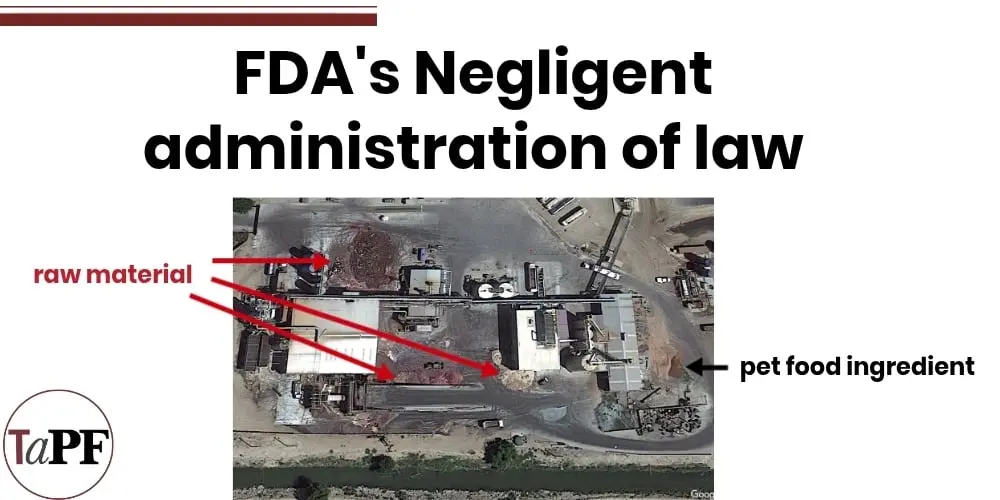
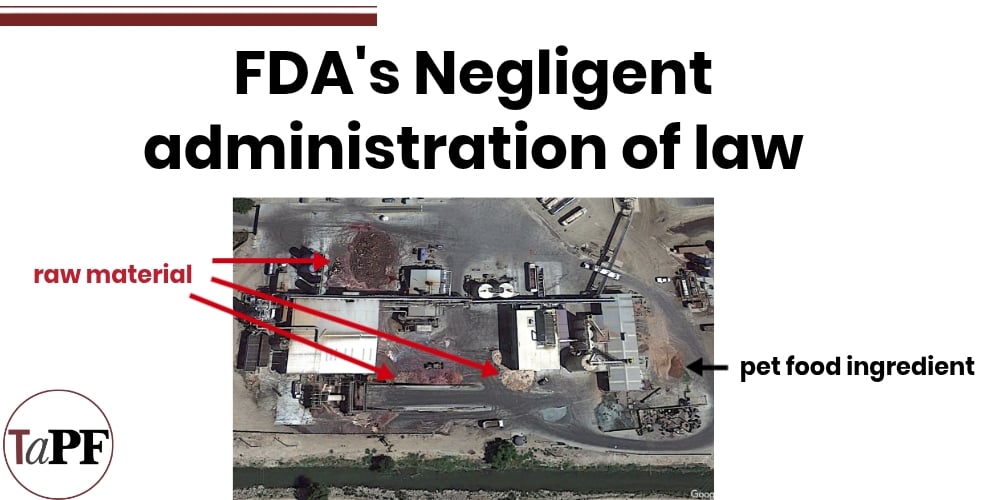
By submitting graphic photographic evidence of industrial rendering facilities alongside statutory legal analyses, advocates are urging the GAO to initiate a full audit of the FDA CVM’s operational and financial practices. The initiative has sparked a coordinated grassroots campaign targeted at key legislative oversight bodies, specifically the House Committee on Energy & Commerce and the Senate Committee on Health, Education, Labor, and Pensions (HELP).
Detailed Chronology: From Policy Decisions to Oversight Failures
The administrative and regulatory background detailing the FDA CVM’s enforcement practices spans several years, culminating in the formal submission to the GAO:
[April 2019] -----------------> [Recent 6-Month Window] -------------> [August 18, 2026]
FDA formalizes                 1,705 Adverse Event Reports received;    Formal 6-page complaint
"Enforcement Discretion"       206 pet deaths recorded for Purina.      filed with the GAO detailing
policy via Citizen Petition    Public alert delayed 7 months; only      programmatic mismanagement
Response FDA-2016-P-3578.      8% of reports investigated.              and selective enforcement.
The 2019 Administrative Precedent
The groundwork for the current dispute stems from the FDA’s response to Citizen Petition (FDA-2016-P-3578) in April 2019. In its official response, the agency publicly acknowledged its stance on ingredient safety and statutory adherence, stating:
"We do not believe that the use of diseased animals or animals that died otherwise than by slaughter to make animal food poses a safety concern and we intend to continue to exercise enforcement discretion."
This position formally established an operational framework wherein the regulatory body chose not to enforce sections of the Federal Food, Drug, and Cosmetic Act (FD&C Act) that explicitly deem food derived from diseased animals or unslaughtered carcasses as adulterated.
The Recent Adverse Event Window
Systemic oversight deficiencies were further highlighted during a recent six-month evaluation period during which the FDA received 1,705 adverse event reports associated with Purina Pet Foods products. Included within these filings were reports of 206 potential pet fatalities. Despite the high volume of critical reports:
- No official Warning Letter was issued to the manufacturer.
- The FDA delayed public disclosure for seven months.
- Subsequent agency transparency disclosures revealed that only 8 percent of the 1,705 adverse event reports were actively investigated by regulatory personnel.
The Inspections of 2026
Following the surge in consumer reports, the FDA conducted a single regulatory inspection at one Purina manufacturing site—out of more than 20 operational facilities owned by the company across the United States. Crucially, the inspection was classified as a routine "Preventive Controls Surveillance" inspection rather than a targeted "for-cause" investigation. Inspectors discussed a total of 24 consumer complaints with plant management, nine of which were historical records dating as far back as 2007.
August 18, 2026
Advocates officially delivered the six-page grievance to the GAO, accompanied by legal citations, regulatory metrics, and visual evidence documenting the condition of industrial rendering plants operating within the commercial pet food supply chain.
Supporting Context & Metrics: The Mechanics of Selective Enforcement
To evaluate the operational landscape described in the GAO complaint, it is necessary to examine the metrics and regulatory dynamics that characterize current pet food oversight.
| Metric / Dimension | Documented Agency Action | Regulatory / Legal Standard |
|---|---|---|
| Adverse Event Response Rate | 8% of 1,705 reports investigated | Mandatory risk-based public safety monitoring |
| Facility Inspection Scope | 1 facility evaluated out of 20+ nationwide | Comprehensive risk-based supply chain oversight |
| Adverse Event Pet Fatalities | 206 reported pet deaths (Purina line) | Immediate for-cause investigation triggering |
| Inspection Classification | Preventive Controls Surveillance | For-Cause Inspection following casualty spikes |
| Ingredient Enforcement | Permitted use of non-slaughtered/diseased stock | Section 402(a)(5) FD&C Act Adulteration Clause |
   FDA CVM Regulatory Funnel (6-Month Purina Monitoring Window)
   ============================================================
   [ 1,705 Adverse Event Reports Received (206 Deaths) ]
                           │
                           ▼
   [ Delayed Public Alert Issued 7 Months Later ]
                           │
                           ▼
   [ 8% of Total Reports Actively Investigated (~136 Cases) ]
                           │
                           ▼
   [ Single Plant Inspection Performed (1 of 20+ Facilities) ]
Case Study: The Inspection Deficit
The contrast between consumer reports and administrative response underscores what advocates term a structural breakdown in compliance monitoring. A "Preventive Controls Surveillance" inspection assesses broad adherence to general manufacturing practices. By contrast, a "For-Cause" inspection is legally mandated to investigate specific, acute hazards that pose an immediate risk to public or animal health.
By conducting a routine surveillance check at a single facility amidst hundreds of reported pet casualties, the FDA CVM failed to exercise its statutory authority to audit the broader manufacturing footprint of major industry entities, according to the complaint.
The Deception Gap: Statutory Law vs. Labeling Realities
The complaint emphasizes that FDA CVM policy creates a significant gap between product labeling and actual ingredient sourcing:
+---------------------------------------------------------------------------------+
|                                 Sourcing Reality                                |
|  Condemned Poultry / Diseased Livestock / Animals Deceased via Non-Slaughter    |
+---------------------------------------------------------------------------------+
                                        │
                                        ▼ (Permitted by CVM Enforcement Discretion)
+---------------------------------------------------------------------------------+
|                                 Consumer Label                                  |
|  Identified as "Chicken" | Marketed as "Made with Real Chicken"                 |
|  Depicts Images of Human-Edible Roasted Poultry                                 |
+---------------------------------------------------------------------------------+
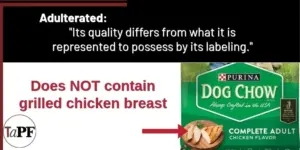
Under federal law governing human food, poultry inspected and passed by the United States Department of Agriculture (USDA) is held to strict safety standards. However, under FDA CVM enforcement discretion, condemned chicken—poultry rejected for human consumption due to disease or contamination—or livestock that died by means other than slaughter, can be rendered and listed under the standard common name "chicken."
As a result, pet food packaging featuring imagery of roasted human-grade meats and marketing claims such as "Made with Real Chicken" may legally contain rendered material from diseased or non-slaughtered sources, leaving consumers unable to determine the true origin of the ingredients.

The Economic Model of a "Shadow Waste Disposal System"
A central argument in the GAO filing is that the FDA CVM’s policy framework effectively maintains a shadow waste management system for agricultural byproducts. By permitting livestock producers and slaughterhouses to redirect condemned and diseased animal carcasses into the pet food processing pipeline, the agency provides an economically beneficial disposal mechanism for agricultural waste.
Advocates assert that congressional funding allocated to the FDA CVM for public health enforcement is instead being used to maintain an undisclosed waste-diversion system funded by unsuspecting consumers.
Official Statements and Legal Arguments
The Advocacy Position
In public declarations accompanying the GAO submission, lead advocate Susan Thixton articulated the foundation of the administrative challenge:
"We bring this formal notice to the Government Accountability Office to evidence the FDA Center for Veterinary Medicine is engaged in programmatic mismanagement, misallocating its congressional funding. The agency has a regulatory history of selectively targeting some pet food manufacturers and targeting enforcement activities only with some federal laws, failing to consistently enforce all federal laws across all pet food manufacturers."
Thixton further emphasized the ethical and legal boundaries of regulatory discretion:
"In our battle against FDA CVM, we are right. No pet food should contain undisclosed diseased animal material or decomposing animal material. No consumer should be deceived by misleading marketing on pet food labels… Congressional funding allocated to FDA CVM is directly supporting a secret waste disposal system via pet food—a system 100 percent facilitated by the agency."
The FDA Center for Veterinary Medicine’s Position
While the FDA CVM has not issued a formal legal response to the August 18 GAO complaint, the agency’s official policy stance relies on historic administrative law provisions concerning regulatory priorities and resource allocation.
Historically, the FDA has argued that:
- Risk-Based Prioritization: The agency must allocate its finite operational resources toward hazards that present clear, scientifically documented risks to human and animal health (e.g., pathogenic contamination such as Salmonella or Listeria).
- Enforcement Discretion: Under established administrative jurisprudence, federal regulatory agencies hold inherent discretion regarding when and how to enforce statutory provisions, provided the practices in question do not pose a demonstrable threat to animal safety.
- Safety Assumptions: The CVM maintains that high-temperature rendering processes effectively neutralize microbial pathogens in animal byproducts, rendering the final feed matrix biologically safe for consumption, regardless of the initial health status of the source animal.
However, the complaint counters that the CVM lacks robust, modern peer-reviewed scientific studies proving that long-term consumption of rendered, diseased animal tissues and associated chemical denaturants is benign for domestic pets.
Future Outlook: Legislative Oversight and Strategic Reform
The submission of the complaint to the GAO marks the start of a coordinated legislative effort. Because the GAO functions as the supreme audit institution of the federal government, its opening of a formal investigation depends heavily on direct requests from members of Congress who hold jurisdiction over the FDA.
                          Strategic Escalation Pathway
                          ============================

[ GAO Complaint Filed ] ---> [ Citizen Mobilization ] ---> [ Congressional Directives ]
  Advocates submit 6-page      Pet owners contact          House Energy & Commerce and
  dossier with photographic    representatives prior       Senate HELP Committees request
  and metric evidence.         to upcoming elections.      formal GAO Audit & Investigation.
Congressional Jurisdictions
The target of the advocacy movement focuses on two key congressional committees possessing direct statutory oversight authority over the Department of Health and Human Services and the FDA:
- House Committee on Energy & Commerce: Responsible for public health policy, food and drug safety regulation, and oversight of consumer protection laws.
- Senate Committee on Health, Education, Labor, and Pensions (HELP): Holds broad jurisdiction over the FDA’s operational authorization, regulatory funding, and administrative appointments.
Potential Regulatory Outcomes
If congressional representatives compel the GAO to launch a comprehensive audit into the FDA CVM, several regulatory and structural reforms could follow:
- Mandatory Auditing of Enforcement Discretion: Congress could require the FDA CVM to formally rescind policy guidelines that contradict written federal adulteration laws, effectively banning the use of unslaughtered or diseased animal stock in pet food.
- Labeling Standardization Reforms: Legislative mandates could require distinct common names for ingredients derived from USDA inspected-and-passed livestock versus those sourced from rendered agricultural waste or condemned materials.
- Restructuring Inspection Priorities: The CVM could be required to establish mandatory, automated thresholds for launching "for-cause" multi-facility inspections whenever adverse event reports exceed baseline statistical norms.
- Reallocation of Appropriations: Congressional appropriators could condition future FDA CVM funding on strict compliance metrics, ensuring transparent reporting of all consumer adverse event investigations.
With federal elections approaching, advocacy groups are leveraging public engagement to push lawmakers to require answers from the FDA CVM. The outcome of this GAO filing could reshape the legal, operational, and financial standards governing the multi-billion-dollar pet food industry.