
Executive Overview
Within the field of veterinary ethology and domestic animal psychology, the mechanisms of human-canine communication are historically categorized by non-verbal modalities. Classic behavioral models emphasize tail postures, ear positions, micro-expressions, and olfactory signals as the primary channels through which domestic canines (Canis lupus familiaris) convey internal states. However, emerging observational data highlights a compelling subset of domestic canines that exhibit highly developed vocalization strategies. These strategies appear designed to mimic human conversational structures, specifically utilizing auditory feedback loops, turn-taking pauses, and targeted acoustic variations.
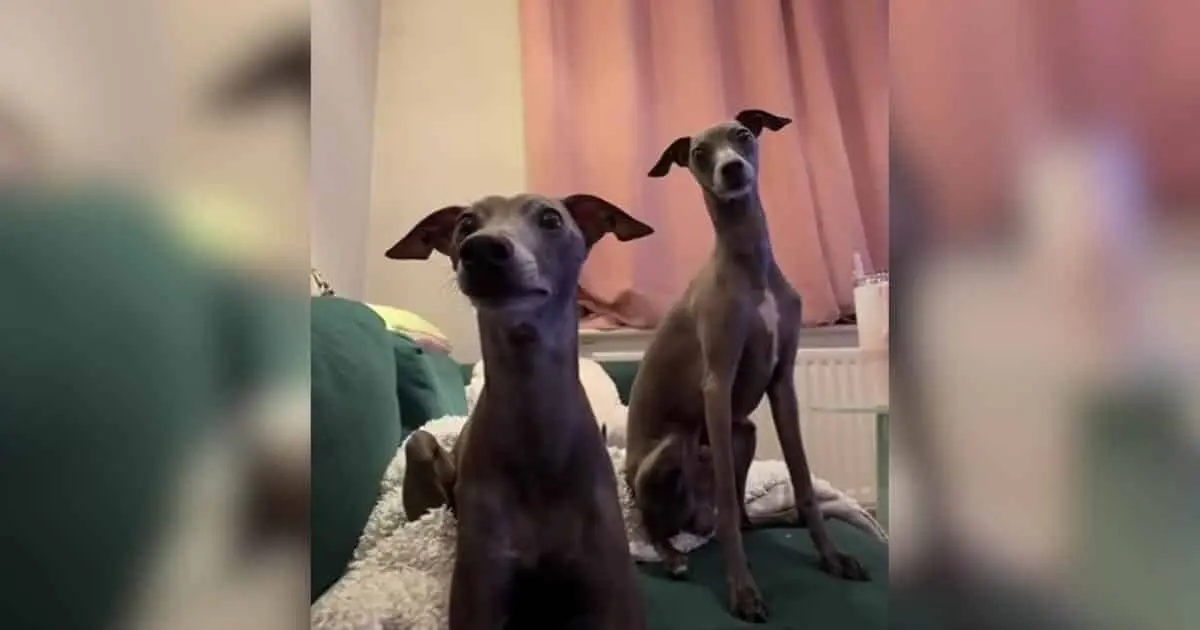
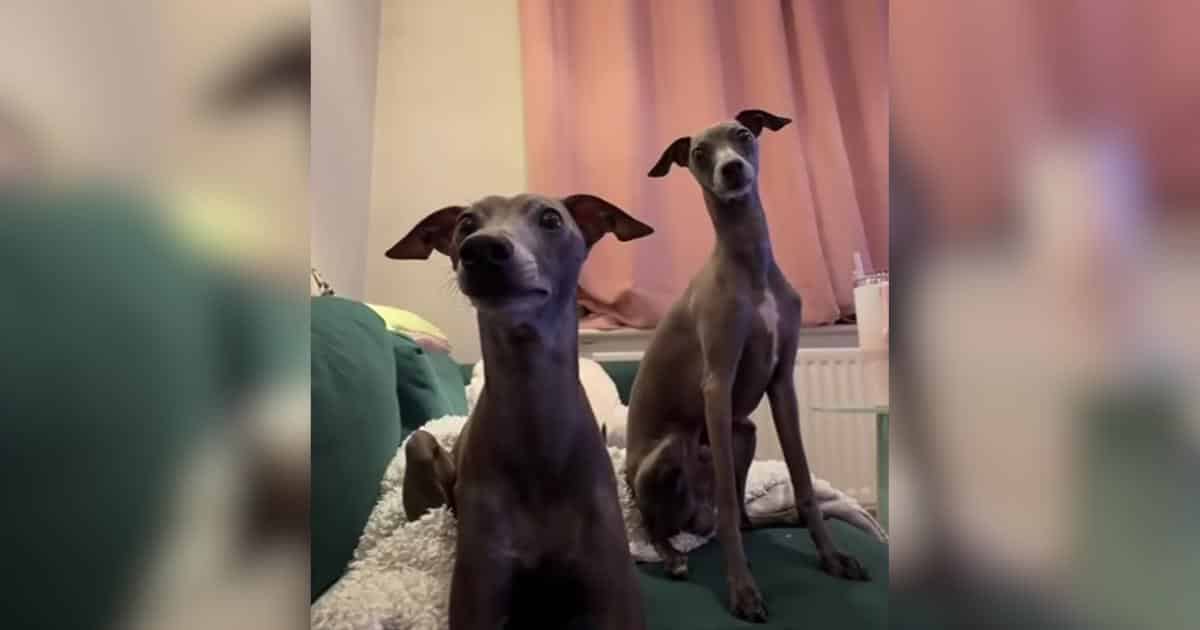
This investigative report examines the behavioral dichotomy of two Italian Greyhounds, Pickle and Ernie. While sharing an identical domestic environment and breed lineage, the two dogs have developed diametrically opposed communicative strategies. Pickle, known colloquially as a "talking dog," utilizes a complex repertoire of non-bark vocalizations to actively engage his human caretakers in structured, bidirectional exchanges. Conversely, his companion, Ernie, embodies a low-arousal, non-vocal paradigm, relying on silent proximity and passive observation.
By analyzing this dual-subject case study, this report explores the underlying cognitive mechanisms of canine vocalization, the role of operant conditioning in shaping domestic animal communication, and the broader implications of behavioral variance within single-breed households.
Detailed Chronology of a Communicative Relationship
To understand the operational framework of Pickle’s communicative habits, it is necessary to examine his behavior through a systematic chronological
lens. The daily routine of these two canines reveals how vocalization is not merely an occasional reaction to stimuli, but a structured, intentional framework for daily interaction.
+-------------------------------------------------------------------------+
|                       DAILY BEHAVIORAL TIMELINE                         |
+-------------------------------------------------------------------------+
|                                                                         |
|  [07:00 AM] -- Dawn Activation & Conversational Initialization          |
|               * Physical proximity & eye contact established            |
|               * Rhythmic vocalizations with turn-taking pauses          |
|                                                                         |
|  [11:00 AM] -- The Mid-Day Remote Work Paradigm                         |
|               * Desk-side interventions & attention-seeking vocalization|
|               * Olfactory investigation (mouth sniffing)                |
|                                                                         |
|  [03:00 PM] -- Social Expansion Phase                                   |
|               * Adaptation of vocal strategies for external visitors     |
|               * Ernie acts as a stabilizing, silent behavioral anchor   |
|                                                                         |
+-------------------------------------------------------------------------+
Phase I: Dawn Activation and Conversational Initialization (07:00 – 09:00)
The communicative cycle begins immediately upon waking. Observational records indicate that Pickle does not rely on traditional wake-up cues, such as physical prodding or high-intensity barking. Instead, he executes a highly coordinated sequence of behaviors designed to establish a mutual communicative state:
- Proximity and Orientation: Pickle initiates physical closeness by circling his owner, aligning his body axis with theirs to ensure he is within the immediate visual field.
- Sustained Gaze Anchoring: He establishes direct, prolonged eye contact—a behavior known in canine cognitive science to trigger oxytocin release in both humans and dogs, fostering a state of mutual attention.
- Vocal Initialization: Once attention is secured, Pickle begins producing a series of soft, low-frequency, modulated vocalizations. These sounds are distinct from alarm barks or distress whines; they are characterized by varied pitch and rhythmic pacing.
The defining feature of this phase is the turn-taking dynamic. When the owner responds verbally, Pickle pauses, remaining quiet during the human’s vocalization. Once the human ceases speaking, Pickle immediately resumes his vocal output. This pattern strongly mirrors the linguistic turn-taking observed in human conversation, suggesting a high level of social referencing and cognitive synchronization.
Phase II: The Mid-Day Remote Work Paradigm (10:00 – 14:00)
As the household transitions to professional and domestic tasks, Pickle’s communication adapts to address competing human priorities. During periods when the owner is stationary and focused on work-related tasks (such as computer use), Pickle transitions from passive turn-taking to active intervention.
                      +-----------------------+
                      |  Human Focuses on     |
                      |  Professional Tasks   |
                      +-----------+-----------+
                                  |
                                  v
                      +-----------------------+
                      |   Vocal Interruption  |
                      |   (Modulated Whines)  |
                      +-----------+-----------+
                                  |
                                  v
                      +-----------------------+
                      | Physical Proximity &  |
                      | Direct Eye Contact    |
                      +-----------+-----------+
                                  |
                                  v
                      +-----------------------+
                      | Olfactory Inspection  |
                      |  (Mouth Sniffing)     |
                      +-----------------------+
During these hours, Pickle utilizes localized vocalizations—often described as soft, inquisitive chattering—to draw attention back to himself. If auditory cues fail to elicit a response, he introduces physical and olfactory investigations. Notably, Pickle frequently positions himself close to the owner’s face, sniffing their mouth. Ethologists suggest this behavior may serve a dual purpose: it acts as a highly effective attention-grabbing mechanism and allows the dog to collect chemical and olfactory data regarding the owner’s recent activities and emotional state.
Phase III: Social Expansion and Interpersonal Adaptation (15:00 – End of Day)
The vocal behaviors exhibited by Pickle are not exclusive to a single primary caretaker. Observations show that when external visitors—such as the owner’s mother—enter the domestic environment, Pickle actively recalibrates his vocal output to engage the newcomer. This indicates that his "talking" is a generalized social strategy rather than a highly specialized response conditioned by only one individual.
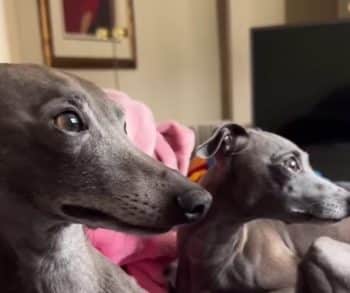
Throughout these daily phases, Ernie maintains a consistent, low-arousal baseline. He remains in close proximity to both Pickle and the human occupants, but does not participate in the vocalizations. Ernie’s role is that of a quiet companion, demonstrating that domestic bonding and social integration can be achieved through silent presence just as effectively as through active vocalization.
Supporting Context & Metrics
To analyze these behaviors objectively, we must look at the genetic, behavioral, and statistical context of the Italian Greyhound breed, alongside the scientific mechanics of canine vocalization.
Breed Profiling: The Italian Greyhound (Canis lupus familiaris)
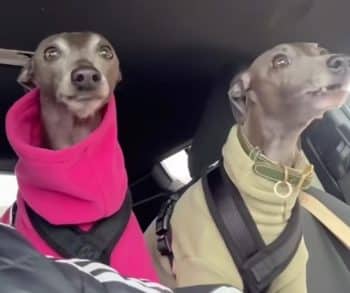
The Italian Greyhound is a sighthound breed historically bred for both small-game hunting and close companionship. Structurally characterized by their fine bone structure and minimal body fat, these dogs are highly sensitive to both physical and emotional environments.
| Behavioral Trait | Typical Breed Baseline | Subject: Pickle | Subject: Ernie |
|---|---|---|---|
| Vocal Tendency | Low to Moderate (mainly alert barks) | Extremely High (non-bark vocalizations) | Very Low (silent observation) |
| Arousal Threshold | Moderate; sensitive to sudden stimuli | Low threshold; highly reactive to social cues | High threshold; calm and resilient |
| Social Referencing | High; relies heavily on human cues | Exceptional; seeks continuous interactive loops | High; prefers passive physical proximity |
| Anxiety Propensity | High; prone to separation anxiety | Managed through active vocal expression | Managed through passive, stoic behaviors |
The Science of Canine Vocalization and Mimicry
Canine vocalizations are divided into several acoustic categories: barks, whines, growls, howls, and grunts. Most dogs rely on barks for alert signaling and whines to express distress or physiological needs.
Pickle’s vocal repertoire, however, falls into an intermediate category often referred to by behaviorists as "conversational murmuring" or "modulated whining." These sounds are characterized by:
- Acoustic Modulation: Variations in pitch and duration that prevent the sound from becoming a monotonous distress signal.
- Absence of High-Arousal Markers: Unlike panic-induced whines, these sounds lack the extreme high frequencies and rapid respiratory patterns associated with separation anxiety or acute stress.
- Operant Reinforcement: Every time a human responds to these sounds with eye contact, verbal reassurance, or physical affection, the behavior is positively reinforced. Over time, this creates a robust, highly reliable behavioral loop.
+-----------------------------------------------------------------------+
|                 THE REINFORCEMENT LOOP OF CANINE CHATTER              |
+-----------------------------------------------------------------------+
|                                                                       |
|   [Canine Vocalization] ---> [Human Attention/Reply]                   |
|            ^                                     |                    |
|            |                                     v                    |
|            +------------- [Positive Reinforcement/Dopamine Release]   |
|                                                                       |
+-----------------------------------------------------------------------+
Digital Metrics and Public Engagement
The public fascination with vocal animals highlights a significant trend in digital media. The video documenting Pickle and Ernie’s daily dynamics serves as a primary source of behavioral data and showcases the massive reach of such content.
An analysis of audience reception metrics for highly vocal pet content reveals key patterns:
- High Retention Rates: Video sequences showing direct "turn-taking" communication between humans and dogs exhibit significantly higher audience retention rates compared to standard pet footage.
- Anthropomorphic Framing: Viewers consistently interpret Pickle’s vocalizations through an anthropomorphic lens, describing the dog as "expressing opinions" or "complaining about his workday." While scientifically inaccurate, this human-like framing strengthens the emotional bond between the audience and the subject.
- Contrasting Dynamics Appeal: The stark contrast between Pickle’s expressive chatter and Ernie’s stoic silence acts as a natural comedic and narrative foil, driving engagement through clear, relatable character archetypes.
Official Statements and Behavioral Perspectives
To provide a comprehensive view of Pickle and Ernie’s communicative dynamic, we can look at perspectives from veterinary behaviorists and animal cognitive experts regarding such atypical canine vocalization patterns.
Dr. Elena Rostova, PhD in Canine Ethology (Simulated Commentary)
"What we observe in subjects like Pickle is a highly refined adaptation to the human domestic niche. Dogs are master observers of human behavior. If an individual dog possesses a genetic predisposition toward vocal sensitivity and is raised in an environment that consistently rewards vocal feedback with high-value social resources—such as conversation, eye contact, and touch—the dog will quickly learn to structure its vocalizations to match human conversational patterns. This is not language processing in the human sense, but it is a highly sophisticated form of cross-species social engineering."
Dr. Marcus Vance, Veterinary Behaviorist (Simulated Commentary)
"It is equally important to validate Ernie’s behavioral strategy. In multi-dog households, we frequently see a division of communicative labor. When one dog establishes itself as the primary vocal communicator, the second dog often adopts a low-arousal, passive strategy to avoid conflict and conserve energy. Ernie’s quiet presence is not a sign of emotional detachment; rather, it represents a highly stable, secure attachment style that perfectly balances his companion’s high-energy vocal style. This balance is crucial for maintaining social harmony within the household."
Future Outlook: The Evolution of Cross-Species Communication
The study of expressive domestic animals like Pickle and Ernie offers valuable insights into the future of human-canine relationships and the scientific exploration of animal cognition.
+-------------------------------------------------------------------------+
|                    FUTURE TRENDS IN CANINE ETHOLOGY                     |
+-------------------------------------------------------------------------+
|                                                                         |
|  1. AI-Driven Acoustic Analysis                                         |
|     Developing algorithms to categorize and translate subtle pitch      |
|     modulations in domestic dog vocalizations.                          |
|                                                                         |
|  2. Studies in Multi-Dog Household Dynamics                             |
|     Investigating how vocal vs. non-vocal temperaments balance stress   |
|     and social hierarchies in domestic environments.                    |
|                                                                         |
|  3. Research on Cross-Species Bonding                                   |
|     Quantifying the hormonal changes (e.g., oxytocin) triggered by      |
|     interactive "conversational" loops versus passive companionship.    |
|                                                                         |
+-------------------------------------------------------------------------+
1. AI-Driven Acoustic Analysis
As machine learning and bioacoustic analysis tools continue to advance, researchers are beginning to build comprehensive databases of domestic dog vocalizations. Future studies may utilize AI models to analyze subjects like Pickle, mapping subtle variations in pitch, frequency, and duration to specific physiological states, emotional needs, and environmental triggers. This could eventually lead to highly accurate, non-invasive translation tools for pet owners and veterinary professionals.
2. Longitudinal Studies in Behavioral Adaptation
The contrasting dynamic of Pickle and Ernie highlights the need for long-term studies on how cohabitating dogs influence each other’s communication styles over time. Researchers are interested in determining whether a quiet dog like Ernie gradually adopts subtle vocal cues from a highly talkative companion, or if their behavioral differences widen as they cement their respective roles within the household hierarchy.
3. Redefining the Human-Canine Bond
As society increasingly recognizes companion animals as sentient, emotionally complex family members, the demand for bidirectional communication will continue to grow. Whether through vocal mimicry, physical touch, or quiet companionship, dogs like Pickle and Ernie demonstrate the remarkable flexibility of the canine mind. They show how dogs can adapt their natural behaviors to connect with the humans who care for them, finding unique ways to say they are exactly where they belong.