
Executive Overview
When Wes Hepker and Daniela Williams traded the predictability of corporate boardrooms and suburban predictability for 20 wooded acres in the heart of the Midwest’s Driftless region, they harbored no grand designs of becoming commercial agriculturalists. Their initial aspirations were modest: an escape to nature, a slower pace of life, and an opportunity to channel a shared passion for backyard horticulture into a productive homestead. However, an unexpected structural gap in their new community’s local food economy fundamentally shifted their trajectory. Confronted by a scarcity of fresh, locally grown produce at their municipal market, the couple pivoted from hobbyists to agrarians, founding Polsgrove Hill Farm in 2023.
Located in Mount Carroll, Illinois, Polsgrove Hill Farm has rapidly evolved from a fledgling plot of land into a vital pillar of the regional local food network. Perched atop a scenic plateau overlooking sprawling, conventional soybean and corn monocultures, the farm specializes in organic specialty crops—ranging from crisp arugula and piquant radishes to vibrant peppers, succulent strawberries, and tender greens. Yet, Polsgrove Hill Farm represents more than a commercial enterprise; it is a manifestation of a growing national movement toward localized, ecologically conscious food production. By marrying regenerative agricultural practices with a deep commitment to regional supply chains, Hepker and Williams are actively proving that small-scale, diversified farming can thrive in a landscape dominated by industrial commodity agriculture.
Detailed Chronology: From Corporate Exits to Agrarian Innovation
The Catalyst: Discovering the Market Gap
The genesis of Polsgrove Hill Farm was neither premeditated nor calculated through exhaustive market research; it was born out of direct consumer frustration. After relocating to Mount Carroll and settling onto their heavily wooded 20-acre parcel, Hepker and Williams visited the local farmers’ market during their first season as residents. To their surprise, the stalls lacked the abundance of fresh, locally cultivated vegetables they anticipated.
"Even if this was just a homestead, we were going to grow our own food," Hepker reflects. "Pero then, we went into the farmers’ market here in Mount Carroll the first year we moved, and like so many farmers’ markets—unfortunately—there was a bit of a lack of produce. So, that’s where the idea was born."
Recognizing an unfilled niche, the couple leveraged their savings and professional backgrounds to lay the groundwork for a commercial operation. What began as an experimental garden plot quickly scaled into a structured farm business designed to feed their immediate community.
Navigating the Hurdles of Startup Realities
Transitioning from white-collar professions to full-time farming brought a steep learning curve and capital demands that far exceeded initial estimates. Williams, who maintained her demanding corporate career through the first two years of the farm’s existence to subsidize upfront infrastructure costs, notes the stark financial realities facing modern agricultural startups.
"The start-up costs were more than I expected them to be," Williams explains. "So, [we are] still trying to get through some of those costs. We had professional jobs… We had some savings before we moved out here, which helped a lot with getting everything up and going. I don’t know how people out of college do it."
Despite these fiscal hurdles, the founders systematically built their brand and production capabilities. Rather than facing challenges with selling their harvest, Polsgrove Hill Farm encountered an entirely different, highly enviable problem: soaring consumer demand that routinely outpaces their current yield capacity. "We need to grow more," Williams notes. "We have a production issue; we don’t really have a demand issue."
Supporting Context & Metrics: The Driftless Advantage and Operational Mechanics
The Unique Geography of the Driftless Region
The physical setting of Polsgrove Hill Farm plays an indispensable role in its identity and operational strategy. Situated in the Driftless Area—a sprawling, unique geological region spanning northwestern Illinois, northeastern Iowa, southeastern Minnesota, and southwestern Wisconsin—the farm benefits from a landscape spared by the flattening effects of the last continental glaciers.
Unlike the flat, uniform topography characteristic of much of the surrounding Midwest, the Driftless region is defined by dramatic rolling hills, steep limestone ridges, deeply carved river valleys, and complex microclimates. Polsgrove Hill Farm’s logo—a minimalist design featuring a slanted line symbolizing the hill alongside three silhouettes that double as arugula leaves and trees—pays direct homage to this topography.
Scaling Production Through Protected Agriculture
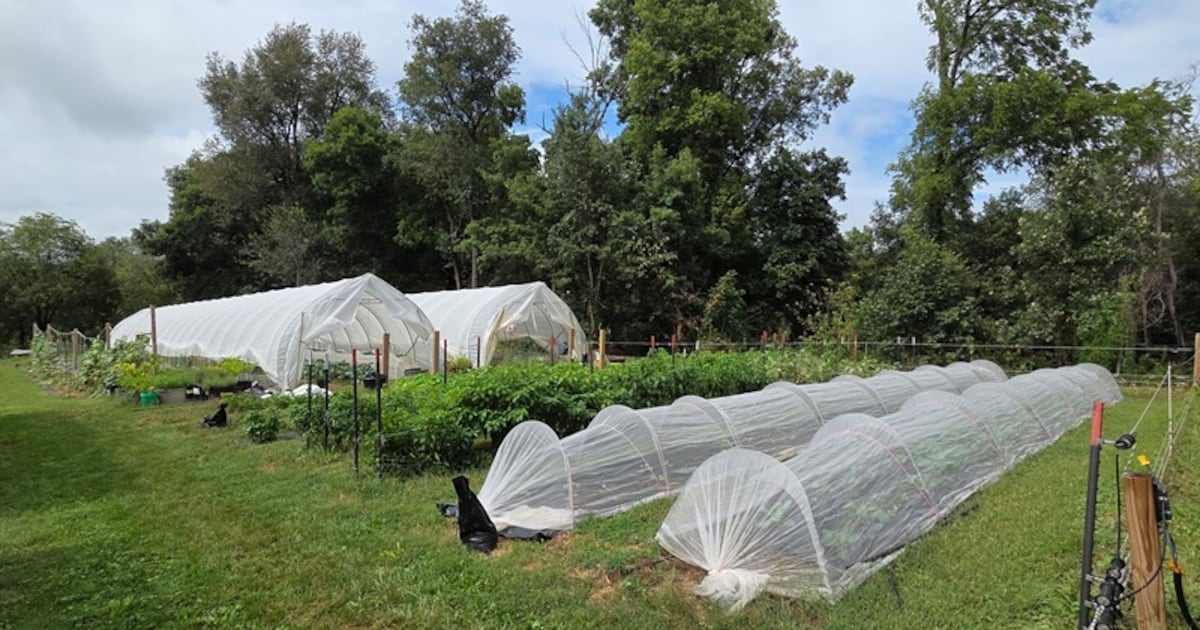
To combat the notoriously short and volatile Midwestern growing season, Hepker and Williams have steadily expanded their protected agriculture infrastructure. Since the farm’s inception, they have added one caterpillar tunnel—a low-cost, unheated hoop house structure—each year. Currently operating three caterpillar tunnels with plans to secure Natural Resources Conservation Service (NRCS) funding for two additional structures, the couple has engineered a system capable of extending their production window significantly.
"The caterpillar tunnels will add a good two weeks of plant growth in the spring and the fall," Hepker notes.
Williams elaborates on the thermal dynamics of these structures: "The caterpillar tunnels will help with retaining some of the heat. It does better in the fall than it does in the spring because the ground’s warm."
However, extending the growing season introduces complex logistical challenges, particularly regarding irrigation management during sub-freezing temperatures. "It is more challenging in the winter because we have drip irrigation," Williams points out. "We have to make sure it’s thawed out before we can actually apply water. Sometimes, we’re dragging hoses that have been stored in a warmer place, so they don’t freeze over. So that makes things a little more complicated."
Managing Pests and Climate Variability
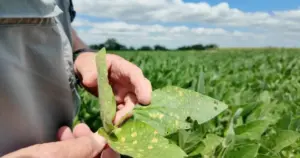
In addition to thermal and water management, the farm faces seasonal pest pressures. During the warm months, cabbage loopers and leaf beetles threaten leafy greens and brassicas, requiring targeted applications of bioinsecticides. Physical barriers, such as protective netting, are deployed to deter voracious herbivores like rabbits.
Furthermore, unpredictable meteorological patterns require adaptive management. "This year, in particular, has been a little wetter than average, and so we have had to use bio-fungicides," Hepker states, highlighting the constant balancing act required in organic specialty crop production.
Official Statements & Community Integration
Deep Roots in the Mount Carroll Economy
Polsgrove Hill Farm operates not in isolation, but as a deeply integrated node within the local economic and culinary ecosystem of Mount Carroll and the broader Jo Daviess County area. The farm’s harvest finds a direct pipeline into high-end regional dining rooms, serving as a trusted supplier for prominent culinary establishments such as Molly’s Kitchen & Bar and the Vessel on Market bistro.
Molly’s Kitchen & Bar, established in 2014, has cultivated a reputation as a premier fine-dining destination in northwestern Illinois, celebrated for its dynamic, rotating menus and scratch-made artisanal ice creams, including unique flavors like homemade vanilla and burnt caramel. The synergy between the farm and local dining establishments is further reinforced by personal ties; to supplement farm income, Hepker works part-time as a bartender at Market Street Pizza, a sister restaurant to Molly’s.
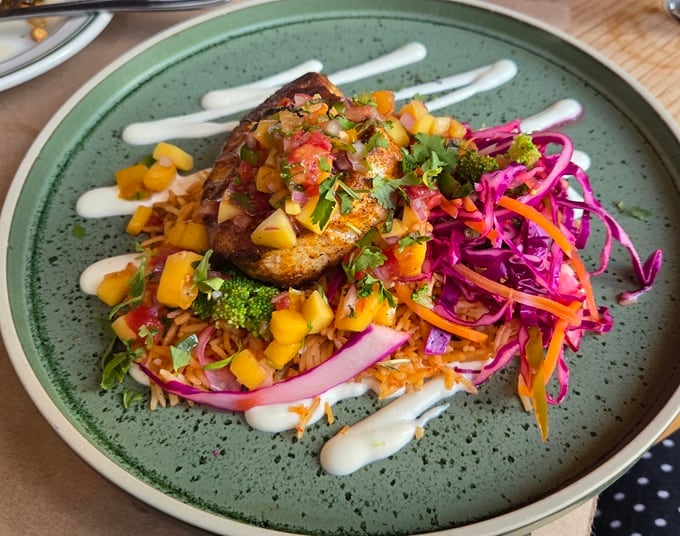
Beyond direct-to-restaurant sales, Polsgrove Hill Farm partners closely with Jo Daviess Local Foods, a regional non-profit organization dedicated to fortifying the local food shed. By bridging the gap between independent producers and conscious consumers via an online marketplace and a brick-and-mortar storefront, the non-profit ensures that fresh, organic produce remains accessible to the community.
The Commitment to Regenerative Agriculture
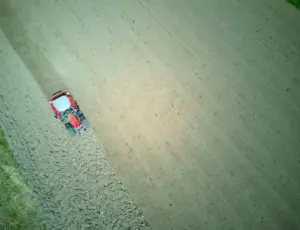
At the core of Polsgrove Hill Farm’s operational ethos is an unwavering dedication to organic standards and regenerative agricultural principles. Eschewing the heavy synthetic inputs typical of conventional industrial farming, Hepker and Williams utilize cover cropping to build soil structure, maintain active on-site composting systems, and apply bio-based crop inputs to maintain fertility.
While minimal tillage is utilized to prepare seed beds efficiently and reduce labor constraints, it is kept to strict minimums to preserve delicate soil biology, prevent erosion, and enhance water-retention capabilities across their rolling acreage.
Energy management reflects this forward-thinking philosophy. While the farm relies on a mix of technologies—including electric equipment and solar panel arrays to curb grid dependence—heavy draft work still necessitates traditional diesel machinery. Hepker addresses this transitional phase pragmatically:
"My tractor is diesel. My diesel prices right now are sky high. I’d like them to be less because it’s another input cost. But the future is electric. So, when we think about projects, when we think about where we want to spend money and research, it’s not on gasoline blends."
Future Outlook
As Polsgrove Hill Farm looks toward the horizon, its trajectory points steadily toward expansion, resilience, and deeper community integration. The immediate bottleneck—consumer demand vastly outstripping production capacity—underscores the viability of small-scale, regenerative farming models in rural America. With pending NRCS support for additional caterpillar tunnels, the farm is poised to increase its year-round yield, extending its seasonal footprint deeper into the shoulders of winter.
For consumers seeking out their produce, the farm remains a fixture at the Mount Carroll farmers’ market, operating every Saturday from May through October between 8:00 a.m. and 12:00 p.m. CST.
The journey of Wes Hepker and Daniela Williams serves as a compelling case study for contemporary agriculture. By transforming a personal lifestyle change into an ecological and economic asset, Polsgrove Hill Farm demonstrates that the future of Midwestern farming may very well lie in the valleys and ridges of the Driftless region—one meticulously managed, organic bed of greens at a time.