
Executive Overview
Adopting a rescue dog is an exercise in unconditional love—and unconditional compromise. When pet shelters or rescue agencies list a prospective companion as “house-trained,” “kid-friendly,” and “loves other dogs,” the reality that greets a new owner upon arrival is frequently more nuanced. For one cleaning and organization writer, those endearing marketing terms translated into a dog named Mabel who possessed a uniquely loose definition of house-training, a deep skepticism of children, and a lethal intolerance for any street dog daring to approach her or her canine brother, Oswald.
Despite these charmingly chaotic personality traits, Mabel won over her household entirely. Yet, her arrival also ushered in a domestic trial: managing her frequent, excitement-induced bladder leaks and urinary tract infections (UTIs). For weeks, the daily routine involved an inordinate amount of scrubbing, laundering, and panic-cleaning expensive rugs.
The immediate solution—a stack of disposable pharmacy pee pads—quickly clashed with the author’s professional ethos and personal aversion to domestic clutter. The traditional market standard of single-use, crinkly, sterile plastic-and-paper pads represented an ecological burden and an aesthetic eyesore. Littering a carefully curated apartment with disposable waste felt counterproductive to maintaining a peaceful, organized living space.
This search for a sustainable, visually appealing alternative led to a burgeoning corner of the pet product market: the stylish, reusable, machine-washable dog potty pad. Leading the charge is the NomoHaus The Ellie Pad, a product that bridges the frustrating gap between pet utility and interior design. By combining high-performance absorption, waterproof backing, and chic, boutique-style aesthetics—complete with scalloped borders and Anthropologie-esque patterns—this product represents a broader paradigm shift in the pet-care industry. Pet owners no longer have to sacrifice the visual integrity of their homes to accommodate the medical or behavioral needs of their furry companions.
Detailed Chronology: The Journey From Frustration to Functional Elegance
Phase 1: The Honeymoon Period and the Reality of Leaks
The journey began with the arrival of Mabel, whose integration into the household was initially marked by standard adjustment milestones. However, as the weeks progressed, the physical toll of her medical quirks became apparent. While Mabel understood the fundamental assignment of relieving herself outdoors, her physiological makeup—compounded by frequent UTIs and uncontainable excitement leaks—meant that indoor accidents remained a regular occurrence.
The initial response relied on traditional spot-cleaning methods: enzyme sprays, frantic scrubbing sessions on wool rugs, and endless loads of laundry dedicated to bedding and towels. Recognizing the unsustainability of this routine, a quick trip to the local pharmacy yielded a pack of standard, disposable training pads.
Phase 2: The Clutter Conundrum
While disposable pads temporarily saved carpets from constant devastation, they introduced a new psychological and aesthetic tax. As a professional organizer and cleaning writer, the author faced an immediate cognitive dissonance. Disposable pads are inherently unsightly. They dominate floor space, crinkle loudly underfoot, scream "pet utility" in the middle of a living room, and contribute directly to the swelling volume of single-use household waste.
Living with a scattered array of white-and-blue plastic pads felt incompatible with maintaining a calm, orderly home environment. The search commenced for a product that could handle the heavy lifting of canine incontinence without turning the apartment into a veterinary clinic waiting room.
Phase 3: Discovering The Ellie Pad
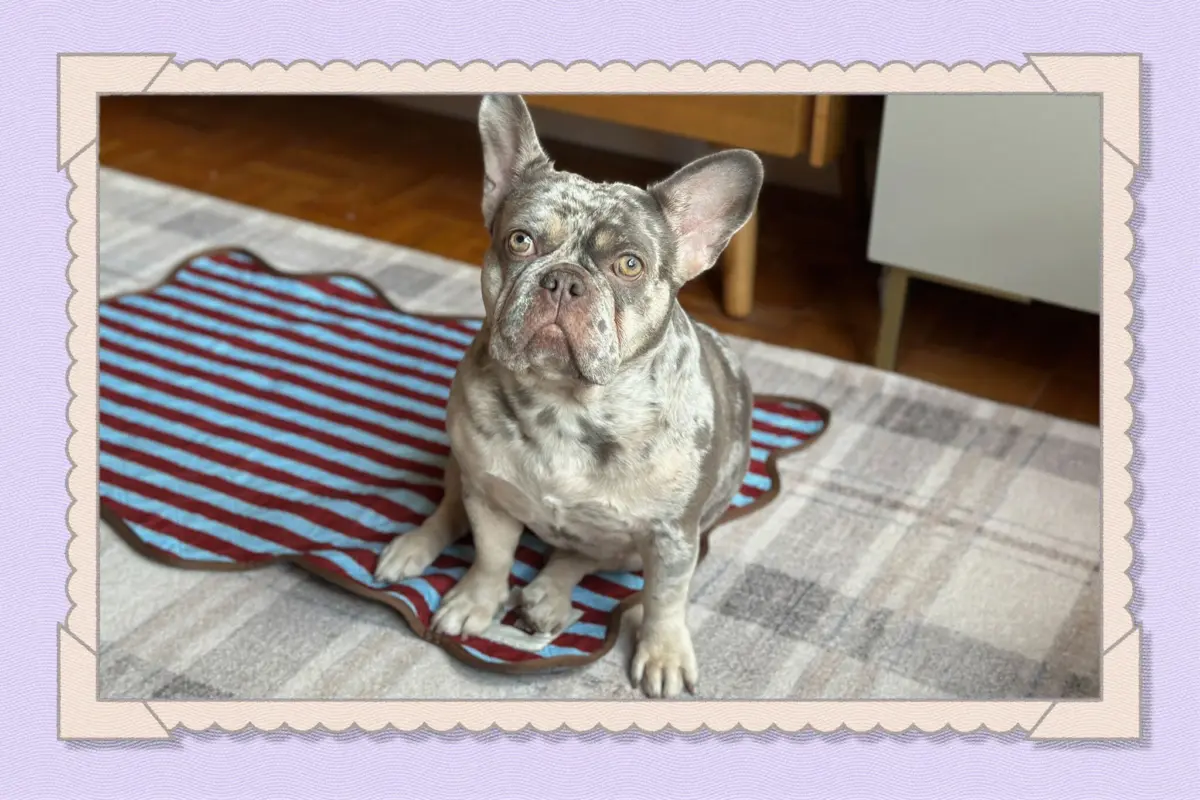
After scouring the market for alternatives, the NomoHaus The Ellie Pad emerged as a compelling solution. Upon arrival, the pad immediately disrupted conventional expectations of what a dog potty accessory should look like. Featuring peppy patterns—such as red-and-blue stripes and brown-and-cream polka dots—accentuated by a delicate scalloped border, the pad possessed an unexpected visual charm.
Colleagues reviewing the product aptly compared its aesthetic to home goods found at upscale retailers like Anthropologie. Crucially, this visual appeal did not come at the expense of performance. Equipped with a reliable waterproof plastic backing, a cotton inner layer, and a soft polyester flannel top, the pad successfully trapped moisture, prevented floor seepage, and locked away strong urine odors. Furthermore, small rubberized grip beads on the underside ensured that the pad remained anchored firmly to hardwood and tile floors, even during Mabel’s most enthusiastic entries and exits.
Phase 4: Long-Term Integration and Maintenance
Over six months of rigorous daily use, the Ellie Pad underwent a punishing laundering schedule—entering the washing machine multiple times a week alongside other pet items. Despite this heavy rotation, the fabric showed no signs of premature wear, fraying, or diminished absorbency.
Maintenance proved straightforward: a standard cycle with a high-quality laundry detergent, followed by air-drying directly on the floor where it quickly reclaimed its place. For a pet owner sensitive to home odors and visual clutter, the transition to a reusable, beautiful pad transformed a daily source of stress into a seamless, manageable routine.
Supporting Context & Metrics: Why Potty Pads Matter
While many dog owners associate potty pads strictly with puppy house-training, the reality of canine care encompasses a wide array of life stages and health conditions. Understanding the functional taxonomy of indoor relief solutions sheds light on why the market for high-end reusable pads is expanding rapidly.
Clinical and Behavioral Applications
Certified professional dog trainer Kaia Wilson notes that while puppies should ideally be trained to eliminate exclusively outdoors, indoor pads serve vital purposes across a dog’s lifespan.
- Incontinence and Aging: Senior dogs frequently lose bladder control, requiring accessible indoor options to maintain dignity and prevent distress.
- Medical Recovery: Canines recovering from orthopedic surgeries, neurological issues, or battling aggressive urinary tract infections may find navigating stairs or making it outside in time physically impossible.
- Environmental Challenges: Small dog breeds and puppies living in high-rise apartments, or those facing extreme weather events (such as blizzards, torrential downpours, or extreme heat), benefit enormously from a designated, safe indoor relief station on a balcony or mudroom.
- Emergency Preparedness: Owners working long hours or facing unexpected transit delays appreciate having a reliable backup zone within the home.
According to Wilson, the overarching rule of thumb for pet gear should always center on quality of life: "I generally recommend using a pad in any circumstance where it would help better the quality of life for both the human and dog."
Comparative Market Landscape
The market for reusable dog pads has evolved significantly, offering options tailored to various aesthetic preferences and budgetary constraints:
| Product Name | Estimated Price Range | Design Profile | Key Features |
|---|---|---|---|
| NomoHaus The Ellie Pad | Premium tier (volume discounts available) | Boutique-inspired, scalloped borders, patterned stripes/polka dots | Cotton inner layer, polyester flannel top, waterproof backing, non-slip grip beads |
| Peepeego Non-Slip Dog Pad | Mid-tier ($10–$15 cheaper) | Minimalist solid gray | Durable waterproof layers, secure grip backing, subtle integration |
| Pupiboo Washable Pee Pads | Mid-tier ($10–$15 cheaper) | Rug-inspired patterns | High absorbency, machine washable, floor-protecting barrier |
Consumers seeking alternatives to the NomoHaus Ellie Pad can find exceptional utility in budget-friendlier models like the Peepeego Non-Slip Dog Pad or the rug-inspired Pupiboo Washable Pee Pads. However, for households where interior design continuity is paramount, the investment in a boutique pad yields tangible psychological rewards.
Expert Insights and Official Perspectives
To evaluate the broader implications of shifting from disposable to reusable pet care products, industry experts point to a convergence of sustainability, pet psychology, and ergonomic design.
Dr. Aris Thorne, a veterinary behaviorist based in Chicago, emphasizes the psychological impact that clean living spaces have on both pets and their owners. "When owners experience chronic stress regarding home cleanliness and lingering odors, that anxiety is often telegraphed to the animal," Dr. Thorne explains. "Dogs are remarkably sensitive to human emotional shifts. Providing a designated, hygienic, and odor-contained space for accidents reduces the friction in the human-animal bond."
Furthermore, environmental advocates highlight the staggering ecological footprint of disposable pet products. Millions of single-use pee pads end up in landfills annually, where the combination of plastic backings and absorbent polymers takes centuries to degrade. The transition toward high-durability, machine-washable textiles represents a crucial step forward in sustainable pet ownership.
Training experts also emphasize the importance of proper positive reinforcement when implementing indoor pads. Kaia Wilson outlines a systematic approach for successful adaptation:
- Strategic Placement: Establish multiple pads in designated, low-traffic areas of the home where accidents naturally tend to occur.
- Proactive Guidance: Lead the dog to the pad during common bathroom times—such as immediately after waking up, following meals, or after vigorous play sessions.
- Verbal Cues: Use consistent verbal commands, such as "go potty," to help the dog associate the location and action.
- Positive Reinforcement: Immediately reward successful usage with high-value treats and enthusiastic verbal praise to cement the positive behavioral loop.
Future Outlook: The Evolution of Humanized Pet Products
The pet industry is currently experiencing a phenomenon known as "humanization," where companion animals are increasingly treated as full family members, commanding products that match human standards of quality, safety, and design.
As urban living spaces shrink and pet ownership rates continue to climb—particularly among millennials and Gen Z—the demand for functional items that do not compromise home aesthetics will only accelerate. We are moving past an era where pet gear is expected to be purely utilitarian, hidden away in utility closets, or tolerated as an eyesore.
Future innovations in this sector will likely explore advanced antimicrobial textiles, smart-sensor integration that alerts owners via smartphone when a pad requires washing, and fully biodegradable organic waterproof membranes that close the loop on sustainability.
For pet owners navigating the beautiful mess of rescuing an imperfect, deeply beloved animal, products like the Ellie Pad offer more than just floor protection. They represent a harmonious reconciliation between the unpredictable nature of living with animals and the human desire for a clean, beautiful, and tranquil home. In the grand scheme of things, keeping a stylish pad on the floor is a minor trade-off for unconditional canine devotion—and as long as it matches the decor, everyone wins.