
Executive Overview
For millennia, domestic dogs have walked alongside humanity, serving as our most loyal companions, our hardest-working partners, and the silent witnesses to the evolution of human civilization. Throughout this shared history, pet owners have shared an unshakeable intuition: our dogs understand us. When we smile, they wag their tails; when we weep, they rest a comforting chin upon our knees; when we scowl, they tread carefully. Yet, for all of our anecdotal confidence in the emotional intelligence of canines, the underlying neurobiological machinery that allows a distinct species to decode the complex micro-expressions of another has remained a profound scientific mystery.
Now, a groundbreaking neuroimaging study published in the August 7 edition of the Cell Press journal iScience has pulled back the curtain on the canine brain. Led by an international team of researchers—including Raúl Hernández-Pérez and senior author Laura Cuaya from the University of Vienna—the study provides the first definitive neurological evidence of how dogs process human facial expressions. Utilizing advanced functional brain scanning and sophisticated machine-learning models, the researchers have mapped the specific neural pathways that light up when a dog looks at a human face.
The findings are both fascinating and profound. The study demonstrates that human smiles trigger distinct, high-level cognitive and reward-processing centers in the canine brain. More remarkably, the research delivers the first empirical proof that dogs do not merely lump negative human expressions into a single, generic category of "stress" or "unhappiness." Instead, they can neurologically differentiate between specific negative emotions—including anger, fear, and sadness.
This deep dive into the neuroscience of human-animal communication offers a fresh perspective on the evolutionary miracle of domestication. Unlike non-human primates, whose social processing abilities stem from a shared evolutionary ancestor with humans, dogs have forged a radically different evolutionary path. Over tens of thousands of years of close association with humans, domesticated canines have re-engineered their cognitive architecture to master our social cues. This study does not just illuminate what happens inside a dog’s head when they look at our faces; it redefines our understanding of cross-species empathy and challenges us to rethink how we communicate with and care for our canine companions.
Detailed Chronology: The Anatomy of a Breakthrough
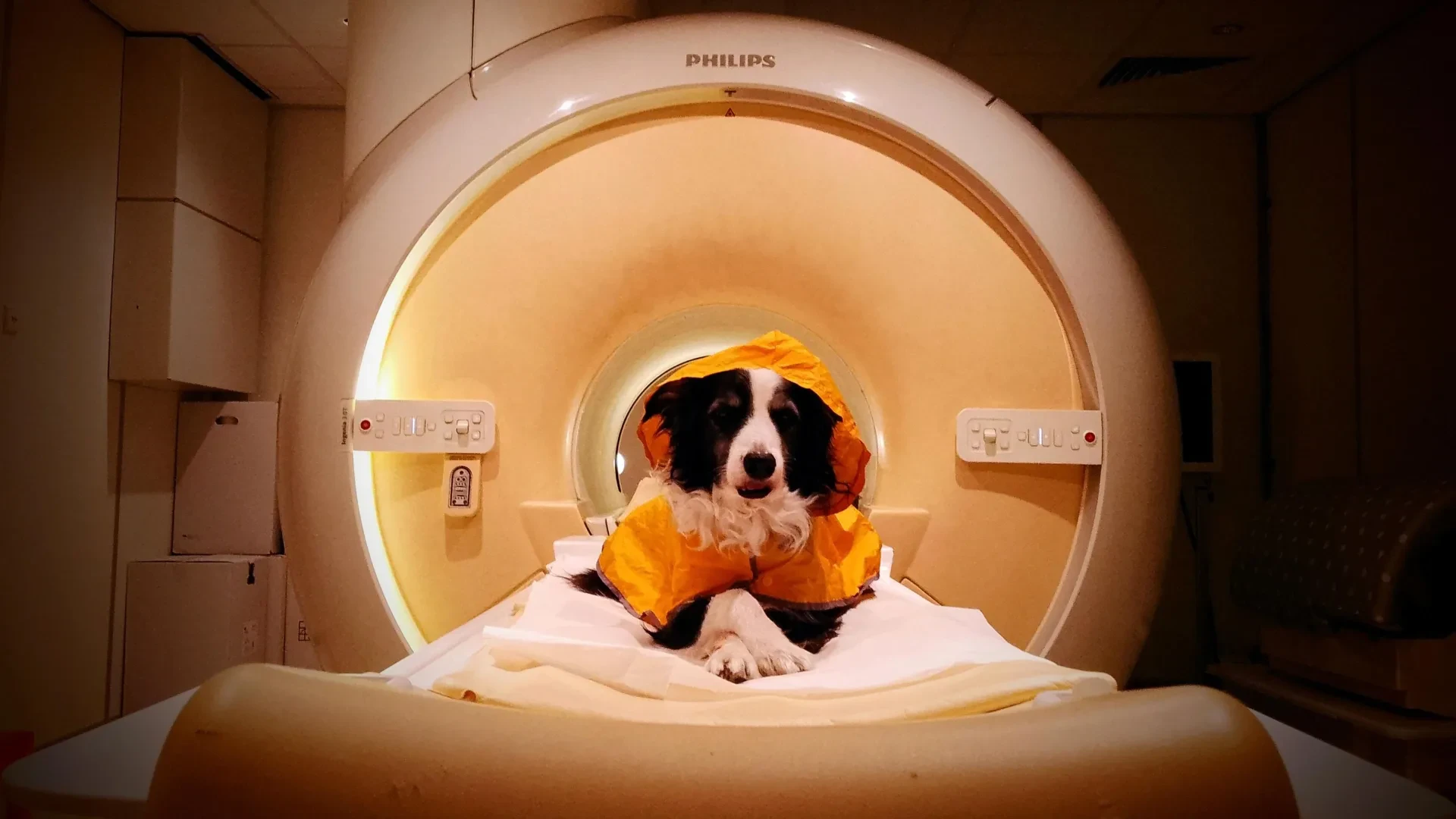
To understand the significance of the iScience study, one must look closely at the step-by-step methodology deployed by the research team. Unlocking the secrets of the canine mind requires overcoming significant methodological hurdles. Unlike humans, who can sit still inside an MRI machine and report their internal states, dogs must be trained to participate voluntarily in neuroimaging studies without the use of physical restraints or chemical sedatives.
Phase One: Mapping the Neural Response to Happiness
The research initiative began with a focused investigation into how dogs perceive human happiness. Scientists have long suspected that positive human expressions hold special significance for domestic dogs, acting as a social anchor that reinforces the bond between the two species.
To test this hypothesis, the researchers recruited a cohort of eight pet dogs. Through positive reinforcement training, these dogs were conditioned to remain completely motionless inside a functional magnetic resonance imaging (fMRI) scanner. While inside the scanner, the dogs were shown a series of visual stimuli: images of unfamiliar human faces displaying either genuinely happy expressions or neutral expressions.
The results of these initial scans provided a clear roadmap of the canine brain at work. When the dogs viewed happy human faces, distinct patterns of neural activation flared up in two primary regions: the temporal cortex and the caudate nucleus.
- The Temporal Cortex: Long known to be involved in higher-level cognitive processing, visual perception, and the integration of complex sensory data, activity in this region indicates that the dogs were not just passively seeing a face, but actively analyzing its structural components.
- The Caudate Nucleus: Deeply embedded within the basal ganglia, the caudate nucleus is fundamentally linked to the brain’s reward circuitry, anticipation of pleasure, and positive reinforcement.
"The activity in the caudate nucleus is particularly interesting," explains Laura Cuaya of the University of Vienna, reflecting on the genesis of the research—which began at the National Autonomous University of Mexico before expanding through collaborations at Eötvös Loránd University in Hungary. "It suggests that happy human faces may have profound emotional significance for dogs, processing our smiles not merely as visual shapes, but as rewarding, positive experiences."
Phase Two: Expanding the Emotional Spectrum
Having established that human smiles trigger unique reward-and-cognitive pathways in the dog’s brain, the research team sought to determine whether these same neural regions reacted differently to a broader array of emotional expressions. Specifically, they wanted to know if dogs could distinguish between various emotional states, or if their brains simply registered all non-smiling faces as a monolithic block of "not happy."
For this second phase, the experiment was expanded to include a cohort of 12 pet dogs. These animals were subjected to fMRI scans while viewing a more diverse gallery of human facial expressions: happiness, anger, fear, and sadness.
Because the resulting torrent of neural data was too complex for traditional analytical methods, the researchers turned to advanced machine-learning algorithms. These computational models were tasked with analyzing the patterns of brain activity across the entire brain to see if the machine could successfully classify which emotion the dog was looking at based solely on its neurological response.
Phase Three: Decoding Negative Expressions
The machine learning analysis yielded revelations that pushed canine cognitive science into uncharted territory. First, the data confirmed that the neural network comprising the temporal cortex and the caudate nucleus responded so distinctively to happy faces that smiles were easily separated from all negative expressions.
More importantly, however, a comprehensive whole-brain analysis revealed distinct patterns of neural activity when the dogs were exposed to fear, as opposed to anger and sadness. This milestone represents the first empirical evidence that dogs can tell apart specific negative human facial expressions. When a human frowns in anger, pulls back in fear, or cries in sadness, the domestic dog does not just sense generalized distress or negativity; its brain registers nuanced differences between these emotional states.
Supporting Context & Metrics: The Science of Domestication
To fully grasp the magnitude of these findings, it is essential to examine the context of canine evolution, the metrics of the study’s participant pools, and the physiological realities of how dogs interpret human communication.
The Evolutionary Divergence: Primates vs. Canines
When neuroscientists study social and emotional processing in primates—such as chimpanzees or macaques—they are examining traits inherited from a common evolutionary ancestor shared with humans. The neural machinery required to read faces in primates is built upon millions of years of shared lineage.
With dogs, however, the story is entirely different. Canids and humans diverged from a common mammalian ancestor tens of millions of years ago. Their evolutionary paths are radically divergent. Yet, through the crucible of domestication—a process that accelerated significantly over the last 15,000 to 30,000 years—dogs underwent profound behavioral and neurological adaptations.
| Metric / Parameter | Phase One Experiment | Phase Two Experiment |
|---|---|---|
| Participant Count | 8 pet dogs | 12 pet dogs |
| Stimuli Types | Happy vs. Neutral | Happy, Angry, Fearful, Sad |
| Imaging Technology | fMRI (Functional Magnetic Resonance Imaging) | fMRI combined with Machine Learning |
| Key Brain Regions Implicated | Temporal Cortex, Caudate Nucleus | Whole-brain network analysis |
| Primary Discovery | Smiles trigger reward circuitry and high-level cognitive processing. | First evidence that dogs distinguish between specific negative emotions (fear vs. anger/sadness). |
Beyond the Still Image: Multimodal Communication
While the iScience study represents a monumental leap forward, the researchers are quick to place their findings within a real-world context. A still image inside an fMRI scanner captures only a microscopic fraction of real-world communication.
In everyday life, dogs do not rely on facial expressions alone. They are masters of multimodal communication, simultaneously processing a complex symphony of human signals:
- Facial Micro-Expressions: Eye contact, eyebrow movements, and mouth tension.
- Body Language: Posture changes, hand gestures, and proximity.
- Auditory Cues: Vocal tone, pitch, cadence, and laughter or crying.
- Olfactory Signatures: Human chemical and hormonal changes detected via an extraordinary sense of smell.
Furthermore, all the dogs participating in the study were domestic pets living closely with human families. Free-ranging or street dogs, who navigate vastly different social environments with minimal human contact, may process these same facial cues through a different neurological lens. Future research aims to investigate these populations to separate innate domestic traits from learned, environment-specific behaviors.
Official Statements and Expert Perspectives
The publication of the study has generated widespread acclaim within the scientific community and sparked vital conversations about how humans perceive and treat our canine companions.
Raúl Hernández-Pérez, the study’s first author from the University of Vienna, emphasizes the remarkable visual acuity shared by both species:
"Humans are really good at picking up small details on the face, and so are dogs. This makes dogs very interesting. By studying their brains, we can understand what adaptations have developed to support their remarkable social and emotional understanding of humans."
Highlighting the evolutionary uniqueness of the canine-human bond, senior author Laura Cuaya points out the extraordinary nature of the canine adaptation:
"When we compare humans with primates, we are looking at abilities that may have come from a common ancestor. With dogs, the story is totally different. They followed a very different evolutionary path, yet through domestication, they developed the social abilities needed to understand and cooperate with us."
Cuaya also issues a passionate call to action for pet owners and animal welfare advocates worldwide, urging a fundamental shift in how we view the inner lives of our pets:
"I would like people to see dogs as emotional beings. They have evolved with us to understand our expressions and cooperate with us, and recognizing that can change how we communicate with and care for them."
Future Outlook: The Next Frontier in Canine Neuroscience
As the ink dries on this landmark publication, the research team at the University of Vienna, alongside international collaborators, is already casting its gaze toward the horizon. The insights gained from fMRI scans and machine-learning models have opened up a vast landscape of unanswered questions regarding interspecies cognition.
Upcoming Research Directions
- Dog-Centered Multimodal Integration: Future studies will move beyond isolated visual cues to explore how dogs integrate multiple streams of information simultaneously. Scientists aim to map how the canine brain processes conflicting signals—such as a happy voice paired with an angry facial expression—providing a clearer picture of how dogs resolve ambiguity in human communication.
- Comparative Neuroprocessing: Researchers are planning cross-species studies to directly compare how dogs and humans process the exact same emotional stimuli. By identifying overlapping neural signatures and distinct cognitive divergences, science can map the precise contours of the empathetic bridge that connects our two species.
- Investigating Diverse Populations: By expanding participant pools to include working dogs, shelter dogs, and free-ranging street dogs, upcoming projects will disentangle the genetic legacy of domestication from the immediate impacts of individual life experiences and human socialization.
Implications for Animal Welfare and Training
The practical applications of these findings extend far beyond academic journals. As we uncover the sophisticated neurological apparatus dogs use to read our emotional states, our ethical obligations as pet owners and society become increasingly clear.
If dogs are neurologically wired to distinguish between our smiles, our fears, and our angers, then our emotional expressions directly impact their internal psychological well-being. Chronic exposure to negative human emotions—such as persistent anger or fear within a household—likely registers deeply within the canine brain, potentially contributing to stress and behavioral issues. Conversely, cultivating positive, rewarding interactions actively engages the caudate nucleus, reinforcing a healthy, secure bond.
Ultimately, this research serves as a scientific validation of what dog lovers have known in their hearts for generations. We are not just sharing space with animals; we are locked in a profound, co-evolved neurological dance. Every smile we offer our dogs is received, processed, and mirrored in the intricate wiring of their brains—a testament to a partnership that continues to shape what it means to be human, and what it means to be man’s best friend.