
Executive Overview
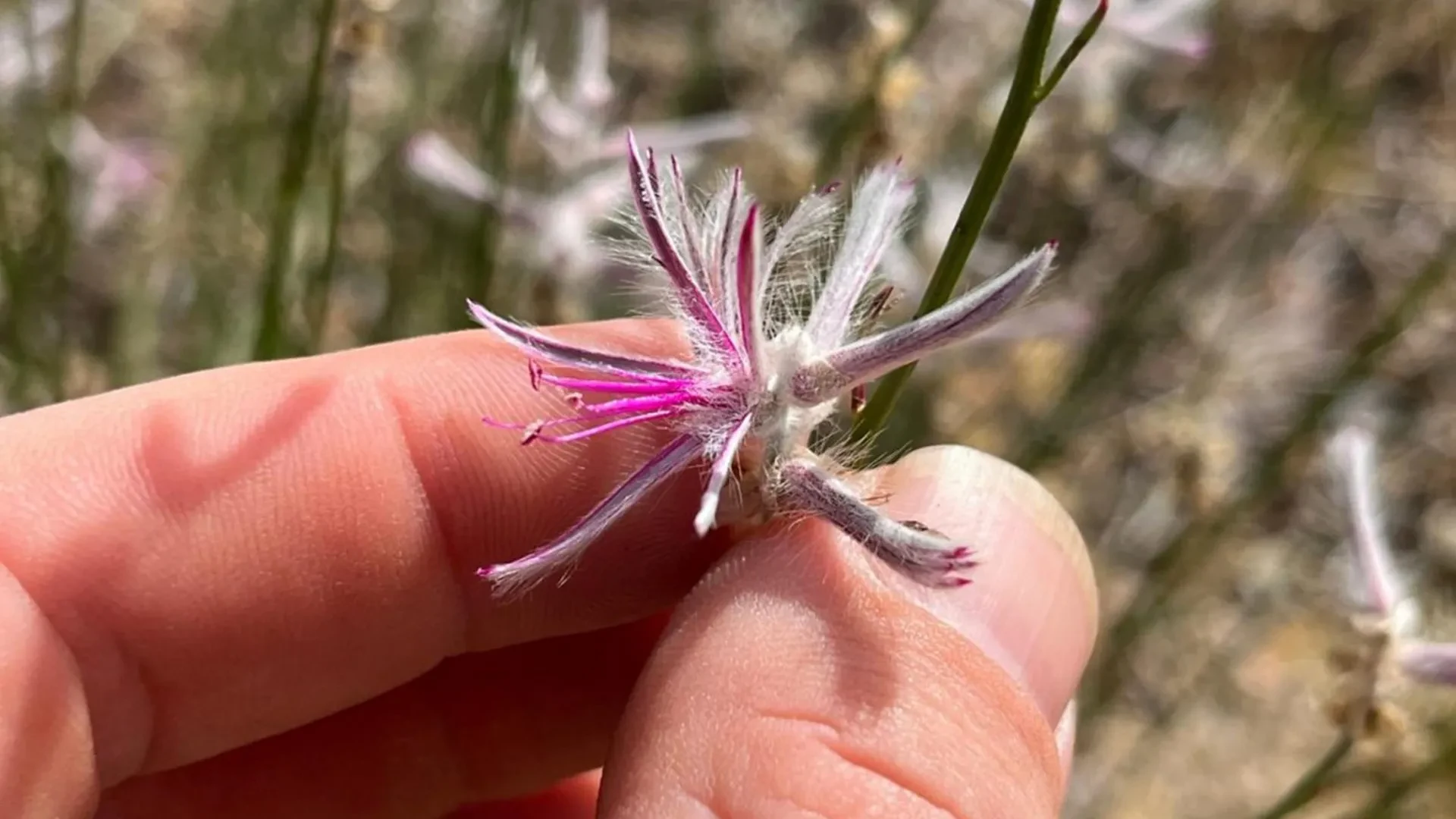
In the vast, sun-baked expanse of Australia’s remote northern outback, the boundaries between permanent loss and miraculous recovery are often separated by a single, well-timed photograph. For nearly six decades, Ptilotus senarius—a delicate, remote-dwelling shrub featuring striking purple-pink blossoms that mimic the brilliant geometry of miniature feathered fireworks—existed only in dusty herbarium records and the fading memories of a vanishing era. Unseen since 1967, the species was officially presumed to have joined the grim global tally of roughly 900 plant species driven to extinction since the mid-1750s.
That narrative shifted permanently thanks to a convergence of modern digital connectivity, casual outback observation, and taxonomic expertise. Aaron Bean, a professional horticulturalist assisting with bird-banding operations on a sprawling pastoral property near the Gulf of Carpentaria in Queensland, paused to photograph an unfamiliar, resilient plant pushing through rugged terrain. Upon returning to mobile coverage, he uploaded the images to iNaturalist, a globally recognized citizen science platform.
What followed was a masterclass in modern collaborative research. The digital footprint caught the eye of Anthony Bean, a prominent botanist at the Queensland Herbarium who had formally described the species a decade prior to its disappearance from scientific documentation. The subsequent verification—supported by the property owner, documented by UNSW researchers, and published in the Australian Journal of Botany—transformed Ptilotus senarius from an extinct ghost of the past into a critically endangered survivor.
This remarkable rediscovery underscores a profound structural transformation in contemporary biodiversity research. As professional scientists face insurmountable logistical hurdles across Australia’s vast, largely inaccessible landscapes—approximately one-third of which is locked behind privately held pastoral leases—amateur naturalists, landowners, and digital platforms are increasingly stepping forward as the vanguard of conservation biology. The resurrection of Ptilotus senarius is not merely an isolated stroke of biological good fortune; it is a clear signal that the future of species discovery relies heavily on the democratization of science.
Detailed Chronology: From the Outback to the Herbarium
To understand the magnitude of the Ptilotus senarius rediscovery, one must trace the winding, highly improbable path that brought the plant from absolute obscurity back into the annals of botanical science. The timeline of this rediscovery reveals a delicate choreography of timing, digital infrastructure, and specialized expertise.
1. The Pre-1967 Baseline and Long Silence
Before the digital age revolutionized field biology, species documentation relied on physical collection expeditions, hand-drawn illustrations, and meticulously curated brick-and-mortar herbariums. Ptilotus senarius was historically identified as a distinct entity inhabiting the harsh, unforgiving terrains of northern Australia, specifically concentrated near the Gulf of Carpentaria. However, changing land-use patterns, severe weather events, and the sheer logistical nightmare of surveying the remote outback meant that sightings were exceptionally rare.
After 1967, documented encounters with the shrub ceased entirely. For decades, botanical surveys in the region failed to unearth a single living specimen. In accordance with strict conservation frameworks, the prolonged absence of empirical evidence pushed the species toward the grim precipice of the "extinct in the wild" classification. Botanists feared the worst: that another unique lineage of Australian flora had quietly succumbed to environmental pressures, unrecorded and unmourned.
2. The Incidental Encounter in Queensland
Fast-forward nearly sixty years to a sprawling outback property in Queensland. Aaron Bean, working professionally as a horticulturalist, was engaged in avian field research—specifically assisting teams with bird-banding operations. Navigating the rugged landscape, Bean’s trained eye caught sight of an unusual shrub. Its distinct morphology did not match the typical flora of the immediate surroundings.
Recognizing that the plant possessed unique characteristics, Bean did what countless modern field workers and nature enthusiasts do: he pulled out his smartphone, captured several detailed photographs of the shrub, and continued with his primary duties. At that moment, the observation was merely a curious bookmark in an otherwise busy workday, sitting dormant on a device awaiting cellular connectivity.
3. The Digital Catalyst: iNaturalist
As soon as Bean regained a stable mobile network connection, he uploaded his field photographs to iNaturalist. Operating on a crowdsourced architecture, iNaturalist allows everyday citizens, amateur naturalists, and professional researchers to upload geo-tagged images of flora and fauna, subjecting them to community-driven identification algorithms and expert peer review.
The upload entered a massive global ecosystem comprising millions of similar observations. Under normal circumstances, an isolated outback plant photo might languish in a digital backlog, waiting months or years for a specialist to stumble across it. However, the geographic metadata, combined with the distinct aesthetic features of the plant’s purple-pink, firework-like blooms, created an unmissable signal for the right set of eyes.
4. Taxonomic Recognition and Verification
Among the users navigating the platform was Anthony Bean, a senior botanist at the Queensland Herbarium. Remarkably, Anthony Bean was not a random academic; he was the very scientist who had formally described Ptilotus senarius years prior.
Scanning the platform’s recent feeds, Anthony Bean immediately recognized the diagnostic features of the species he thought he would never see alive again. The visual match was undeniable. However, modern scientific rigor demands physical verification before a taxonomic status can be legally or ecologically altered.
Triggered by the platform alert, a coordinated effort swung into action. With the gracious cooperation and permission of the private property owner, researchers coordinated the collection of physical botanical specimens from the exact coordinates provided by Aaron Bean’s initial upload. These physical samples were delivered to the Queensland Herbarium, where morphological analysis definitively confirmed the living identity of Ptilotus senarius. The ghost had materialized.
Supporting Context & Metrics: The Scale of Modern Citizen Science
The resurrection of Ptilotus senarius serves as an empirical case study for the shifting paradigms of ecological research. In an era marked by rapid biodiversity loss and unprecedented pressures on natural ecosystems, traditional academic models are increasingly augmented—and sometimes rescued—by decentralized public participation.
The Tyranny of Distance and Private Land Access
Conducting comprehensive biological surveys across the Australian continent presents monumental logistical challenges. Australia spans roughly 7.69 million square kilometers, much of it characterized by extreme climates, sparse infrastructure, and rugged topography. Professional research institutions, often constrained by tight government funding and limited personnel, cannot maintain a continuous physical presence across every square kilometer of wilderness.
Compounding this geographic barrier is the issue of land tenure. Approximately one-third of the entire Australian landmass consists of privately owned or leased property, including vast pastoral stations, Indigenous protected areas, and privately managed conservation reserves. Professional botanists and ecologists cannot simply walk onto these lands at will; access requires navigating complex permissions, establishing trust with landowners, and mounting expensive, targeted expeditions.
This is precisely where citizen scientists and rural landowners become indispensable. As Thomas Mesaglio of the UNSW School of Biological, Earth and Environmental Sciences notes, individuals who live, work, or hold permits on private properties hold the key to vast, unexplored ecological archives.
"If you are the property owner or you’re someone who has permission from the owner to be there then suddenly it opens up this whole new world," Thomas Mesaglio observed regarding the logistical breakthrough provided by private land access.
Global Metrics of iNaturalist
The success of the Ptilotus senarius rediscovery is not an isolated statistical anomaly; it reflects the compounding power of global citizen science networks. iNaturalist, jointly initiated by the California Academy of Sciences and the National Geographic Society, has evolved from a niche hobbyist app into a powerhouse of empirical data collection.
- Global Integration: Academic literature reviews indicate that data generated through iNaturalist has already been formally cited in scientific papers spanning 128 countries.
- Species Coverage: Tens of thousands of distinct plant, animal, and fungi species have had their ranges, seasonal behaviors, or conservation statuses updated based on crowdsourced observations.
- The "Lazarus Effect": Across the globe, platforms like iNaturalist are regularly responsible for "Lazarus taxa"—species rediscovered decades or even centuries after being written off as extinct. These include rare orchids, isolated insect populations, and elusive mammalian sub-species.
Despite these successes, scientists emphasize that the utility of citizen science data depends heavily on the quality and context of the observations submitted. Thomas Mesaglio and other leading researchers have outlined practical guidelines to maximize the scientific value of amateur uploads:
- Comprehensive Plant Profiling: A single close-up photograph of a flower is frequently insufficient for definitive identification, especially within diverse genera where floral structures closely mirror one another. Observers are encouraged to photograph multiple anatomical features, including leaves, bark, stems, and the overall habit of the entire plant.
- Environmental Context: Metadata matters. Recording subtle details such as soil composition, surrounding dominant vegetation, slope orientation, and the presence of specific pollinators provides vital ecological context.
- Sensory Details: Information that cannot be captured visually—such as distinctive plant odors, latex or sap characteristics, or tactile textures—can serve as decisive diagnostic clues for taxonomic experts.
Official Statements and Expert Insights
The documentation of the rediscovery, published in the peer-reviewed Australian Journal of Botany, has sent ripples through the international botanical community. Leading researchers have spoken out about the philosophical and practical implications of the find, emphasizing the unique confluence of luck, human observation, and institutional expertise.
Reflecting on the sheer improbability of the chain of events, Thomas Mesaglio emphasized that while technology provided the conduit, human intuition and systemic readiness made the discovery possible.
"It was very serendipitous," Thomas Mesaglio remarked, detailing the mechanics of the find. "Aaron Bean is an avid iNaturalist user who opportunistically took some photos of a few plants that were interesting on the property. It’s one of these situations where everything had to fall into place and there was a bit of good fortune involved."
Furthermore, experts highlight that the transition of Ptilotus senarius from the "extinct" ledger to the "critically endangered" category represents a profound regulatory victory. Conservation frameworks cannot allocate funding, draft protective management plans, or designate critical habitats for species officially registered as extinct. By proving that the plant persists in the wild, the discovery instantly unlocks legal protections and focuses targeted conservation initiatives designed to secure the remaining populations against grazing pressures, invasive species, and climate shifts.
Future Outlook: Empowering Landowners and Expanding Biodiversity Data
The successful recovery and reclassification of Ptilotus senarius has triggered broader strategic initiatives within the Australian conservation sector. Rather than waiting for lightning to strike twice through random chance, researchers and government agencies are actively engineering systems to systematically integrate landowners into the national scientific data pipeline.
The Land Libraries Model
A prime example of this proactive approach is unfolding in New South Wales through the "Land Libraries" project, administered by the state government’s Biodiversity Conservation Trust. This innovative program bridges the gap between private land stewardship and institutional science by providing participating landowners with specialized training, digital documentation tools, and ongoing support.
By equipping landholders to systematically survey and catalog the flora and fauna inhabiting their properties—and subsequently uploading these inventories to public citizen science databases—the program transforms private economic stewards into active biological guardians.
Thomas Mesaglio and fellow conservationists are fervent advocates for expanding these initiatives nationwide. Beyond the immediate scientific yield of mapping elusive species across privately held boundaries, these programs foster a deeper cultural and emotional investment in ecological preservation.
"Engaging landholders themselves with science and the natural world and getting them more passionate about diversity makes them far more likely to be interested and invested in protecting that diversity," Mesaglio noted, underscoring the long-term socio-ecological benefits of participatory research.
The Next Frontier in Biodiversity Discovery
As millions of new observations continue to flood into platforms like iNaturalist each year, the boundary between amateur naturalism and professional taxonomy continues to dissolve. Automated image-recognition algorithms, backed by massive machine-learning datasets, are drastically accelerating the initial sorting of field uploads, allowing human specialists like Anthony Bean to focus their efforts on high-probability anomalies.
For conservation biologists, the rediscovery of Ptilotus senarius serves as both a humbling reminder of nature’s resilience and an urgent call to action. It proves that hidden within the vast, uncharted landscapes of the world—beneath the radar of institutional science—countless biological treasures may still linger, waiting for the right observer, a functional smartphone, and a platform willing to listen.