
Date: August 19, 2026
Organization: Alley Cat Allies
Executive Overview
The landscape of animal welfare and advocacy is fraught with continuous challenges, demanding vigilance, rapid disaster response, and compassionate direct care. In this comprehensive update for August 2026, Alley Cat Allies highlights critical developments across the United States and its territories. From legislative battles over punitive feeding bans in Ripon, California, to emergency water and food distribution amid ongoing crises in San Juan, Puerto Rico, the organization remains at the forefront of protecting feline welfare.
Furthermore, this report celebrates the ongoing efforts to dismantle harmful biases against black cats, details the emergency rescue and medical treatment of a mother cat and her four kittens, and shares a heartwarming success story of a young survivor named Woody. Through community education, legislative advocacy, and hands-on veterinary care, Alley Cat Allies continues to demonstrate that humane, science-based approaches—most notably Trap-Neuter-Return (TNR)—are the only sustainable methods for stabilizing cat populations and ensuring the well-being of felines everywhere.
Detailed Chronology: Recent Developments in Advocacy and Rescue
The Battle in Ripon, California: Standing Against Ineffective Feeding Bans
In municipal legislation, local governments occasionally turn to quick-fix, punitive measures to manage outdoor cat populations. Recently, the City of Ripon, California, proposed a troubling ordinance that would directly penalize community cat caregivers. Under this proposed rule, individuals who selflessly provide food and sustenance to outdoor cats could face a steep $100 fine merely for carrying out acts of care.
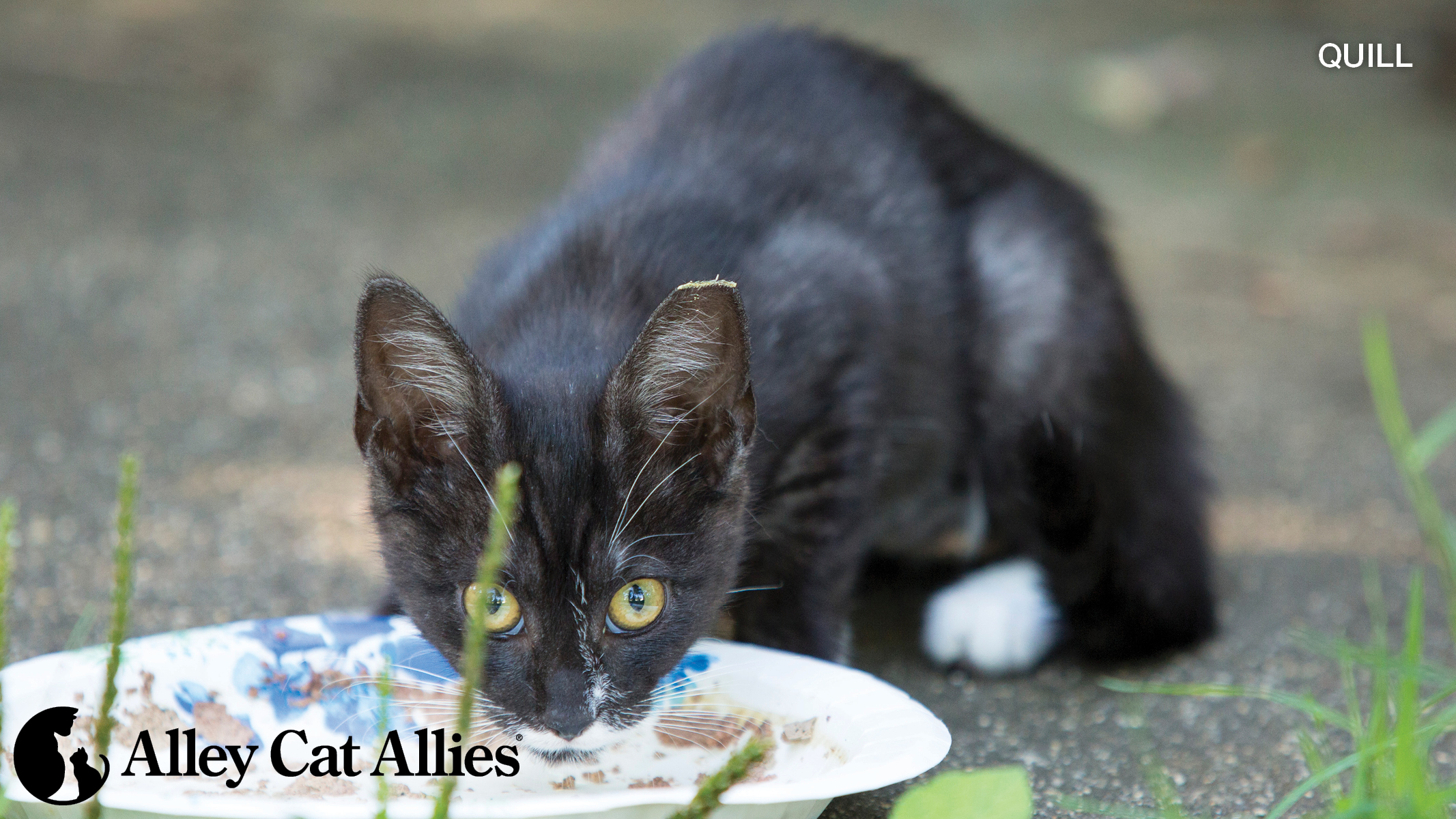
Alley Cat Allies has formally and strongly opposed this measure, reaching out directly to Ripon city officials to urge a reversal of course. Rather than penalizing compassion, the organization advocates for the implementation of Trap-Neuter-Return (TNR), a proven, humane strategy that stabilizes populations naturally while improving the health outcomes of the cats involved. Punitive feeding bans do not reduce cat populations; they merely drive populations underground, cause unnecessary suffering, and punish the compassionate volunteers who look out for neighborhood animals.
Disaster Relief on the Ground in San Juan, Puerto Rico
While policy battles wage on the mainland, emergency rescue teams face humanitarian and animal welfare crises in the territories. Alley Cat Allies’ San Juan Cat Protection Team remains active on the ground in Puerto Rico, delivering critical emergency supplies amid an ongoing local water crisis.
Team members have been distributing essential cases of bottled water and wet food directly to community cat caregivers throughout San Juan, completely free of charge. This operation has highlighted the resilience and deep compassion of local residents, many of whom routinely prioritize the health and safety of their neighborhood cats above their own immediate comfort. These felines are deeply woven into the social fabric of San Juan, and emergency interventions ensure they are not forgotten during times of widespread infrastructure strain.
Celebrating and Protecting Black Cats Year-Round
As the calendar turns past Black Cat Appreciation Day, animal advocates emphasize that the fight against superstition and bias is a daily endeavor. Black cats historically face lower adoption rates and higher rates of prejudice due to outdated myths and cultural superstitions.
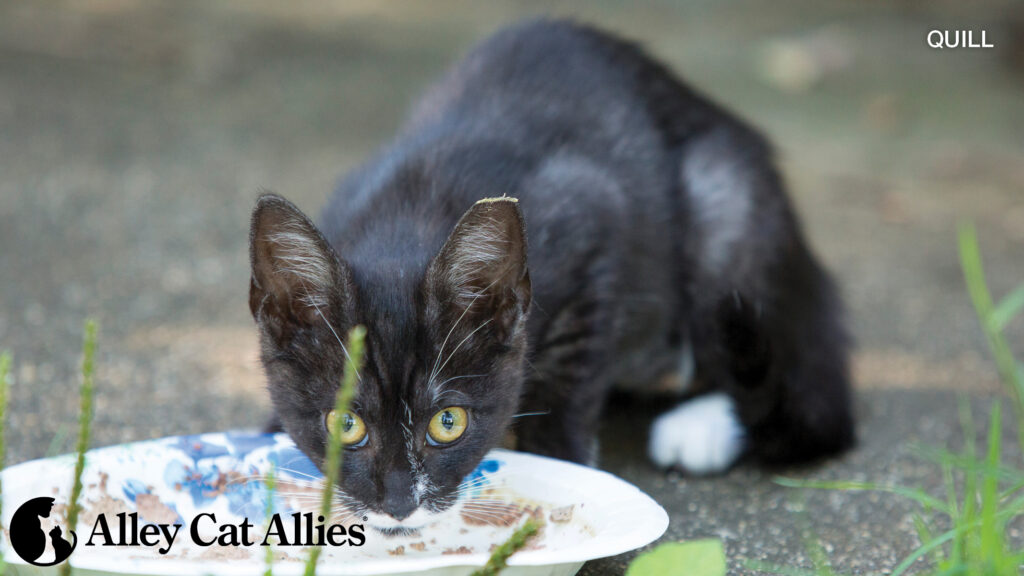
Alley Cat Allies continues its multi-pronged approach to safeguarding dark-furred felines. This includes public education campaigns designed to dispel harmful myths, alongside direct policy advocacy aimed at ensuring municipal laws protect cats of every coat color equally. Dismantling the stigma attached to black cats is vital to preventing neglect and ensuring these affectionate animals find safe, loving homes.
Direct Care: Saving a Feline Family of Five
With the peak of kitten season straining shelters nationwide, emergency rescue operations are more crucial than ever. Alley Cat Allies recently stepped in to rescue a mother cat and her four male kittens from a municipal shelter that lacked the resources to provide the specialized medical care they required.
Upon intake by one of the organization’s veterinary allies, it was discovered that the entire family was suffering from severe upper respiratory infections (URIs), with several of the kittens requiring intensive eye care. Alley Cat Allies has assumed full financial responsibility for their medical treatments. While the team continues to brainstorm names for the energetic young quartet, the immediate focus remains on nursing the mother and her sons back to robust health.
Woody’s Journey: From Vulnerable Orphan to Cherished Family Member
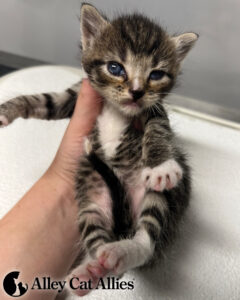
Success stories provide the emotional fuel necessary to sustain rigorous rescue work. Earlier this spring, a young kitten named Woody was separated from his mother and impounded alone in a shelter—a perilous situation for an unweaned or newly weaned kitten. Woody quickly developed a severe upper respiratory infection that required urgent medical intervention.
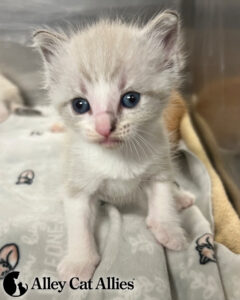
Thanks to the rapid response and funding provided by supporters, Woody was pulled from the shelter environment and given the life-saving veterinary care he desperately needed. Today, Woody is unrecognizable from the frail kitten he once was. Adopted by Stephanie and Adam, he has transformed into a playful, confident young cat.
"He still loves to play all day, especially with his favorite toy, his blue fish! He even loves to carry it around the house and settles down for snuggles at night, too," shared Stephanie and Adam. "We love him more each day, and he’s really made himself at home. We feel so lucky we found him!"
Supporting Context & Metrics: Why TNR and Humane Policies Matter
To understand the urgency of Alley Cat Allies’ opposition to ordinances like the one in Ripon, one must examine the empirical failure of traditional catch-and-kill or feeding-ban models.
The Vacuum Effect
Decades of animal control data demonstrate that removing cats from an area without altering the habitat simply creates a "vacuum effect." When outdoor cats are removed or starved out via feeding bans, new cats migrate into the territory to take advantage of available resources (such as shelter or remaining food sources). Consequently, population numbers quickly rebound.
The Efficacy of Trap-Neuter-Return (TNR)
TNR interrupts this cycle permanently:
- Population Stabilization: Sterilized cats no longer reproduce, leading to a natural, gradual decline in population over time.
- Elimination of Nuisance Behaviors: Spaying and neutering drastically reduce mating-related behaviors such as yowling, roaming, and spraying.
- Public Health Integration: Vaccinated community cats serve as a healthy, stable buffer against rodent populations while posing no public health threat.
Official Statements
Alley Cat Allies has maintained a firm, authoritative stance on municipal policies regarding outdoor cats. In their formal communications with the City of Ripon, leadership emphasized:
"Feeding bans do not work. They are cruel, ineffective, and punish individuals who are acting in the best interest of their communities. Trap-Neuter-Return is the only humane and effective approach to stabilizing community cat populations. That’s what Ripon officials, and officials worldwide, need to know."
Regarding disaster relief efforts in San Juan, organizational representatives noted:

"Along the way, we’re meeting incredible and dedicated Puerto Ricans who in many ways put the well-being of their cats above their own. Cats are truly members of the community in San Juan, and we are honored to support that community when it’s most needed."
Future Outlook
Looking ahead, Alley Cat Allies remains committed to expanding its legislative footprint, disaster response readiness, and veterinary support networks.
- Legislative Defense: The organization will continue to monitor local ordinances across California and the United States, providing legal arguments, expert testimony, and policy alternatives to municipalities considering regressive feeding bans.
- Disaster Preparedness expansion: Building upon the successes in San Juan, emergency relief frameworks are being continuously refined to ensure rapid deployment of food, water, and medical supplies during climate and infrastructure emergencies.
- Kitten Season Support: As veterinary partners manage high volumes of neonatal and pediatric cases like Woody and the newly rescued family of five, public donations and volunteer networks will remain the backbone of these life-saving interventions.
Supporters interested in reviewing the full correspondence sent to municipal leaders can access the documents at alleycat.org/Letters, and those wishing to contribute to disaster relief and ongoing rescue missions can visit alleycat.org/donate.