
Executive Overview
For decades, the prevailing narrative of wildlife rescue has been a comforting one: an animal is saved from the brutal grips of the illegal pet trade, nursed back to health in captivity, and triumphantly returned to the embrace of the wild. It is a story that satisfies public expectations, appeases donors, and offers a cinematic sense of redemption. However, a groundbreaking scientific study published in the journal Global Ecology and Conservation shatters this idyllic assumption, revealing a grim reality: for many highly territorial and specialized species, returning to the wild does not always end in success. In some circumstances, the natural habitat into which they are released transforms into what researchers bluntly describe as a "death trap."
The study, spearheaded by renowned primatologist Professor Anna Nekaris OBE of Anglia Ruskin University, alongside collaborators from the conservation group Plumploris e.V. and the University of Western Australia, sheds light on the tragic fates of Bengal slow lorises (Nycticebus bengalensis) released into a national park in northeastern Bangladesh. The findings indicate that without meticulous ecological planning, thorough habitat assessment, and individualized post-release monitoring, these well-meaning conservation efforts can yield devastating mortality rates.
While charismatic megafauna—such as tigers, elephants, and large bears—frequently command extensive tracking resources and post-release support, smaller and less conspicuous species are often returned to the wild with little to no follow-up. This investigative report examines the mechanics of this hidden conservation crisis, exploring how territorial warfare, the hidden scars of captivity, and poorly planned release methodologies are quietly undermining the survival of some of the planet’s most vulnerable creatures.
Detailed Chronology: Tracking the Fate of the Bengal Slow Loris
To understand how a return to nature can turn fatal, researchers embarked on a rigorous tracking initiative in a protected national park in northeastern Bangladesh—a forested region historically utilized for wildlife reintroductions. The subjects of this investigation were nine Bengal slow lorises, all of which had experienced the trauma of captivity and subsequent rescue.
The Methodology and Immediate Aftermath
Prior to their release, scientists fitted each of the nine Bengal slow lorises with advanced radio collars, allowing the research team to monitor their movements, ranging patterns, and survival rates with pinpoint accuracy. What followed was not a triumphant recovery of wild populations, but a swift and catastrophic decline.
The timeline of survival was dishearteningly brief:
- Day 0 to Day 10: Within a mere ten days of being introduced into the forest, three of the nine slow lorises were dead. The shock of transition, combined with immediate hostility from resident wildlife, proved instantly fatal for a third of the cohort.
- Day 11 to Six Months: Over the ensuing months, the grim trend continued. Four more animals perished within the six-month observation window.
- The Final Tally: Out of the initial group of nine rescued lorises, only two survived the harrowing transition into the wild.
Of the seven animals that died, researchers managed to recover four of the bodies for post-mortem analysis. Every single recovered carcass bore unmistakable physical evidence of violent confrontations: severe, deep-tissue bite wounds concentrated primarily on the head, face, and digits. The forensic evidence confirmed that these animals had not succumbed to starvation, disease, or predation by external carnivores; rather, they had been hunted down and killed by their own kind.
The Dynamics of Territorial Warfare and Venomous Defenses
To comprehend why resident slow lorises turned so lethally on the newcomers, one must examine the unique behavioral ecology of the species. Slow lorises are notoriously solitary and intensely territorial animals. They defend their home ranges fiercely against intruders, utilizing a biological defense mechanism unique among primates: they are venomous.
Slow lorises possess a brachial gland on their inner arms. When mixed with saliva, the secretion from this gland produces a potent, flesh-rotting toxin that the animals deliver via specialized, comb-like lower teeth. A territorial battle between a slow loris and an intruder is not a mere scuffle; it is a brutal, toxic war.
The data gathered during the study revealed a direct correlation between the duration of captivity and survival time. Animals that had spent longer periods in captivity tended to survive for fewer days after release. Furthermore, upon entering the wild, these captive-origin lorises exhibited abnormal behaviors: they moved across wider areas and appeared hyper-alert compared to native, wild Bengal slow lorises.
Intriguingly, the only two individuals that survived the study managed to traverse significantly larger territories than those that perished. This behavioral pattern suggests that survival was predicated entirely on the ability to escape established resident territories rapidly, avoiding direct, fatal confrontations with local populations that already had their home ranges locked down.
Supporting Context & Metrics: The Crisis of the Illegal Wildlife Trade
The plight of the Bengal slow lorises in Bangladesh cannot be viewed in isolation; it is deeply intertwined with the global illicit wildlife trade, which treats sentient, highly specialized animals as disposable commodities.
The Allure and Agony of the Slow Loris
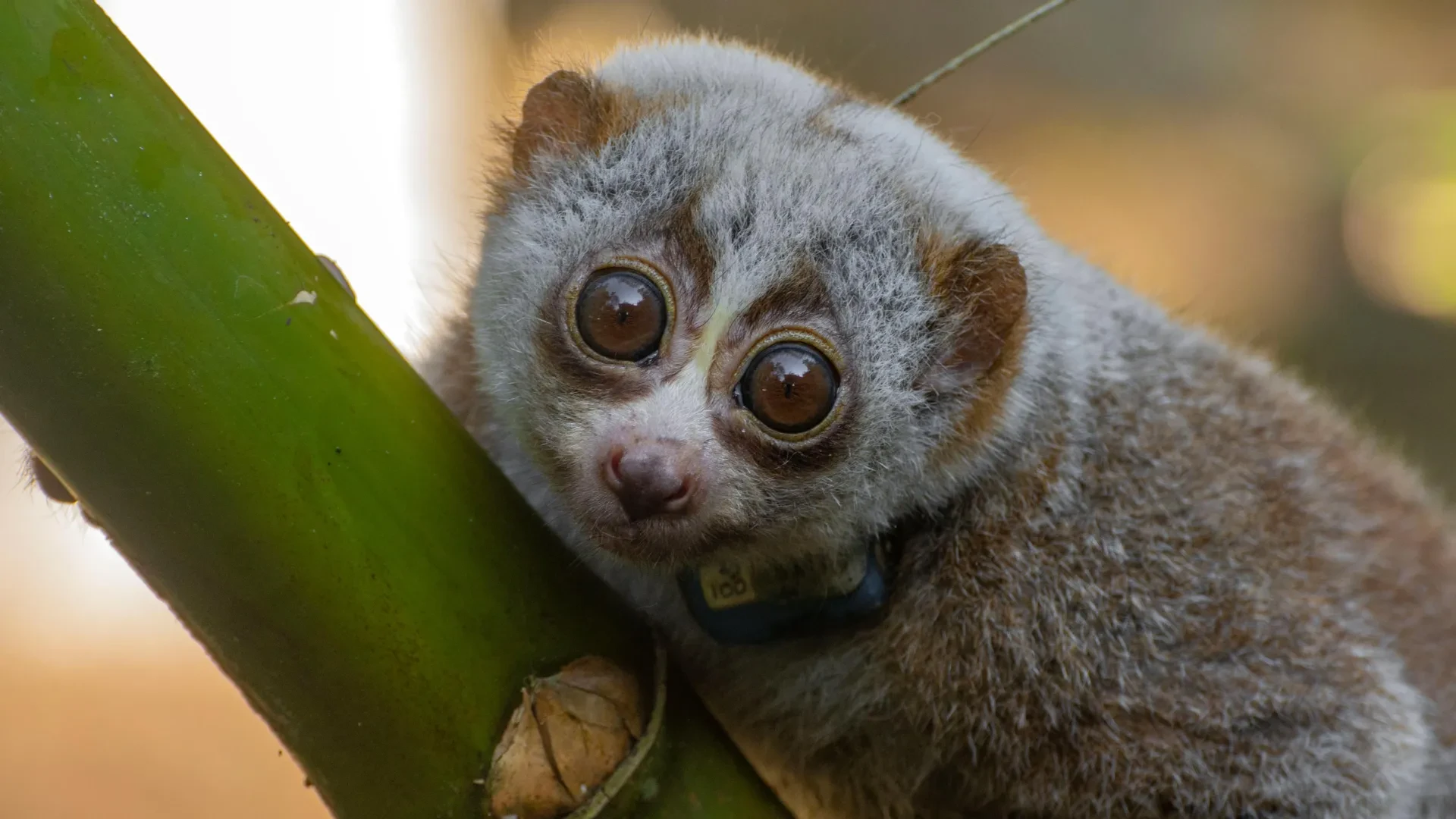
Slow lorises are globally recognizable due to their oversized, expressive eyes, dense fur, and seemingly gentle demeanor. While these physical adaptations evolved to help them navigate nocturnal forest canopies, these exact traits have turned them into prime targets for the illegal pet trade. Millions of internet videos depict captive slow lorises being tickled or fed, creating a false perception that they make docile, affectionate domestic pets.
In reality, the trade is devastatingly cruel. To prepare them for the pet market, poachers routinely clip or pull out the animals’ teeth with wire cutters or nail clippers—a barbaric practice intended to prevent them from delivering their venomous bites to human owners. This mutilation frequently leads to severe infections, chronic pain, and permanent psychological trauma, making it virtually impossible for these individuals to ever return to a normal, unassisted existence in the wild.
Because of relentless trapping, habitat fragmentation, and the pet trade, all slow loris species are classified by the International Union for Conservation of Nature (IUCN) as Critically Endangered, Endangered, or Vulnerable. As conservation enforcement has occasionally stepped up confiscations, rescue centers across Asia have found themselves inundated with traumatized primates. This influx has triggered a desperate rush to release animals back into the wild, often driven more by public relations and emotional optics than by rigorous ecological science.
The Scale of the Monitoring Gap
The discrepancy in how large and small animals are treated post-release represents a major systemic vulnerability in global conservation practices. When a charismatic, high-profile species—such as a tiger, a leopard, or an orangutan—is reintroduced into the wild, it is typically accompanied by substantial funding, intensive telemetric tracking, dedicated veterinary teams, and years of post-release oversight.
Conversely, smaller, less publicly visible species—such as reptiles, amphibians, songbirds, and small primates like slow lorises—frequently slip through the cracks of post-release evaluation. Once they are let out of their transport crates, they are rarely tracked. Consequently, the high mortality rates documented in the Bangladesh study likely represent a much broader, hidden phenomenon occurring quietly across global conservation landscapes. If small-scale, unmonitored releases of territorial species routinely result in mortality rates exceeding 77% (as observed in this study), thousands of well-intentioned conservation actions may actually be functioning as disguised culling events.
Official Statements and Expert Perspectives
The findings of this study have sent shockwaves through the conservation community, prompting leading scientists to call for an immediate overhaul of current rescue and reintroduction protocols.
Professor Anna Nekaris OBE: Challenging Conventional Wisdom
Professor Anna Nekaris, senior author of the study, head of the Little Fireface Project, and Professor of Ecology, Conservation and Environment at Anglia Ruskin University, did not mince words when discussing the implications of the research.
"It’s assumed that returning confiscated or rescued animals to the wild is always a positive conservation story," Professor Nekaris stated. "Our research shows that for highly territorial species like slow lorises, releasing them into areas that are already densely populated can be a death trap."
She emphasized that while public pressure often demands immediate releases, yielding to these emotional expectations can be profoundly destructive. "Many rescued endangered species are often released because the public expects it, but for animals such as the Bengal slow loris, this is not always the best course of action. Without fully understanding the animal’s behavior, its time spent in captivity, and the density of resident populations at the release site, reintroductions may do more harm than good."
Hassan Al-Razi: Exposing the "Dumping Ground" Phenomenon
Hassan Al-Razi, lead author of the study and team leader of Plumploris e.V. Bangladesh, highlighted the logistical and administrative failures that frequently plague local conservation initiatives in developing nations.
"Rescue and release have become an increasingly common practice in Bangladesh," Al-Razi explained. "Many wild animals, including slow lorises, are rescued and subsequently released back into the wild. However, in many cases, these releases are conducted inappropriately."
Al-Razi pointed out a troubling logistical shortcut taken by overburdened rescue organizations: "For forest-dwelling species, release sites are often selected based on logistical convenience rather than ecological suitability. As a result, certain forests have effectively become dumping grounds for rescued animals and are no longer appropriate release sites."
While his team’s empirical research centered specifically on the Bengal slow loris, Al-Razi issued a stark warning that the underlying issues extend far beyond a single species. "Although our research has focused on the Bengal slow loris and demonstrated the consequences of such practices, we believe similar patterns likely affect many other species."
Future Outlook: Re-Engineering Wildlife Conservation Protocols
The revelation that well-intentioned wildlife releases can inadvertently orchestrate animal suffering demands a fundamental paradigm shift in how conservationists, rescue centers, and government agencies handle rehabilitated animals. Moving forward, the conservation sector must transition away from emotional, knee-jerk releases and embrace a rigorous, scientifically validated framework.
1. Mandatory Ecological Carrying-Capacity Assessments
Before any animal is cleared for release, conservationists must conduct exhaustive surveys of the proposed habitat’s carrying capacity. Releasing a territorial animal into a forest that has already reached its maximum saturation of resident conspecifics is mathematically equivalent to dropping a stray into a hostile gang territory. Release sites must be selected based on rigorous ecological criteria—such as food availability, predator presence, and local population density—rather than the ease of road access for conservation workers.
2. Standardized Post-Release Monitoring Protocols
The era of the "release and forget" conservation model must come to an end. Funding structures for rescue organizations must mandate post-release tracking—utilizing telemetry, GPS, or camera trapping—to evaluate the long-term survival and integration of released individuals. Without this data, conservationists remain blind to the efficacy of their own programs, blindly repeating fatal mistakes under the banner of rescue.
3. Species-Specific Rehabilitation Guidelines
Not all animals process captivity in the same way. Highly specialized, nocturnal, and venomous primates like slow lorises require highly tailored rehabilitation protocols that minimize human imprint, preserve natural foraging instincts, and account for the psychological degradation caused by time spent in the illegal trade pipeline. For individuals that are too psychologically or physically damaged to ever navigate the hazards of a wild environment, permanent, high-standard sanctuary care may be a far more ethical and humane alternative than a doomed ticket back to the forest.
4. Public Education and Ethical Transparency
Conservation organizations must take the lead in educating the public about the complex realities of wildlife rehabilitation. While the image of a newly freed animal bounding into the forest canopy is undeniably powerful, the public must be made aware that true conservation requires patience, hard data, and sometimes, difficult decisions that prioritize animal welfare over symbolic optics.
Conclusion
The study by Nekaris, Al-Razi, and their colleagues serves as a sobering wake-up call for the global conservation community. Nature is not an infinite sponge capable of absorbing every displaced, traumatized animal that human society chooses to return to it. By confronting these uncomfortable truths head-on, transitioning from emotional optics to empirical science, and recognizing that not every rescue story can—or should—end in a wild release, conservationists can ensure that their efforts truly serve the animals they seek to protect.