
Executive Overview
While iconic national parks like Yosemite, Yellowstone, and the Grand Canyon command global attention, a quieter network of federally protected lands forms the backbone of American conservation: the nation’s 138 national monuments. Spanning millions of acres from the misty, temperate rainforests of Alaska to the sun-baked ochre canyons of Arizona and the dense northern woods of Maine, these landscapes welcome roughly 20 million visitors annually. Beyond their sweeping vistas and recreational appeal, national monuments serve as vital ecological fortresses. They preserve critical bird habitats, sustain rich biodiversity, honor deep-rooted cultural heritage, and bolster local economies.
However, these landscapes face unprecedented threats. A landmark study by the Cornell Lab of Ornithology revealed that North America has lost nearly three billion birds since 1970—a staggering 29 percent decline across the continent’s avian populations. As habitat destruction, climate change, and human encroachment accelerate, the preservation of large, unfragmented public lands has transformed from a passive environmental goal into an urgent ecological necessity. National monuments represent islands of survival for imperiled species, functioning as indispensable safe havens that maintain the structural integrity of North America’s interconnected ecosystems.
Detailed Chronology: The Evolution and Legal Genesis of Monument Protection
To understand how America’s national monuments came to form this critical conservation network, one must look back through more than a century of legislative history and executive action.
The Foundation of the Antiquities Act (1906)
The modern framework for protecting America’s most sensitive natural and historical sites was born out of concern over the rampant looting and destruction of prehistoric ruins and archaeological sites in the American Southwest. In response, Congress passed the Antiquities Act of 1906, signed into law by President Theodore Roosevelt.
- The Legislative Intent: The Act granted the President of the United States the authority, by executive proclamation, to set aside public lands owned or controlled by the federal government as historic landmarks, historic and prehistoric structures, and other objects of historic or scientific interest.
- Early Designations: President Roosevelt swiftly utilized this authority to protect Devils Tower in Wyoming—a towering igneous intrusion made famous in modern pop culture—designating it as the nation’s very first national monument in September 1906. Soon after, he protected the Grand Canyon, though it was later reclassified by Congress as a national park.
Mid-Century Expansion and Ecosystem Recognition
For the first several decades following its passage, the Antiquities Act was applied primarily to geological wonders and archaeological ruins. However, as the ecological sciences matured in the mid-20th century, conservationists recognized that the Act could—and should—be used to protect entire functioning ecosystems.
- 1978 Alaska Lands Proclamation: President Jimmy Carter utilized the Antiquities Act under immense political pressure to protect vast swaths of Alaskan wilderness, establishing 15 new national monuments (including Misty Fjords and Admiralty Island) totaling over 56 million acres. This monumental action prevented wholesale industrial exploitation and set aside pristine habitats for bald eagles, brown bears, and migratory fish.
- The Clinton and Obama Eras: Entering the late 20th and early 21st centuries, successive administrations expanded the scope of monuments to include marine environments and expansive desert ecosystems. President Bill Clinton established the Cascade-Siskiyou National Monument in 2000, specifically designed to protect an ecological crossroads of exceptional biodiversity. Later, President Barack Obama established marine monuments in the Pacific Ocean and designated vast terrestrial expanses like the Bears Ears National Monument in Utah.
Modern Management and Interagency Collaboration
Today, once a national monument is designated via an Act of Congress or an executive proclamation under the Antiquities Act, ownership remains in the hands of the public. Management duties are distributed among federal stewards depending on the pre-existing jurisdiction of the land:
- National Park Service (NPS): Focuses heavily on historical preservation and visitor interpretation.
- Bureau of Land Management (BLM): Oversees vast multi-use landscapes, balancing conservation with traditional uses such as sustainable grazing.
- U.S. Forest Service (USFS): Protects forested watersheds and timberlands.
- U.S. Fish and Wildlife Service (USFWS): Prioritizes wildlife refuges and the direct recovery of endangered species.
- National Oceanic and Atmospheric Administration (NOAA): Co-manages marine monuments with federal partners.
This multi-agency framework ensures that while monuments protect nationally significant resources, they continue to accommodate scientific research, public recreation, and local economic needs under rigorous federal oversight.
Supporting Context & Metrics: The Avian Crisis and Ecosystem Health
The argument for safeguarding national monuments is grounded in hard science. Birds are universally recognized by biologists as premier bio-indicators—canaries in the coal mine for global environmental health. When bird populations plunge, it signals a systemic breakdown in the ecological webs that sustain all terrestrial life, including humans.
The Three Billion Bird Crisis
According to comprehensive population monitoring data published in Science, North America’s bird populations have plummeted by 29 percent over the last half-century. The drivers of this decline are multi-faceted, but habitat loss remains the single greatest culprit.
- Grassland Collapse: Birds dependent on North American prairies and grasslands have suffered the most catastrophic drops, driven by agricultural conversion and urban sprawl.
- Migratory Songbirds and Shorebirds: Species that undertake epic migrations spanning thousands of miles face compounding threats across their flyways. For these birds, every protected stopover—such as the wetlands and forests preserved within national monuments—acts as a vital refueling station that determines whether they survive their journey.
Case Studies in Monument Conservation
National monuments provide unfragmented islands of habitat that act as lifeboats for vulnerable species:
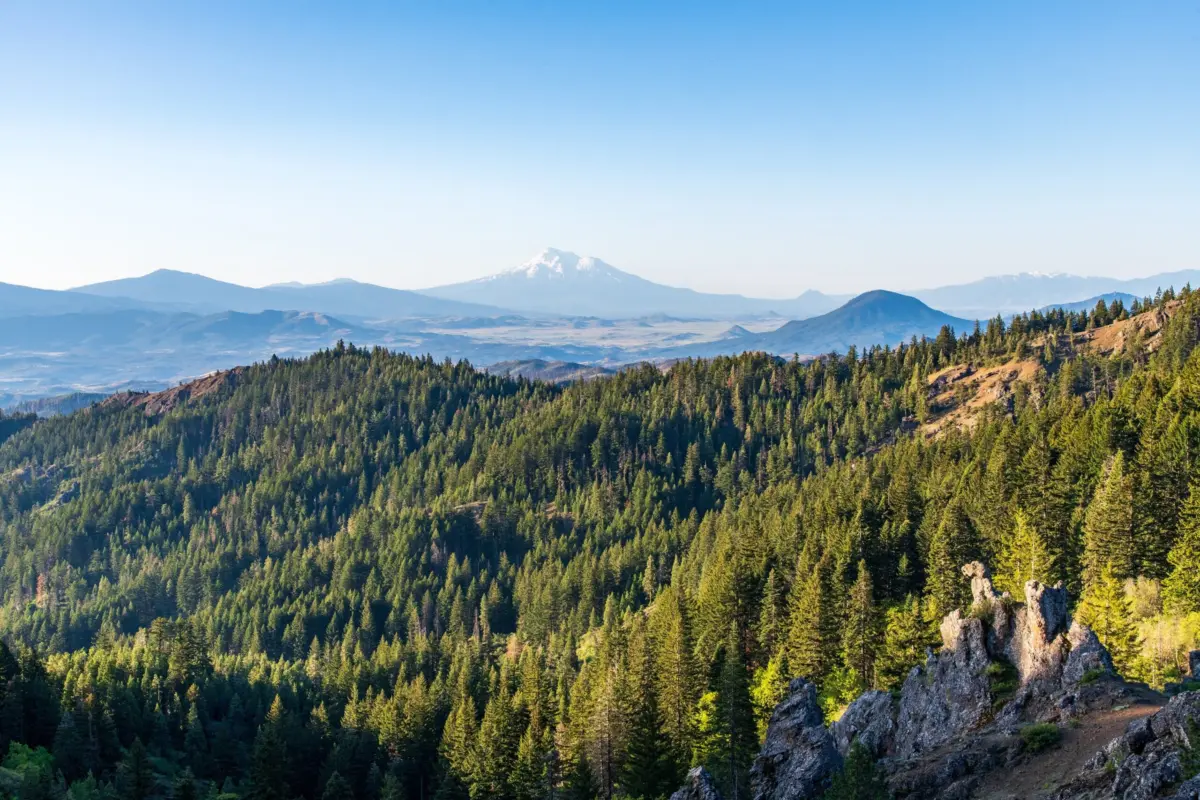
- Cascade-Siskiyou National Monument (California-Oregon Border): This unique convergence zone unites the Cascade, Klamath, and Siskiyou mountain ranges. It provides a secure stronghold for the Northern Spotted Owl, whose survival depends on old-growth forest canopies free from destructive logging practices.
- Craters of the Moon National Monument (Idaho): Beyond its striking volcanic basalt flows, the monument’s protected sagebrush steppe ecosystems provide critical nesting and breeding grounds for the Greater Sage-Grouse, a bird whose range-wide declines have alarmed conservationists for decades.
- Katahdin Woods and Waters (Maine): Encompassing deep northern forests, pristine rivers, and lakes, this monument safeguards critical breeding habitat for neo-tropical migratory songbirds and native forest-dwelling wildlife.
Ecosystem Services Provided by Protected Lands
Beyond avian conservation, the intact ecosystems within national monuments generate profound cascading benefits for human societies:
- Natural Filtration: Protected watersheds naturally filter precipitation, securing clean drinking water for millions of downstream residents.
- Soil Fertility and Pest Control: Healthy bird and insect populations manage agricultural pests organically, reducing reliance on chemical pesticides while pollinators maintain food web integrity.
- Climate Resilience: Intact forests, wetlands, and soils act as massive carbon sinks, drawing down atmospheric carbon dioxide and buffering local communities against extreme weather events driven by climate change.
Official Statements and Perspectives
The management and expansion of national monuments routinely sit at the intersection of public policy, economic strategy, and environmental advocacy. Stakeholders across various sectors emphasize the multifaceted value of these public lands.
The Scientific Community on Biodiversity Loss
Leading ornithologists and ecologists emphasize that piecemeal conservation is no longer sufficient to combat the accelerating rates of extinction. Dr. Kenneth Rosenberg, a Cornell Lab of Ornithology conservation scientist who led the landmark three-billion-birds study, has repeatedly stressed the systemic nature of the crisis:
"The cumulative loss of nearly three billion birds across North America is not just an environmental statistic; it is a flashing red warning light indicating that the life-support systems of our continent are fraying. Protecting large, intact landscapes like national monuments is one of our most effective, proven tools to reverse these trends and give vulnerable species a fighting chance against habitat fragmentation."
Economic and Tribal Perspectives
Government bodies and Indigenous nations underscore that conservation is not mutually exclusive with human prosperity; rather, the two are deeply intertwined.
- The Outdoor Recreation Economy: According to data released by the U.S. Bureau of Economic Analysis (BEA), outdoor recreation accounted for nearly $697 billion of the national gross domestic product (GDP) in 2024, supporting millions of jobs nationwide. Birdwatching alone has emerged as one of the fastest-growing recreational activities in the United States, pouring vital revenue into rural communities via eco-tourism, outfitters, lodging, and guiding services.
- Indigenous Stewardship: Tribal nations have long emphasized that national monuments preserve much more than biological diversity—they protect sacred ancestral homelands, archaeological treasures, and cultural landscapes. Conservation experts and federal officials increasingly recognize that true stewardship must incorporate Indigenous traditional ecological knowledge, honoring centuries-old connections between Native communities and the lands they have historically managed.
Future Outlook: Challenges and Recommendations
As the global community confronts the twin crises of climate change and biodiversity loss—with scientists warning that roughly one million species face extinction—the role of America’s national monuments has never been more critical. However, safeguarding these treasures requires active vigilance, forward-thinking policy, and robust public investment.
Emerging Threats to Protected Landscapes
- Political and Legislative Rollbacks: National monuments remain frequent targets of political debate. Attempts to shrink monument boundaries, diminish federal oversight, or open protected areas to resource extraction (such as oil, gas, and hard-rock mining) pose continuous threats to ecological continuity.
- Climate-Driven Stressors: Rising global temperatures, prolonged droughts, and severe mega-fires are altering the very ecosystems monuments were designated to protect. Forests are shifting into grasslands, and water scarcity is threatening riparian bird species.
- Visitor Pressures: As public awareness and visitation grow, popular monuments face strain from overcrowding, trail erosion, and wildlife disturbance, necessitating careful management plans to prevent recreational overuse from degrading natural resources.
Strategic Roadmap for the Future
To ensure that national monuments continue to fulfill their ecological, cultural, and economic mandates for generations to come, conservationists and policymakers must pursue several vital initiatives:
- Defend Science-Based Designations: Future administrations and Congress must utilize the Antiquities Act and legislative measures to protect new, ecologically vulnerable landscapes, prioritizing wildlife corridors that connect fragmented habitats.
- Increase Funding for Land Management Agencies: Federal land agencies—the BLM, NPS, USFS, and USFWS—require robust, sustained financial appropriations to manage visitor traffic, mitigate wildfire risks, conduct scientific monitoring, and restore degraded habitats within monument boundaries.
- Prioritize Collaborative and Indigenous Stewardship: Co-management frameworks that empower Tribal nations to guide the stewardship of ancestral lands must be expanded. Incorporating Indigenous ecological wisdom ensures that cultural preservation is woven directly into conservation strategies.
- Enhance Climate Resilience Planning: Management plans must integrate climate adaptation models, creating climate-smart corridors that allow plant and animal populations to migrate northward or to higher elevations as thermal zones shift.
Conclusion
America’s national monuments represent an irreplaceable inheritance. They are living laboratories, economic engines, cultural archives, and, above all, the last best hope for many of North America’s most vulnerable wildlife species. By proactively defending these public lands from degradation and investing in their science-based stewardship, we ensure a future where birds still fill our skies, ecosystems remain resilient, and the American landscape continues to sustain both nature and humanity in harmony.