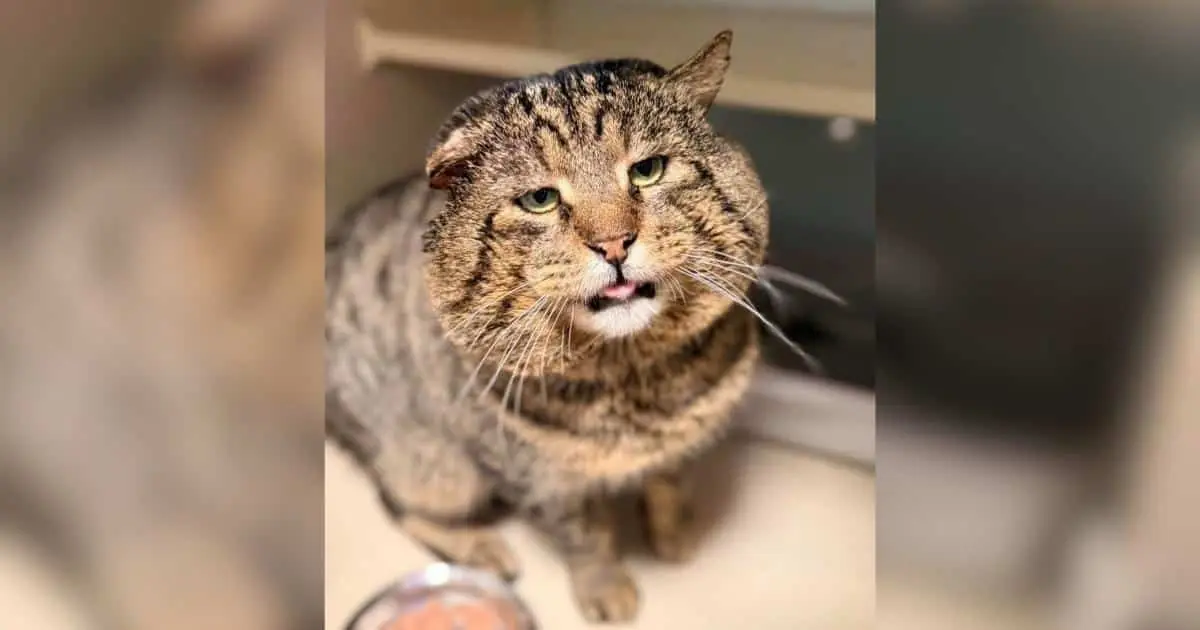

Animal rescue operations often witness the full spectrum of human negligence and animal resilience, but every so often, a rescue enters their doors that immediately alters the atmosphere of the facility. For the staff at Furkids Animal Rescue and Shelters in East Cobb, Georgia, that defining moment arrived on Christmas Day. Stepping out of the holiday cold and into the warmth of the shelter was a 15-pound, battle-scarred feline whose visage instantly commanded the room.
With an imposing, broader-than-life face, oversized jowls, and a permanently stern glare, the cat—christened Katpone—looked less like a domestic pet and more like a hardened neighborhood crime syndicate leader. Yet, within moments of his intake, the staff discovered a heartwarming dichotomy: behind the intimidating “mean mug face” and the physical reminders of a harrowing past lay an exceptionally gentle, affectionate soul.
This in-depth investigative report examines Katpone’s journey from a rugged, independent survivor of the unforgiving streets to a cherished shelter resident on the cusp of a permanent adoption. By exploring the biological reasons behind his striking facial structure, the medical challenges of feline outdoor survival, and the vital role modern no-kill shelters play in rehabilitating marginalized animals, we uncover a story that challenges preconceived notions of tough exterior aesthetics and highlights the triumph of unconditional compassion.
Detailed Chronology: From Christmas Day Intake to Shelter Royalty
The Christmas Day Arrival
The holiday season is typically a time of quiet reflection and community celebration, but for animal rescue personnel, the rhythm of rescue work never pauses. On Christmas Day, the intake doors at Furkids Animal Rescue and Shelters swung open to reveal an unexpected holiday arrival. At approximately 15 pounds, Katpone possessed a heavy-set, solid frame that immediately signaled he was no ordinary stray.
Estimated to be between four and five years old at the time of his intake, Katpone’s physical presence was immediately striking. Staff members stopped in their tracks, captivated by his broad skull, thick neck, and a facial structure that suggested he had spent years navigating the dangerous, territorial politics of the outdoors.
Decoding the "Mob Boss" Aesthetic
It did not take long for Furkids’ social media team to capture the internet’s imagination by sharing Katpone’s story. In a widely circulated Facebook post, the rescue affectionately dubbed him a feline "mob boss," joking that he possessed the kind of jowls that suggested he spent his evenings settling neighborhood disputes behind a local dumpster and emerging victorious every single time.
However, behind the lighthearted humor lay a sobering biological reality. Katpone had lived his formative years intact. In the biological world of unneutered male felines, circulating high levels of testosterone dictate physical development. Over years of outdoor existence, elevated testosterone triggers a thickening of the skin, neck muscles, and facial tissues—particularly around the cheeks and jowls.
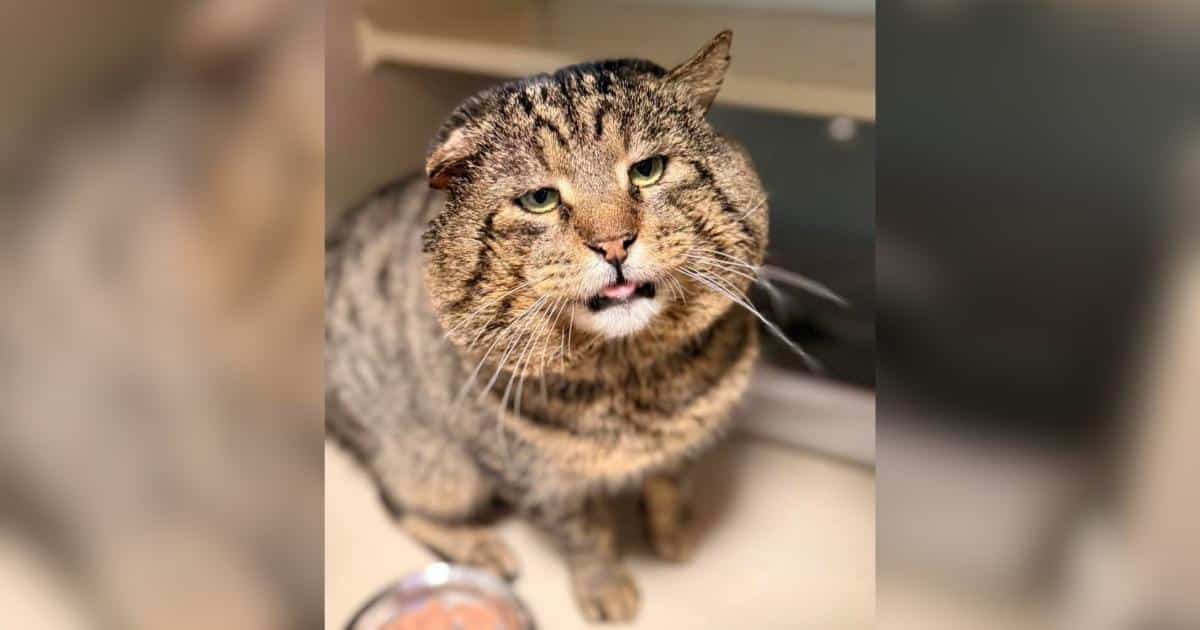
These prominent facial features are not merely cosmetic; they serve as evolutionary armor. During territorial skirmishes and mating disputes, an unneutered male’s thick jowls act as a natural shield, absorbing the brunt of bites and swipes from rival cats. For Katpone, those legendary cheeks were the physical archive of countless battles fought for food, shelter, and survival under the open sky.
Unveiling the Medical Reality
While his facial structure told one story, a thorough veterinary examination revealed the true toll of his street-fearing lifestyle. When rescue workers took him in, they found that his rugged exterior masked several underlying medical conditions requiring immediate intervention.
Katpone tested positive for Feline Immunodeficiency Virus (FIV), a common condition among outdoor, unneutered tomcats who frequently engage in bite-wound transmissions. Additionally, he was battling an upper respiratory infection—a notoriously stubborn ailment in shelter environments that requires rigorous antibiotic therapy and close monitoring.
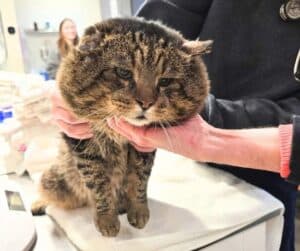
Furthermore, a close inspection of his head revealed misshapen, heavily scarred ears. Veterinary professionals surmised that these structural anomalies were the cumulative result of severe, untreated ear mite infestations and the repetitive trauma of localized fight injuries. Every scar, every thickened tissue, and every medical diagnosis painted a vivid picture of a cat that had known profound hardship, isolation, and persistent physical pain before ever crossing paths with organized animal rescue.
Supporting Context & Metrics: The Plight of Community Cats and FIV Management
To fully understand Katpone’s transformation, one must examine the broader systemic challenges facing outdoor and stray cat populations across the United States. According to animal welfare metrics compiled by organizations such as the ASPCA and Shelter Animals Count, millions of stray and feral cats enter the rescue pipeline annually. A significant percentage of these animals present with complex medical histories, yet few capture the public imagination quite like "tough-guy" felines who defy expectations.
The Science of FIV in Modern Shelters
Feline Immunodeficiency Virus (FIV) is often misunderstood by the general public, historically carrying an unfair stigma that once led to immediate euthanasia in outdated shelter models. However, modern veterinary science has radically shifted this paradigm. FIV is primarily transmitted through deep bite wounds sustained during aggressive territorial fights—making intact outdoor cats like Katpone prime candidates for the virus prior to their rescue.
Crucially, FIV is not transmissible to humans or canine companions, nor is it easily spread among cats in a stable, indoor multi-cat household where biting behaviors are absent. Modern veterinary consensus emphasizes that FIV-positive cats can live long, comfortable, and relatively healthy lives provided they receive:
- Indoor-Only Housing: Protecting them from environmental pathogens and preventing the spread of the virus to outdoor populations.
- Proactive Veterinary Care: Swift treatment of secondary infections, routine dental cleanings, and regular wellness panels.
- Nutritional Support: High-quality diets designed to support immune function.
Katpone’s diagnosis did not define his destiny; rather, it served as a baseline management metric for the medical team at Furkids, ensuring that his transition to indoor life was accompanied by specialized care tailored to his immune status.
The Role of No-Kill Shelters in Behavioral Rehabilitation
The transition from an autonomous, feral, or semi-feral outdoor existence to structured indoor shelter life is notoriously stressful for adult cats. For years, Katpone relied strictly on his own instincts to secure sustenance and safety. Every human interaction in his past was likely fraught with uncertainty or danger.
When placed in a supportive, low-stress environment, however, animals like Katpone frequently undergo profound psychological rehabilitation. Organizations specializing in no-kill rescue models utilize behavioral enrichment, gentle handling protocols, and nutritional security to help traumatized animals decompress. Within weeks of his arrival, Katpone’s underlying demeanor eclipsed his tough exterior. The cat who looked like a hardened street brawler transformed into a gentle giant, proving that mammalian resilience often runs deeper than any physical scar.
Official Statements and Insider Perspectives
The duality of Katpone’s appearance versus his personality has been a source of endless fascination for the staff and volunteers who interact with him daily.
Karlie Lucas, a social media specialist at Furkids, offered an intimate glimpse into Katpone’s true character in an interview with The Dodo. Lucas noted that despite his intimidating facade, Katpone is an "incredibly sweet cat" who consistently subverts expectations. She affectionately coined the term "mean mug face" to describe his resting expression—a permanent scowl that entirely vanishes the moment he receives a gentle scratch behind the ears or a reassuring word from a caregiver.
"Katpone has the kind of face that makes people stop, smile, and wonder what stories he could tell," rescue representatives shared in an official statement detailing his intake. "Behind those enormous cheeks and battle-worn ears is a cat whose body carried reminders of just how difficult those years had been. Yet, the moment he realized he was safe, all that toughness melted away into pure affection."
According to internal shelter reports, Katpone quickly adapted to the rhythm of the facility. Far from cowering in fear, his larger-than-life personality expanded to fill the room, leading shelter workers to jokingly remark that the newcomer was already "running the place." This playful commentary highlights the psychological healing process: an animal that once fought merely to survive in the shadows was now secure enough in his environment to claim it as his own domain.
Future Outlook: The Road to Permanent Adoption
Having successfully navigated his medical treatments, overcome an upper respiratory infection, and adapted smoothly to indoor sanctuary life, Katpone stands on the precipice of the most important chapter of his life: securing a permanent, loving home.
Finding the Right Match
The adoption coordinators at Furkids Animal Rescue and Shelters are executing a targeted placement strategy for Katpone. Given his FIV-positive status and his history as an independent former stray, prospective adopters are screened for specific criteria:
- Indoor-Only Commitment: To ensure his compromised immune system remains protected and he never faces the hazards of vehicular traffic, extreme weather, or territorial fights again.
- Experienced Cat Owners: Individuals who understand the unique behavioral cues of mature male felines and appreciate that a stern facial expression does not preclude deep, affectionate bonding.
- Low-Stress Environment: Homes that can provide a tranquil sanctuary where Katpone can spend his golden years lounging in sunbeams, receiving unlimited head scratches, and enjoying the culinary luxuries of regular, high-grade meals.
A Legacy Beyond Appearance
Katpone’s viral popularity and subsequent shelter journey offer a profound lesson for animal welfare advocates and pet lovers alike. In a world heavily influenced by superficial aesthetics—where certain breeds and facial structures are routinely overlooked or judged as "aggressive"—Katpone stands as a living testament to the fallacy of judging a book by its cover.
His massive jowls, misshewn ears, and intense stare once served as his only defense mechanisms against a harsh and indifferent world. Today, those same features serve as a badge of honor, symbolizing a survivor who endured the worst of outdoor existence and lived to tell the tale through soft purrs and gentle headbutts.
As Furkids prepares to match their legendary resident with his forever family, Katpone’s legacy is already secured within the Georgia rescue community. He is far more than a viral social media sensation with a funny nickname; he is a beacon of hope, proving that with adequate medical intervention, patience, and boundless love, even the roughest exterior can hide a heart of absolute gold.