
Executive Overview
For millennia, the narrative of human expansion has been written across the face of the Earth in asphalt, concrete, agriculture, and sprawling urbanization. As human populations have surged, we have fundamentally re-engineered the planet, forcing wildlife to navigate an increasingly fragmented and hostile world. Traditional conservation science has long assumed that an animal’s behavior and survival are dictated primarily by the physical alteration of its habitat—the loss of forests to clear-cutting, the carving of migration corridors by highways, or the conversion of native grasslands into monoculture farms.
However, a landmark study published in the prestigious journal Science shatters this long-held paradigm. Researchers from the University of California, Santa Barbara (UCSB), the Smithsonian’s National Zoo and Conservation Biology Institute, and Yale University have revealed that animals are responding not only to the physical environments we construct, but also to the simple, dynamic fact that humans are physically nearby.
By merging unprecedented, high-resolution cellphone geolocation data with massive GPS-tracking datasets from nearly 4,600 individual mammals and birds across the continental United States, the research team successfully separated the ecological impacts of human presence from the impacts of human infrastructure. The findings are both startling and nuanced: over half of the species studied are simultaneously influenced by both factors, yet their behavioral responses vary wildly depending on the species, the density of human crowds, and the degree to which a landscape has already been modified.
This groundbreaking research—born from the unique global "anthropause" of the COVID-19 pandemic—provides a vital missing puzzle piece for wildlife managers. For decades, conservation strategies have relied on blunt instruments, such as tracking urban sprawl or agricultural boundaries, to gauge human impact. This new study proves that managing coexistence requires far more than preserving green spaces; it demands that we account for our physical footprint in real-time. As researchers pivot to investigate whether these behavioral shifts spell adaptation or distress, this work offers a hopeful roadmap toward sophisticated, data-driven policies that allow humans and wildlife to share an increasingly crowded planet.
Detailed Chronology: How the "Anthropause" Unlocked a Scientific Breakthrough
To understand how researchers accomplished what was once thought impossible—quantifying the invisible pressure of human presence on wild animals—one must look back to the unprecedented disruption of early 2020.
The COVID-19 "Anthropause"
When the COVID-19 pandemic swept the globe, governments enacted sweeping lockdown policies that dramatically and instantaneously altered human mobility. Overnight, bustling national parks emptied, major commuter arteries fell silent, and cities experienced a profound hush. Dr. Ruth Oliver, assistant professor at UCSB’s Bren School of Environmental Science & Management and co-lead author of the study, recognized this extraordinary moment for what it was: a once-in-a-generation ecological experiment.
Ecologists had long struggled to isolate the effects of human activity from the effects of human infrastructure. When an animal avoids a certain area near a highway, is it because of the asphalt and cars, or is it because people are constantly walking along the shoulder? In normal times, these two variables are inextricably linked; where there is infrastructure, there are almost always people.
The pandemic shattered this correlation. Infrastructure remained firmly in place, but human presence flickered, vanished, and shifted in ways never before recorded. This global slowdown—coined the "anthropause" by researchers—provided the ideal natural laboratory.
Assembling the Data Matrix
Seizing upon this window, an international collective known as the COVID-19 Bio-Logging Initiative swung into action. This broader collaboration ultimately involved 600 partners who amassed an astonishing 1 billion location records from approximately 13,000 animals worldwide to study how human activities influence wildlife.
For the specific study published in Science, the research team narrowed their focus to the continental United States. They extracted weekly GPS records from 4,581 individual mammals and birds, comparing matched tracking periods across 2019 (pre-lockdown) and 2020 (during lockdown).
While tracking the animals through telemetry collars and GPS tags was a well-established science, quantifying where humans were actually moving during a rapidly shifting pandemic landscape posed a monumental challenge. Historically, public data tracking human movement with high spatial precision is heavily guarded by private corporations and remains virtually impossible for academic researchers to obtain. Consequently, wildlife studies have historically relied on crude, indirect proxies: acreage of urban development, distance to the nearest road, agricultural intensity, or blunt binary metrics like whether a county was under a stay-at-home order.
A First-of-Its-Kind Dataset
To overcome this critical limitation, the research team secured access to anonymized cellphone geolocation data resolved down to the neighborhood level.
"The cell phone data we used was made available to researchers during the pandemic to help reveal the impacts of COVID-19 shutdowns," explained Dr. Scott Yanco, a research ecologist at the Smithsonian’s National Zoo and co-lead author of the study. "Typically, private companies hold onto these, which made this a rare opportunity for us to quantify how human presence impacts wildlife, and to demonstrate that there is more to consider than just land modification to create robust conservation plans."
By feeding millions of anonymized mobile-device data points alongside animal GPS trajectories into advanced computational models, the team was able—for the very first time in ecological history—to independently evaluate how the physical movement of people alters the daily lives of wild animals.
Supporting Context & Metrics: Unraveling the Complex Web of Human-Wildlife Interactions
The integration of high-resolution human mobility data with wildlife telemetry yielded a wealth of quantitative insights, challenging several long-held dogmas in conservation biology.
The Interplay of Presence and Modification
The researchers investigated two primary metrics for each animal: the physical space (territory) it occupied and its "environmental niche," which encapsulates how an animal utilizes available habitats and resources within its ecosystem.
The data revealed that looking at landscape modification alone paints a dangerously incomplete picture. For the vast majority of species studied, human presence and habitat alteration operate in tandem:
- 57% of all species studied were significantly impacted by the combination of both human presence and landscape modification.
- 67% of mammal species experienced measurable changes in either their territory size or environmental niche as a direct result of human presence.
- 68% of bird species demonstrated similar vulnerability to the physical proximity of humans.
Crucially, the study uncovered that these two human influences are deeply interconnected. The disruptive weight of human presence on an animal depended heavily on how intensely the surrounding landscape had already been altered. Conversely, the environmental impact of a modified landscape shifted depending on how densely populated with humans that area was.
The Paradox of Protected Spaces
One of the most counterintuitive findings of the research centers on where animals exhibit the greatest sensitivity to human presence.
One might intuitively assume that wildlife living in heavily urbanized environments or intensely farmed regions would display the highest levels of stress or avoidance behavior toward humans. However, the data revealed the exact opposite: sensitivity to people was especially strong in places with relatively little physical development, such as national parks and protected wilderness areas compared to bustling cities.
Specifically, about 67% of mammal species and 41% of bird species responded to the dual pressures of human presence and landscape alteration by contracting the amount of habitat they used. In pristine environments where animals are unaccustomed to dense, persistent crowds—or where protected areas suddenly experience massive influxes of recreationists—the psychological and spatial footprint of humans exerts a powerful, restrictive force, effectively squeezing wildlife into smaller, less optimal corners of their own habitats.
Official Statements & Species-Specific Breakdown
To assume that all wildlife reacts uniformly to the human footprint would be a critical policy error. The Science study underscores that behavioral adjustments are highly species-specific, rooted in evolutionary history, dietary needs, and behavioral ecology.
The Gray Wolf: Defying the Trend
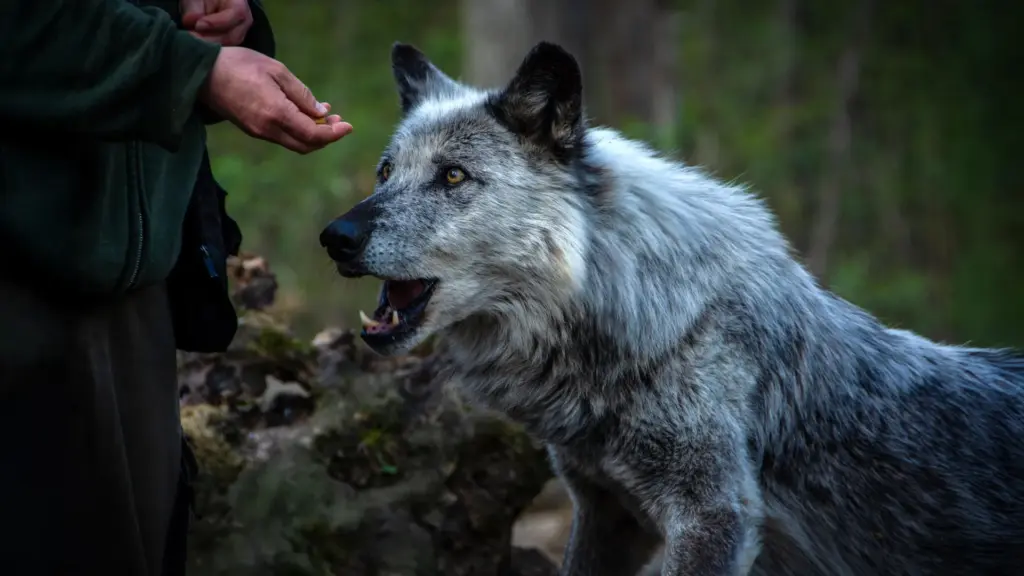
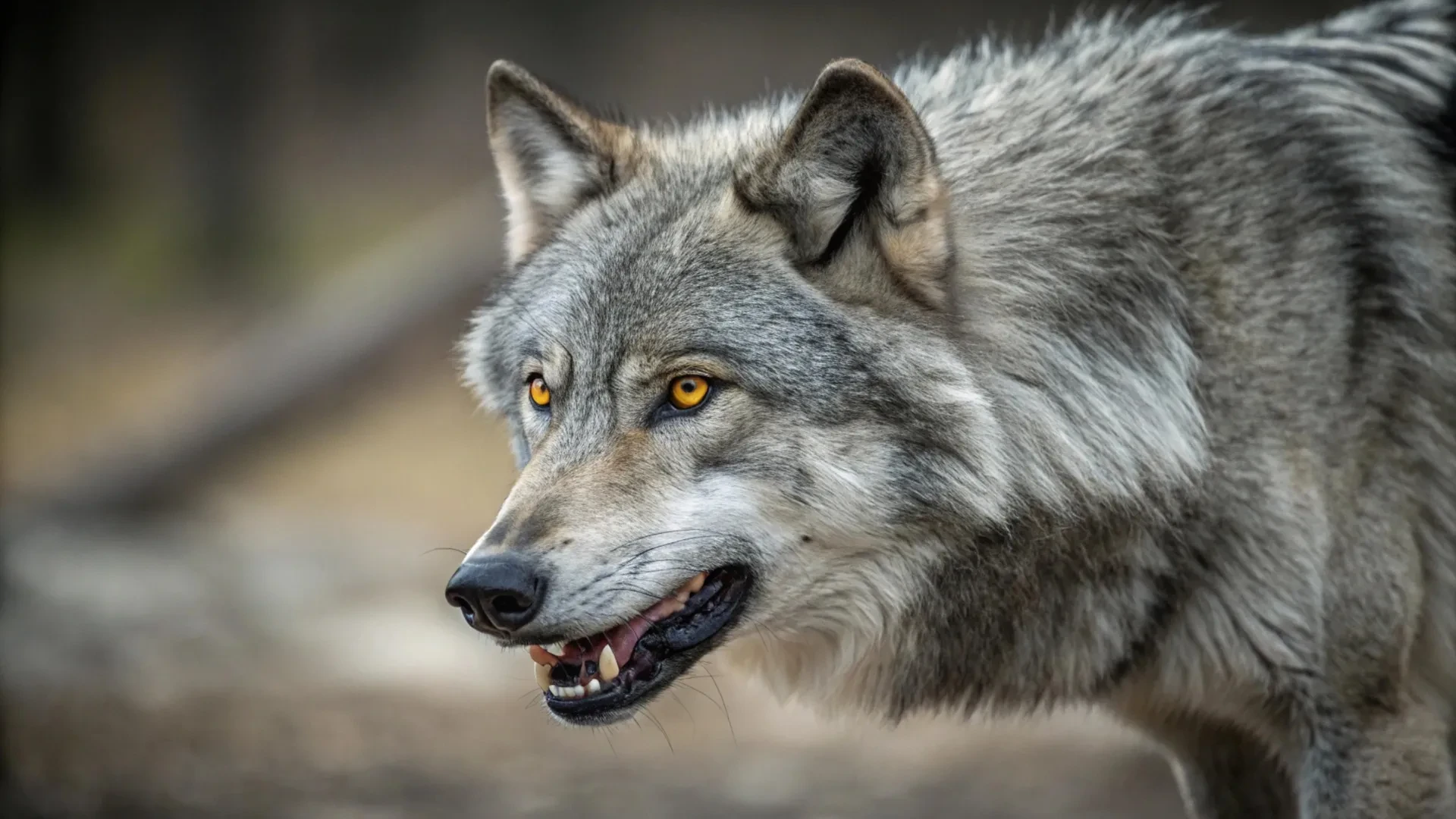
While many mammals and birds contract their ranges in the presence of humans, gray wolves (Canis lupus) charted a radically different path. The research showed that wolf habitat use actually expanded in response to human presence.
Ecologists attribute this to the complex, fraught evolutionary history between canids and humans. Marked by centuries of persecution, culling, and habitat expulsion, wolves maintain an acute awareness of human activity. Rather than cowering or squeezing into tighter refuges, wolves respond to human proximity by spreading out and ranging farther afield to maintain a safe buffer zone between themselves and human footprints.
Deer and Cranes: Divergent Strategies
The study also illuminated fascinating behavioral divergences among other iconic North American fauna:
- White-tailed deer (Odocoileus virginianus) displayed a complex, dual-axis response. Their environmental niches expanded as landscapes became physically modified (such as the mosaic of forests and agricultural fields), but their ranges noticeably contracted as human presence and foot traffic increased.
- Sandhill cranes (Antigone canadensis) displayed the exact reverse pattern, showcasing the intricate and often unpredictable ways different taxa partition space based on human pressures.
Commenting on these diverse reactions, co-lead author Dr. Ruth Oliver emphasized the necessity of moving away from generalized conservation frameworks:
"These findings highlight the critical importance of species-based conservation. Every species has different habitat requirements, has its own particular behavioral tendencies, and faces unique threats. Effective conservation requires that we understand the particular challenges that each species faces."
Future Outlook: Adaptation, Stress, and Smarter Conservation
As the echoes of the pandemic "anthropause" fade and global human mobility returns to—or exceeds—pre-2020 levels, the implications of this research are shifting from theoretical ecology to urgent conservation policy.
Are Behavioral Changes Helping or Hurting?
Having proven that animals actively adjust their spatial use and resource allocation in response to human presence, Dr. Oliver and her research team are now tackling the ultimate ecological question: Are these behavioral modifications helping wildlife adapt, or are they distress signals masking a slow decline?
"Our current study shows that animals change how they use space and resources, but we don’t know if these changes are helping them adapt or are a sign of stress," Dr. Oliver noted. "Our group is now digging into that question by asking whether animals that change their behavior in response to human pressures are at greater or lower risk of dying."
By linking real-time behavioral adjustments to survival rates across various species, future research will determine whether an animal avoiding a popular hiking trail is successfully mitigating risk or starving itself by abandoning prime foraging grounds.
A New Era of Nuanced Conservation Policy
Historically, conservation policy has operated with a blunt instrument. Wildlife managers established protected boundaries, created wildlife bridges over highways, or restricted industrial development, largely operating under the assumption that if the concrete was kept away, the animals would thrive.
This new research provides a sophisticated roadmap for the Anthropocene—the geological epoch defined by human dominance over Earth’s ecosystems. By harnessing the power of animal telemetry alongside anonymized mobile-device data, conservationists can finally design dynamic, time-sensitive management strategies.
Imagine national parks that temporarily restrict public access to specific trails not just during static seasonal nesting periods, but dynamically—when human foot traffic spikes beyond a threshold that wildlife can comfortably tolerate. Imagine urban planning that accounts not only for green corridors, but for acoustic and physical human presence thresholds.
Despite the sobering reality of our expanding global footprint, Dr. Oliver remains profoundly optimistic about what these findings mean for the future of multi-species coexistence:
"Our results give me some optimism that we can achieve wildlife-coexistence through more nuanced policies that more smartly consider where and when we need to give animals space."
As science pierces deeper into the invisible psychological and spatial boundaries we draw around the natural world, the path forward becomes clearer: protecting wildlife requires more than saving their homes. It requires us to learn how to share the space, step by mindful step.