
Executive Overview
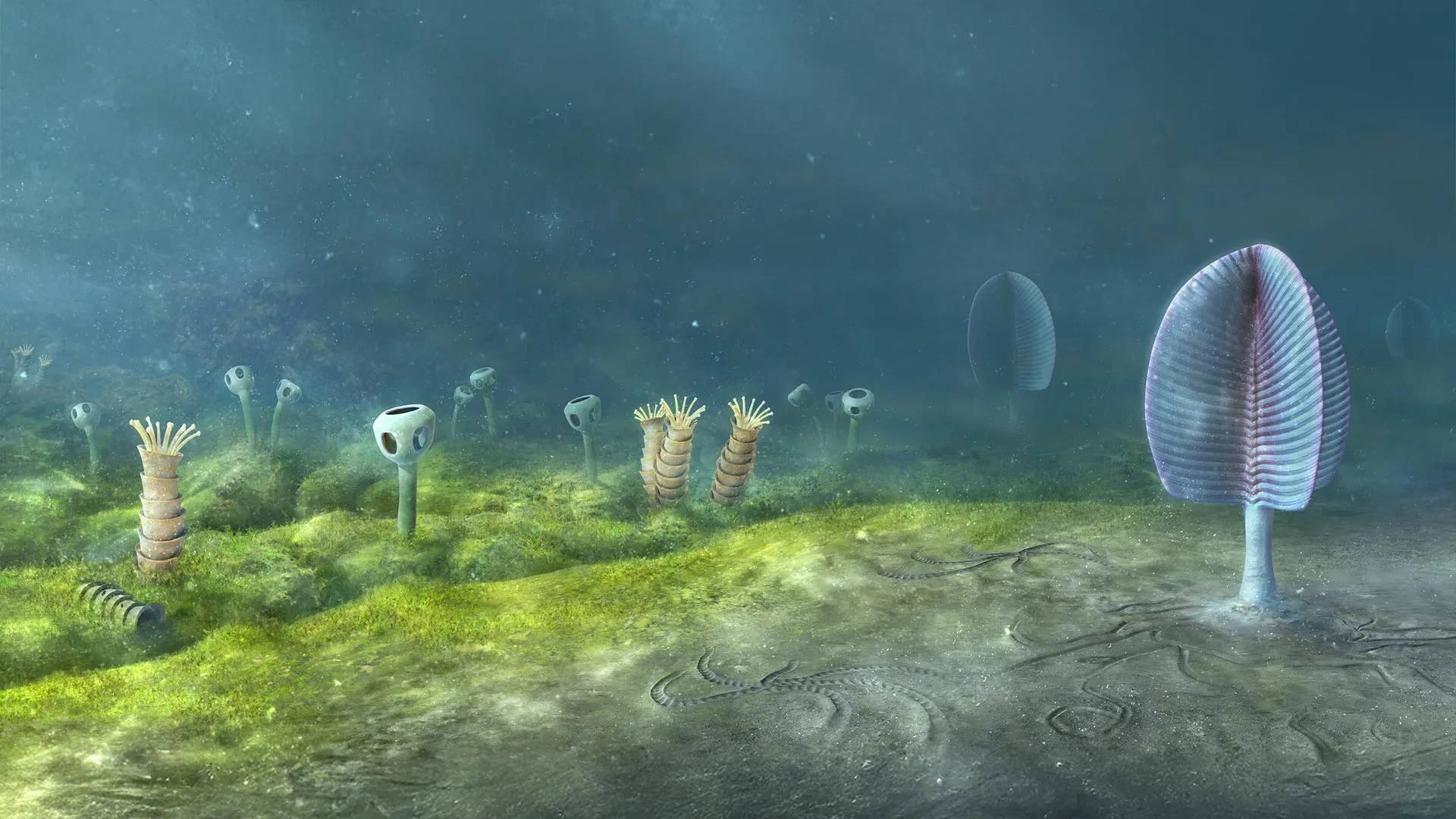
In a discovery that upends foundational assumptions in evolutionary biology, a multi-institutional team of international researchers has revealed that the animal kingdom may have emerged up to 200 million years earlier than previously thought. Published in the October 2 issue of Science Advances, a study spearheaded by the University of Oxford demonstrates that the earliest animals could have originated deep within the Neoproterozoic Era, predating some of the most severe global ice ages in Earth’s planetary history.
For generations, paleontologists and evolutionary biologists have grappled with a profound chronological paradox. While complex macroscopic animals burst onto the geological scene in a relatively abrupt evolutionary expansion shortly before the Cambrian Period—spanning roughly 539 to 487 million years ago—various lines of genetic and geochemical evidence have long hinted at a much older, more deeply hidden genesis. Yet, efforts to pin down this true origin point have relied heavily on a critical negative premise: the assumption that if soft-bodied or microscopic animals had existed prior to the Ediacaran Period, exquisite fossil deposits from that epoch would have captured them.
The new Oxford-led study shatters this pivotal assumption. By examining exceptionally preserved microfossils from the Kheseen Biota in Mongolia—formations dating to an era when animals definitively existed globally, yet left no trace within these specific rocks—the researchers proved that pristine fossil preservation does not guarantee the retention of early animal remains.
By dismantling this longstanding methodological bottleneck, the team recalibrated molecular clock models using older, pre-Ediacaran geological constraints. The resulting data pushes the theoretical origin of animal life back by roughly 200 million years, placing the emergence of the kingdom between 800 and 700 million years ago. This radical recalibration suggests that primitive, soft-bodied fauna may have inhabited the globe before the cataclysmic "Snowball Earth" glaciations, fundamentally reshaping our understanding of how life endures and evolves under extreme planetary stress.
Detailed Chronology: Unraveling the Neoproterozoic Puzzle
To understand the magnitude of the new findings, scientists must confront the complex stratigraphic timeline of the late Precambrian and early Phanerozoic eons. The traditional narrative of animal evolution has long been dictated by the fossil record, which displays a dramatic proliferation of complex, hard-shelled, and trace-making organisms during the Cambrian explosion. However, molecular clock analyses—which calculate divergence times by measuring accumulated genetic mutations among living lineages—consistently point to an ancient genesis stretching far back into the Precambrian.
The Problem of the Weng’an Biota
At the core of the debate over maximum evolutionary limits has been the Weng’an Biota in South China. Preserved in rocks roughly 590 million years old belonging to the Ediacaran Period, the Weng’an deposit is a paleontological treasure trove. It features microscopic organisms, algae, and protozoans preserved in jaw-dropping, three-dimensional cellular detail via early phosphate mineralization.
Because the Weng’an Biota exhibits such pristine, micrometer-scale preservation of delicate biological structures, scientists previously reasoned that any microscopic or soft-bodied animals living alongside these organisms would have been captured by the fossilization process. Because intensive, decades-long searches of Weng’an rocks have yielded zero definitive animal fossils, researchers historically used this absence as a hard chronological ceiling. The prevailing logic dictated that if animals had existed 590 million years ago, Weng’an would have found them. Therefore, animal life must have evolved after the Weng’an Biota formed.
Testing the Assumption: The Kheseen Biota of Mongolia
To test the validity of this foundational assumption, an international team comprising researchers from the University of Oxford, the University of California Berkeley, ETH Zürich, and Yale University turned their attention to Central Asia. They launched an exhaustive analytical campaign targeting the Kheseen Biota in Mongolia.
The Kheseen Biota represents a microfossil assemblage roughly 40 million years younger than the Weng’an Biota. While the two sites share certain species of microfossils, the geological timeline of the Kheseen Biota is well-established within an interval when animal life was already conclusively present on Earth, as evidenced by unambiguous fossil finds from contemporaneous deposits in Namibia and South China.
Utilizing advanced scanning electron microscopy, the research team analyzed more than 140 distinct rock samples—including materials harvested from previously undocumented geographic locations. The analysis revealed a suite of exquisitely preserved microfossil species, including diverse acritarchs (enigmatic spherical marine microfossils characterized by intricate spines and branching projections) and delicate, embryo-like structures complete with internal cellular divisions.
Yet, despite the breathtaking fidelity of the preservation, not a single specimen within the Kheseen Biota could be definitively classified as an animal.
This empirical disconnect delivers a direct blow to the traditional reliance on "absence of evidence" as "evidence of absence." The Kheseen deposits prove that an environment can host pristine microfossils and be contemporaneous with living animal populations elsewhere on the planet, while still failing to record those animals in its local rock strata. Consequently, the absence of animals in the older Weng’an Biota can no longer be marshaled as proof that animals had not yet evolved 590 million years ago.
Supporting Context & Metrics: Recalibrating the Molecular Clock
With the primary methodological constraint of the Weng’an Biota invalidated, the Oxford-led team sought a more reliable baseline to establish maximum possible ages for the origin of the animal kingdom. They turned their focus to much older sedimentary deposits dating from roughly 850 to 730 million years ago.
Ancient Geological Formations as New Anchors
The researchers utilized data from three world-renowned, fossil-rich geological sequences:
- The Svanbergfjellet Formation in Spitsbergen, Norway.
- The Bitter Springs Group in the Amadeus Basin, Australia.
- The Chuar Group in the Grand Canyon, Arizona, USA.
These ancient formations possess the necessary chemical and sedimentological conditions to preserve delicate organic microfossils, though no confirmed animal body fossils have yet been discovered within them. By utilizing these older, pre-Ediacaran formations as maximum age constraints, the team ran a sophisticated series of molecular clock analyses.
The 200-Million-Year Shift
Molecular clock dating relies on the premise that genetic mutations accumulate within lineages at a relatively steady average rate over time. By comparing the genetic differences among living animal phyla (such as sponges, cnidarians, and bilaterians) and integrating these rates with the new, older geological calibration points, the researchers recalculated the timeline of divergence.
When anchored to these older Neoproterozoic deposits rather than the younger Ediacaran Weng’an site, the statistical output shifted the estimated origin of the animal kingdom backward by approximately 200 million years. The refined evolutionary window places the emergence of the earliest animals between 800 and 700 million years ago.
The Biomarker Connection
This dramatic temporal shift aligns harmoniously with a separate body of geochemical evidence that has long puzzled conventional paleontologists: chemical fossils, or biomarkers. Organic molecules extracted from ancient sedimentary rocks—specifically sponge-derived lipids known as steranes—contain chemical signatures consistent with the presence of demosponges living at least 650 million years ago.
These molecular biomarkers predate the oldest undisputed macroscopic animal body fossils by tens of millions of years. The new molecular clock data bridges the gap between these elusive chemical traces and evolutionary theory, providing a coherent framework in which primitive, soft-bodied sponges and other basal metazoans inhabited Neoproterozoic marine ecosystems long before they developed hard skeletal parts capable of easy fossilization.
Official Statements and Insights from the Research Team
The implications of the study extend far beyond academic revisionism, touching upon the fundamental limits of the fossil record and the fragility of historical assumptions in Earth sciences.
Associate Professor Ross Anderson of the Oxford University Museum of Natural History, who served as the senior author of the study, emphasized how decisively the new data undercuts old dogmas:
"The Kheseen Biota breaks the argument that the exceptional microfossils of Weng’an mean we would have seen animal fossils in the assemblage had they existed at the time. The Kheseen microfossils are just as well-preserved, yet animals continue to be absent—despite the fact we know at that point they existed."
Anderson noted that this absence points to localized ecological or taphonomic (fossilization) variables. Animals may have inhabited ecological niches distinct from those represented in the sampled rock facies, or the specific geochemical conditions governing mineralization in those environments may have been inherently unsuited to preserving soft-bodied animal tissue.
Orin Lole Durbin, a PhD student at Virginia Tech who performed the work as an undergraduate at the University of Oxford and is the study’s first author, struck a note of measured scientific caution while highlighting the scale of the breakthrough:
"Pre-Ediacaran animal body fossils still elude us, and this analysis does not prove that animals existed 800 million years ago. However, our new fossil evidence from Mongolia undermines one of the main arguments for restricting animal origins to the Ediacaran interval. Meanwhile, our molecular-clock analyses show how much further back their evolutionary history could extend."
Future Outlook: Did Animals Exist Before "Snowball Earth"?
Pushing the theoretical origin of animals back to the 800-to-700-million-year bracket introduces a sensational new possibility into earth sciences: Did animal life evolve before, or even survive through, the most extreme global glaciation events in planetary history?
The Cryogenian Challenge
Around 720 million years ago, Earth entered the Cryogenian Period, triggering a series of catastrophic global ice ages commonly referred to as "Snowball Earth." During these episodes, continental glaciers advanced toward the equator, and the global oceans may have been largely encased in thick sheets of sea ice. For decades, scientists debated whether complex multicellular life could originate or endure under such apocalyptic environmental stress, or if these global freezes acted as evolutionary bottlenecks that wiped out early experiments in multicellularity.
If the new molecular clock estimates are accurate, primitive animal lineages were already present on Earth as the planet marched toward the Cryogenian, or emerged directly out of the dynamic environmental pressures of that harsh era. Rather than acting strictly as agents of extinction, the fluctuating geochemical gradients, nutrient upwellings, and changing ocean chemistry associated with Snowball Earth cycles may have actually catalyzed the early adaptive radiations of animal life.
The Road Ahead for Paleontologists
Resolving the true birth date of the animal kingdom will require a coordinated, multidisciplinary offensive. The research team stresses that future investigations must cast a wider net, exploring ancient fossil deposits across an expanded array of geographic locations, sedimentary environments, and preservation regimes.
Crucially, this ongoing quest cannot rely on body fossils alone. The scientific community must increasingly integrate every available line of empirical evidence, synthesizing:
- Macroscopic and microscopic body fossils recovered from diverse lithofacies.
- Trace fossils indicating early behavioral activity, burrowing, or locomotion.
- Geochemical biomarkers trapped within ancient organic matrices.
- Advanced molecular phylogenomics calibrated with robust, continuously tested geological constraints.
Until an unambiguous pre-Ediacaran animal body fossil is unearthed from Neoproterozoic strata, the exact birth date of the animal kingdom will remain a subject of intense scientific inquiry. However, by removing the methodological roadblock of the Weng’an Biota, Oxford’s new research has opened a wide window into a deeper, hidden chapter of evolutionary history—one where the story of animal life began long before the first bones, shells, or complex ecosystems ever left their permanent mark on the rocks.