
Executive Overview
In the study of animal behavior, the grieving process of domestic dogs remains one of the most compelling and deeply researched subjects. When a canine loses a long-term companion, the psychological impact can manifest in profound behavioral shifts, including lethargy, loss of appetite, and a distinct lack of engagement with their environment. For Duffy, an energetic Pit Bull, the passing of his longtime canine companion plunged him into a period of quiet grief, leaving his owner, Brooke, searching for a way to restore vitality to his life.
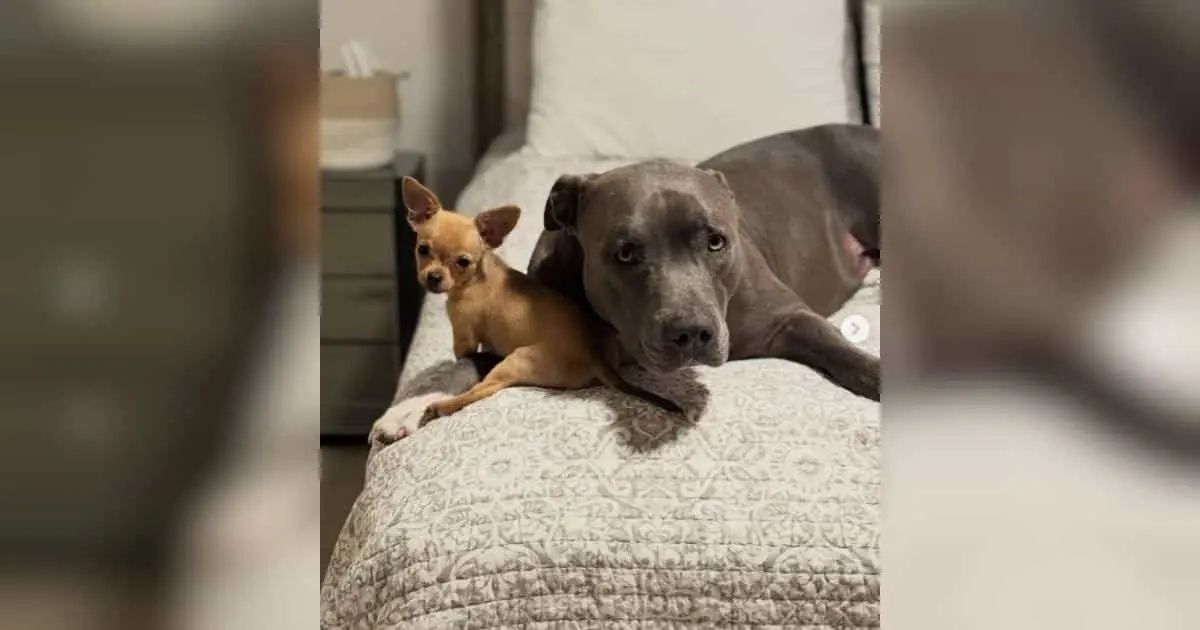
The solution came from an unexpected source: a tiny, delicate Chihuahua puppy named Tink.
This case study examines the remarkable relationship that developed between Duffy and Tink, defying traditional expectations of breed compatibility and size dynamics. While the physical disparity between a powerful, muscular Pit Bull and a fragile toy breed often prompts caution among animal behaviorists, the interaction between Duffy and Tink highlights the complex social intelligence of dogs. Through careful self-handicapping, adaptive play styles, and shared resting patterns, these two highly disparate animals have formed a symbiotic bond that has not only facilitated Duffy’s emotional recovery but also provided a masterclass in canine socialization.
Detailed Chronology
[Loss of Companion] ──> [Period of Grief] ──> [Introduction of Tink] ──> [Adaptation & Play] ──> [Deep Bond]The Void of Loss
Before the arrival of Tink, Duffy’s household was defined by a quiet emptiness. Having spent years alongside his previous canine sibling, Duffy’s daily routines were deeply intertwined with another dog. Following his companion’s passing, Duffy exhibited classic signs of canine bereavement. The vibrant, high-energy Pit Bull who once thrived on physical activity became noticeably withdrawn.
Brooke observed these subtle yet heartbreaking changes daily. Recognizing that human companionship, while vital, could not entirely replicate the unique social dynamics of a multi-dog household, she began considering the introduction of a new canine family member. However, the decision-making process was fraught with concern. Introducing a new dog to a grieving pet requires a delicate balance; the wrong match could lead to territorial aggression, increased anxiety, or behavioral regression.
The Introduction of Tink
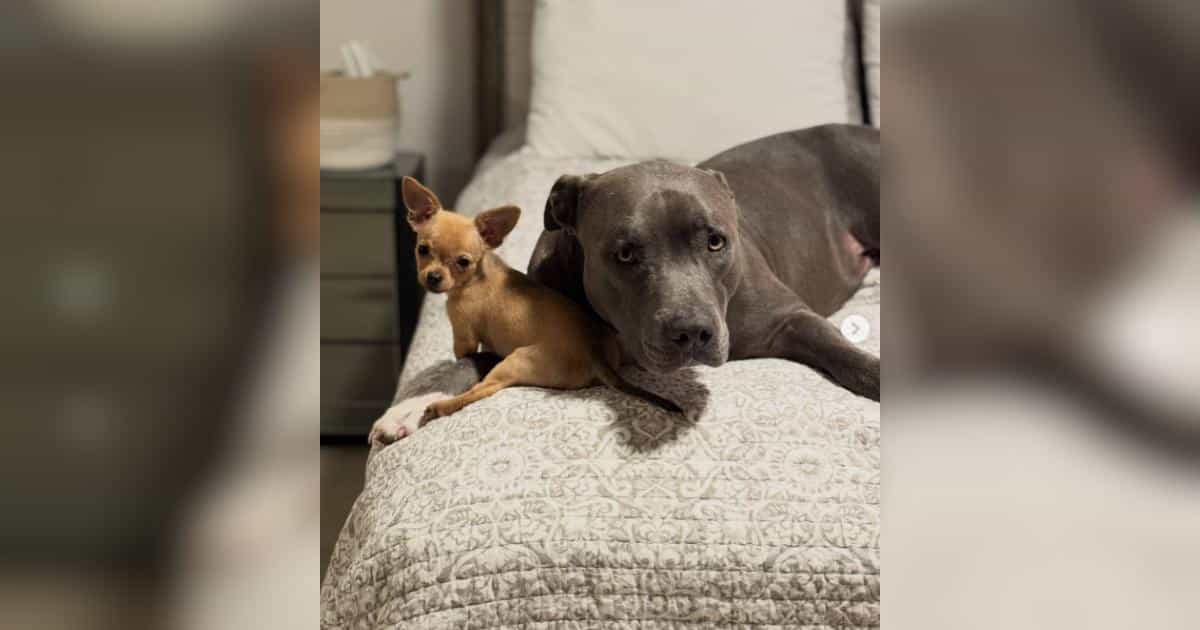
The decision to adopt Tink, a miniature Chihuahua puppy, was met with a mixture of hope and intense apprehension. Chihuahuas are among the smallest dog breeds in the world, often weighing under six pounds at full maturity, while Pit Bulls are robust, athletic animals with significant physical power. The sheer physics of the pairing presented inherent risks. A single misplaced paw or an overly enthusiastic play gesture from Duffy could result in severe injury to the fragile puppy.
When Tink was first introduced into the home, Brooke monitored their interactions with extreme vigilance. The initial face-to-face meeting was a critical threshold. To Brooke’s relief, Duffy’s response was not one of territorial dominance or predatory drive, but rather of intense, gentle curiosity. From their very first interaction, Duffy demonstrated an instinctual understanding of Tink’s vulnerability. He lowered his body posture, approached with slow, deliberate movements, and allowed the tiny puppy to investigate him at her own pace.
Establishing the Dynamic
As Tink acclimated to her new environment, her bold, confident personality began to emerge, matching Duffy’s underlying playfulness. The backyard quickly transformed into their primary arena of interaction. Here, the stark contrast in their sizes became a source of fascinating behavioral adaptation.
+-------------------------------------------------------------+
|                     PLAYTIME DYNAMICS                       |
+------------------------------------+------------------------+
| Duffy (Pit Bull)                   | Tink (Chihuahua)       |
+------------------------------------+------------------------+
| - Uses "deer-like" prancing        | - Initiates play       |
| - Lowers body to match height      | - Climbs and barks     |
| - Practices bite inhibition        | - Displays high boldness|
| - Exhibits self-handicapping       | - Leads the chase      |
+------------------------------------+------------------------+
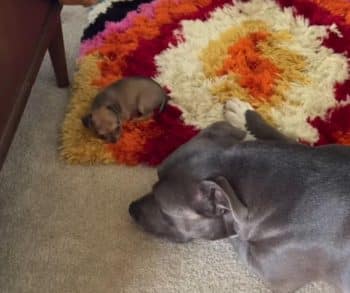
When Duffy’s excitement peaks, he engages in a unique, high-stepping "deer-like prance." This movement allows him to expend energy and express joy without gaining excessive forward momentum that might lead to a physical collision with Tink. Meanwhile, Tink exhibits no fear. She actively initiates play by jumping on Duffy’s limbs, barking to command his attention, and directing the flow of their games. Duffy willingly yields to her assertions, demonstrating a classic canine social structure where size does not dictate dominance.
Rest and Recovery
The bond between Duffy and Tink is not solely defined by high-energy play; it is equally cemented during periods of rest. When Brooke is away from the home, remote security cameras capture a peaceful reality that contrasts with their chaotic backyard antics.
On the living room sofa, the two dogs are routinely found curled up together, sleeping side-by-side. For a dog recovering from grief, this physical closeness is highly therapeutic. Sleeping in tight quarters requires absolute trust, and the transition from active playmates to quiet, synchronized sleepers indicates a deeply established familial bond. Tink does not merely serve as a distraction for Duffy; she has become a source of physical comfort and emotional security.
Supporting Context & Metrics
Canine Grief and Social Recovery
Canine cognitive science has increasingly recognized that dogs experience a form of grief when losing a close companion. While they may not conceptualize death in the human sense, they are acutely aware of the absence of a pack member and the disruption of established routines.
Common indicators of canine grief include:
- Depressive behaviors: Decreased interest in toys, walking, or interaction.
- Vocalizations: Searching the home while whining or howling.
- Appetite changes: Temporary refusal of food or treats.
- Sleep disturbances: Increased lethargy or restlessness.
The introduction of a young puppy like Tink can act as a behavioral catalyst. Puppies emit specific social cues—such as play bows, high-pitched vocalizations, and submissive posturing—that naturally trigger maternal or paternal caregiving instincts in older dogs. This shift from grieving to caregiving redirects the older dog’s focus, stimulating the release of dopamine and oxytocin, which aids in emotional recovery.
The Science of "Self-Handicapping"
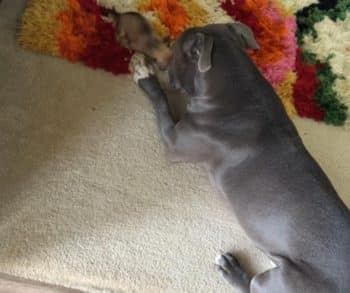
One of the most remarkable aspects of Duffy and Tink’s relationship is Duffy’s use of self-handicapping. In veterinary ethology, self-handicapping occurs when a stronger, larger animal voluntarily compromises its physical advantages to facilitate play with a weaker partner.
Common self-handicapping behaviors observed in Duffy include:
- Lying on the back or side: This puts Duffy in a vulnerable position, allowing Tink to "win" wrestling matches.
- Inverted play bows: Lowering the front half of the body to bring his head down to Tink’s eye level.
- Bite inhibition: Restraining jaw pressure to a fraction of his capability during gentle mouth-play.
- Slowing of reflexes: Allowing Tink to catch him during chase games.
This behavior is a clear indicator of high emotional intelligence and social competence, disproving the misconception that large, powerful breeds are inherently unable to safely cohabitate with toy breeds.
Official Statements
Insights from Owner Brooke
Reflecting on the journey of her two dogs, Brooke shares the profound emotional impact the transition has had on her household:
"When we lost our previous dog, the silence in the house was heavy. Duffy was just a shell of himself; he would lie by the door and look at me with these incredibly sad eyes. I knew he needed a friend, but when I first brought Tink home, my heart was in my throat. The size difference was terrifying. I kept thinking, ‘What if he accidentally steps on her?’
But the moment they met, all my fears started to melt away. Duffy looked at this tiny, shivering puppy and immediately softened. It was like he knew she was fragile. Now, seeing them run around the yard—with Duffy doing his ridiculous deer-prance and Tink bossing him around—is the most beautiful thing. She didn’t replace the friend he lost, but she gave him a reason to be happy again."
Veterinary and Behavioral Expert Analysis
To understand the mechanics of this pairing, animal behaviorists point to the specific temperaments of both breeds. Dr. Arlo Vance, a certified veterinary behaviorist, explains:
"What we are seeing in Duffy and Tink is a perfect demonstration of canine social plasticity. Pit Bulls, historically bred for athletic tasks, often possess a high degree of empathy and social responsiveness toward their family units. When properly socialized, they are exceptionally good at modulating their physical output based on their play partner.
Furthermore, Chihuahuas are known for their bold, often terrier-like confidence. They do not view themselves as small. Tink’s fearless approach to play actually helps Duffy understand that she is a willing participant, while Duffy’s instinctual self-handicapping keeps the play safe. It is a highly successful social contract between two animals who speak the same language, despite living in entirely different weight classes."
Future Outlook
Long-Term Implications for Multi-Dog Households
The success of Duffy and Tink’s integration offers valuable insights for dog owners considering introducing a second pet after a loss. While their story is inspiring, behavioral experts emphasize that such pairings require careful management to ensure long-term success.
  SUCCESSFUL INTEGRATION PROTOCOL
┌────────────────────────────────────────┐
│  1. Gradual, Supervised Introductions   │
├────────────────────────────────────────┤
│  2. Provision of Safe Zones for Puppy  │
├────────────────────────────────────────┤
│  3. Positive Reinforcement of Calmness │
├────────────────────────────────────────┤
│  4. Active Monitoring of Body Language │
└────────────────────────────────────────┘
For owners attempting to replicate this dynamic, the following guidelines are recommended:
- Supervised Separation: Ensure the smaller dog has dedicated "safe zones" (such as crates or gated rooms) where the larger dog cannot enter, allowing the smaller dog to rest without fear of being stepped on.
- Monitor Fatigue: Puppies tire quickly and can become irritable, while larger dogs may not realize when play has crossed the line into overstimulation. Owners must step in and enforce rest periods.
- Resource Management: Prevent resource guarding by feeding the dogs in separate areas and monitoring high-value toys.
The Continued Journey of Duffy and Tink
As Tink matures from a puppy into an adult dog, her physical size will remain small, but her bond with Duffy is expected to strengthen further. The foundation of trust, patience, and mutual understanding established during her puppyhood has set the stage for a lifetime of companionship.
Duffy’s journey from a grieving, withdrawn pet to an active, protective older sibling serves as a powerful reminder of the resilience of animals. While grief is a natural process, recovery often comes through the willingness to accept new connections. In Duffy’s case, healing did not require him to forget the companion he lost; it simply required a tiny, four-pound reminder that his heart still had plenty of room to love.