
Executive Overview
For generations, evolutionary biologists and paleontologists have wrestled with one of the most stubborn paradoxes in the history of science: the sudden, seemingly explosive appearance of complex animal life in the fossil record just prior to the Cambrian Period, roughly 539 to 487 million years ago. While genetic markers, evolutionary theory, and chemical traces have long whispered that the animal kingdom (Metazoa) must have deep roots stretching far back into the Precambrian darkness, the physical evidence—the actual body fossils—has stubbornly refused to show up.
Scientists attempting to date the genesis of animal life have historically relied on a bedrock assumption: the logic of absence. If a rock deposit features extraordinary preservation conditions capable of capturing microscopic cellular life, yet completely lacks any trace of animal remains, science has taken that silence as absolute proof. The animals simply were not there yet.
However, a groundbreaking study published on October 2 in Science Advances shatters this foundational assumption. Led by an international team of researchers from the University of Oxford, alongside colleagues from the University of California Berkeley, ETH Zürich, and Yale University, the new research reveals that a famously pristine fossil deposit can completely fail to capture animals that we know were already alive and thriving elsewhere on Earth.
By testing this new understanding through the lens of exceptional microfossils discovered in Mongolia, and recalibrating genetic evolutionary timelines known as "molecular clocks," the researchers have upended established geological paradigms. Their findings suggest that the true origin of animals may need to be pushed backward by up to 200 million years. This places the dawn of the animal kingdom deep within the Neoproterozoic Era, potentially throwing open the extraordinary possibility that our earliest ancestors lived before—or managed to survive through—the apocalyptic global glaciations of "Snowball Earth."
Detailed Chronology of a Paleontological Paradigm Shift
To understand the magnitude of the Oxford-led discovery, one must trace the timeline of how scientists have historically constructed the evolutionary calendar.
The Ediacaran Anomaly and the Weng’an Biota
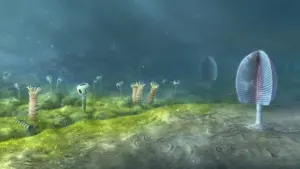
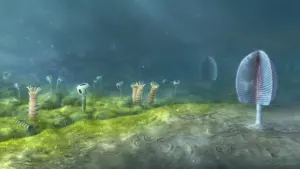
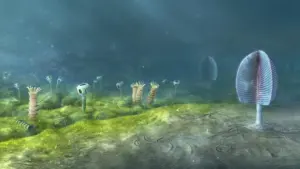
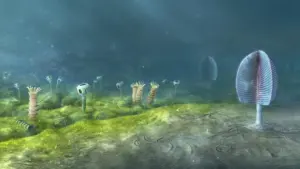
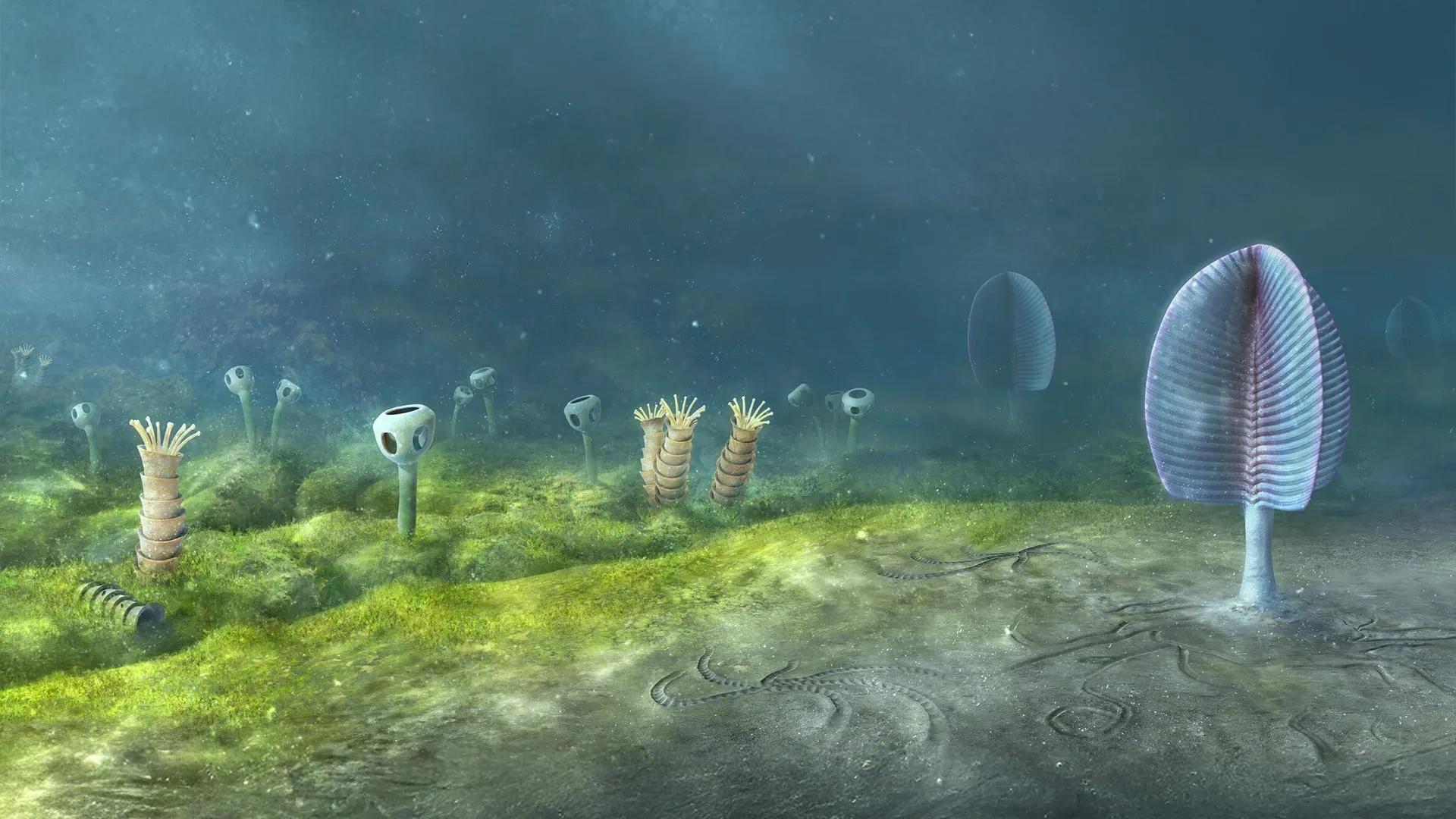
For decades, the search for the oldest animals has focused heavily on the Ediacaran Period (spanning roughly 635 to 539 million years ago). During this epoch, macroscopic, soft-bodied organisms—collectively known as the Ediacaran biota—begin to populate the fossil record. Yet, these bizarre frond-like, disk-like, and quilt-like organisms rarely resemble modern animal groups clearly, leaving the pre-Ediacaran timeline shrouded in fog.
At the center of this chronological puzzle has been the Weng’an Biota in South China. Preserved in rocks approximately 590 million years old, this extraordinary fossil deposit is a "Konservat-Lagerstätte"—a site characterized by exceptional preservation. Within these rocks, microscopic organisms, algal spores, and possible multicellular structures are fossilized down to the cellular level with breathtaking clarity.
Because the Weng’an Biota is so exquisitely preserved, generations of paleobiologists have deployed it as a geological anchor. The scientific consensus ran as follows: If animals had already evolved by 590 million years ago, surely the extraordinary chemical environment of Weng’an would have trapped them. Because no definitive animal fossils have ever been recovered from Weng’an, researchers concluded that the deposit predated the origin of animals. Consequently, Weng’an was used to place a strict maximum age limit on the birth of the animal kingdom, sealing off any possibility that Metazoa could have older roots.
The Kheseen Biota: A Crucial Test in Mongolia
To test the validity of this core assumption, the international research team turned their attention to Central Asia. They conducted an exhaustive, multi-year analysis of exceptionally preserved microfossils from the Kheseen Biota in Mongolia.
The Kheseen Biota presents an ideal natural laboratory for testing fossil preservation limits. Geologically, the Kheseen deposits are more than 40 million years younger than the Weng’an Biota. More importantly, independent paleontological data confirms that by the time the Kheseen Biota formed, animals were definitively roaming other shallow marine environments across the globe, with robust fossil evidence already documented in contemporaneous sites in Namibia and South China.
Using advanced scanning electron microscopy, the research team meticulously examined more than 140 rock samples—including material gathered from previously undocumented stratigraphic locations. Their analysis revealed a hidden micro-world of exquisitely preserved species. Among them were acritarchs—tiny, enigmatic spherical organisms adorned with intricate spines and branching projections—alongside fragile, embryo-like microfossils featuring clearly defined internal cell structures.
Yet, despite the astonishing fidelity of this preservation, a glaring absence remained: not a single fossil in the Kheseen Biota could be confidently identified as an animal.
This single discovery dismantled the long-standing Weng’an argument. As the data demonstrated, a fossil deposit can possess world-class preservation capabilities, capturing delicate cellular structures, yet still completely fail to record the presence of animals—even in a world where we know animals were actively living.
Supporting Context & Metrics: Unlocking the Molecular Clock
With the Weng’an "maximum age" constraint invalidated by the Mongolian data, the research team was forced to rethink how scientists calculate the true antiquity of the animal kingdom.
Recalibrating the Evolutionary Timeline
To build a more accurate picture, the researchers shifted their focus to much older geological formations. They examined deposits dating back approximately 850 to 730 million years ago, including:
- The Svanbergfjellet Formation in Norway
- The Bitter Springs Group in Australia
- The Chuar Group in Arizona, USA
These ancient sedimentary deposits are exceptionally rich in microfossils and possess the right chemical environment to preserve complex organic remains. While no confirmed animal body fossils have yet been found in these deep Precambrian layers, scientists have historically used them to test evolutionary boundaries.
The researchers fed these older geological constraints into a molecular clock analysis. This sophisticated bioinformatics technique compares the genetic divergence among living species, mating those mutation rates with established fossil calibration points to mathematically wind back the clock and calculate when common ancestors must have first branched apart.
When the molecular clock was constrained by these older 850–730 million-year-old deposits rather than the younger 590 million-year-old Weng’an site, the mathematical results shifted dramatically. The estimated origin of animals was violently yanked backward in time by approximately 200 million years. The newly calculated range places the emergence of the animal kingdom squarely between 800 and 700 million years ago.
The Supporting Evidence of Chemical Biomarkers
This staggering expansion of the animal timeline does not rest on genetic mathematics alone. For years, organic geochemists have extracted silent witnesses from ancient rocks: chemical fossils, or biomarkers.
Lipid molecules uniquely produced by modern demosponges (a primitive class of marine sponge) have been isolated from rock strata dating back at least 650 million years. These molecular echoes predate the oldest undisputed macroscopic animal body fossils by tens of millions of years.
Furthermore, the biological reality of the earliest animals explains why they have been so elusive in the fossil record. The inaugural metazoans would have been diminutive, gelatinous, and entirely soft-bodied. Lacking mineralized skeletons, shells, or robust internal hard parts, their chances of surviving the destructive processes of decomposition, scavenging, and diagenesis were microscopically slim. Preservation would have required a freak convergence of local environmental chemistry and rapid, pristine mineralization—explaining why a shadow-world of ancient fauna could exist for hundreds of millions of years without leaving a single macroscopic bone behind.
Official Statements and Expert Perspectives
The profound implications of the study have sent ripples through the global paleobiological community.
Reflecting on the collapse of the traditional fossil argument, Associate Professor Ross Anderson, senior author of the study from the Oxford University Museum of Natural History, explained:
"The Kheseen Biota breaks the argument that the exceptional microfossils of Weng’an mean we would have seen animal fossils in the assemblage had they existed at the time. The Kheseen microfossils are just as well-preserved, yet animals continue to be absent—despite the fact we know at that point they existed."
Anderson noted that this profound mismatch implies two major possibilities for early ecology: either the earliest animals inhabited narrow, specialized marine niches entirely separate from the environments captured by fossil deposits like Kheseen and Weng’an, or the localized chemical conditions required to fossilize such organisms simply did not overlap with where early animals lived.
Weighing in on the speculative frontier of the research, lead author Orin Lole Durbin, a PhD student at Virginia Tech who conducted the research as an undergraduate at Oxford, struck a tone of cautious scientific rigor:
"Pre-Ediacaran body fossils still elude us, and this analysis does not prove that animals existed 800 million years ago. However, our new fossil evidence from Mongolia undermines one of the main arguments for restricting animal origins to the Ediacaran interval. Meanwhile, our molecular-clock analyses show how much further back their evolutionary history could extend."
Future Outlook: Did Animals Witness "Snowball Earth"?
Pushing the theoretical birth of the animal kingdom back to the 800-to-700-million-year window opens up an extraordinary historical crossover: the encounter between nascent animal life and the most extreme climatic upheavals in planetary history.
The Cryogenian Period commenced roughly 720 million years ago. During this epoch, Earth underwent runaway global glaciations in events frequently dubbed "Snowball Earth," where massive ice sheets marched from the poles down to the equator, locking the oceans beneath thick armor of glacial ice for millions of years.
If animals indeed originated between 800 and 700 million years ago, it means the very dawn of metazoan life either immediately preceded these apocalyptic ice ages or unfolded during them, forcing Earth’s earliest multicellular pioneers to adapt, hide in thermal refugia, or evolve novel metabolic strategies to survive a frozen planet.
As the scientific community digests these paradigm-shifting insights, researchers stress that the hunt for the earliest physical evidence of animals must adapt. Future investigations will need to scour unconventional sedimentary environments, probing a much wider variety of depositional settings and geochemical regimes than previously targeted.
Ultimately, solving the deep-time riddle of animal origins will require the total synthesis of all available data streams: integrating elusive body fossils, subtle ichnofossils (trace trails of ancient movement), molecular clocks, and organic biomarkers. Until a definitive pre-Ediacaran animal fossil is pulled from the stone, the precise birth date of the animal kingdom remains wrapped in mystery—but the horizon of our planet’s biological history has just been pushed dramatically further back into the dark.