
Executive Overview
Long before a puppy ever learns to sit on command, heel alongside a handler, or navigate a crowded pedestrian thoroughfare to guide someone safely through the world, an intricate web of neurological and physiological development is already underway behind the scenes. In the specialized realm of guide and service dog breeding and training, excellence is not forged overnight; rather, it is systematically engineered from the very first moments of life.
At organizations like Dogs Inc, the preparation of future canine partners begins long before formal obedience training commences. Modern canine science emphasizes that the neonatal period—spanning from birth through approximately two weeks of age—is a critical window of rapid brain and nervous system growth. During this time, while puppies remain blind, deaf, and entirely dependent on their mother and littermates, foundational changes are occurring that will dictate how they process stress, adapt to novel environments, and interact with humans later in life.
One of the primary science-based interventions utilized during this delicate stage is Early Neurological Stimulation (ENS). Comprising a series of brief, gentle, and carefully controlled tactile exercises, ENS introduces mild neurological stress in a safe environment, effectively kickstarting cardiovascular and adrenal systems. While ENS is merely one small chapter in a comprehensive, multi-stage development program, it underscores the holistic, deeply thoughtful approach required to produce resilient, confident service dogs. This report explores the science of early puppy development, the mechanics of ENS, its distinction from later socialization, and the lifelong continuum of training that transforms a vulnerable newborn into a life-changing partner.
Detailed Chronology: From Neonatal Vulnerability to Adolescent Maturity
The developmental journey of a service dog prospect is marked by distinct, rapidly unfolding biological chapters. Understanding these chronological milestones is essential for appreciating why early intervention matters so much.

The Neonatal Stage (Birth to 2 Weeks)
During the first fortnight of life, newborn puppies exist in a state of complete reliance on their dam and littermates. Their world is defined entirely by sleeping, nursing, and warmth regulation. Because their eyes and ears are tightly sealed, they navigate their immediate environment solely through the senses of touch and smell.
Despite their seemingly fragile and inactive appearance, internal transformations are occurring at a breakneck pace. The central nervous system is expanding, and neural pathways are forming at an exponential rate. It is precisely during this vulnerable window that Early Neurological Stimulation is introduced. Because the neonatal nervous system is so plastic, short bursts of mild, non-harmful stimulation trigger adaptive responses that permanently alter neurological capacity.
The Transitional Stage (2 to 4 Weeks)
As puppies cross the two-week threshold, a dramatic transformation occurs. Their eyes and ears begin to open, abruptly expanding their sensory horizons. By the time they reach four weeks of age, puppies are typically beginning to find their footing, taking their first tentative steps, and even testing out their vocal cords with soft barks.
Simultaneously, their primary teeth start to erupt, signaling a nutritional shift away from exclusive nursing toward soft gruel and, eventually, solid food. This transitional period bridges the gap between purely reflexive neonatal existence and active, curious engagement with the physical world.

The Socialization Period (3 to 12 Weeks)
Often considered the most critical psychological window in a dog’s life, the socialization period overlaps with the tail end of the transitional phase and extends through the third month. As cognitive capacity peaks, young puppies begin actively interacting with people, novel sounds, varied floor surfaces, and other dogs.
Between 3 and 12 weeks, positive exposure to environmental stimuli is paramount. By the eight-week mark, these experiences lay the crucial groundwork for a friendly, well-adjusted temperament. By 12 weeks, puppies should have safely encountered a wide variety of people, sounds, and textures to build emotional resilience. Crucially, this is also when foundational learning begins; by three months of age, puppies are fully capable of grasping basic cues during short, positive-reinforcement training sessions.
The Adolescent Stage and Fear Periods (6 Months and Beyond)
As dogs mature past puppyhood, they enter the adolescent stage—often beginning around six months of age. Much like human teenagers, adolescent canines frequently test boundaries, challenge established rules, and exhibit shifting hormonal behaviors. Depending on their sex, reproductive maturity typically settles in between 6 and 12 months, bringing with it the onset of heat cycles in females and hormone-driven exploratory behaviors in males.
Furthermore, canine behaviorists note that most puppies experience an average of four distinct "fear periods" as they grow. During these biological blips, even familiar objects or sounds may suddenly provoke caution or hesitation. This reality necessitates patient, continuous, and thoughtful positive reinforcement training, ensuring that adolescent challenges do not crystallize into lifelong phobias or behavioral liabilities.

Supporting Context & Metrics: The Science of ENS and Environmental Enrichment
To truly understand the value of Early Neurological Stimulation, one must examine the physiological mechanisms at play. Originally developed through military canine research programs, ENS is designed to stimulate the neurological system by introducing minor stressors at a time when the body is maximally responsive.
How ENS Exercises Are Administered
ENS routines consist of five specific, highly controlled tactile exercises performed daily between days three and sixteen of a puppy’s life. Each exercise lasts approximately three to five seconds per puppy:
- Tactile Stimulation: Holding the puppy gently in one hand, the handler uses a Q-tip to tickle the skin lightly between the toes on any one foot for 3–5 seconds.
- Head Held Up: The puppy is held vertically, with both hands supporting the body, so that the head is pointed straight up (perpendicular to the ground) for 3–5 seconds.
- Head Pointed Down: The puppy is held securely with the head inverted, pointing downward toward the ground at a 45-degree angle, for 3–5 seconds.
- Supine Position: The puppy is placed flat on its back in the palm of the handler’s hand, allowing it to rest comfortably and slightly disoriented for 3–5 seconds.
- Thermal Stimulation: A damp towel that has been chilled in a refrigerator is placed inside a container, and the puppy is placed directly on top of the cool fabric (without restraint) for 3–5 seconds.
The Physiological Benefits
Each exercise introduces a brief physical stressor that activates the neurological system without causing distress or taxing the puppy’s limited energy reserves. Controlled studies and decades of working-dog breeding data indicate that this early physiological "workout" yields measurable benefits, including:
- Improved Cardiovascular Performance: Enhanced heart rate efficiency and stronger cardiac reserves.
- Stronger Adrenal Glands: Better hormonal regulation when responding to unexpected stimuli.
- Greater Tolerance to Stress: An increased capacity to recover quickly from startling events or sudden environmental shifts.
- Enhanced Brain Function: Improved problem-solving capabilities and neural connectivity.
ENS vs. Socialization: Clarifying the Timeline
A common misconception among breeders and pet owners is that ENS is synonymous with socialization. In reality, they are entirely different tools operating at distinct developmental milestones:

- ENS is a clinical, protocol-driven tactile routine administered exclusively during the neonatal stage (days 3–16) when puppies are blind and deaf.
- Socialization is an interactive, experiential process spanning the socialization period (weeks 3–12) where puppies actively explore sights, sounds, surfaces, and social dynamics.
While ENS prepares the nervous system to handle stress, socialization populates the puppy’s psychological database with positive associations, ensuring they can interact safely and confidently with society.
Official Statements & Institutional Philosophy
At institutions dedicated to the breeding, raising, and placement of elite working animals, early developmental protocols are treated with rigorous scientific discipline. Organizations such as Dogs Inc operate on the philosophy that elite performance cannot be improvised; it must be cultivated systematically from day one.
"Long before a puppy takes its first official step out into the working world as a guide or service dog, an extraordinary amount of deliberate preparation has already taken place behind the scenes," notes the canine development team at Dogs Inc. "Early Neurological Stimulation is just one small piece of a much larger, highly intentional puzzle. We do not look to create ‘perfect’ dogs through a single magic intervention; rather, we provide a continuous arc of thoughtful experiences that support emotional maturity, resilience, and lifelong learning."
Working dog organizations universally stress that while genetics establish the raw potential of a puppy, the environment, health management, ENS protocols, socialization, and formal training dictate whether that potential is fully realized. By investing institutional care into the earliest, most delicate days of neonatal life, breeding programs ensure that future service dogs possess the steadfast temperament required to assist individuals who rely on them for independence and mobility.
Future Outlook: A Lifetime of Learning for Elite Canines
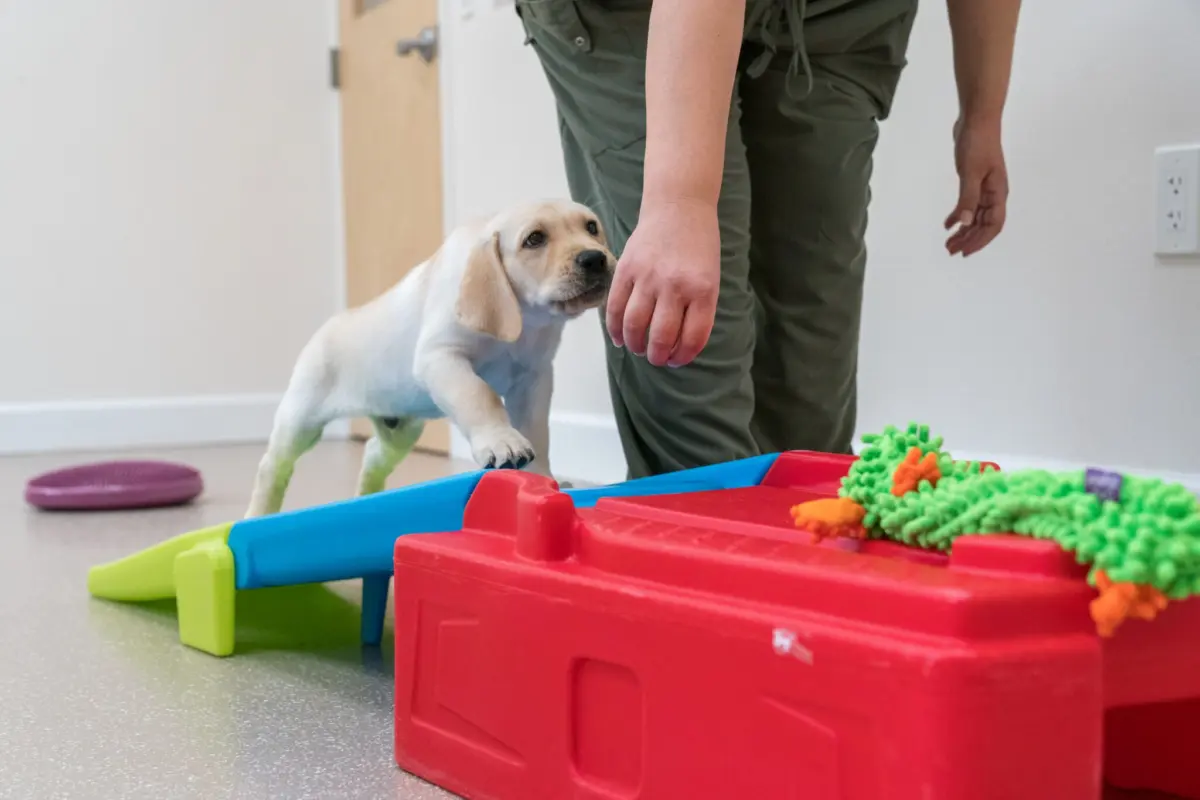
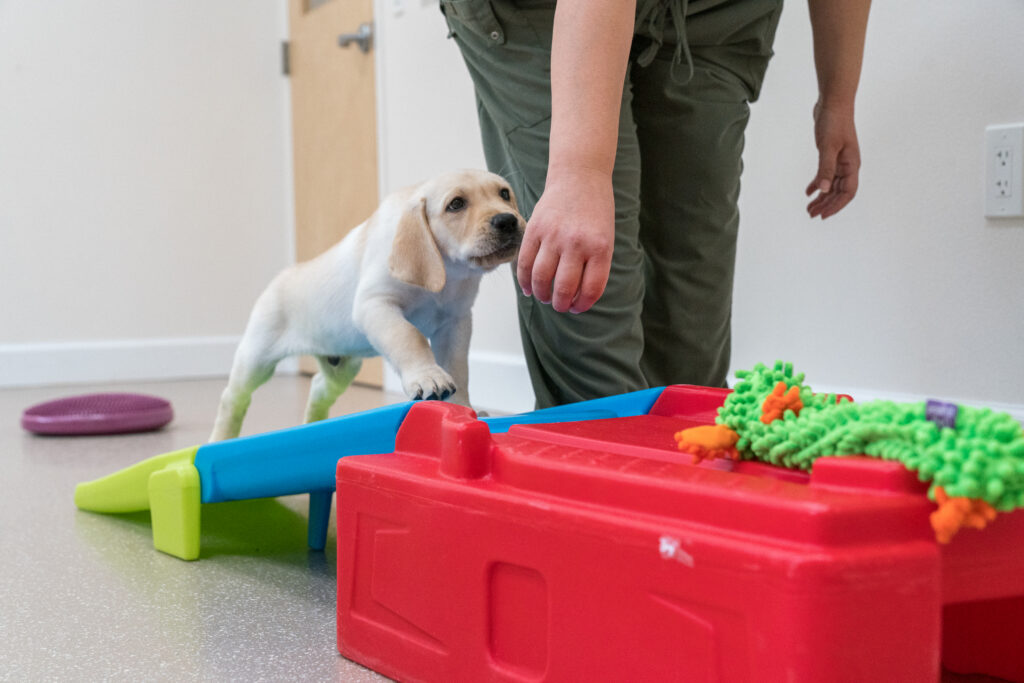
The journey of a guide or service dog is a marathon of continuous adaptation. Once a puppy successfully navigates the neonatal and transitional stages, and graduates from the foundational socialization window, the educational continuum expands exponentially.
By the time a puppy reaches 16 weeks of age, structured puppy classes and targeted environmental exposures become routine. Crate training is introduced to foster independence and establish healthy daily rhythms. Gentle introductions to other species, multi-dog households, and complex urban environments ensure the young dog remains unshakeable amidst the chaos of modern life.
Looking forward, the integration of advanced developmental science into breeding programs continues to evolve. As researchers uncover more about canine epigenetics, neuroplasticity, and stress-recovery mechanisms, protocols like ENS will only become more refined. For future service dogs, this means an even higher degree of reliability, poise, and emotional stability.
Ultimately, a puppy’s earliest weeks pass in the blink of an eye, but they serve as the bedrock for a lifetime of partnership. Through the careful application of Early Neurological Stimulation, thoughtful socialization, positive reinforcement training, and unwavering institutional dedication, organizations like Dogs Inc ensure that today’s fragile neonates evolve into tomorrow’s life-changing heroes.