
Executive Overview
In an ambitious move to reshape the foundational layers of the United Kingdom’s agricultural supply chain, agtech pioneer Airponix has joined forces with Dyson Farming. Supported by funding from the Department for Environment, Food and Rural Affairs (Defra) Farming Innovation Programme and delivered through Innovate UK, this high-stakes two-year research and demonstration project aims to resolve a long-standing vulnerability in English agriculture: the reliable, domestic production of high-quality, disease-free seed potatoes.
At the core of this initiative is Airponix’s patented, fog-based growing technology. By cultivating plants within an enclosed, sterile environment using an ultra-fine, nutrient-rich mist rather than traditional soil or standard aeroponics, the partners hope to prove that England can establish a commercially viable, domestic source of Generation Zero (G0) seed potatoes. Historically, English potato growers have relied heavily on seed imported from Scotland or overseas markets. However, mounting regulatory hurdles, post-Brexit trade complexities, and escalating biosecurity concerns have made these supply lines increasingly precarious.
Running until April 2028, the collaborative project brings together Airponix’s cutting-edge hardware, artificial intelligence, and machine vision systems with Dyson Farming’s extensive glasshouse infrastructure, agronomic expertise, and commercial-scale field trial capabilities. Beyond addressing immediate food security and climate resilience challenges, the initiative aims to offer a peat-free, highly resource-efficient blueprint for commercial expansion. If successful, this venture could not only eliminate England’s reliance on external seed stock but also accelerate the introduction of climate-resilient potato varieties, setting a new global standard for precision agriculture.
Detailed Chronology: From Concept to Collaboration and Future Milestones
The genesis of the Airponix and Dyson Farming partnership is a testament to the modern agtech networking ecosystem, evolving rapidly through targeted industry touchpoints before culminating in a formal, government-backed initiative.
The Path to Partnership (2025–2026)
The groundwork for the collaboration was laid in 2025 when representatives from Airponix and Dyson Farming were first introduced through Barclays Eagle Labs. This initial connection established a mutual interest in sustainable, high-tech agricultural practices. The relationship was further solidified during the World Agri-Tech Innovation Summit in London, where both parties recognized the severe convergence of supply chain constraints facing English potato producers and the potential for Airponix’s fog-growing technology to offer a definitive solution.
Recognising the strategic alignment between Airponix’s technological capabilities and Dyson Farming’s operational scale, the two entities secured backing through Defra’s Farming Innovation Programme, facilitated by Innovate UK. This funding enabled the establishment of a dedicated research and demonstration facility designed to rigorously test the technology under authentic English growing conditions.
Current Implementation and Trial Structure
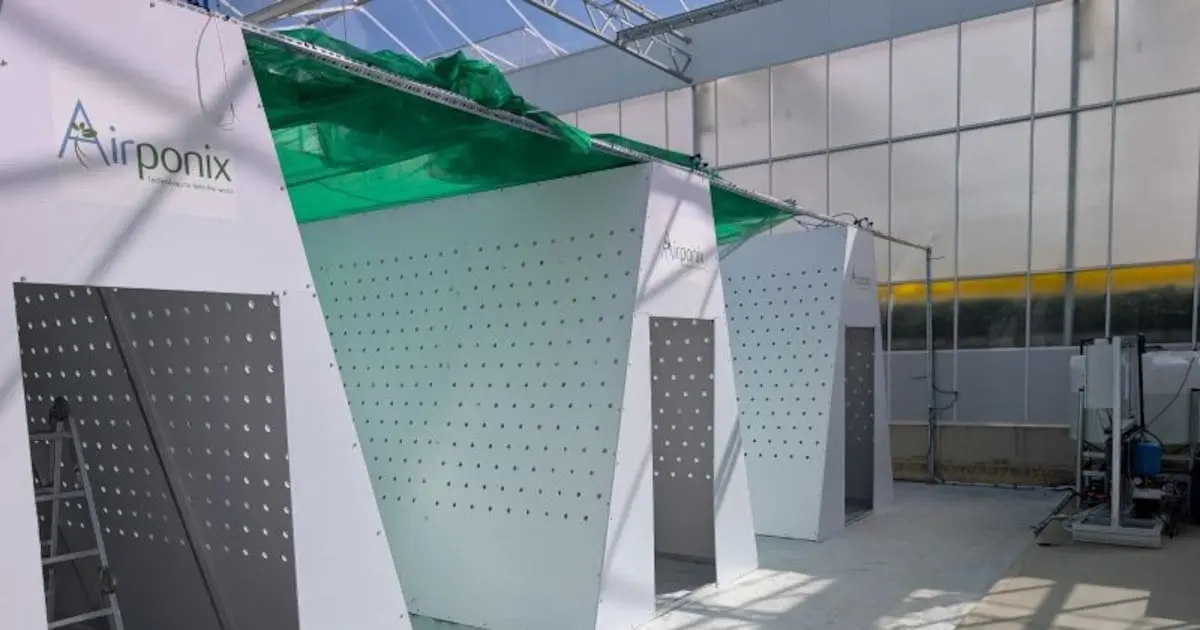
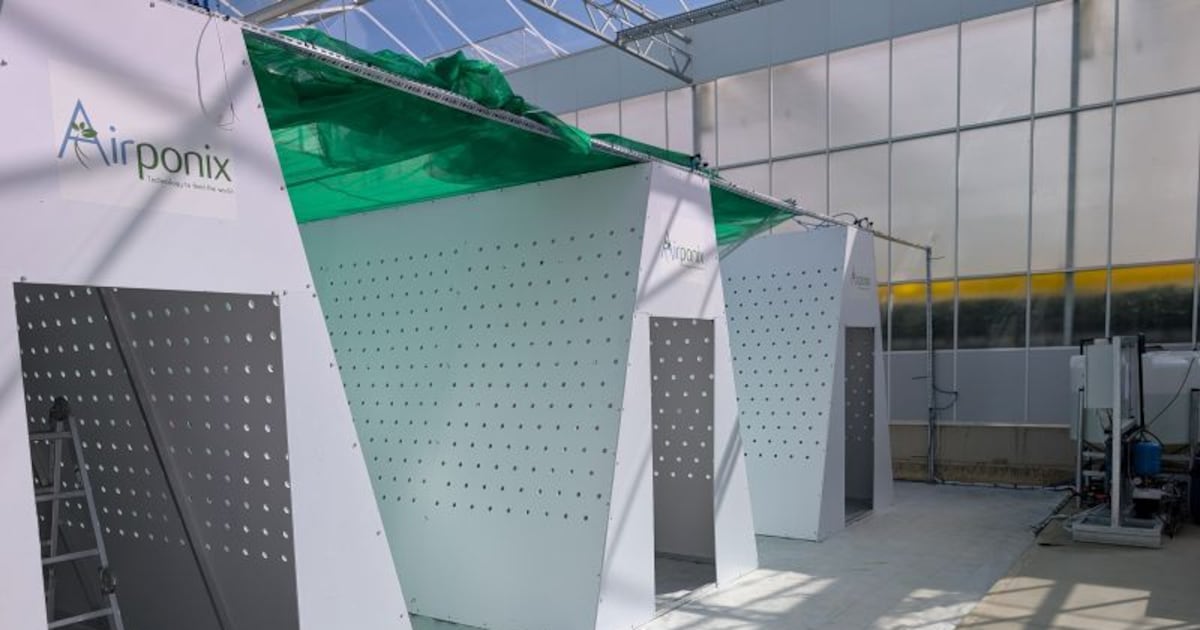
The operational hub of the project is hosted within Dyson Farming’s sophisticated glasshouse facilities. The installation features a tailored system comprising four Airponix A-frames, housing more than 6,000 plants. Unlike typical commercial operations that rely on artificial lighting and synthetic heating, this trial utilizes natural light and integrates strict peat-free production methods, aligning with the UK’s legislative mandate to phase out peat-based growing media by 2030.
Roadmap to 2028: Key Milestones
The two-year project is structured around a strict timeline of technical validations, field trials, and data consolidation leading up to its conclusion in April 2028:
- 2026–2027 Season: The project will yield its first official G0 production results from the Dyson Farming glasshouse facility. Researchers will evaluate the physical characteristics, health status, and yield efficiency of the mini-tubers produced via the Airponix fog system.
- 2027–2028 Field Trials: Tubers harvested from the initial G0 generation will be planted in field multiplication trials. These trials are designed to track how Airponix-produced seed performs across multiple generations of traditional field multiplication, comparing their vigour and disease resistance against conventionally produced certified seed.
- Regulatory Pathways: Throughout the trial period, the partners will engage with agricultural authorities to establish robust certification pathways for fog-produced G0 seed potatoes, ensuring regulatory compliance and commercial market readiness.
- Spring 2028: The project will conclude with the publication of comprehensive final findings, establishing a scientifically validated, repeatable blueprint for commercial-scale deployment across the UK and international markets.
Supporting Context & Metrics: The Mechanics of Fog-Based Agriculture and Supply Economics
To understand the profound significance of this project, one must examine the critical role of seed potatoes within the agricultural ecosystem, the thermodynamic and biological efficiency of fog-based cultivation, and the compelling economic metrics driving the initiative.
The Critical Importance of Seed Potatoes
Seed potatoes are the absolute foundation of the potato supply chain. The process begins with Generation Zero (G0) seed—the cleanest, disease-free stock propagated from tissue culture in sterile laboratory environments. From this singular G0 generation, commercial growers multiply the stock three or four times (advancing to G3 or G4 classifications) before harvesting ware potatoes for human consumption.
Because of this cascading multiplication effect, any disruption, pathogen introduction, or physiological stress at the G0 stage ripples downstream. Diseases such as potato virus Y, blackleg, and cyst nematodes can devastate subsequent generations, leading to massive commercial losses. Historically, England has relied on seed imported from Scotland and various overseas territories. However, tightening phytosanitary rules, climate shifts, and post-Brexit friction have made sourcing reliable, high-grade tubers increasingly difficult. Furthermore, with the UK government enforcing a complete phase-out of peat-based horticultural media by 2030, the industry urgently requires innovative, peat-free propagation systems.
Airponix Technology: Beyond Conventional Aeroponics
While aeroponic systems spray liquid nutrient solutions onto suspended plant roots, Airponix utilizes a patented ultrasonic or high-pressure atomisation process to generate an ultra-fine, nutrient-rich fog. This fog completely envelops the root zone within an enclosed, sterile chamber.
The biological benefits of this approach are profound:
- Enhanced Nutrient Absorption: The microscopic droplet size of the fog maximises surface area contact with root hairs, allowing plants to absorb water, oxygen, and essential minerals with unprecedented efficiency.
- Continuous Harvesting: Unlike traditional soil-based systems where tubers must be grown to maturity and then harvested all at once via destructive digging, the Airponix system allows growers to selectively pick tubers of the exact required size throughout the growing season while leaving the plant intact to continue producing.
- Resource Conservation: The closed-loop nature of the system drastically reduces water and fertiliser waste.
Proven Commercial Viability
The technology is not merely theoretical; it has already been proven at a commercial scale. Airponix previously deployed its fog-growing platform in Saudi Arabia through a 940-square-metre facility built for the National Agricultural Development Company (NADEC). That facility successfully produced approximately one million mini-tubers annually from 33,000 plants while consuming a remarkably low volume of approximately 3 cubic metres of water per day.
The Dyson Farming project translates this proven international success into temperate English conditions, adapting the hardware to harness natural sunlight and entirely peat-free substrates.
AI-Driven Optimisation and Economic Targets
A major pillar of the current project is the integration of Airponix’s proprietary machine vision and artificial intelligence (AI) architecture. Strategically positioned cameras continuously monitor root development, foliage canopy growth, and tuber formation 24 hours a day.
This real-time telemetry generates rich datasets concerning:
- Plant vigor and stress indicators
- Tuber count and volumetric expansion
- Environmental humidity and temperature fluctuations
Armed with these granular insights, the system can instantly recalibrate fluid dynamics, pH levels, and fertiliser compositions to match the precise physiological needs of different potato cultivars at specific developmental stages.
From an economic perspective, Airponix is targeting production costs that are less than half those associated with conventional high-tech propagation methods. By driving down capital and operational expenditures, the company aims to make domestic G0 production economically irresistible for commercial enterprises.
Official Statements and Industry Perspective
The collaborative spirit and strategic vision of the project are best captured through the reflections of its primary leadership. Michael Ruggier, Founder and Chief Executive Officer of Airponix, has emphasised both the historical gap in English agriculture and the collaborative strength of the venture.
Reflecting on the historical deficit in domestic seed production, Ruggier noted:
"We share one challenge: England has not produced G0 seed potatoes for decades if at all, and sourcing reliable, good quality and disease-free seed potato tubers is proving to be more and more difficult."
Highlighting the unique synergy brought by the partnership, Ruggier remarked:
"The combination is what makes the project credible." He further elaborated on the operational flexibility afforded by their hardware and software integration, stating, "The key advantage of our system over any other is that we can immediately modify the fluid and fertiliser composition for a desired effect."
Looking beyond basic production metrics toward agricultural innovation, Ruggier highlighted the broader implications for crop science:
"A controlled, disease-free environment like this also lets breeders bring new and climate-resilient varieties to market much faster, which we see as an important opportunity."
Finally, regarding the long-term legacy of the Defra-funded initiative, Ruggier concluded:
"The project is designed to produce a blueprint that can be replicated, backed by evidence. The Dyson Farming site will also serve as our UK showcase and R&D centre for international markets."
Future Outlook: Blueprint for Commercial Expansion and Global Reach
As the agricultural sector faces unprecedented pressures from climate volatility, geopolitical trade friction, and tightening environmental regulations, the Airponix and Dyson Farming project offers a compelling glimpse into the future of farming.
Re-establishing Domestic Sovereignty
Current estimates indicate that the annual UK demand for G0 seed potatoes ranges between 3.5 million and 4 million tubers. Airponix calculates that a single commercial facility spanning just a few thousand square metres could supply a substantial share of this national demand. By proving that England can establish a secure, self-sustaining domestic source of G0 seed, the project directly mitigates post-Brexit supply chain vulnerabilities and insulates farmers from international biosecurity shocks.
Accelerating Breeding Cycles
Beyond commercial seed multiplication, the sterile, highly controlled micro-environment of the Airponix facility serves as an accelerator for agricultural research. By drastically shortening the timeline required to produce foundational seed stock, plant breeders can fast-track the testing and commercialisation of potato varieties engineered to withstand extreme weather events, droughts, and emerging pathogen strains—vital capabilities in an era of rapid climate change.
Global Commercialisation Models
The partnership is intentionally designed to generate a repeatable, evidence-backed commercial blueprint. Upon the successful conclusion of the trials in 2028, Airponix plans to commercialise the technology through a flexible suite of business models, including:
- Turnkey installations for major agricultural enterprises
- Direct licensing agreements for proprietary hardware and software
- Strategic joint ventures with international farming conglomerates
- Build-own-operate partnerships
Furthermore, the Dyson Farming R&D site is intentionally positioned to function as an international showcase. By welcoming agricultural delegations and potential commercial partners from Europe, the Middle East, Africa, and Australia, the site will export British agtech innovation to global markets.
In summary, what begins as a targeted two-year scientific feasibility study in an English glasshouse holds the potential to permanently transform how foundational crops are propagated worldwide—merging artificial intelligence, resource efficiency, and biological science to secure the future of global food production.