
Executive Overview
For generations, paleontologists and evolutionary biologists have relied on a fundamental rule of thumb: if a geological deposit is exceptionally well-preserved and yet lacks any trace of animal remains, those animals simply did not exist at the time the rocks were formed. This logical deduction has served as a cornerstone for mapping the timeline of multicellular life on Earth, anchoring maximum age constraints for when the animal kingdom first emerged.
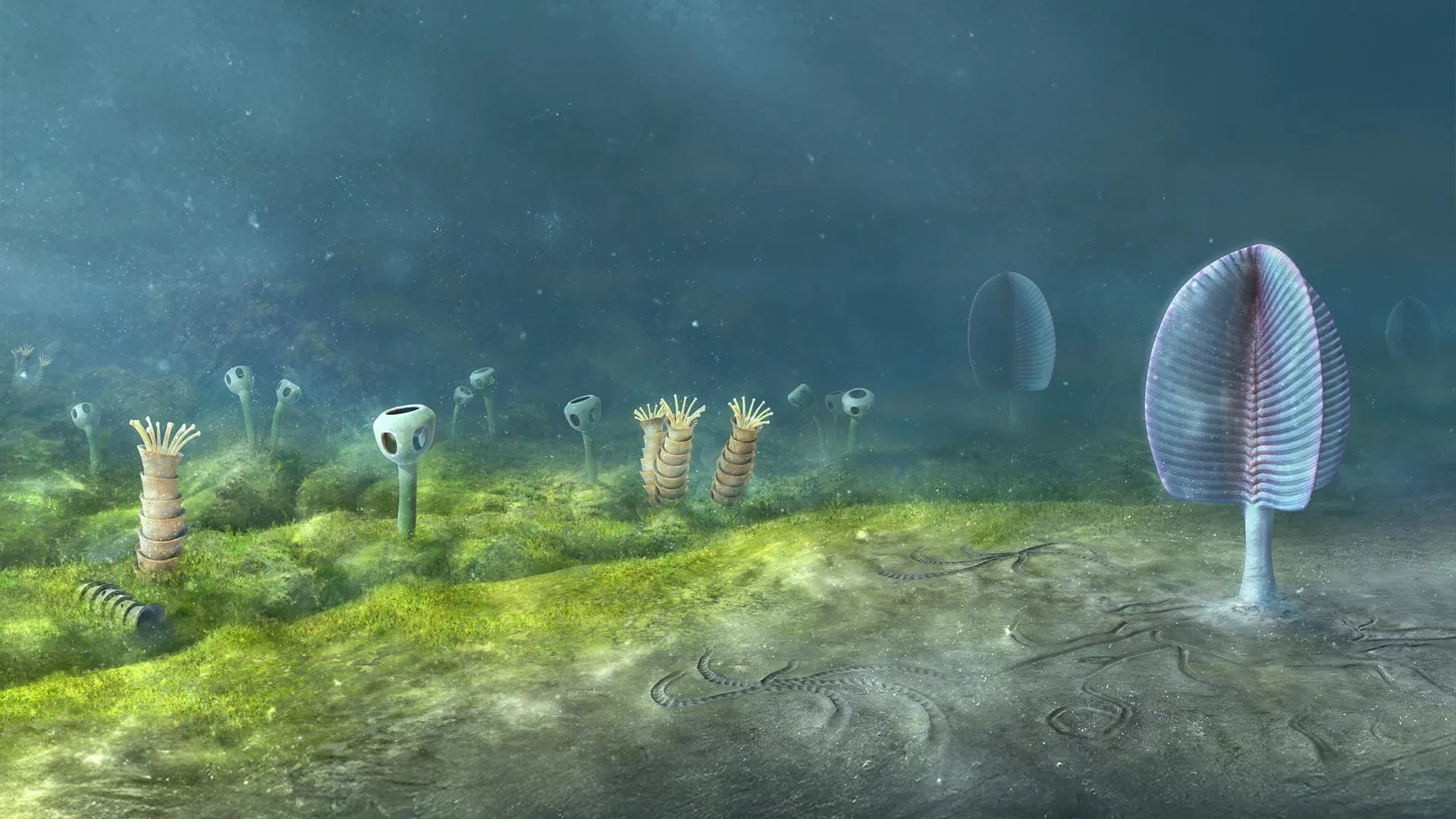
However, a groundbreaking study published on October 2 in Science Advances has upended this foundational assumption. Led by an international team of researchers from the University of Oxford, alongside collaborators from the University of California Berkeley, ETH Zürich, and Yale University, the new research reveals that animals may have evolved up to 200 million years earlier than what is clearly documented in the physical fossil record.
By analyzing exceptionally preserved microfossils from the Kheseen Biota in Mongolia—a site roughly 550 million years old that lacks animal fossils despite forming at a time when animals are known to have populated the globe—the researchers shattered the reliability of a key dating metric. When this traditional fossil constraint was removed and replaced with much older geological benchmarks, advanced molecular-clock analyses pushed the potential genesis of the animal kingdom deep into the Neoproterozoic Era, placing the origin of animals between 800 and 700 million years ago.
This startling revelation not only rewrites the narrative of early evolution but also thrusts the timeline of animal origins into the teeth of Earth’s most extreme climatic catastrophes: the global glaciation events known as "Snowball Earth." While definitive body fossils from this deep-time period remain elusive, the study compels the scientific community to re-evaluate how deep our planet’s biological history truly goes and challenges us to look beyond the visible fossil record to find the phantom ancestors of all animal life.
Detailed Chronology: From the Cambrian Explosion to the Neoproterozoic Mystery
To understand the magnitude of the new Oxford-led study, one must first grasp the long-standing conundrum of the fossil record. For centuries, the timeline of complex life was viewed through the lens of the Cambrian Explosion—a relatively abrupt evolutionary burst occurring roughly between 539 and 487 million years ago, during which most major animal phyla seemingly materialized all at once in the geological record.
Yet, for decades, evolutionary biologists recognized a glaring discrepancy. Molecular clocks—mathematical models that track genetic mutations over time to estimate when species diverged from common ancestors—consistently suggested that the animal lineage split from its single-celled predecessors much earlier. The physical fossils, however, steadfastly refused to cooperate, creating a frustrating chasm between genetic predictions and physical evidence.
The Weng’an Biota and the Ediacaran Assumption
At the epicenter of this debate has been the interpretation of ancient, exquisitely preserved microfossil deposits dating to the Ediacaran Period. One of the most famous of these is the Weng’an Biota in South China, a roughly 590-million-year-old assemblage of rocks renowned for preserving microscopic organisms with microscopic, cellular-level fidelity.
Because the Weng’an Biota is so remarkably intact, scientists historically reasoned that if animals had already existed on Earth 590 million years ago, their tiny bodies, embryos, or larval forms would inevitably have been trapped and preserved within these ancient rocks. The total absence of definitive animal fossils in Weng’an was therefore interpreted as a hard biological constraint: animals simply could not have evolved yet. Consequently, Weng’an was deployed by researchers as a maximum age limit, effectively slamming the door on any hypotheses suggesting a much deeper, pre-Ediacaran origin for the animal kingdom.
The Mongolian Test: The Kheseen Biota Breaks the Rule
To test the validity of this crucial assumption, the international research team turned their attention to another extraordinary repository of ancient microfossils: the Kheseen Biota in Mongolia.
The Kheseen Biota is roughly 40 to 50 million younger than the Weng’an Biota, yet the two assemblages share striking similarities, including several overlapping species of microscopic organisms. Crucially, the paleontological community already possesses incontrovertible evidence that animals were widespread across the globe by the time the Kheseen Biota formed, with confirmed fossil sites documented in places like Namibia and South China.
Utilizing advanced scanning electron microscopy, the researchers scrutinized more than 140 samples—including material gathered from previously undocumented locations within the region. Their meticulous analysis unearthed a trove of exquisitely preserved microfossil species. These included intricate acritarchs (tiny spherical organisms characterized by complex spines and branching projections) alongside delicate, embryo-like structures containing clearly defined internal cells.
Despite this breathtaking level of preservation, not a single fossil within the Kheseen assemblage could be confidently identified as an animal.
This discovery delivered a decisive blow to the traditional dogma. As the data demonstrated, even when an environment is capable of preserving microscopic structures in stunning detail, and even when we know animals were actively populating the Earth at that exact moment in time, those animals may still fail to show up in the local fossil record. The absence of animal remains in a fossil deposit no longer constitutes proof of their absence in the broader biosphere.
Supporting Context & Metrics: Redating the Tree of Life
With the foundational assumption linking exceptional preservation to the immediate appearance of animals thoroughly dismantled, the research team was forced to re-evaluate how maximum age constraints are calculated for the animal kingdom.
Expanding the Molecular Clock
If the Ediacaran Weng’an deposit could no longer be used as a reliable ceiling for animal origins, the researchers looked much further back in geological time. They turned their focus to older, fossil-rich deposits dating from approximately 850 to 730 million years ago. These included:
- The Svanbergfjellet Formation in Norway,
- The Bitter Springs Group in Australia, and
- The Chuar Group in Arizona, USA.
These ancient formations are known to preserve complex organic-walled microfossils and possess the chemical and geological characteristics capable of hosting delicate biological remains, though no confirmed animal body fossils have ever been retrieved from them.
By utilizing these significantly older geological constraints rather than the younger Weng’an site, the researchers ran a sophisticated molecular-clock analysis. By calibrating genetic divergence rates against these deeper time markers, the mathematical models shifted the estimated origin of the animal kingdom backward by a staggering 200 million years.
The newly calculated range places the emergence of the earliest animals somewhere between 800 and 700 million years ago, deep within the Neoproterozoic Era.
Chemical Fossils and the Search for Soft Bodies
This retrofitted timeline aligns comfortably with indirect clues that have long puzzled traditional paleontologists. Chief among these are chemical fossils, or biomarkers—stable organic molecules found preserved in ancient rocks that serve as molecular fingerprints of specific biological groups.
Lipid biomarkers recovered from rocks dating back at least 650 million years bear a chemical signature consistent with the presence of demosponges. This biochemical evidence places the existence of early sponges tens of millions of years before the appearance of the oldest definitive macroscopic animal fossils.
Furthermore, evolutionary logic dictates that the earliest animals would have been exceedingly small, delicate, and entirely soft-bodied. Lacking rigid mineralized skeletons, shells, or bones, these primitive organisms possessed virtually zero preservation potential under normal geological conditions. Their chances of fossilization relied upon a lottery of hyper-specific environmental factors, rare chemical conditions immediately following death, and exceptionally fortuitous depositional settings.
The Shadow of "Snowball Earth"
Pushing the origin of animals back to the 800-to-700-million-year window introduces a profound evolutionary and climatic question: Did animal life exist before the harshest ice ages in Earth’s history?
Around 720 million years ago, the Cryogenian Period began, ushering in episodes of planetary glaciation so extreme that ice sheets stretched from the poles down to the equator—a phenomenon famously known as "Snowball Earth."
If animals indeed originated between 800 and 700 million years ago, it means they either predated these global freezing events or miraculously emerged and survived within ecological refugia during this punishing epoch. Far from destroying early life, the severe environmental pressures of Snowball Earth may have acted as a brutal evolutionary crucible, driving the innovations that ultimately allowed complex multicellular life to conquer the planet.
Official Statements and Expert Perspectives
The implications of the study have reverberated across the global scientific community, challenging entrenched paradigms and inviting a collaborative interdisciplinary approach to the study of deep-time paleontology.
Senior author Associate Professor Ross Anderson of the Museum of Natural History at the University of Oxford emphasized how the Mongolian findings shatter previous limitations:
"The Kheseen Biota breaks the argument that the exceptional microfossils of Weng’an mean we would have seen animal fossils in the assemblage had they existed at the time. The Kheseen microfossils are just as well-preserved, yet animals continue to be absent—despite the fact we know at that point they existed."
Professor Anderson noted that this absence points to distinct ecological realities: either these early animals inhabited environmental niches entirely separate from those represented in the Kheseen deposits, or the specific geochemical conditions required for fossilization in those settings were fundamentally unsuited for preserving fragile animal tissues.
First author Orin Lole Durbin, who initiated the research as an undergraduate at the University of Oxford and is now a PhD student at Virginia Tech, struck a note of both caution and ambition regarding the study’s conclusions:
"Pre-Ediacaran animal body fossils still elude us, and this analysis does not prove that animals existed 800 million years ago. However, our new fossil evidence from Mongolia undermines one of the main arguments for restricting animal origins to the Ediacaran interval. Meanwhile, our molecular-clock analyses show how much further back their evolutionary history could extend."
Durbin’s perspective highlights the delicate balancing act required in modern paleontology: while absolute physical proof in the form of an 800-million-year-old animal fossil remains undiscovered, the removal of false constraints allows science to seriously entertain—and mathematically model—a far deeper and more complex evolutionary history.
Future Outlook: The Quest for the First Animals
As the scientific community digests the revelations of the Oxford-led study, the path forward for early evolutionary research is becoming sharply defined. The hunt for the dawn of animal life will require a paradigm shift in how paleontologists approach fieldwork, fossil analysis, and data synthesis.
Broadening the Search Parameters
Moving forward, researchers emphasize that paleobiological expeditions must look beyond traditional, easily accessible fossil localities. Scientists must systematically examine microfossil deposits from a drastically wider range of geographical locations, paleo-environments, and diverse preservation regimes. By casting a wider net across varied sedimentary basins, researchers increase their statistical odds of stumbling upon the rare environments where fragile, soft-bodied Precambrian pioneers were miraculously preserved.
A Multidisciplinary Synthesis
Ultimately, solving the mystery of when and how animals first evolved will not be achieved through paleontology alone. The future of the field lies in the aggressive integration of multiple independent lines of inquiry:
- Animal Body Fossils: Continuing the painstaking microscopic and macroscopic search for physical remains in Neoproterozoic strata.
- Trace Fossils: Looking for subtle behavioral evidence, such as ancient bioturbation, burrows, or slime trails left by crawling organisms that lacked hard shells.
- Biomarkers and Geochemistry: Refining chemical biomarker techniques to detect the molecular remnants of early biological membranes and metabolic pathways.
- Advanced Molecular Clocks: Continuously updating genetic divergence models as genomic databases expand across modern living species.
As Professor Anderson aptly concluded:
"Until that evidence becomes available, the precise birth date of the animal kingdom remains uncertain."
Yet, thanks to the microfossils of Mongolia and the meticulous work of an international team of scientists, the curtain has been pulled back. We now know that the story of animal life on Earth is older, deeper, and far more resilient than we ever dared to imagine—waiting quietly in the ancient rocks for the tools of modern science to finally bring it to light.