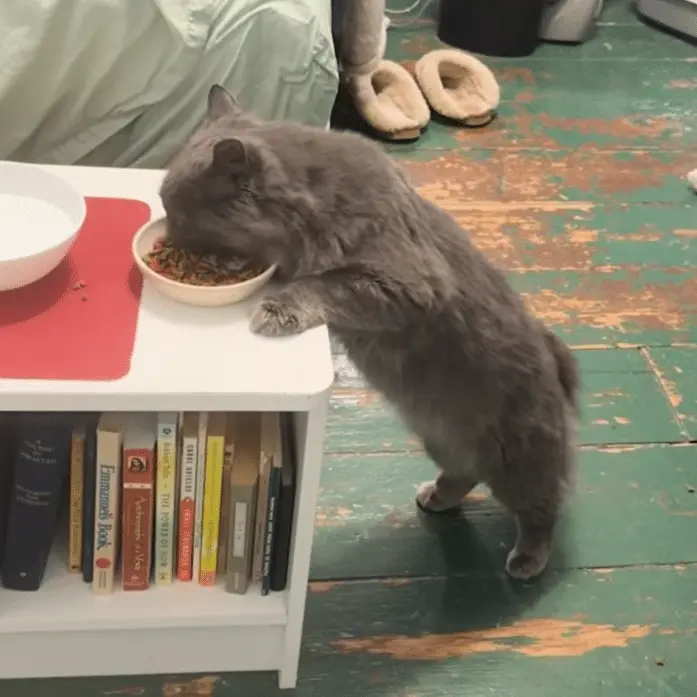
For 571 days, an ordinary household in Greenwich, Connecticut, carried the heavy, quiet grief of an unresolved mystery. Turtle—an affectionate, long-haired gray cat with a history as a Tennessee stray before finding permanent comfort in New England—had vanished into thin air. What began as a startling, momentary mishap during a hurried morning departure spiraled into an exhausting, year-and-a-half-long cross-state ordeal.
The story of Turtle’s disappearance is more than a localized human-interest vignette; it is a masterclass in the persistence of modern pet rescue operations, the vital importance of permanent identification technology, and the unexpected power of decentralized social media networks. Spanning two states—crossing municipal boundaries from Connecticut into New York—Turtle’s journey challenged the conventional wisdom of feline wandering behavior and local homing ranges.
Through the collaborative intervention of dedicated pet retrieval specialists, watchful citizens, and a single, unyielding microchip, Turtle’s improbable saga reached its conclusion. This comprehensive report examines the precise chronology of his disappearance, the strategic efforts deployed during the search, the broader implications of feline microchipping and stray rescue protocols, and the emotional restoration experienced by a family that never truly gave up hope.
Detailed Chronology: From Greenwich to Mamaroneck and Back
The Roots and the Catalyst
Turtle’s life was defined by resilience long before he crossed paths with Kelly Moore and her family. Originally pulled from the unpredictable environment of a Tennessee rescue setting, Turtle made his way north, eventually integrated into the Moore household in Greenwich, Connecticut. He was easily identifiable by a tipped ear—the international universal sign of a neutered community cat—and, crucially, a registered microchip embedded beneath his skin. He had adapted seamlessly to domestic life, earning a reputation among family members for his high intelligence and deeply affectionate disposition.
The tranquility of the household was shattered in 2025 during an ordinary morning routine. Rushing out the door to meet the demands of a busy schedule, Moore inadvertently startled the cat. Feline startle responses are instantaneous and instinctual; caught off guard, Turtle bolted away from the safety of his home environment and out into the open air.
Realizing the gravity of the situation immediately, Moore launched into a frantic search. Recognizing the limits of amateur tracking, she quickly enlisted the services of Rocco, a professional pet recovery specialist operating with Taurus Rocket Lost Pet Rescue.
The Initial Search and Camera Surveillance
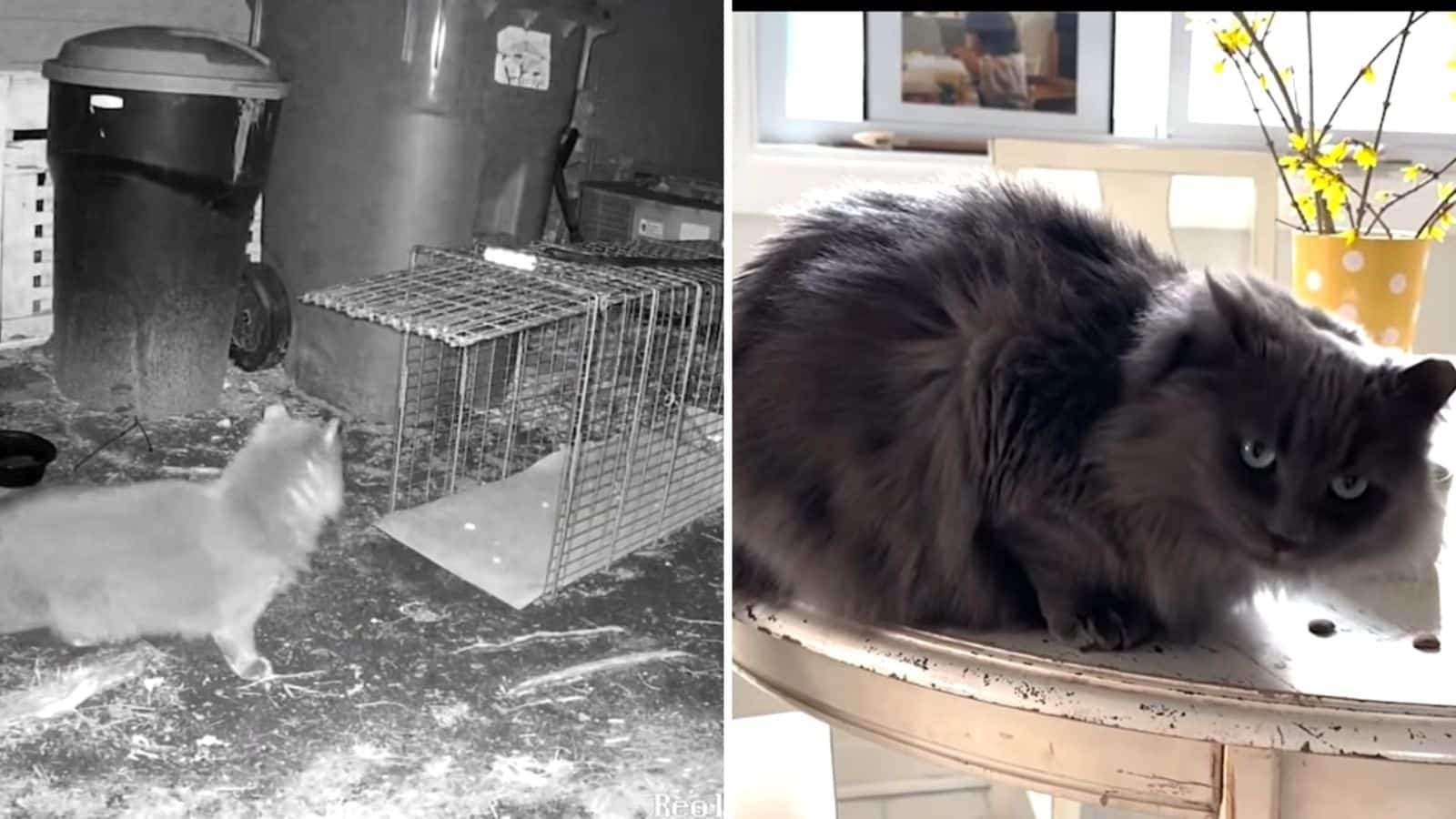
Rocco’s preliminary strategy involved assessing the immediate perimeter of the Greenwich residence. Understanding that indoor-outdoor or newly displaced cats often remain close to their home territories during the initial phase of displacement, the rescue team deployed strategic monitoring equipment. Infrared trail cameras were positioned around the property to capture nocturnal movement without human intervention.
To the family’s initial relief, the strategy bore fruit. The cameras captured footage of Turtle visiting the perimeter during the late-night hours. He was alive, relatively healthy, and still drawn to the scent and familiarity of his home turf.
However, translating visual confirmation into a physical rescue proved exceedingly difficult. Turtle had developed an intense aversion to traditional animal carriers—a common behavioral hurdle in rescue work. Each attempt to secure him failed due to his cage-shyness. Before the rescue team could refine their capture protocols to account for his anxieties, the sightings abruptly ceased. The trail went cold, and Turtle vanished from the monitoring zone entirely.
19 Months of Silence
As the days bled into weeks, and the weeks into months, the psychological toll on the Moore family mounted. The absence of concrete evidence transformed hope into agonizing ambiguity. Without sightings, search radiuses expanded into theoretical guesses, and the probability of recovery diminished with every passing season.
Moore later shared the profound weight of her guilt, grappling with the memory of the morning she frightened him. The inability to ascertain whether Turtle was sheltered, injured, or navigating the harsh realities of New England winters became a persistent emotional burden. More than a year and a half ticked away on the calendar, accumulating to a staggering total of 571 days without a single verifiable trace of the missing cat.
The Digital Breakthrough Across State Lines
The turning point arrived not through active field tracking, but through the modern digital infrastructure of community networking. In Mamaroneck, New York—a municipality situated across state lines and well outside the standard tracking radius for a localized Connecticut escape—a stray cat was discovered. A concerned citizen photographed the animal and uploaded a description to a localized social media group, hoping to connect the animal with a potential owner.
By sheer coincidence, Rocco—the same pet rescuer who had attempted to trap Turtle nearly two years prior—came across the digital post. Examining the photographs of the cat found in Mamaroneck, Rocco recognized distinct physical characteristics that triggered his intuition. He suspected that the stray in New York might be the long-lost Greenwich cat.
The geographical span raised eyebrows within the rescue community. Rocco noted that the distance between Turtle’s home and the location where he was found far exceeded the typical wandering range of cats reported missing in his professional experience. Felines are typically territorial, but displaced cats can travel significant distances under the influence of panic, vehicular transport, or the search for sustenance.
Verification and Return
To definitively establish identity, rescuers relied on the gold standard of pet reunification: the microchip. When the cat found in Mamaroneck was scanned, the scanner revealed the unique digital identifier matching Turtle’s veterinary records from Connecticut. The data verified what Rocco had suspected. The cat wandering the streets of New York was indeed the same Turtle who had slipped away 571 days earlier.
With verification complete, the final hurdle remained: securing Turtle for transport. True to his past behavior, his aversion to carriers persisted, requiring immense patience from the rescue personnel on the scene. Once safely contained, Turtle made the reverse journey across the state line, returning at last to the soil of Connecticut.
Upon stepping out of the carrier and into the familiar environment of his home, Turtle stepped back into a family that had nearly abandoned hope of ever seeing him whole again. For Moore, the reality of the moment felt surreal. Reflecting on the impossibility of the outcome, she remarked to ABC7 New York, "If this can happen, anything can happen."
Supporting Context & Metrics: The Science of Pet Loss and Recovery
Turtle’s narrative intersects with several critical data points regarding lost pets, recovery methodologies, and the mechanics of feline behavior. Understanding these metrics highlights why his story is both an incredible anomaly and a testament to modern rescue strategies.
The Role of Microchips in Reunification
Statistical data from animal welfare organizations consistently emphasize the efficacy of permanent identification. According to studies by the American Humane Association, lost dogs and cats without microchips are returned to their owners at dismally low rates—often estimated at less than 2 to 5 percent for cats. Conversely, microchipped cats experience a significantly higher rate of successful repatriation, provided their contact information remains up to date in the database registry.
Turtle’s microchip served as the definitive legal and biological anchor that bridged a two-state divide. Without it, the cat found in Mamaroneck would likely have been processed as a local stray or community cat, leaving the Moore family entirely unaware of his whereabouts.
Feline Dispersal Patterns and Range
While dogs are known to track scents over vast expanses, domestic cats typically exhibit site fidelity, anchoring themselves to a home range of a few acres. However, behavioral specialists categorize lost cats into two primary psychological states:
The Displaced/Hiding Cat: Usually frightened by a sudden noise or event (as Turtle was), these cats bolt blindly and immediately go to ground, hiding silently within a tight radius of home for days or even weeks. They often refuse to answer their owner’s calls due to a survival-induced freeze response.
The Wandering/Traveling Cat: If a cat is dislodged from its hiding spot or continues moving out of desperation for food and shelter over an extended period, its range expands exponentially. Over 571 days, Turtle’s exact route remains an enigma—whether he hitched a ride in a delivery vehicle, crossed forested corridors, or gradually drifted town by town toward New York is unknown. However, his ability to survive across multiple seasons underscores the adaptability of former strays.
The Power of Social Media and Grassroots Networks
The modern pet rescue ecosystem relies heavily on decentralized information sharing. Traditional missing pet posters on telephone poles have largely been supplanted by localized Facebook groups, neighborhood apps like Nextdoor, and dedicated lost-and-found pet networks. Rocco’s accidental exposure to a digital post originating in an entirely different state underscores the interconnected nature of contemporary animal welfare networks. A single share by an anonymous bystander in Mamaroneck catalyzed a chain reaction that traversed municipal, county, and state boundaries.
Official Statements and Perspectives
The emotional and operational dimensions of Turtle’s return were captured through interviews and statements provided by key figures involved in the rescue continuum.
Kelly Moore, reflecting on the prolonged psychological strain of the ordeal, spoke candidly about the guilt and sorrow that characterized the 571 days of separation.
"I was rushing out so fast I startled him and he ran… I cried, I cried so many nights," Moore told ABC7 New York, capturing the distinct anguish experienced by pet owners who blame themselves for accidental escapes.
Her perspective shifted entirely upon the miraculous confirmation of Turtle’s survival and discovery in New York. Emphasizing the improbability of the rescue, she encapsulated the collective sentiment of the recovery team:
"If this can happen, anything can happen."
Professional rescuer Rocco, speaking on behalf of Taurus Rocket Lost Pet Rescue, highlighted the extraordinary nature of the geographic distance involved. In his professional estimation, the distance Turtle traveled from Greenwich, Connecticut, to Mamaroneck, New York, represented an outlier compared to the typical recovery cases he handles. His vigilance in monitoring regional stray networks proved indispensable, proving that pet recovery often hinges on the cross-pollination of information across disparate community groups.
Future Outlook & Recommendations for Pet Owners
Turtle’s extraordinary journey offers valuable lessons for pet owners, municipal animal control departments, and rescue organizations alike. While his story concluded with a joyful reunion, it underscores the systemic vulnerabilities inherent in pet ownership and the preventative measures necessary to mitigate risks.
1. Dual-Identifier Protocols
While microchips are undeniably critical—as proven by their role in ending Turtle’s 571-day absence—they are passive devices requiring a physical scan. Experts recommend combining microchips with visible identifiers, such as quick-release collars equipped with ID tags. However, for escape-prone or nervous cats, breakaway collars are essential to prevent strangulation hazards.
2. Immediate Response to Feline Startle Flights
When an indoor or sensitive cat is startled and bolts outdoors, standard behavioral advice dictates a systematic approach:
Resist the urge to chase: Running after a panicked cat confirms its fear and drives it further into hiding.
Establish a feeding and monitoring station: Leaving familiar food and an unwashed piece of the owner’s clothing near the exit point can draw a hiding cat out during quiet nocturnal hours.
Deploy humane traps early: As demonstrated by the initial stages of Turtle’s search, knowing a cat is present is only half the battle; having secure, humane trapping mechanisms ready for cage-shy animals is vital before they relocate.
3. Expanding Search Radii Over Time
As Turtle’s case demonstrates, a missing cat does not remain static if initial recovery attempts fail. Owners and rescue coordinators must periodically expand their digital search parameters beyond immediate municipal borders. Monitoring neighboring town rescue groups, animal shelters, and community boards across county and state lines is critical, as displaced pets frequently cross administrative boundaries in search of resources.
Conclusion
Turtle’s return home after 571 days stands as a powerful reminder of resilience, community cooperation, and the enduring bond between humans and animals. Though the chapters of his journey spent navigating the terrain between Connecticut and New York will remain largely unwritten, the final outcome restores faith in the mechanisms designed to protect our most vulnerable companions. For Kelly Moore and her family, the long wait is over, replaced by the quiet comfort of a familiar, long-haired gray cat curled up where he always belonged.