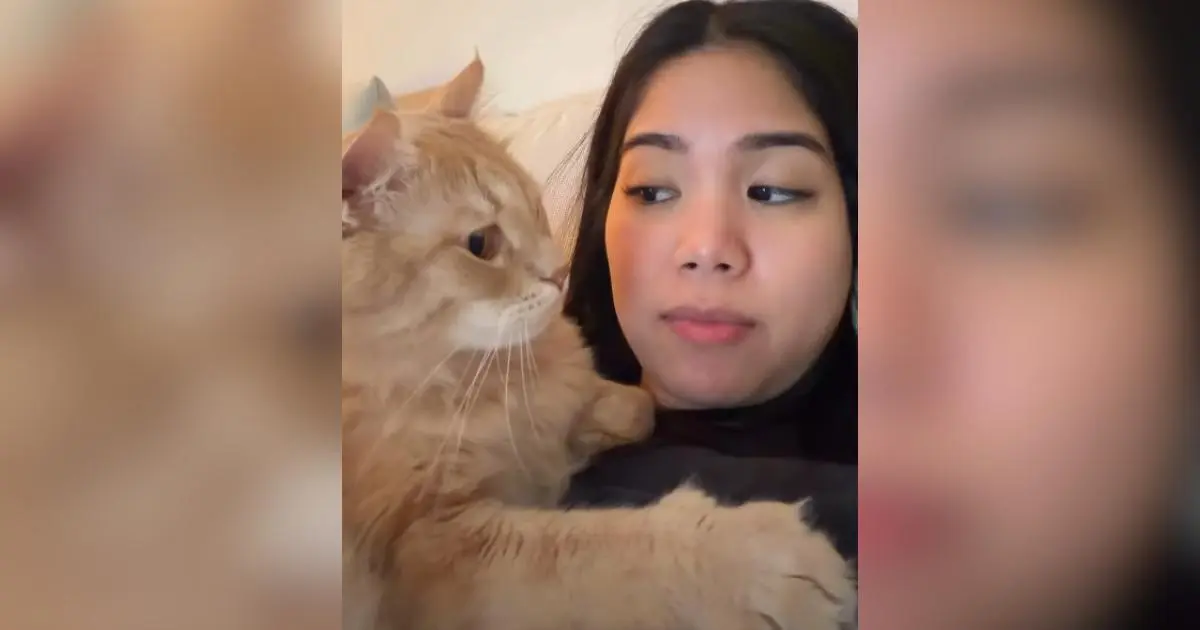
In the realm of animal rescue, the reasons animals are surrendered often reflect human limitations rather than animal flaws. For Leo, a wonderfully expressive feline whose conversational nature knew no bounds, this unfortunate reality led to the heartbreak of displacement. His previous family, overwhelmed by his constant vocalizations, deemed him "too much" and made the painful decision to rehome him. However, one person’s annoyance is often another’s treasure. When Leo crossed paths with his new cat mom, Rosh, the very trait that had once alienated him became the foundation of an extraordinary, viral bond.
Rather than silencing Leo, Rosh listened. What began as late-night worry over his endless chatter quickly evolved into an unexpected artistic collaboration: a vocal partnership where human and cat sing in harmony. A video capturing their unique musical duets recently captivated the internet, amassing over a million likes and touching the hearts of animal lovers globally. Beyond the viral fame, Leo and Rosh’s story offers a profound meditation on unconditional acceptance, the complexities of feline communication, and the hidden rhythms that connect human and animal souls. This in-depth report explores Leo’s journey from a misunderstood shelter cat to an internet sensation, examines the science behind feline vocalizations, and highlights how empathy can transform perceived behavioral "flaws" into cherished traits.
Detailed Chronology: From Misunderstood Chatterbox to Viral Star
The Hardships of a Misunderstood Past
Long before he was serenading millions online, Leo’s life was marked by the instability familiar to many shelter animals. According to accounts shared with GeoBeats Animals, Leo’s initial family welcomed him with good intentions, but quickly grew fatigued by his persistent vocalizations. Domestic cats communicate in a variety of ways, but Leo was exceptionally talkative. Whether he was narrating his morning routine, commenting on the weather, or demanding companionship, his voice filled every corner of the house.
Unfortunately, his previous humans lacked the patience and bandwidth to decode his expressive personality. Perceiving his constant meowing as a behavioral problem rather than an authentic form of expression, they made the difficult choice to surrender him. For a sensitive creature like Leo, being uprooted from his familiar environment introduced a period of profound uncertainty. Yet, feline resilience often surprises us. When Leo arrived at Rosh’s home, he did not cower or retreat into silence; instead, he stepped into his new space with absolute confidence, ready to pick up right where he left off.
Midnight Monologues and the Dawn of Understanding
Transitioning into a new home often brings anxiety, but Leo wasted no time establishing his presence. Almost immediately, his vibrant personality emerged, accompanied by a steady, unwavering stream of meows that stubbornly refused to quiet down for bedtime. Rosh quickly learned that Leo operated on a different schedule, with his most intense vocal performances taking place reliably between midnight and three in the morning.
For many pet owners, a cat howling in the dead of night might trigger frustration or anxiety. Initially, Rosh experienced a mixture of both. She found herself lying awake in the dark, questioning whether her new companion was in pain, stressed, or confused.
"It kind of made me wonder if he was okay. But he actually was; he just really meowed a lot," Rosh shared in an interview with GeoBeats Animals.
Once Rosh realized that Leo’s midnight monologues were simply his unique way of processing the world and connecting with his environment, her perspective shifted completely. Instead of viewing his vocalizations as an inconvenience to be managed or suppressed, she chose adaptation and acceptance. Rosh began adjusting her own daily routine, waking up around five in the morning to synchronize her schedule with her chatty companion. This act of empathy paved the way for a deeper breakthrough that would alter the trajectory of their relationship forever.
The Birth of the Cat-Human Duet
The turning point in their relationship came from an unexpected intersection of human passion and feline instinct. Rosh possessed a deep love for singing, frequently filling her home with melody. It did not take long for Leo—ever the attentive and musically inclined observer—to realize he had artistic ambitions of his own.
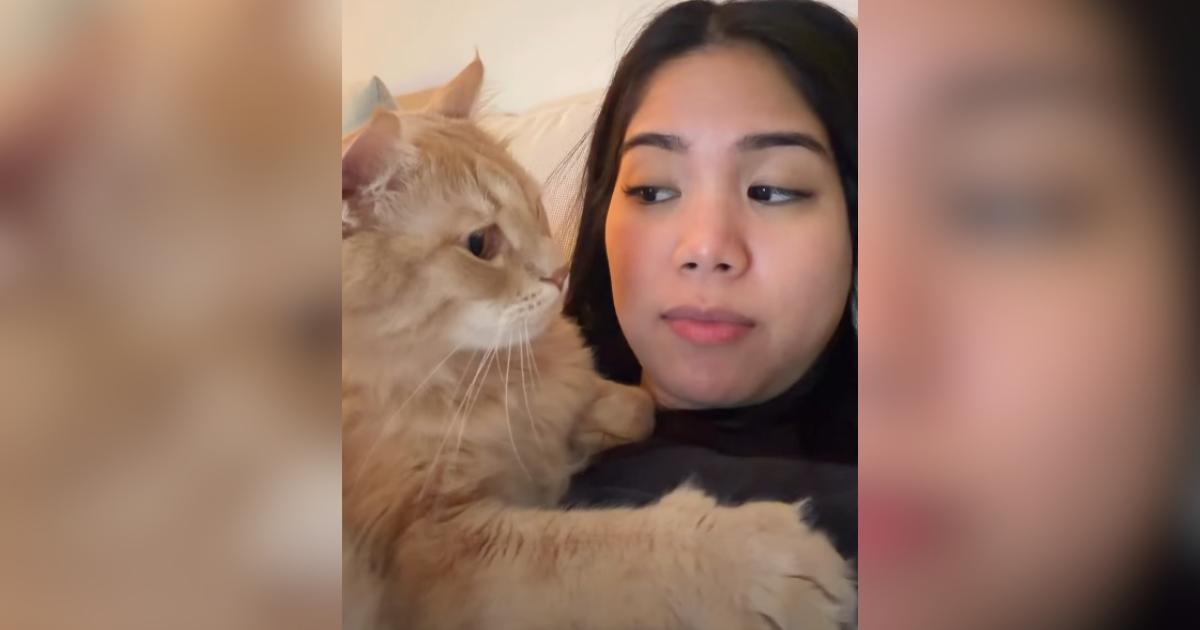
Whenever Rosh began to sing, Leo would eagerly join the performance. Far from being disturbed by the sound, he treated it as an open invitation to collaborate. He would answer her vocalizations with perfectly timed meows, trills, and warbles, creating genuine musical duets that blended human pitch with feline cadence.
This spontaneous harmonization captured the attention of the digital world when Rosh uploaded a video of their performances to social media. The clip struck a universal chord, rapidly surpassing one million likes and drawing thousands of comments praising the heartwarming harmony. More importantly, it solidified a core truth: Leo did not need to change who he was to deserve love. He simply needed a human who understood that his voice was an inseparable part of his magnificent soul.
Supporting Context & Metrics: The Science of Feline Communication and Music
To fully appreciate the phenomenon of Leo and Rosh’s musical partnership, it is essential to examine the scientific landscape of feline vocal behavior and how cats process auditory stimuli.
Why Cats Talk: Decoding the Meow
Contrary to popular belief, adult cats rarely meow at each other in the wild. Aside from kittens communicating with their mothers for food or warmth, mature felines primarily use scent marking, body posture, and touch to interact with members of their own species. The domestic meow is, evolutionary speaking, an adaptation designed specifically for human-cat communication.
Cats are remarkably perceptive creatures that quickly learn which behaviors yield results. A vocal cat may be expressing a wide array of needs, including:
Resource Demands: Requesting fresh water, food, or access to a preferred resting spot.
Social Engagement: Seeking attention, validation, or an interactive play session.
Environmental Commentary: Expressing discomfort with a closed door, an unfamiliar noise, or a shift in the household routine.
Personality Expression: As seen in Leo, some cats are simply hardwired to be conversationalists, treating every human utterance as the start of a dialogue.
Feline Musical Preferences and Research Insights
Music’s impact on animals has become an increasingly popular field of study within veterinary science and ethology. A landmark study published in the Journal of Feline Medicine and Surgery in 2019 explored how domestic cats respond to auditory enrichment, specifically music tailored to their species-specific sensory range.
The researchers discovered that cats exhibited significantly lower stress levels when exposed to music composed specifically for felines. Unlike human music—which typically utilizes tempos and frequencies matching human heart rates and vocal ranges—species-specific cat music incorporates frequencies akin to feline purring and suckling sounds, alongside sliding pitches that mirror cat vocalizations.
While researchers continue to study how cats react to engineered compositions, Leo’s story highlights a far more potent form of auditory enrichment: human-animal co-regulation. By singing with Rosh, Leo is not merely tolerating sound; he is actively participating in a shared emotional ritual. The rhythm of Rosh’s voice, combined with her attentive, non-judgmental body language, provides Leo with a profound sense of psychological safety and belonging.
Breed Genetics and Individual Temperament
While individual personality remains the ultimate determinant of how talkative a cat will be, genetics and breed heritage certainly play a supporting role. Certain breeds are legendary for their loquaciousness:
Siamese: Famously vocal, known for their distinct, low-pitched, almost human-sounding cries.
Bengal: Highly energetic and communicative, often utilizing chirps and chatty meows to command attention.
Sphynx: Affectionate and extroverted, frequently expressing their desire for warmth and interaction through vocal outbursts.
Conversely, breeds like the Chartreux or British Shorthair are celebrated for their quiet, reserved demeanors. However, as Leo proves, rescue cats of mixed or unknown heritage can possess the most vibrant and unexpected personalities of all.
Note: Veterinarians always caution that a sudden, dramatic change in a cat’s vocalization habits—such as a normally quiet cat beginning to yowl constantly—can be an indicator of underlying medical issues, including hyperthyroidism, cognitive dysfunction, or pain. Routine veterinary checkups remain essential to ensure that excessive talking is merely a personality quirk rather than a cry for medical help.
Official Statements & Community Perspectives
The viral success of Leo and Rosh’s singing partnership has sparked broader conversations among animal welfare advocates, behaviorists, and pet owners regarding the responsibilities of pet guardianship.
Animal behavior specialists frequently emphasize the importance of matching human expectations with animal personalities. When adopting a pet, shelters often screen for behavioral traits, but hidden quirks—such as a cat’s nocturnal activity levels or vocal tendencies—can occasionally catch unprepared owners off guard.
"Pets are not accessories designed to fit silently into the background of our lives; they are sentient individuals with distinct voices, needs, and emotional landscapes," notes a leading voice in animal rescue advocacy. "Leo’s story reminds us that when we rehome an animal for being ‘too much,’ we may simply be failing to meet them on their own terms. Rosh’s willingness to listen transformed a perceived behavioral flaw into a celebrated masterpiece of companionship."
Online communities have echoed this sentiment with overwhelming enthusiasm. Comments on Rosh’s viral videos frequently highlight personal experiences with talkative cats, fostering a supportive digital space where feline loquaciousness is celebrated rather than criticized. Viewers have noted that Leo’s bright expression during their duets proves that animals thrive when they feel truly heard by their human caretakers.
Future Outlook: A Lifetime of Melodies Ahead
As Leo and Rosh continue to share their lives—and their musical collaborations—with the world, their story serves as a timeless reminder of the transformative power of patience and empathy. In a society that often prizes quiet compliance, Leo’s journey teaches us to embrace authenticity, both in our animal companions and within ourselves.
Looking forward, Rosh hopes that her viral platform will inspire more prospective pet parents to consider shelter animals, particularly those with unique personalities or "quirks" that might make them overlooked by casual adopters. Special-needs pets, senior animals, and undeniably chatty cats like Leo often possess the deepest wells of love to give, provided they find the right human willing to listen.
For now, the future sounds remarkably bright in Rosh’s home. As the sun sets and the midnight hours approach, Leo no longer needs to worry that his voice is unwelcome. Instead of driving a wedge between them, every meow serves as an opening chord, inviting Rosh to join in, clear her throat, and sing alongside her cherished, chatty best friend.