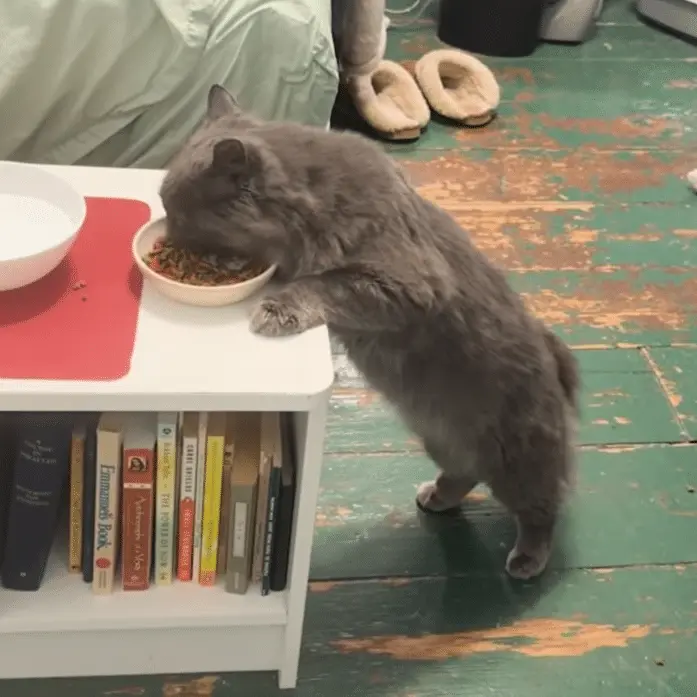
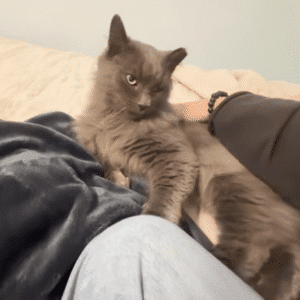
In an era defined by hyper-connectivity, the physical distance between a lost pet and a heartbroken family can sometimes feel insurmountable. For Kelly Moore and her family of Greenwich, Connecticut, that distance spanned not only 571 days of agonizing uncertainty but also an interstate border. Their beloved, long-haired gray cat, Turtle, vanished in a flash of startled panic, kicking off an extraordinary, multi-state journey that defied statistical odds.
Turtle’s disappearance began as a common domestic accident—a rushed exit, an unexpected fright, and a feline bolt into the unknown. What followed, however, was an uncommon tale of resilience, community mobilization, modern digital sleuthing, and the immutable value of pet microchipping.
When Turtle finally materialized across state lines in Mamaroneck, New York, more than a year and a half after he was last seen in Connecticut, it was a social media post spotted by a dedicated animal rescuer that broke the case open. This comprehensive report examines the timeline of Turtle’s disappearance, the operational mechanics of the search, the role of digital infrastructure in modern animal rescue, and the broader implications of microchipping for pet owners facing similar crises.
Detailed Chronology: From Greenwich to Mamaroneck
The Origins and the Inciting Incident
Turtle’s story did not begin in the upscale suburbs of Fairfield County, Connecticut. Originally a stray rescued from Tennessee, the intelligent, affectionate feline eventually found his way into the heart of Kelly Moore’s family via her daughter. By the time Turtle settled into his Greenwich home, he possessed all the hallmarks of a well-cared-for rescue animal: he was neutered (indicated by a classic ear-tip) and, most importantly, microchipped.
The tranquil domestic routine shattered in 2025 during an ordinary morning. Rushing out the door for a time-sensitive engagement, Moore inadvertently startled the sensitive cat. Frightened by the sudden motion and noise, Turtle bolted past the threshold and into the unfamiliar outdoor environment.
“I was rushing out so fast I startled him and he ran,” Moore recounted in an interview with ABC7 New York.
The Immediate Search and Evolving Strategy
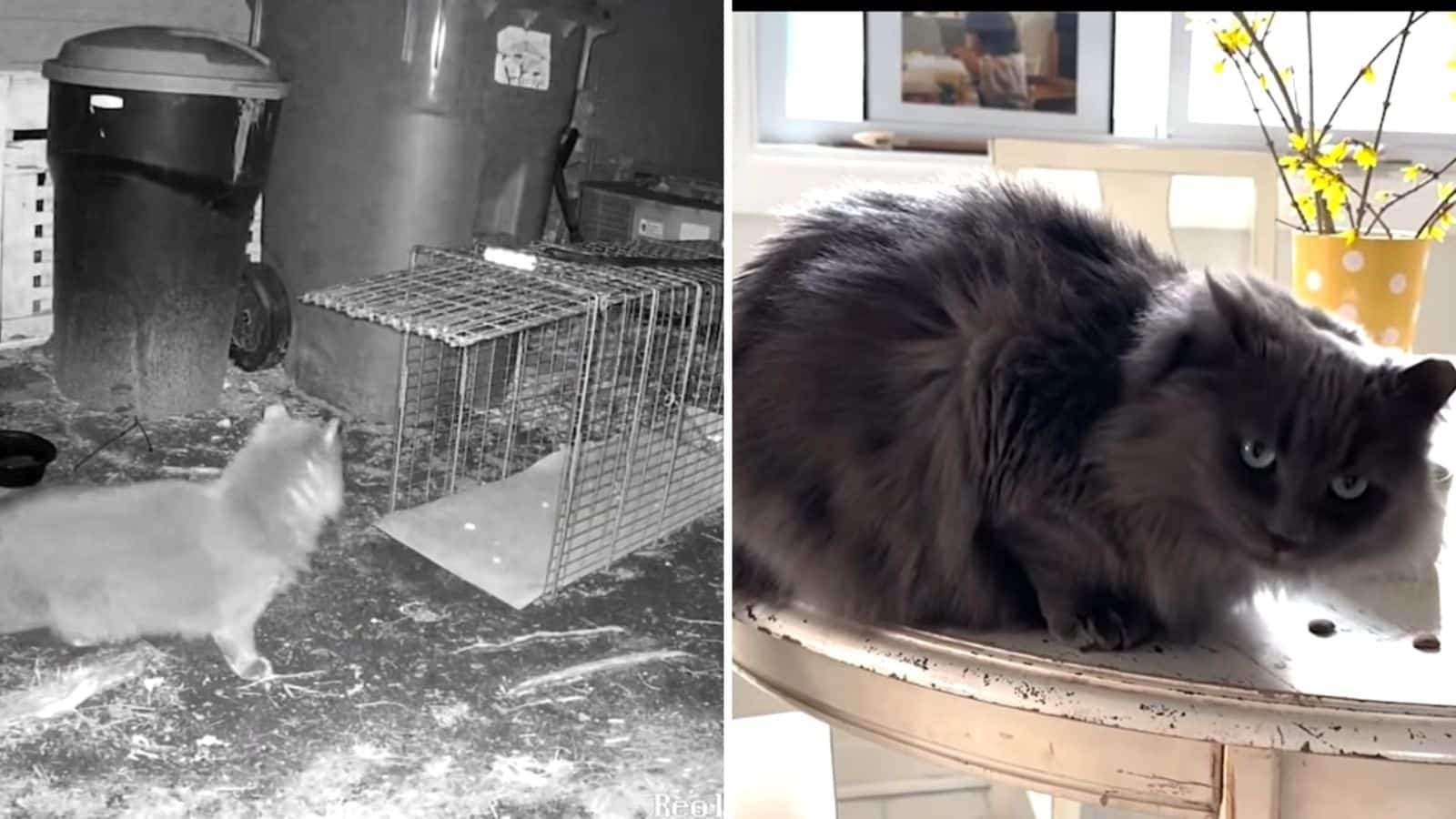
Recognizing the urgency of the situation, Moore immediately initiated recovery efforts. She enlisted the services of Rocco, a specialist from Taurus Rocket Lost Pet Rescue, to spearhead the field operations. The early stages of the search offered a glimmer of hope. Rocco deployed state-of-the-art wildlife and security cameras around the perimeter of the Moore family property to monitor nocturnal activity.
For a brief window, the strategy yielded positive results. Night vision footage captured Turtle cautiously returning to the familiar turf after dark. However, physical capture proved to be an uphill battle. Turtle harbored a deep-seated aversion to enclosed spaces, particularly pet carriers. This aversion paralyzed rescue efforts; even when his presence was confirmed, coaxing him into a trap or carrier without specialized equipment or risking a deeper flight response proved nearly impossible.
Before rescuers could refine their capture tactics, the situation deteriorated further: Turtle stopped appearing on the trail cameras entirely.
The 571-Day Silence
Months bled into one another, transforming from weeks into more than a year and a half of profound psychological weight for Moore. The absence of concrete evidence or credible sightings transformed the search from an active recovery operation into a haunting exercise in speculation.
Moore later shared the emotional toll of those 571 days, noting the heavy burden of self-blame she carried for accidentally startling him. “I cried, I cried so many nights,” she admitted, grappling with the agonizing question of where her companion could possibly be and whether he was surviving the elements, predators, and urban hazards.
Without geographical tethers, search radiuses expanded infinitely. Turtle had vanished from the Greenwich observation grid, leaving his family in a state of indefinite limbo.
The Digital Breakthrough Across State Lines
The turning point arrived not through physical tracking grids or door-to-door flyers, but through the digital ether of social media. An anonymous individual in Mamaroneck, New York—located miles away across the state line—posted an alert about an unattached stray cat wandering through their neighborhood.
By sheer coincidence, rescuer Rocco encountered the post online. Analyzing the visual characteristics of the cat in the photograph, Rocco’s professional intuition was triggered. The physical descriptions aligned closely enough to warrant an interstate investigation.
Mamaroneck sits comfortably outside standard local missing cat radiuses for a Greenwich escapee. As Rocco later noted, the distance Turtle covered during his absence far exceeded the typical displacement patterns observed in domestic feline escape cases, suggesting either a multi-stage journey or accidental transport by a vehicle.
To confirm the hypothesis, rescuers scanned the cat for a microchip. The scanner pinged with a unique identification number that directly matched Turtle’s veterinary and adoption records. The 571-day mystery was officially solved: the cat in New York was, without a doubt, the missing Greenwich resident.
The Homecoming
With identity verified, the final hurdle remained identical to the one that had plagued rescuers a year and a half prior: Turtle’s enduring phobia of carriers. Exercising infinite patience and employing specialized handling techniques, the rescue team successfully secured the elusive feline for transit.
Transported back across the border to Connecticut, Turtle was officially reunited with Moore. The reunion shattered expectations, prompting Moore to reflect on the miraculous nature of the event with a renewed sense of possibility: “If this can happen, anything can happen.”
Supporting Context & Metrics: The Science of Lost Pet Recovery
Turtle’s narrative highlights several critical data points regarding lost pet behaviors, recovery metrics, and the efficacy of modern identification technology.
Feline Dispersal Patterns and Distances
According to lost pet behaviorists, indoor-outdoor or indoor-only cats that are startled outdoors typically do not travel far initially; instead, they often hunker down within a three-to-five-house radius, entering a state of "silent survival mode" where they refuse to respond to calls or food. However, as Turtle’s case proves, exceptional circumstances can alter these patterns. Crossing state lines into Mamaroneck indicates that Turtle either navigated a sustained overland journey over many months or was inadvertently relocated.
The Microchip Advantage
Turtle’s safe return underscores the vital importance of permanent identification. Industry statistics compiled by animal welfare organizations demonstrate a stark disparity in return-to-owner rates based on microchipping:
Unchipped Cats: Studies indicate that fewer than 5% of lost, unchipped cats entering shelters are successfully reunited with their families.
Microchipped Cats: For cats equipped with registered microchips, the reunification rate jumps exponentially—data from the American Humane Association suggests microchipped cats are more than 20 times more likely to be returned home compared to their unchipped counterparts.
Despite these statistics, millions of pets remain unchipped, or worse, possess outdated registry data. Turtle’s safe recovery hinged entirely on the fact that his chip data remained linked to a reachable guardian, neutralizing the passage of time and physical distance.
Official Statements and Reflections
The emotional resonance of Turtle’s return was captured eloquently by his owner, Kelly Moore, whose candor during her media appearances shed light on the psychological trauma experienced by pet parents enduring long-term absences.
"I was rushing out so fast I startled him and he ran… I cried, I cried so many nights."
— Kelly Moore, Pet Owner
Moore’s reflections serve as a cautionary yet hopeful testament to accountability and perseverance in pet ownership. Rather than abandoning hope as the calendar months accumulated, the family maintained their connection to the rescue community, ultimately reaping the rewards of modern digital networking.
Rocco of Taurus Rocket Lost Pet Rescue emphasized the exceptional nature of the case, noting that cross-state feline migrations discovered via social media platforms represent a small fraction of successful recoveries. His team’s utilization of trail cameras demonstrates the evolving methodology required in modern pet rescue, moving beyond traditional flyers to incorporate wildlife surveillance and online community mobilization.
Future Outlook: Lessons in Modern Pet Safety and Recovery
Turtle’s 571-day odyssey offers actionable takeaways for pet owners, rescue organizations, and municipal animal control agencies striving to improve reunification statistics.
1. Universalization of Microchip Maintenance
While Turtle’s chip saved him, millions of pet microchips fail to yield results because owners move or change phone numbers without updating their registry profiles. Animal welfare advocates increasingly push for mandatory microchip registration at the point of adoption and annual veterinary check-in reminders for data verification.
2. Leveraging Hyper-Local and Regional Social Networks
The traditional lost pet flyer pinned to a telephone pole is no longer sufficient in an era of mobile fragmentation. Turtle’s case proves the power of cross-jurisdictional digital sharing. Lost pet recovery networks that span county and state lines—amplified by hyper-local social media groups and algorithmic reach—play an indispensable role in bridging geographic divides.
3. De-Escalating Flight Responses in Sensitive Pets
Turtle’s aversion to carriers nearly thwarted his rescue both at the onset of his disappearance and upon his discovery in New York. Animal behaviorists recommend that owners regularly acclimate pets to carriers by leaving them out in the home as safe, positive resting spaces, thereby reducing the panic response during emergency captures or veterinary visits.
As Turtle settles back into the rhythm of his Greenwich home, his story joins the pantheon of improbable animal survival tales. For Kelly Moore and her family, the 571 days of silence are now replaced by the comforting presence of a resilient gray cat—proving that with the right combination of technology, community vigilance, and unwavering love, even the most distant wanderers can find their way back home.